Daily insights for city builders, delivered every morning at 6 AM ET. I’m Brandon Donnelly — a Toronto-based real estate developer and founder of Globizen. I’ve been writing here since 2013.

Tag: toronto

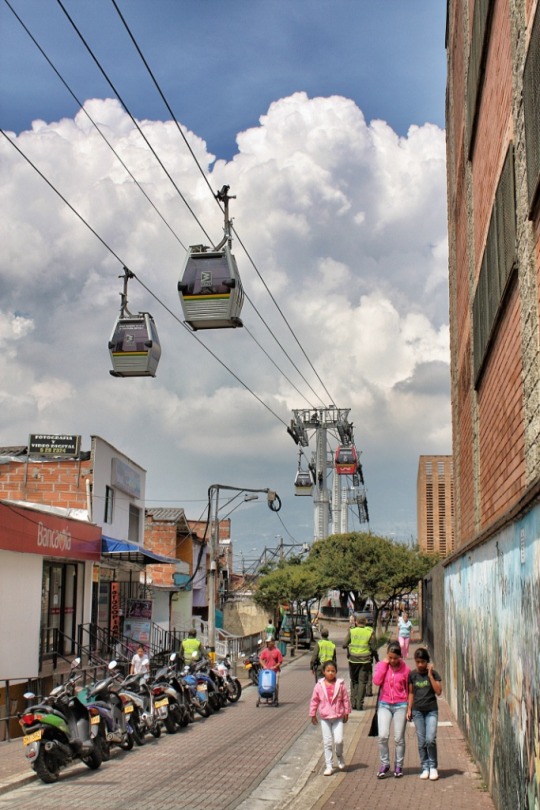
  • Medellín wins 2016 Lee Kuan Yew World City Prize

    image

    Thanks to my friend Darren Davis, I just recently learned about something called The Lee Kuan Yew World City Prize.

    Named after Singapore’s first Prime Minister, the prize is a biennial award that honors cities who have made, “outstanding achievements and contributions to the creation of liveable, vibrant and sustainable urban communities around the world.” Along with the prize comes $300,000 (Singapore Dollars), which is about $287,000 Canadian as of today.

    The 2016 Prize Laureate is Medellín, Colombia.

    Over the past two decades, the city has transformed itself from one of the most dangerous cities in the world to one that has become a model for social inclusion and urban innovation. Here is a video that talks about the transformation. It’s a bit cheesy, but it does provide a high-level overview of their urban initiatives. A lot of them will serve as a reminder about the importance of urban connectivity.

    If you’re a regular reader of this blog, you may also remember that my good friend Alex Feldman (VP at U3 Advisors) wrote a guest post about Medellín after he visited the city for the World Urban Forum almost two years ago. That post was called, What cities could learn from Medellín.

    It’s worth mentioning that the runners-up for this year’s World City Prize were Auckland, Sydney, Toronto, and Vienna. In the case of Toronto, our “far-from-ideal transit” was specifically called out as a negative. Thankfully we are now working on road pricing, which will provide additional funding for transit. 😉

    Image by Jorge Gobbi

  • Thoughts on inclusionary zoning

    Ontario is looking to pass legislation that would allow municipalities in the province to implement something known as inclusionary zoning. If passed and should municipalities decide to use this tool (Toronto almost certainly would), developers would then be required and/or incentivized to include some percentage of affordable housing in their new market rate developments. 

    Politically, inclusionary zoning tends to be popular. It’s believed to be a way for governments to create new affordable housing using relatively small public subsidies. Not surprisingly though, the development industry generally hates IZ. It’s another cost that needs to be added to the development pro forma – though some municipalities rightly offset these additional costs with additional density, breaks on levies, and so on.

    What I always think about when this topic comes up is the broader economic impact of the land use policy. Because I’m suspect that it’s as simple as: mandate affordable housing; get more affordable housing for free. Generally there are always trade-offs.

    So here’s some reading material for you all this morning.

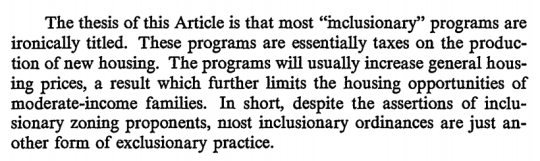
    In a classic paper (1981) by Yale Professor Robert C. Ellickson – called The Irony of Inclusionary Zoning – he argues that these practices can actually increase general house prices:

    image

    As a counterargument Owen Pickford over at The Urbanist argues that IZ simply reduces land prices as a result of the new tax. Land, after all, is the residual claimant. Therefore, he believes it’s an effective affordable housing policy. (I’m not so sure I believe that land prices would decrease in practice.)

    There’s also debate about the effectiveness of inclusionary zoning to actually deliver affordable housing at a meaningful scale. City Observatory wrote a post that looked at the total number of units produced (through IZ) across a number of American cities and the results were spotty. It should, however, be noted that not all inclusionary zoning policies are mandatory.

    Finally, the Furman Center for Real Estate & Urban Policy at New York University published a housing policy brief back in 2008 that looked at this exact topic. While they admit that the data is scarce, they come to the conclusion that IZ had no meaningful impact on the prices and production of single-family housing in San Francisco, but that IZ seems to have slightly decreased production and slightly increased pricing in the suburbs of Boston.

    What this last point suggests is that inclusionary zoning policies are not all created equal. So like all difficult questions, the answer to this one is likely: it depends. If anyone can point me to better data on inclusionary zoning, I would love to see it.

  • The value of a millisecond

    I’m reading a book right now called Flash Boys: A Wall Street Revolt. 

    One of my graduate school buddies recommended it to me on one of our annual ski/snowboard trips and I’m finally getting around to reading it. I’m only about half way through it, but I’m enjoying it so much that I have decided to write about it today.

    One of the protagonists in the book is a Toronto-native by the name of Brad Katsuyama. That’s probably one of the reasons I like it – although Michael Lewis makes all Canadians out to be overly polite and well-behaved. Is that what we’re like?

    The other reason I like the book is that a lot of it actually has to do with geography. Technology and the internet were supposed to make cities and location irrelevant. But as Flash Boys argues, location and physical connectivity matter a great deal in the world of high-frequency trading. Each millisecond matters.

    To illustrate this point, the book starts by describing the construction of a $300 million, 827-mile cable running as straight as humanly possible from Chicago to New Jersey in order to reduce data travel times from 17 to 13 milliseconds. That’s how much the milliseconds matter.

    This is also not a topic that I know a lot about and so it’s eye opening (and a bit disappointing) to learn about the sorts of things that happen in our financial markets. If any of you would like to borrow the book after I’m done (and are located in Toronto), leave me a comment below.

  • What the UPX fare reduction means for the west side of Toronto

    Last week Metrolinx slashed fares on Toronto’s Union to Pearson Airport express train (UPX), by a lot. From $27.50 to $12 for people without a PRESTO card and from $19 to $9 for people with a PRESTO card. They listened to the pundits. And there were a lot of them regarding this topic.

    At these fares, the UPX is decidedly cheaper than a taxi or Uber, but more than regular transit, which I think makes sense given that it’s a better overall experience. I would take this train all day long.

    But the other thing that Metrolinx did was also reposition the train service as an inner city commuter service by matching fares with GO transit for non-airport trips within the city. As one example, this means that you can now go from Bloor & Dundas West in the west end to downtown Union Station for $5.30 in cash or $4.71 with a PRESTO card. This is in comparison to $3.25 in cash on the subway.

    But this is huge, because look at the options for this transit trip:

    • UPX Train: 8 minute trip; service every 15 minutes
    • GO Train: 12 minute trip (additional stop); service every 20-30 minutes during peak times and roughly every hour during off-peak times (so no drinks after work)
    • Subway: 26 minute trip; most frequent service

    This is a significant connectivity upgrade for the west side of the city. One that reinforces my belief that, next to Union Station, Bloor/Dundas West is the best connected mobility hub in the Toronto region. This now a perfect location for companies and people who need quick access to both the Financial District and the airport. Unfortunately though, I don’t think we’ve taken full advantage of this connectivity in terms of what we’ve allowed and disallowed to be built in the area to date.

    I’ll end by saying that I think the pundits have been overly critical of the UPX train. Everyone loves to talk about it as a failure. But look, every organization and person makes mistakes. If you’re not making mistakes, then you’re not pushing yourself hard enough. The key is to iterate and refine as you charge along. So go make some mistakes today 🙂

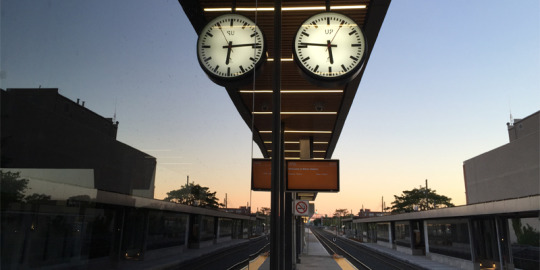
    Image: UP Express

  • How things could be

    I have about 15 minutes before I need to head out for dinner, so I’m afraid that there won’t be much of an ATC post today. It has been a busy week.

    But given that this week was Bjarke Ingels’ talk in Toronto and many of us are pretty excited about his King West project, I thought I would share a video where he sketches and talks about architecture. Click here if you can’t see it below.

    [youtube https://www.youtube.com/watch?v=cIsIKv1lFZw?rel=0&w=560&h=315]

    I love the idea that architecture is about imagining how things could be. That’s how I feel about both architecture and real estate development.

  • Towards a cashless society

    I increasingly never carry cash on me. I just never think to take out money and, when I do, I hate paying for things and getting change back. That change just ends up in a “change jar” in my apartment and then never comes out ever again. I keep telling myself that I need to buy coin rolls but that never seems to happen.

    Lucky for me, it’s pretty clear that many cities and countries are quickly headed towards a cashless society. It’s pretty easy to get by in most cities today without cash. Here in Toronto, I use Uber and my PRESTO card to get around. I can use my phone for many purchases like coffee. And I can use my credit/debit cards for everything else. I never really thought about it until recently, but I have unintentionally gone almost completely cashless.

    But of course it’s not just cash that is going to disappear; it’s also our physical wallets. Just this week Fred Wilson wrote a post on his blog about how he forgot his wallet at home and how Apple Pay came to the rescue at Whole Foods. I can’t wait until more banks roll this out in Canada. It’s also encouraging to see that under “coming soon” on the Apple Pay website, the Toronto Transit Commission is listed. I guess that means it will be integrated with PRESTO.

    However, this transition is not happening in the same way everywhere. There are many countries that still prefer cash. According to CNN (November 2015), only about 10% of people in Indonesia and the Philippines would prefer to pay with a credit card. And it’s for this reason that Uber now accepts cash in a number of countries. It’s what those customers wanted. I find this interesting though, because not having to carry cash is one of the main reasons I use Uber.

    Of course, there’s also the question of what happens to people who are currently not connected in anyway to electronic forms of money. I get asked by people on the street for change at least every day when I walk around Toronto. But there is actually no way for me to transmit the money I have to them. I don’t carry cash and I certainly don’t carry change.

    I would be curious how many of you have gone or are close to going cashless. And if you are operating cashless, did you even notice the transition happening?

  • Ziggurats and gondolas

    Yesterday was an exciting day for Toronto city building announcements. 

    Firstly, Alex Bozikovic of the Globe and Mail published an exclusive preview of architect Bjarke Ingel’s plan for King Street West. Here’s a photo of the architectural model (it’s by Landon Speers):

    My favorite quote from the article is this one from Bjarke:

    “It would be sad if the most diverse city in the world had the most homogenous real estate.”

    It’s true.

    For those of you who emailed me about the details of his talk next week (there were a lot of you!), I believe I emailed you all back. But in case I missed some of you, you can click here for the event details. I should have included it in my original post about BIG, but I thought the event was already oversubscribed.

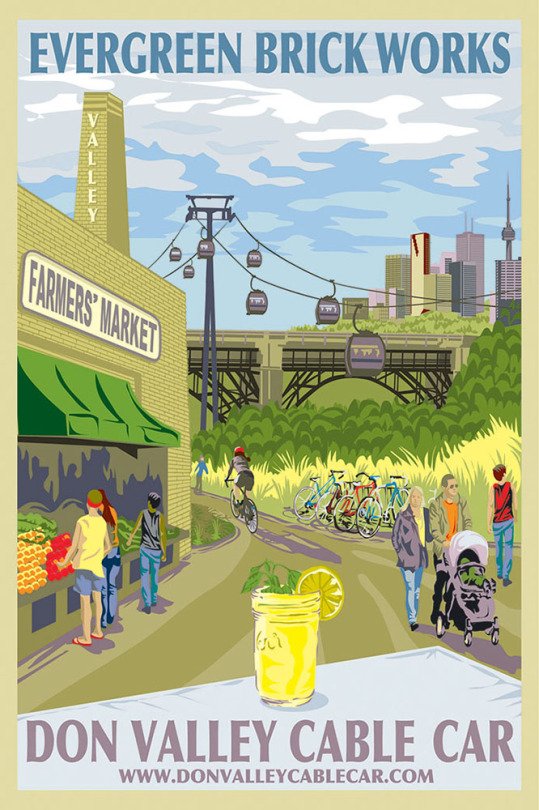
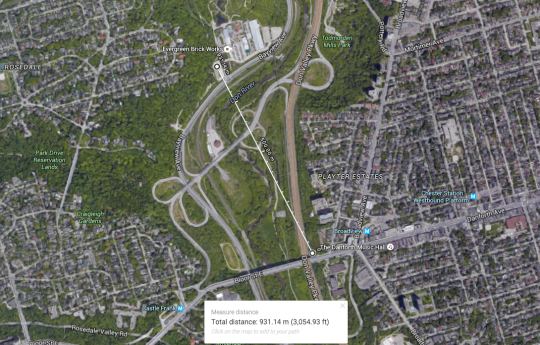
    Secondly, a private company called Bullwheel International Cable Car Corp. has just proposed to build a $20 to $25 million gondola running from Danforth Avenue (near Broadview subway station) to the Evergreen Brickworks. The total length would be almost 1 km and it, allegedly, wouldn’t require any public money. Here is their website.

    The timing of this proposal feels a bit serendipitous to me. When I was in Park City, Utah a few weeks ago, snowboarding right into the town and then taking their “town lifts” back up to traverse the mountain, I remember thinking to myself: what a wonderful form of transportation this is.

    Of course, Park City has giant mountains and Toronto, unfortunately, does not. But we do have spectacular ravines and a spectacular institution known as the Evergreen Brickworks.

    But one of the challenges with our ravines is that they can be a bit hidden – particularly for visitors to the city. Part of this is because we are trying to figure out the right balance between natural preservation and active use. But that’s one of the things that makes this proposal so intriguing. It’s a way to celebrate our ravines and natural landscape, without physically encroaching it.

    Here’s a map of the proposed gondola path:

    What do you think about these announcements?

  • Toronto’s rapid transit network by 2031

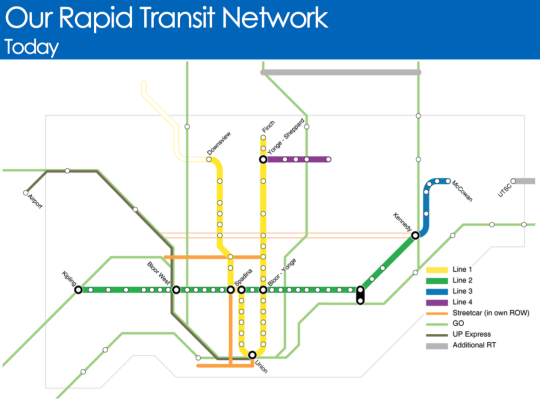
    Starting today and running until the end of March, the City of Toronto, the Toronto Transit Commission, and Metrolinx will be hosting several public meetings as they work towards planning out this city and region’s rapid transit network.

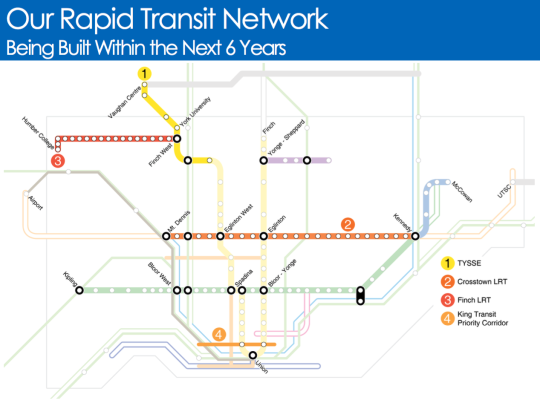
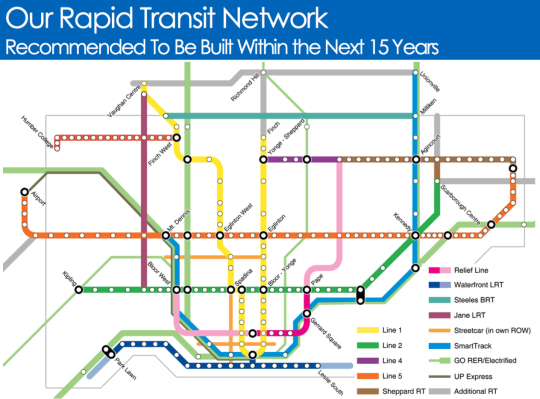
    Below are a few of the key maps from their presentation.

    Here is what Toronto’s rapid transit network looks like today (the hollow lines represent projects in construction):

    image

    Here is what will be built within the next 6 years:

    image

    And here is what they are recommending should be built within the next 15 years:

    image

    It’s hard not to get excited when you see maps like this. Of course, it’s a lot easier to draw lines on a map then it is to fund and execute on projects like this.

    But I think it all starts with us acknowledging that these initiatives are critical to both our economic competitiveness as a city region and our quality of life as citizens of it. Because if this is something we really want, then we can absolutely make it happen.

    Click here if you’d like to see the full presentation and also the public meeting dates/times.

  • Hot to cold

    Architect Bjarke Ingels will be in Toronto next week to talk about how architecture can create communities and about a new project that he is working on with developers Westbank and Allied REIT here in the city.

    The last time I heard Bjarke speak was when I was in undergrad and he had recently started a firm called PLOT with Julien De Smedt. That was over 10 years ago. So I am looking forward to this talk. If you’re also going to be attending, tweet me and let’s try and connect at the event.

    In anticipation of that, I thought I would share a book that his firm published about a year ago called, BIG, HOT TO COLD: An Odyssey of Architectural Adaptation. 

    What’s interesting about the book is that all of the projects are organized according to climatic location – literally hot to cold. That’s why the pages themselves start as red and end up in dark blue.

    It’s a direct response to the fact that modern architecture and modern building systems largely did away with regional and climatic variations. Buildings were designed, no matter their location, to look exactly the same. 

    To a certain extent, globalization makes this somewhat inevitable. But climate is climate. And I believe that architecture is stronger when it responds to local context.

    If you were in Toronto this past weekend – perhaps for the NBA All Star Game – you’re probably well aware that Toronto sometimes gets cold. So it will be interesting to see what kind of strategies they employ for their upcoming project.

    If you want to hear Bjarke talk about this book and some of their projects, check out this video from the Architectural Association in London.

  • Let’s fix the UPX train, together

    I am a big fan of the UP Express train that runs from downtown Toronto to Pearson Airport. 

    I love the station architecture, the branding and identity, the trains themselves (with wifi), and the local retailers they house at Union. I also happen to live a stone’s throw away from the downtown station. So I can go from door to bum in seat within 10 minutes.

    But despite all this, it has become clear that something needs to be done to fix the UPX train. Just last weekend a friend of mine and fellow urbanist, who was visiting Toronto from Vancouver, sent me a text message saying: “This UPX train is really nice, but why is it so expensive?”

    Indeed, that seems to be the general consensus. Here is the opening paragraph from a recent Globe Editorial article:

    Toronto’s high-end airport express train is a failure. A city that urgently needs better transit has been saddled with a deluxe boutique rail service that cost $456-million to build and runs nearly empty, 19 ½ hours a day.

    So today I thought we could collectively brainstorm some ideas for how Metrolinx – the public agency that operates the train – should address this issue.

    I’ll start by sharing my thoughts as a rider and then, hopefully, you all will share yours in the comment section below. I know that there are people from Metrolinx who subscribe to this blog, so I am sure your feedback will get through to them.

    My thoughts are twofold. Like many others, I think the pricing is off. But at the same time, I think there should be a focus on enhancing the value proposition of the service.

    Bur first, let’s talk about price.

    At the time of writing this, a one-way trip from Union Station to Pearson Airport on the UPX is $27.50. If you happen to have a PRESTO card, it’s $19.

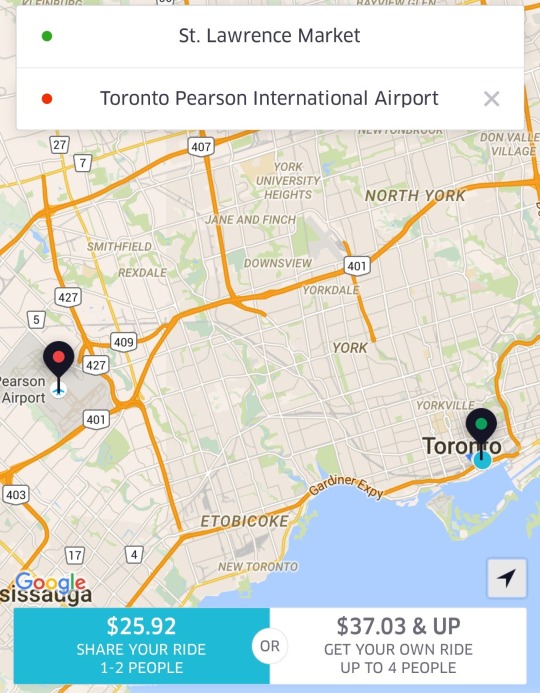
    The alternative for many is probably a taxi. So let’s also look at some Uber fare estimates. For someone like me leaving the St. Lawrence Market area, I’m looking at $25.92 with UberPOOL (meaning I’m sharing the car with 1-2 other people) or $37.03 if I insist on riding solo.
    image

    Against the non-PRESTO fare, UberPOOL is a cheaper option and it’s door-to-door service. Against the PRESTO fare, UPX is potentially $6.92 cheaper. But if you’re someone who has to take the subway to the UPX station, then it’s only $3.67 cheaper (add $3.25 for the subway) and it’s not door-to-door service. So for the vast majority of people, I suspect that UberPOOL would win out in this particular scenario.

    If you happen to be traveling with someone, then UberPOOL and UberX are probably going to be cheaper no matter how you slice it. And again, you’re getting door-to-door service. So I think the consensus is right: fares need to come down.

    But I don’t think Metrolinx should be solely focused on price. They should also be thinking about ways to create additional values for riders. 

    One of my favorite travel experiences is that of Hong Kong’s airport train. There, they have airline check-in counters in the city so you can collect your boarding pass and check your baggage up to a day before your actual flight. This is a huge value add because it means you can check out of your hotel, liberate yourself of your luggage, and spend the day in the city before leaving on the train to catch your flight. You can’t do that with an Uber. And lugging bags around a busy city, sucks.

    My point with all of this is simply that you can’t expect people to pay more or roughly the same, if they are not getting additional value. And right now, the train isn’t door-to-door and taxis are. (Though, the train has a travel time advantage during peak times.) So you either make it cheaper or you create additional value. Or, you do some combination of the two, which is where my head is at.

    What are your thoughts? Please respond in the comments below so all the feedback is public. Thanks.