Daily insights for city builders, delivered every morning at 6 AM ET. I’m Brandon Donnelly — a Toronto-based real estate developer and founder of Globizen. I’ve been writing here since 2013.

Tag: tolls

  • A picture of dynamic road pricing

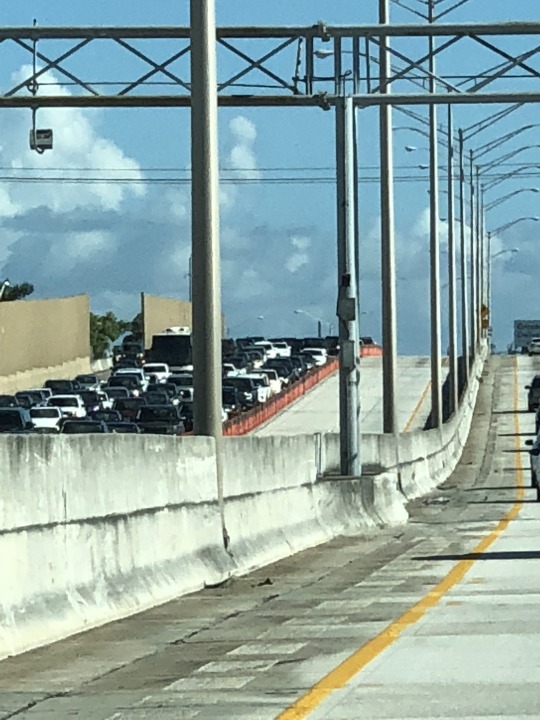
    Below is a photo of Interstate 95 near Miami, which, for the record, I myself did not take while driving.

    image

    The two empty lanes that you see are the “Express Lanes.” The price for using these lanes varies based on demand.

    During periods of low demand, the toll could be around $0.20 per mile. 

    During periods of high demand, such as during rush hour, it might be $1 per mile. 

    And during unusually heavy periods, like when there’s an accident, it could be more.

    We used these lanes while driving around the Miami area on this trip. The pricing always seemed reasonable and the lanes were never congested.

    I think the above picture is a good demonstration of how dynamic road pricing can be used alleviate traffic congestion.

    That’s why many cities, such as Portland, are exploring it as a solution. I wish Toronto would do the same.

  • Driving in the HOT lane

    image

    Joe Cortright of City Observatory recently published an interesting post on HOT lanes (high-occupancy toll lanes) and cited a research paper by Austin Gross (University of Washington) and Daniel Brent (Louisiana State University). The paper looked at the behavioral response of drivers to dynamic HOT lane pricing. 

    They way HOT lanes work is simple: when traffic is light, the price dynamically decreases; when traffic is heavy, the price dynamically increases to ensure a minimum level of service. That is, the price increases until enough cars leave the lane and driving speeds increase to some minimum threshold. In this case, it’s 45 mph.

    The key takeaway from the report is that “value of reliability” appears significantly more important to drivers than “value of time”. Put differently: it’s less about the time I’m wasting in traffic and more about the uncertainty of not knowing when I’m going to arrive at my destination.

    It’s for this reason that HOT lanes are used more frequently in the morning (when you’re running late for that meeting) than in evening (when you’re just on your way home from work). 

    Gross and Brent estimate that the spread is about 7.5x. The typical driver values saving time at about $3 per hour and reliability improvements at about $23 per hour! This is fascinating because we tend to focus a lot on time. But arguably what people really want to buy is greater certainty.

    I can tell you that it’s definitely one of the things that I love about walking to work, or for that matter cycling somewhere. I always know how long it’s going to take.

  • How to save 8 minutes on Toronto’s highways

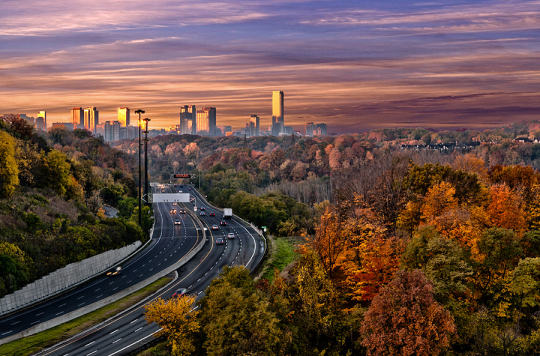
    City in Colour by Greg Patterson on 500px.com

    https://500px.com/embed.js

    Three months ago when Toronto City Council voted
    not to remove the Gardiner Expressway
    East (which in
    my view was a mistake
    ), it did so with a commitment to look at tolling
    options for both the Gardiner Expressway and the Don Valley Parkway (which in
    my view is a positive thing
    ).

    Last week a preliminary report was released
    discussing some of those tolling options. If reading dry city reports is your thing,
    you can do that here.

    The Coles Notes version (CliffNotes for you
    Americans) is that a $3 flat toll on both the Gardiner and the DVP – the same
    cost as riding transit in this city – would be expected to reduce vehicles on the highways by 9% and 12%, as well reduce end-to-end travel times by 3 minutes and 5
    minutes, respectively. There’s obviously a lot more in the report, but these
    figures stood out for me.

    Given how monumental the
    3 minute delay
    was in the Gardiner East debates, it will be interesting to
    see whether people treat a 3 minute time savings in a similar way. I suspect
    they won’t. The cost will be the larger issue.

    I’ve been a
    vocal supporter of tolls and road pricing on this blog
    . One of the main reasons
    for that is because I view the demand for highways as being largely inelastic
    and therefore a potentially great source of transit funding.

    The discouraging part of the above report is
    that its primary goal is to explore tolls for the purpose of “offsetting
    capital, operating, and maintenance costs.” The primary goal is not to come up
    with sustainable sources of transit funding.

    Having these costs paid for by user-fees as
    opposed to general taxes is still a good thing in my view. But an even better thing
    would be to help fund mobility solutions that we know will be far more
    effective at getting people around this region as millions more people move here
    in the coming decades.

    The other discouraging part of the report is
    that near the end it explains that while the City of Toronto Act of 2006 allows
    for toll highways, they cannot be implemented without the Province passing
    regulation.

    It’s a reminder that our governance structures do
    not reflect the current urban reality of this country.

  • The tragedy of the commons

    https://500px.com/embed.js

    In 1968, Garrett Hardin wrote an article where he coined the term: the tragedy of the commons. Hardin was an American ecologist who was obsessed and concerned with the prospect of human overpopulation.

    In his article, the term tragedy of the commons was used to describe a situation where individuals – all acting independently and in their own self-interest – actually end up behaving in a way that is detrimental to the larger group and that negatively impacts some sort of common resource.

    Just in case, here’s another definition via Investopedia:

    An economic problem in which every individual tries to reap the greatest benefit from a given resource. As the demand for the resource overwhelms the supply, every individual who consumes an additional unit directly harms others who can no longer enjoy the benefits. Generally, the resource of interest is easily available to all individuals.

    So what would be an example of a tragedy of the commons?

    You may not have thought of it in these terms, but I bet you that everybody reading this blog has experienced one.

    I will give you two examples.

    1. The first is that of electricity consumption. 

    In most condominiums, there are two types of ways that electricity gets billed and paid. Either the whole building gets one bill (master metering) or each individual resident gets a bill (submetering). 

    In the case of master mastering, each resident’s consumption isn’t tracked and so nobody knows who is consuming what. But in the case of submetering, each individual resident only pays for the electricity that they use.

    Not surprisingly, the data shows that submetering can cut electricity consumption by 10 to 30%. That’s because it creates a 1:1 relationship between usage and cost. There’s now a strong incentive to conserve.

    With master metering, there isn’t a 1:1 relationship between usage and cost. The additional burden/cost of consumption actually gets shared by everyone else in the building. And since each individual is looking to maximize their own benefit, they lose the incentive to conserve. As a whole, this makes the entire group worse off.

    2. The second example is that of congestion on public, un-tolled roads.

    In most cities, public roads are a resource that is “easily available to all individuals” (to use Investopedia’s terminology). They are basically free. The marginal cost of driving another kilometer to work on a road is basically nothing (other than a bit of gas and some time).

    What this does is create a situation where individuals – in their pursuit of maximum individual benefit – start to overload the road. Everybody just wants to get where they need to go and there’s no incentive to conserve the resource (i.e. the road). Once again, the result is that the entire group becomes worse off.

    That’s why building more road rarely/never works. You’re simply increasing a resource that is easily available to all individuals. What we should instead be doing is looking at submetering our roads (i.e. pricing our roads). It’s been proven time and time again to reduce road congestion basically overnight.

    I had never heard of the term tragedy of the commons before today, but I like it a lot. So the next time you’re stuck somewhere in traffic, you can now scream to yourself: What a tragedy of the commons!

  • Revisiting electronic road pricing as a way to fight traffic congestion

    https://500px.com/embed.js

    As disappointing as this week’s vote on Toronto’s Gardiner Expressway East was, there is one good thing that has come to the forefront and that is the will to explore road pricing. At this point, I have almost no confidence that this City Council would ever vote it in, but at least we’re talking about it. That’s better than not talking about it.

    If you’ve been reading Architect This City since the beginning, you might know that I’ve been a vocal supporter of road pricing. I wrote two posts on the topic: The case for electronic road pricing (which was based on an HBS case I did as part of my MBA) and More on electronic road pricing (which was a Lunch & Learn I did while I was at TAS).

    I continue to believe that road pricing is a highly sensible solution to big city traffic congestion. But I do think that an electronic/variable pricing model is preferable to and more equitable than a flat toll model. A variable model means that the price of using the road adjusts based on congestion levels and/or the time of day. I also think that we should use as much of the revenues as possible to fund continuous transit improvements.

    If you’re interested in learning more about this topic, check out the two posts mentioned above. I’d also love to hear your thoughts on road pricing in the comment section below. Would you welcome it in your city?