Daily insights for city builders, delivered every morning at 6 AM ET. I’m Brandon Donnelly — a Toronto-based real estate developer and founder of Globizen. I’ve been writing here since 2013.

Tag: techno music

  • Psycho pillow run

    I have been told by some of you that when I write about snowboarding, you tune out on those days. If you are one of these people, then today is a good day to skip over on the blog. See you tomorrow.

    However, if you’re not one of these people, and you enjoy exceedingly cool things, then you’re going to want to take 6 minutes and — at the very least — watch Part III of the above video. Travis Rice is one of the best. And in this Red Bull video he goes from BC to Wyoming. (If for whatever reason it doesn’t start in the right place, click here and fast forward to 7:22 for Part III.)

    I once heard Quentin Tarantino say that if you choose the right song for the right scene in a movie, you’ll never be able to listen to that song ever again without thinking of the movie. (Think Pulp Fiction.) Now, this isn’t a movie per se, but it definitely feels like one of those cases. This techno song will forever remind me of this psycho “pillow” run.

  • The birth of electronic music

    What We Started is an interesting documentary about the birth and history of electronic dance music (EDM), starting with house music in Chicago and techno music in Detroit.

    Personally, I view EDM as being distinct from house & techno, and it’s generally not my favorite kind of electronic music. But that’s besides the point. EDM is now wildly popular. It has crossed over into the mainstream and bled into many other genres.

    What’s fascinating about the story of electronic music is that it’s a reminder that new ideas and new movements tend to start out on the fringe. Electronic music came from hobbyists experimenting in their garages, basements, and in warehouses. It was people tinkering with something that they were passionate about.

    And let’s face it, that’s the only way this genre of music could have gotten started because no record label would have signed an electronic DJ back in the 1980s. It was weird and underground, and in the early years, the US mainstream media was openly hostile toward it.

    It reminds me of a blog post that Chris Dixon wrote back in 2013 called, “what the smartest people do on the weekend is what everyone else will do during the week in ten years.” New ideas start on the margin.

    The other fascinating thing about this story is that the emergence of new ideas are often tied to a particular time and place. Think tech and Silicon Valley. In the case of techno, which is often described as being sharper, faster, and more precise than house music, it feels right that it originated in a city like Detroit.

    Detroit was extremely musical, but it was also high-tech. It was machines and assembly lines and that clearly created fertile ground for a new genre of music that relied on, well, machines.

  • The post-Wall techno music of Berlin

    image

    I’ve written about Berlin many times before on this blog. It’s such a fascinating case study for me because of its history, its urban development patterns, and its famous techno scene.

    Last month, Nick Paumgarten wrote a piece in the New Yorker, called Berlin Nights, where he dives into the city’s club culture and its reputation as the cradle of techno music. 

    But in doing that, he is necessarily forced to talk about the once divided city and its unique “post-Wall” condition. When the Wall came down, the East became – as a result of its under-utilized built form – a breeding ground for the pent up energy and creativity of the West.

    Here is an excerpt that speaks to the importance of those empty spaces and sparsely populated neighborhoods:

    The post-Wall abundance of derelict building and excess housing was decisive. “Empty spaces allowed there to be a club culture,” Robert Henke said. “With no empty space, you get a closed-at-2 a.m., restrictive-alcohol culture.” At first, the reclamation seemed slapdash, improvisational, anarchic, as squatters took over buildings and neighborhoods and set off a period of cultural ferment. But the powers that be had been dreaming up developments for years before the Wall came down, and now—amid a boom in real-estate speculation and investment (everyone spoke of the Swedes)—empty space, and the sense of wildness that comes with it, has become harder to come by. “Flats are getting more expensive,” Hegemann said. “But we still have many free spaces. This is the secret for why Berlin is still alive.”

    And here is the story of one such building:

    Some empty spaces have completed their life cycles. One afternoon, I visited the old Reichsbahnbunker, a five-story fortress of reinforced concrete built by the Nazis in 1942 as an air-raid shelter. The Soviets turned it into a jail for P.O.W.s. Then it was used to store bananas and other tropical fruit. It was abandoned. In the nineties, it became an infamous techno night club, the Bunker. No ventilation, no fire exits. The government eventually shut it down. In 2003, an advertising executive and his wife bought the building and converted it into a museum to house their collection of contemporary art. They also built a glass-and-steel penthouse on the roof, to house themselves. Now the collection is open to the public, by appointment only. I joined a tour one afternoon. The guide, a young art student with a sweet monotone, took us into a cell-like space featuring giant manipulated photographs of the night sky, by Thomas Ruff, and explained that it had been the original dark room of Berlin. “It was very extreme,” she said. “It was hot, damp, loud, and dark. It was said to be the hardest club in the world. I’m sure you can imagine the things.” She gave a coy smile.

    If you’re interested in cities and/or electronic music, the essay is well worth a read.

  • The birthplace of techno

    Detroit has been called the birthplace of techno. Beginning in the early 1980s – when the city was well in decline – the Detroit techno sound started to emerge, thanks to musicians such as Juan Atkins, Derrick May, and Kevin Saunderson. 

    Chicago had house music. And Detroit had techno music – among, of course, many other musical genres. But what I find fascinating about Detroit techno, in particular, was how it really reflected the ethos of post-industrial Detroit. It was high-tech. It was about machines. And it was obsessed with the future.

    Below is a clip from a 1996 French documentary called Universal Techno. Even if you’re not into electronic music, I think you should at least watch the segment starting at 1:40. I love how Derrick May talks about Detroit, and what should be this balance between the past and the future. It really reflects my own views on city building.

    [youtube https://www.youtube.com/watch?v=RSX_r0u3uzE?rel=0&w=420&h=315]

    If you can’t see the video, click here.

    I’m thinking about Detroit and its music because I’m headed there during Memorial Day weekend for the annual Movement Electronic Music Festival. It has been about 2 years since I was last in Detroit and so I’m excited to see the city in full swing.

  • Incubating new ideas in cities

    A couple of days ago I wrote about a documentary series called Real Scenes. It’s a fascinating series that examines the electronic music scene in a bunch of different cities from New York to Berlin to Tokyo. 

    What’s fascinating about these films is the inside look it gives you into how these “scenes” develop. Berlin, for example, is absolutely on fire right now. It has a thriving startup scene and a reputation for being a major force in the world of electronic music.

    How did that happen?

    The documentary leads you to believe that Berlin was able to establish itself as, arguably, the techno music capital of the world by having lots of empty buildings and nobody cracking down on squatters after the Berlin Wall fell. Quite literally, the scene appears to have started as a result of illegal techno parties being thrown in abandoned buildings. 

    It’s a perfect and perhaps extreme example of Jane Jacobs’ famous line that new ideas require old buildings. The rents are simply too high in new buildings for anything experimental. Landlords naturally prefer to rent to triple-A tenants who will pay the highest rents. And who can blame them. 

    But just like there’s tremendous value in incubating new startups before they’re even close to turning a profit, there’s obviously value in empowering new ideas, new concepts, new retailers, and new businesses to flourish within cities. 

    I’m not exactly sure how that could be done in the context of new developments, but it’s on my mind right now as a result of some discussions I’ve been having with some incredibly smart and ambitious people in this city.

    So today I’d like to turn it over to you. How could we make it so that new ideas flourish even in new buildings? Since investment naturally drives up rents, does that mean it will always put pressure on those crazy instigators who just need cheap space?

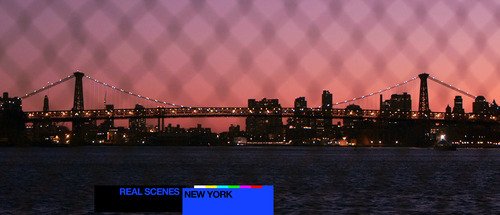
  • Real Scenes Documentary — a look at New York’s electronic music scene [Video]

    image

    I just stumbled upon a fascinating documentary series called Real Scenes. Each film explores “the musical, cultural and creative climate” within a particular city. 

    Below is Real Scenes: New York (click here if you can’t see it below). It’s an inside look at the underground music scene that has developed in Brooklyn, but that is at the same time being threatened by development and rising rents. Disclaimer: There’s a lot of f-bombs and a lot of hating on gentrification.

    [youtube https://www.youtube.com/watch?v=LDtf0uIUPuE?rel=0&w=560&h=315]

    I’ve only watched the New York video from this series, but I plan to watch each and every one of them. The other cities are Tokyo, Johannesburg, Paris, Berlin, Detroit, and Bristol.

    What’s fascinating about these short documentaries is that they give you a glimpse into a particular undertone within each city – one that would otherwise be hard to get if you weren’t living there and engrossed in the scene.

    It’s also interesting to see how some people view change within cities. 

    To some, transforming a neighborhood from one that looks like a “bomb went off” to something more pristine, is a good thing. But to others, it’s the worst possible outcome. It all depends on your frame of reference.

    Now, how do I get them to make a Real Scenes: Toronto? 🙂

    Image: Resident Advisor