
Daily insights for city builders, delivered every morning at 6 AM ET. I’m Brandon Donnelly — a Toronto-based real estate developer and founder of Globizen. I’ve been writing here since 2013.

Tag: tech

  • New startup wants to solve urban congestion through data and lotteries

    image

    If you’re a regular reader of Architect This City, you’ll know that I’m a supporter of congestion and road pricing. Any valuable good or service, such as a road, that’s offered for all intents and purposes as free, will never be able to keep up with demand. You need to price it.

    However, the political risk associated with implementing something like this has made it such that few cities around the world have done it. London and Singapore are the two most common examples.

    The more populist solution is to simply build more roads and highways, even though study after study shows that this doesn’t work. If it did, we would have already solved the problem of traffic congestion. And we most certainly haven’t.

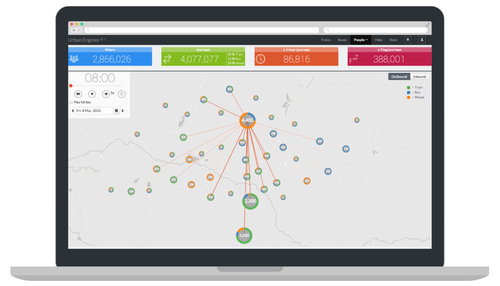
    Which is why I’m excited about a new startup that recently launched called Urban Engines. Their solution is twofold. It’s based on incentives and on treating people and cars in cities as sensors that feed back data into their network. Here’s a brief video. If you can’t see it below, click here.

    [youtube https://www.youtube.com/watch?v=oaCp5Tl-uAc]

    The data piece is almost a no-brainer (provided they can get the data). The more data we can collect about the way people and cars move in a city, the more they’ll be able to optimize and manage the flows. The possibilities are endless.

    But what I found really interesting is their incentives based approach. Typical road pricing methods are, one could argue, a punitive approach. As traffic increases so does the price of the road. (I like to look at it as efficient pricing.)

    With Urban Engines, their approach is the opposite: it’s to reward people–through money and lotteries–for driving during off peak times. It’s smart because selling a reward program to cities will be a lot easier than selling a new charge.

    Overall, this a great example of how startups are stepping up to solve some of our most important societal problems. For more information on Urban Engines, check out their website and this writeup on CityLab.

  • Location-based social network Foursquare is unbundling

    I’ve been a Foursquare user for a number of years now. I like seeing which friends are nearby and where I’ve been. I love the data aspect of it. It’s a kind of urban “spidey sense.”

    Sometimes when you “check-in”, the app will tell you the last time you were there (if it’s been awhile), how many consecutive weeks you’ve been there (which I like seeing when I check-in at the gym), and also give you any tips that others may have left about the place you’re at–such as, try the sea urchin ceviche.

    But Foursquare has been struggling. Check-ins proved to be a bit of a fad and Yelp solved the what-do-you-want-to-do-tonight problem better. However I’ve always felt that, on a fundamental level, Foursquare had the potential to be so much more powerful than Yelp. 

    Well, today the big news in the tech world is that Foursquare is unbundling its app. There will be Foursquare and there will be Swarm. Foursquare will be a recommendation engine that helps people find places to eat, drink, shop and so on (just like Yelp), and Swarm will be all about social–seeing where your friends are and which ones are nearby. And along with this unbundling, there will be no more check-ins:

    But how can Foursquare personalize its users’ results if they are no longer collecting check-ins, the foundation of Foursquare’s recommendation engine? Crowley smiles and says something a bit shocking. He no longer needs check-ins, the meat and potatoes of Foursquare’s entire business and data collection engine for the last five years.

    Not only has Foursquare collected 6 billion check-ins, he says, but it has collected five billion signals to help it map out over 60 million places around the world. Each place is a shape that looks like a hot zone of check-ins — of times when people have said “I’m here.” Foursquare’s “Pilgrim” location-guessing engine factors in everything from your GPS signal, to cell tower triangulation, to the number of bars you have, to the Wi-Fi networks, in order to create these virtual shapes.

    Now that it has this data, Foursquare can make a very accurate guess at where you are when you stop moving, even without a check-in, it’s a technology it hopes will allow it to keep its database of places fresh and accurate. Foursquare calls these implicit check-ins “p-check-ins,” or Neighborhood Sharing. Take your phone into four or five different Japanese restaurants over the course of six months and without a single check-in Foursquare will learn that you like Japanese food and start making recommendations for you based on that data.

    There will obviously be a number of people who have anxiety about an app that’s passively tracking everywhere they go and then trying to feed them recommendations (come eat here!), but I do think they’re on to something.

    The opportunity with Foursquare (and its data) is that the recommendations can be tailored. If I’m looking for a place to eat, Foursquare will already know that I love Mexican and that I just worked out (meaning I’m probably extra hungry). Personally, I’m okay with that.

    But then I start to wonder how this might impact cities. If the process of discovery becomes this automated and this tailored, how might it change the way we organize and design our cities?

  • What will selling your home look like in 5 years?

    Earlier today it was announced that Keith Rabois–a venture capitalist with Khosla Ventures and the former COO of Square–is working on a startup that hopes to make selling your home as easy as a few clicks. The codename for the project is Homerun.

    “For most people, homes are their biggest asset and it’s completely illiquid,” Rabois said. “This is a really expensive transaction for many people. What we’re going to provide is instant certainty, liquidity and convenience for normal people to sell their homes.”

    Rabois hasn’t shared many details, other than a pretty basic flow:

    “I’m not going to describe the exact flow, but the general point is you’ll tell us what your address is and confirm your identity, then we’ll allow you to sell your home,” he said. “Obviously there’s a variety of ways you could verify your identity that we didn’t have in 2003, when I originally thought of this idea. Like Facebook Connect.”

    This, of course, isn’t a new idea. Many companies have tried to improve the process of buying and selling homes by going online. But it’s a space that hasn’t seen a lot of innovation. I’m particularly interested because I work in real estate and it’s always struck me as a lumbering archaic industry.

    So when a name like Keith Rabois announces that they’re working on solving a problem in this space, I get excited about what might come about.

  • What do venture capitalists have to do with cities?

    This morning I woke up to a tweet from somebody asking me why–despite my obvious love of cities and real estate–do I seem more influenced by venture capitalists on my blog. He wondered if it was because of a lack of public/online real estate thought leaders.

    I responded by saying yes; that’s part of the reason. I honestly can’t think of one real estate developer that hosts a personal and regular blog. (If you know of any, please pass them along.) Whereas I can’t think of a major VC who doesn’t blog.

    Sure there are other real estate professionals who blog, but a lot of those sites just feel like giant lead generation tools and those aren’t enjoyable to read. I’m trying not to create that kind of blog. The trust of readers is more important to me than trying to promote my businesses.

    But the other reason I often cite venture capitalists and “tech” centric topics is because I believe in cross pollinating industries. I don’t believe the world operates neatly under silos and neither should our minds and businesses. I’ve also argued many times before that with software eating the world, nobody should be ignoring technology.

    At the same time, the consumer web feels to me like this profound social force changing the way people live and interact with each, which, if you think about it, is what cities have always been about. And so I see all kinds of interesting overlaps.

    Of course, I also look to planners, designers and other urbanists for inspiration. But I don’t like to do so exclusively. Industries, like anything else, can quickly become insular–whether tech or urban planning. My interest–and the focus of this blog–is cities. And I will continue to incorporate ideas and viewpoints from any discipline that I think touches them.

  • All sorts of bubbles

    Fred Wilson (New York VC) wrote a post on his blog this morning called The Bubble Question. In it, he talks about how everyone asks him whether or not there’s a tech bubble, which he has been asked for the past 4 years now. It reminded me of the debates that are also happening in the real estate community (particularly in Canada).

    The thesis of his post is this:

    I learned in business school that the multiple of earnings one should pay for a business is roughly the inverse of interest rates.

    In other words, as interest rates drop, people are willing to pay more for the business or asset in question. And it’s because they can’t find the yields anywhere else.

    The same phenomenon, you could argue, is also happening in the real estate space. Typically, income producing real estate assets are assessed using capitalization rates (or cap rates), which is defined by the Net Operating Income (NOI) of the property (revenue – expenses, but excluding financing costs), divided by the price of the property.

    The real estate equivalent of what Fred is talking about is cap rate compression. When cap rates drop it means you’re paying more for the same amount of yield (or NOI). One of the reasons that might happen is because people are anticipating that the asset will appreciate. But it could also be because interest rates are so low that investors will take whatever returns they can get. 

    So you could argue that the market is just responding to the macro economy. And since the feds are probably waiting for global growth to pickup (before raising rates), one could argue that the status quo is just going to continue. Ideally, it’ll continue until robust economic growth is able to take the place of cheap money.

  • Entrepreneurship as economic development strategy

    It’s no secret that a lot of cities out there want to become the next Silicon Valley (or San Francisco, since a lot tech companies seem to be now setting up shop there instead). With the shift towards a knowledge/information/networked economy (pick your favorite name), cities around the world are betting that entrepreneurship is going to be the key to future economic growth.

    As an example, I was reading yesterday about a Buffalo-based business plan competition called 43North. It’s allegedly one of the biggest business plan competitions, ever:

    With $5 million in cash prizes, including a top award of $1 million, six $500,000 awards and four $250,000 awards, 43North is setting out to turn the best new business ideas from around the globe into reality.

    In addition to cash, winners will receive mentoring and free office space for a year. But while the competition is open to anyone in the world, you have to relocate to Buffalo for a minimum of one year if you win. 

    It’s a bold move. $5 million is a lot of money. But it strikes me as a step in the right direction to reinvent a city that was once the 8th largest in the US. I’m a big believer in the power of entrepreneurship.

    But 2 considerations do come to mind.

    The first is that this move can’t, or at least shouldn’t be, purely about business and economics. To create an entrepreneurial hub, I think you need to also ensure that you have a city that young people would love to live in.

    I’m not saying that Buffalo isn’t one of those cities (I don’t know it well enough to comment), but I am saying that it should be part of any economic development strategy. Why do you think more and more startups are moving from Silicon Valley to San Francisco?

    The second is that I worry we may end up with too many cities trying to become the next Silicon Valley. The industrial economy allowed for the creation of a certain number of thriving metropolitan regions (see: The Rust Belt).

    But I’m not so sure the networked economy will require as many. I could be wrong, but the data seems to suggest that we’re heading towards a spikier economic landscape—both within cities and across nations.

    In any event, here’s my question for the community: Would you move to Buffalo?

  • Housing policy in San Francisco

    The tech community has been receiving a lot of backslash in San Francisco as of late. And Peter Shih’s infamous 10 things I hate about San Francisco post certainly didn’t help. But I think there’s a bigger issue than just rich tech people driving up the price of real estate.

    I was reading Quartz this morning and I think they nailed it: 

    “But the blame shouldn’t go to the tech companies or their employees moving to San Francisco, however despicable some might be. Blame San Francisco for being pleasant, and its policymakers for being foolish: When a lot of people are moving to your city—San Francisco the city gained 50,000 new residents between 2000 and 2012, including some 25,000 between 2010-2012 and likely more since—home prices are going to increase unless you build a lot more housing.”

    I’ve talked about this idea before. But I wanted to break it down a bit more precisely.

    If San Francisco, the city, gained 25,000 people between 2010-2012, let’s say that the city gained roughly 8,300 people per year. I just divided by 3. However, if you look at the rate of new housing supply, you get a 10-year average of 2,350 housing units a year (from the Quartz article) and an even lower amount according to Atlantic Cities.

    Regardless, what you end up with is a pretty simple phenomenon: More people are moving to the city than new housing is being provided and that’s driving up the price of real estate. In fact, San Francisco allegedly only created 269 housing units in 2011! That’s the equivalent of only one fairly typical Toronto condo building going up (and we have hundreds under construction). No wonder there’s upward pressure on prices.

    So rather than just blame the tech community for the city’s housing problems, I think there needs to be a broader look at housing policy. If you really want to help affordability, here’s one simple solution: start building.

  • A culture of transparency

    One of the things I think the real estate industry is notoriously bad for is transparency. It’s getting better, but we’re nowhere near as transparent as some other industries, such as tech. In tech, you get companies like San Francisco-based Everpix who fail and then release all of their private documents to the public, including revenue, subscribers, cap table and so on.

    Could you imagine a real estate developer failing and then releasing all of its financials? This is what we paid for the land. This is how many units we sold. And this is why we failed. It doesn’t happen (or at least I’ve never seen it).

    Sure you might be able to get some of this information with a publicly traded real estate company, but that’s because they have to be more transparent. Everpix was 7 employees working out of a co-working space. They didn’t have to do this. But they did it because they wanted to help the larger startup community. They didn’t want to let a good failure go to waste.

    But at the same time, I actually don’t think that transparency is all about being altruistic. Transparency can also drive the bottom line. Every company wants to stand out from the competition and engage with its customers on a deeper level. But in order to do that, I think you need to give your customers something to engage with. You have to put yourself out there.

    One way to do that is to be more open and transparent. Be genuine and tell your customers who you are, what you believe in and, perhaps most importantly, why you’re doing the things that you’re doing. I like Simon Sinek’s philosophy that “customers don’t buy what you do, they buy why you do it.

  • Who’s going to disrupt real estate?

    There’s an interesting article in Forbes (from last week) called, “Invest in the Disruptors of the Real Estate Industry.” It’s by Ross Gerber who runs a wealth and investment management firm out of LA called Gerber Kawasaki. He’s also a fellow Penn alum.

    I like the article because I agree with the problem he’s identified. The real estate market is imperfect and inefficient. We need a proper electronic marketplace.

    But I disagree with where he feels the solution will (or may) come from. I don’t think it’ll come from an incumbent like Zillow. They make money from agents and if they’re perceived to be driving down commissions, those customers are going to flee.

    Instead, I believe it’s going to come from a new entrant—a startup. And like most disruptors it’ll probably seem benign and, frankly, a bit crazy at first. Agents will dismiss it as a silly tool that will never cut into their business.

    But slowly and surely, that’s exactly what it’ll do.

  • Innovating amongst the haters

    Whether you’re developing a building, planning transit, starting a company or just trying to do something different, there will always be haters. But pessimists don’t change the world—optimists do.

    I came across a great post last night by venture capitalist Ben Horowitz. It’s called, “Can-Do vs. Can’t Do Culture.” And I think you’d be well served to keep a copy of it on file and read it before every single meeting where you’ll be asked to provide input on something new.

    He’s specifically talking about a growing and discouraging trend of naysaying in the tech community, but the lessons apply more broadly to innovation as a whole.

    I love these lines:

    “The trouble with innovation is that truly innovative ideas often look like bad ideas at the time. That’s why they are innovative — until now, nobody ever figured out that they were good ideas.”

    “From a psychological standpoint, in order to achieve a great breakthrough, you must be able to suspend disbelief indefinitely. The technology startup world is where brilliant people come to imagine the impossible.”

    But the best part of Horowitz’s post is an excerpt from an internal Western Union report (then the largest telegraph provider in the US) recommending that the company not purchase Alexander Graham Bell’s invention (the telephone) and patents for $100,000.

    The Telephone purports to transmit the speaking voice over telegraph wires. We found that the voice is very weak and indistinct, and grows even weaker when long wires are used between the transmitter and receiver. Technically, we do not see that this device will be ever capable of sending recognizable speech over a distance of several miles.

    Messer Hubbard and Bell want to install one of their “telephone devices” in every city. The idea is idiotic on the face of it. Furthermore, why would any person want to use this ungainly and impractical device when he can send a messenger to the telegraph office and have a clear written message sent to any large city in the United States?

    The electricians of our company have developed all the significant improvements in the telegraph art to date, and we see no reason why a group of outsiders, with extravagant and impractical ideas, should be entertained, when they have not the slightest idea of the true problems involved. Mr. G.G. Hubbard’s fanciful predictions, while they sound rosy, are based on wild-eyed imagination and lack of understanding of the technical and economic facts of the situation, and a posture of ignoring the obvious limitations of his device, which is hardly more than a toy …

    In view of these facts, we feel that Mr. G.G. Hubbard’s request for $100,000 of the sale of this patent is utterly unreasonable, since this device is inherently of no use to us. We do not recommend its purchase.

    It’s a classic example of The Innovator’s Dilemma (a book written by management guru and HBS professor Clayton Christensen). Many firms see their businesses disrupted because they blindly stick to the innovation that made them successful in the first place—ignoring what’s coming up on the horizon.

    In the case of Western Union, they could not imagine “telephone devices” in every city. The idea was pure lunacy to them. Of course to us today, they look like myopic fools. We now not only have telephone devices in every city, but a full fledged computer in every pocket. Imagine that.

    Which is why I think it’s important to remember that the way to drive the world forward is—to use Horowitz’s terminology—through hope and curiosity. Suspend disbelief. Think big. Dare to be crazy. Because you’re only crazy until you’re proven to be a genius.