Daily insights for city builders, delivered every morning at 6 AM ET. I’m Brandon Donnelly — a Toronto-based real estate developer and founder of Globizen. I’ve been writing here since 2013.

Tag: talent

  • Returning to an office-centric culture

    Earlier this week, Amazon announced that it plans to return to an “office-centric culture” as its baseline. Its rationale was that being in an office allows the company to better “invent, collaborate, and learn together.” All of this was laid out in an announcement that was distributed to its teams globally. On the other end of the spectrum, Twitter continues to double down on working from home. The company, which is currently hiring, is even trying to target talent that may be disgruntled by the fact that their current company is planning for them to return to the office. Two very different approaches. So which one is right?

    This is, of course, a great debate right now and the right answer probably depends on a myriad of different factors, some of which are likely specific to the company. Dror Poleg has been trying to think through this problem with something he calls the talent equation (because it’s all about talent). It works like this: level of in-person interaction x overall size of talent pool = innovation and financial success. The basis behind this equation is pretty simple. In-person interaction is great for business. This much we know. But you also need the right talent interacting. Allowing remote work is one way of expanding the size of your talent pool. But again, you do this at the expense of in-person interaction.

    In-person interaction is what makes cities the great organisms that they are. And I believe firmly in this side of the equation over the long-term. Even right now I find that when I go into the office, my call and Zoom volumes go down dramatically and I have more time to think, collaborate, and do, you know, actual work. This is because many interactions don’t require a Zoom meeting when you’re in the office. You stop by someone’s desk. You ask a thing (usually pretty quickly). And then you go off and action that thing. But I also acknowledge that for some companies, access to the right talent — and lots of it — may be a real challenge, particularly in smaller cities.

    Like Amazon, I am a supporter of office-centric work cultures. But I do think that Poleg’s talent equation is a useful way to think about this debate right now.

    Photo by Shridhar Gupta on Unsplash
  • The City as a Place for People

    The City of London Corporation recently published a report called “The City as a Place for People”, which talks primarily about itself and how great London is as a magnet for talent. 

    But as self-serving as it may be – the report is timed to be ahead of this year’s MIPIM – there appears to be some data and interviews backing up the claims.

    58% of “institutional investors” said that London is the best European city for business. Dublin was next at 22%. 

    A separate survey of 2,568 “corporate decision makers” in Europe revealed that 21% of respondents felt that London was the best European city for business, followed by Paris (13%) and Frankfurt (7%). When asked which city had the best talent pool, the responses were fairly similar.

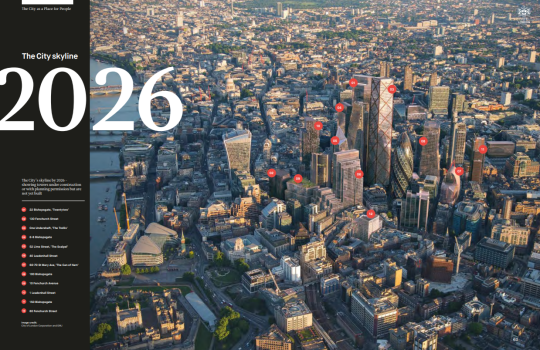
    Also included in the report is a rendering of the City’s skyline by 2026. These are always fun to see. Here is a screen grab:

    image

    It is showing all towers under construction and all towers with their planning permissions in place. If you’d like to download the full report, you can do that here.

  • Amazon orange

    This week (Thursday) was the deadline to submit proposals for Amazon HQ2. About 100 cities across North America are thought to have a bid in. 

    New York lit up every single landmark in the city with “Amazon orange” in an “embarrassing attempt” to try and win this thing. That’s how bad cities want this.

    I already think that Toronto has won an incredible prize with Sidewalk Toronto. Arguably, it may turn out to be more impactful to this city than Amazon HQ2. It’s an opportunity to define the future of, not just this city, but all cities. It’s an opportunity to lead.

    At the same time, I continue to believe that there’s no better place for Amazon HQ2 than here in Toronto. Not surprisingly, our bid emphasized the point that I’ve been hammering home on this blog since Amazon first announced the RFP. Toronto’s key competitive advantage: talent. 

    Below is an excerpt from the submission cover letter. The entire letter emphasizes our ability to grow, attract, and retain top talent.

    Thirty-nine percent of the Toronto Region—and 51% of Toronto proper—are born outside of Canada. We welcome more new immigrants each year than New York, LA, and Chicago combined. We speak over 180 languages and dialects. Toronto is heralded as the most multicultural city in the world, and our labour force and economy benefit directly from our diversity and inclusivity. We build doors, not walls. And those doors open to highly-skilled economic immigrants and international students who can easily become permanent residents and citizens.

    For the full Toronto region submission, click here

    Okay, enough about Sidewalk Labs and Amazon. Regular scheduled programming will resume on the blog starting tomorrow.

  • Are you T-shaped?

    image

    The world-renowned design firm IDEO is known for hiring people described as being “t-shaped.” Here’s a quote from an interview with CEO Tim Brown explaining what that means:

    “T-shaped people have two kinds of characteristics, hence the use of the letter “T” to describe them. The vertical stroke of the “T” is a depth of skill that allows them to contribute to the creative process. That can be from any number of different fields: an industrial designer, an architect, a social scientist, a business specialist or a mechanical engineer. The horizontal stroke of the “T” is the disposition for collaboration across disciplines. It is composed of two things. First, empathy. It’s important because it allows people to imagine the problem from another perspective – to stand in somebody else’s shoes. Second, they tend to get very enthusiastic about other people’s disciplines, to the point that they may actually start to practice them. T-shaped people have both depth and breadth in their skills.”

    For an interdisciplinary design firm like IDEO, I’m sure you can see why the above would be important. But I also think it’s hugely important for those of us who work in the arena of the built environment.

    City building projects don’t get accomplished by individuals, alone, or “I-shaped people” who don’t play well with others. They get accomplished by people with breadth in their skills and by large cohesive teams with vastly different core competencies. The notion of the individual genius is overplayed.

    New buildings, for instance, typically involve a coming together of the project team (hugely diverse in and of itself), the city, the community, and other stakeholders. You can try and bully your way through that process or you can try and navigate through with empathy.

    Based on the tremendous success of firms like IDEO, one could certainly argue that creativity and innovation seem to thrive more on empathy.

  • How sexy is your city?

    I recently penned an article for Building Magazine called How Sexy Is Your City? The subtitle is: The next generation of talent will require cities to take a next generation approach to city building.

    I know that we’re all hitting our limit in terms of people talking about millennials, so I’d like to reassure you that – excluding the actual article tag – the word “millennial” only shows up twice in the piece. 

    I also don’t write long-form articles very often. I’ve had people suggest that I do that periodically on this blog, but I find the time commitment to be exponentially greater than for the short, glib pieces I usually write here. 😉

    So if you can bear two more instances of the word “millennial” and you’ve been looking for something longer, you are in luck. Also, if you’d like to subscribe to Building, you can do that here.

    Image: Doublespace Photography via Building

  • Introducing Tech:NYC

    Following the lead of San Francisco, a new non-profit, member-supported organization for New York tech companies has just launched. It’s called Tech:NYC. Here are their goals, taken from this blog post:

    Tech:NYC’s primary goals are to support the growth of the technology sector in New York City, to increase civic engagement by leaders of the New York tech community, and advocate for policies that will attract tech talent, jobs, and opportunity to NYC.

    Tech:NYC will advocate for policies that: 1) underscore a regulatory environment that supports the growth of technology companies and technology talent in NYC; 2) promote inclusivity; and 3) ensure access for all New Yorkers to connectivity, technology tools, and training.

    What makes something like this important is that many public policy issues are now rooted in the tech sector. Think about all the debate regarding ride-sharing, home-sharing, drone regulation, contract employees, and so on.

    But what is also clear is that many cities are struggling to deal with these issues. As I’ve argued before, just saying no to innovation that doesn’t fit neatly into our currently regulatory boxes is often shortsighted. 

    So how do we put in place policies that deliver the right results and that are balanced? How do we grow the tech base while at the same time managing the disruptive fallout? That’s what this group hopes to do.

    And it strikes me that every big city could likely benefit from an organization like this.

  • Why Toronto needs a night mayor

    Recently I wrote about the first Night Mayor Summit being held in Amsterdam. As part of this, I spoke about Amsterdam’s first night mayor – Mirik Milan.

    Since then (but obviously not because of my post), the idea has seemingly taken off. Below are a couple of excerpts from a recent Guardian article.

    This pragmatic and classically Dutch notion is now being copied across Europe: Toulouse, Zurich, Paris as well as several other Dutch cities have night mayors too.

    This week the mayor of London, Boris Johnson, announced plans for a “Night-Time Commission”, a six-month assessment of how to protect and manage the city’s £66bn night-time economy which is likely to recommend the creation of a “night-time champion” role. 

    Berlin is considering it too, and in April, Amsterdam will host the first global Night Mayors’ Summit.

    Why is this happening? Simple:

    “Late-night people are typically young, educated, creative, entrepreneurial – people you want in your city, and who work in the creative industries and startups you also want. If places like Berlin have flourished, it’s not just because of low rents. It’s because they’re nightlife capitals.”

    So if you’re reading this, Mayor John Tory, now is probably your last chance to make Toronto a North American leader in this regard. 

    It’s great that we are trying to push the Toronto – Waterloo region as a global startup hub, but so is every other major city and region in the world. A focus on startups is so commonplace in today’s economic development strategies, that at this point it almost feels meaningless. What are we going to do to stand out in this competition for the world’s best talent?

    If everyone believes something to be true – such as, there’s value in having a robust startup ecosystem – then it’s no longer innovative. It’s just the way things are. To take it to the next level, we’re going to have to do things that will probably feel uncomfortable at first – particularly for old establishment Toronto.

    I’m not saying that having a night mayor is going to be the silver bullet for our startup ecosystem. There’s no such thing. But I am saying that it should be one component of our larger strategy. 

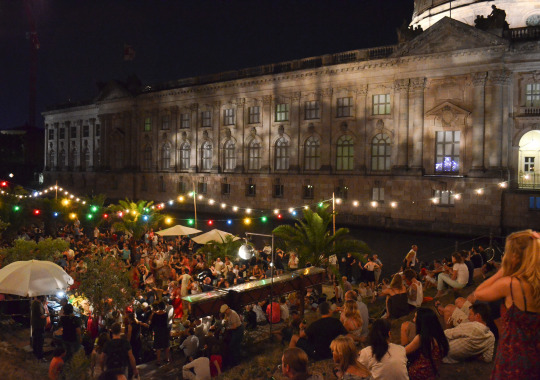
    Because already there’s a growing number of European cities who have come to this one simple realization: people are drawn to kickass places.

    If you agree with this post, I would encourage you to leave a comment below and also tweet the Mayor of Toronto.

    Image: Berlin nightlife by Tom Stromer

  • Amsterdam is about to host the first Night Mayor Summit

    Canal Reflections by Peter Elliston on 500px.com

    https://500px.com/embed.js

    What is a night mayor, you might ask?

    Well, just as the name suggests, a night mayor is the chief executive officer of a city’s nighttime activity. And in 2014, Amsterdam became the first city ever to have one.

    Why is this important, you might ask?

    Well, for most cities the night is a blindspot. It’s viewed as something that needs to be carefully controlled as opposed to something that is celebrated and leveraged. Amsterdam saw this opportunity and, in my opinion, is now at the forefront of rethinking the night.

    Here’s an example of the kind of changes that this has meant for the city (via CityLab):

    “Until recently, Amsterdam enforced what by continental European standards is a fairly strict curfew: nightclubs had to close by 4 a.m. on weekdays and 5 a.m. on weekends. The city often had problems with noise and disorder at the exact moment when all the clubs closed, filling narrow inner city streets with rowdy people.

    To solve this problem, the night mayor suggested not less, but more time for people to go clubbing. He has helped push through the granting of 10 24-hour licenses for nightclubs. Crucially, all of them were located not in the dense city center but in thinly populated districts around Amsterdam’s outer ring road. The result was a marked reduction in street noise.”

    Some of you are probably feeling skeptical as you read this. Especially since 4AM and 5AM hardly seem strict when compared to other cities (Toronto’s last call is at 2AM). 

    But I would not underestimate the importance of what Amsterdam is doing. We are living in an era of the 24-hour global city and it’s about time that governments woke up to that. I’m sorry Toronto, but 2AM is an absolute joke.

    The night can be your competitive advantage in attracting human capital. As the CityLab article cited above suggests, a big part of what transformed Berlin into a capital of cool was its nightlife. 

    I wholeheartedly believe that and I have no doubt that the night will start to become a greater focus in city building.

    If you’d like to learn more about the Night Mayor Summit, click here.

  • A Detroit story of single family homes and pianos

    NO MORE MUSIC by Shawn Whitehead on 500px.com

    https://500px.com/embed.js

    I was reading Aaron Renn’s blog this morning and a post called, How Urban Planning Made Motown Records Possible, caught my attention. 

    His argument – taken from a book called Once in a Great City: A Detroit Story – is that the prevalence of pianos in black working class and middle class families was a key ingredient in Detroit ultimately punching above its weight musically.

    Here’s an excerpt that Aaron Renn shared on his blog:

    The family piano’s role in the music that flowed out of the residential streets of Detroit cannot be overstated. The piano, and its availability to children of the black working class and middle class, is essential to understanding what happened in that time and place, and why it happened, not just with Berry Gordy, Jr. but with so many other young black musicians who came of age there from the late forties to the early sixties. What was special then about pianos and Detroit? First, because of the auto plants and related industries, most Detroiters had steady salaries and families enjoyed a measure of disposable income they could use to listen to music in clubs and at home. Second, the economic geography of the city meant that the vast majority of residents lived in single family homes, not high-rise apartments, making it easier to deliver pianos and find room for them. And third, Detroit had the egalitarian advantage of a remarkable piano enterprise, the Grinnell Brothers Music House.

    Detroit is obviously not the only city with lots of single family homes. But it’s fascinating to think that this housing typology, combined with a number of other socioeconomic factors, could be what ultimately led to the creation of the Motown Sound.

    It’s also interesting to think about what kind of talent we might be squandering in our cities. I mean, look what happens when people have access to things like pianos (in the case of Detroit), computers (in the case of people like Bill Gates), and cheap/vacant space (in the case of Berlin and its clubs). They create amazing things.

    This is one of the reasons why I think we sometimes underestimate the importance of small scale moves when it comes to spurring innovation in cities. We forget that people will do incredible things when they are, quite simply, given the freedom to work on projects they are passionate about.

    If we could harness these passions instead of focusing so often on big political announcements, I think we’d all be better off.

  • Fred Wilson on where the New York tech ecosystem is heading

    Venture capitalist Fred Wilson is the poster boy for the New York tech industry. And this morning he posted an interesting video on his blog of a recent talk he did at Google NYC.

    At the 4:50 mark he begins talking about the evolution of the tech sector in New York and how it became what is probably the second most active startup hub in the United States.

    Given yesterday’s post on talent and the recent CityAge conference I participated in, I thought this video would make a great follow-up. There’s talk of lifestyle, diversity, gender equality, and talent within cities.

    Fred is heavily involved in growing and improving computer science education in New York, which is a perfect example of how cities can better leverage the people and talent they already have – as opposed to just focusing on bringing in new talent. Coding is a valuable skill to possess.

    I also found it interesting that Fred ended up in New York precisely because his wife wanted to live in New York. And that had a lot to do with all of the things you can do in the city, outside of work.

    If you can’t see the video below, click here.

    [youtube https://www.youtube.com/watch?v=_fZCrasNIfQ?rel=0&w=560&h=315]