Daily insights for city builders, delivered every morning at 6 AM ET. I’m Brandon Donnelly — a Toronto-based real estate developer and founder of Globizen. I’ve been writing here since 2013.

Tag: surface magazine

  • This is not a hotel

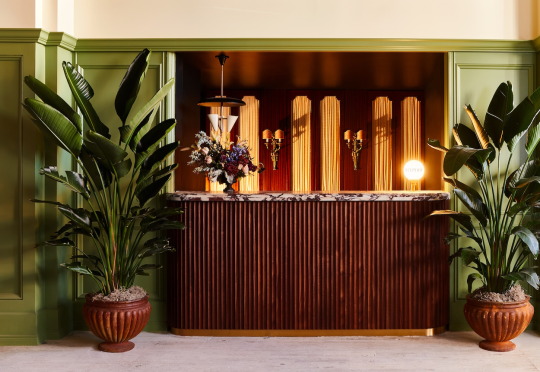
    I am not the target market for Restoration Hardware, I mean RH. But I do think it is interesting the way they are evolving their brand. At the beginning of 2021, the company announced a $105 million equity investment in a development project in Aspen, where it is planning a new guesthouse and, more broadly, a new “RH ecosystem” that will include residences, restaurants, a spa, etc. It hasn’t opened yet, but RH does now have a guesthouse in New York. To be clear, it is not a hotel:

    So what is RH trying to do with all this?

    Surface Magazine recently argued that they are trying to become the “public” version of Soho House. That is, a lifestyle omni-brand that isn’t membership-based, but that will still make you feel rich and special while you eat, sleep, play, and shop for various things for your home. Now, I do think that their target customers aren’t exactly the same person. But of course, I see the parallels. And it’s certainly interesting from an experiential retail, brand ecosystem, and real estate development standpoint. It gets the brand everywhere.

  • Surface Summer School at Penn

    The University of Pennsylvania Stuart Weitzman School of Design — my alma mater — has just launched a new initiative with Surface Magazine called the Surface Summer School at Penn. A fairly unique partnership between a media company and an accredited university, the goal of the “summer school” is twofold.

    One, it gives Penn students, who might otherwise struggle to find an internship in this climate, something productive and positive to do over the summer. And two, it applies design thinking to the problems of this pandemic.

    Penn students will have the month of June to design a prefabricated COVID-19 testing structure — one that could be rolled out in dense and compact urban centers around the world. A jury will then review the submissions and a winner will be announced by mid-July.

    The jury includes a host of noteworthy architects and designers: Winka Dubbeldam, Dror Benshetrit, Thom Mayne, Yves Béhar, Susan Sellers, Marion Weiss, Ferda Kolatan, Joe Doucet, and others. Starting on June 3rd at 6:30 PM eastern, members of the jury will also start delivering design lectures on Surface’s Instagram.

    I am looking forward to seeing the submissions. Hopefully all of them will be made public.

    Photo by Dyana Wing So on Unsplash

  • The Siren opens in downtown Detroit

    Three years ago I wrote about the design and development firm, ASH NYC. What attracted me to them was how they were vertically integrating design, development, property management, and even hospitality management.

    Well they have continued to grow and this spring they opened up a new 106 room hotel in downtown Detroit called The Siren. It is located in the Wurlitzer Building, which the firm purchased back in 2015.

    With The Siren, ASH NYC also introduced their first-ever furniture line. It goes to show you just how focused they are on design and on the details. Surface Magazine did a good feature on the hotel, and the firm, here.

    The other thing, which I think is very cool, is how they paid tribute to the late and great Detroit street photographer, Bill Rauhauser. Check out the culture section of The Siren website to see what I mean.

    So if you’re planning to be in Detroit or are looking for an excuse to be in Detroit, maybe check out The Siren.

    Image: Christian Harder via Surface Magazine

  • Don’t touch the walls

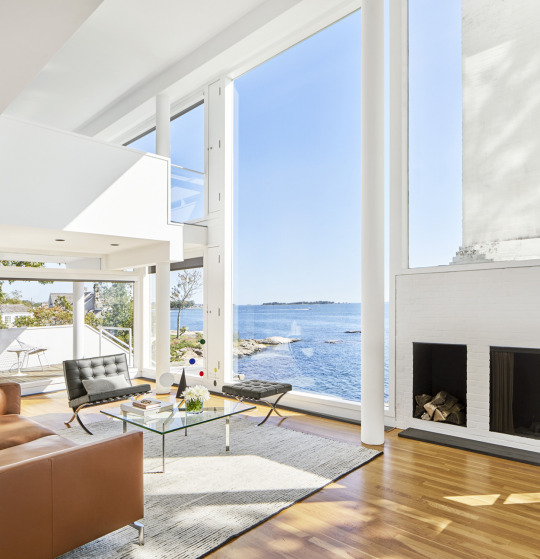
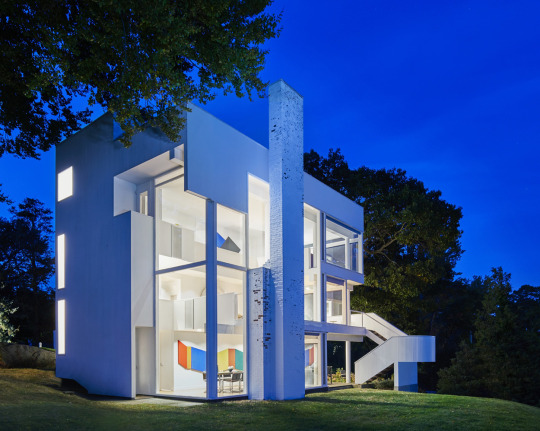
    The Smith House by Richard Meier turned 50 years old last year. In celebration of that, photographer Mike Schwartz took these photographs. And just recently they were published in Surface Magazine along with an interview of both Meier and Chuck Smith. Smith’s mother commissioned the house (completed in 1967) and he was 8 years old when the family moved in.

    My favorite comment in the article is this one by Smith:

    “Don’t throw balls in the house, and don’t touch the walls.” I must have heard “don’t touch the walls” three or four times a day. That said, there’s a crack in one of the windows where I shot it with a BB gun. We got away with some things.

    Modern architecture was supposed to be a perfectly engineered machine for living. But I guess living didn’t include touching the walls or shooting BB guns in the house.

    My favorite photos – both from Mike Schwartz – are these two:

    imageimage

    They feel like inversions of each other. The first one (day shot) is all about the views outward. Meier also talks about how the white on white helps to enhance this experience. The second one (night shot) turns the house inward on itself. Smith talks about how at night the view disappears and all you’re left with is your own reflection.

    I also like how the paint is flaking on the fireplace, which by the way, is perfectly on axis with the home’s entry. It makes you work a little bit for the view. Apparently keeping the paint on was a problem since day one. But it gives the house – which is otherwise seemingly perfect – a bit of a patina. 

    However, I’m guessing that Meier would prefer the paint stay on.

  • In defense of Instagrammable moments

    Surface Magazine – and more specifically the CEO of Surface Magazine – recently published this article criticizing the “trend” toward designing for Instagrammable moments.

    Here is an excerpt:

    We—and yes, this includes architects, too—have succumbed to the pressures of gaining followers, likes, and comments. High-priced, difficult-to-attain architecture degrees are now, incomprehensibly, being used to create “Instagrammable” installations for things like impromptu selfie fashion shoots and hotel lobby photo booths. The whole thing is, I must say, sad. It’s embarrassing enough that our team at Surface has received press releases from architects promoting their latest project with “Instagram-friendly interiors.” They can’t be serious.

    And here are his final words:

    If retail is dead, then its rebirth will depend on creating memorable atmospheres that don’t call for #✌💙👯🙋📷.

    I certainly appreciate the push for lasting and memorable spaces, but, at the same time, I can’t say I’m nearly as fussed about lobby selfies and the alleged timelessness of Instagram. 

    In fact, I think it would be an interesting exercise to study how social media may be impacting the way we design physical spaces.

    Maybe it is simply a fad being promulgated by “knucklehead junior marketers” or maybe 100 years from now nerdy architectural historians will look back on that quaint period of time when we designed spaces to service rudimentary 2D images shared amongst friends.

    Whatever the case may be, I think that architecture, like all art, should embody the milieu in which it was designed. 

    But often we have biases telling us that what is new is not as good as what’s existing and already accepted.

  • What are the most compelling reasons for someone to become an architect now?

    Since I’ve talked a lot before about the profession of architecture and the future of it, I thought I would share this recent interview with Mark Wigley from Surface Magazine (May 2014). Since 2004, Wigley was the Dean of Columbia University’s Graduate School of Architecture, Planning and Preservation. But he’s now stepping down and this was his exit interview.

    The first question he was asked was: 

    What are the most compelling reasons for someone to become an architect now?

    I actually think that there’s never a compelling reason to be an architect. The decision is irrational, and that irrationality is an enormous and precious asset. Architecture is full of romantics who think that even relatively small changes to the built environment create the aspiration for a better society. It sounds hokey, but there is in every architect the thought that things could be better. This is a kind of professional optimism. And that leads to an expertise in entering situations in which the dynamics are unclear. Architects are only ever called into a situation when it’s impossible. If it’s possible, you invite somebody with a toolbox who can give answers. You call the architect in when it’s not clear what the question even is. 

    The line I really like is the one I highlighted in bold above: “…there is in every architect the thought that things could be better.”

    Wigley is talking about it in a kind of romantic and idealistic way, but I don’t think it necessarily needs to be that way. The optimistic belief that things could be better, that things could be improved, is a powerful notion. In my view, it’s what drives entrepreneurship and that happens to be our most powerful economic engine.

    I actually think there are a number of parallels between architecture and entrepreneurship. In school, architects are indeed taught to enter into situations where “the dynamics are unclear.” It’s about taking an idea, developing it, and trying to figure out what it could become.

    Then, once you’ve poured your heart and soul into that idea, you get up in front of everyone and you pitch it. It’s your job to convince everyone that, yes, the way you’ve developed your idea is in fact the right way. Sometimes you get shot down. And other times you don’t. But you just have to take the risk.

    Click here to download the full PDF of Mark Wigley’s interview.