Daily insights for city builders, delivered every morning at 6 AM ET. I’m Brandon Donnelly — a Toronto-based real estate developer and founder of Globizen. I’ve been writing here since 2013.

Tag: streetsblog

  • Transit investment & density (in San Francisco)

    This recent Streetsblog article about the possibility of turning the M Ocean View line in San Francisco into a kind of subway is a good reminder about the always important connection between transit investment and density. The question I always pose to myself is, “If I were a private company deciding where to spend the money on a new and expensive subway line, what would I look for?” Most of us recognize that population and employment densities would be near, if not at, the top of the list.

    Of course, if the company were fully private, then we would run the risk of low-density / unprofitable areas of the city not being serviced by transit. For a variety of reasons, that’s not an ideal outcome, which is why transit operators are mostly subsidized. The challenge is that the way we plan transit in most — or all? — cities has become so highly politicized today. That’s how we end up with the wrong transit technologies in areas that don’t have the density to properly support them.

    Now, I don’t know the specifics of the M Ocean View line. (Maybe some of you do and will provide those thoughts in the comments below.) So this is not a post about what may or may not be appropriate in this particular instance. But it is a commentary on the importance of fiscal prudence and sound transportation planning.

    Photo by Lance Anderson on Unsplash

  • Scooter trips surpassed bike share last year

    According to the National Association of City Transportation Officials (NACTO), scooter trips in the US surpassed station-based bike share trips for the first time in 2018. Here is a chart taken from Streetsblog:

    Dockless electric scooters have created a public nuisance in many of our cities, but what is clear is that the demand is there. Which perhaps isn’t all that surprising given that they require less effort than traditional cycling.

    The other interesting takeaway from NACTO’s analysis, which is likely also not that surprising, is that bike share trips are heavily concentrated in a select few cities.

    In 2018, there were about 36.5 million bike share trips across the US. And about 84% of them took place in just 6 cities: New York, Boston, Chicago, DC, Honolulu, and San Francisco.

    Almost half of the 36.5 million trips were on NYC’s Citi Bike network.

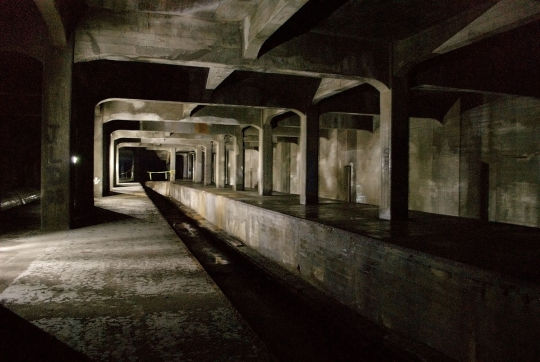
  • 100 years since Cincinnati tried to build a subway

    image

    I can get lost on Google Maps for hours on end. I love looking at maps and I love using Street View to virtually explore cities. This morning I’m honed in on Cincinnati, Ohio (a city I’ve never been to) while I listen to this podcast about their unfinished subway.

    In 1916, the city voted in favor of spending $6 million on a new subway. But it was never finished and so today – 100 years later – it has the dubious distinction of being the largest abandoned subway tunnel in the United States. 

    The podcast I’m listening to is with a fellow by the name of Jake Mecklenborg. He has written a book on the subway’s history and has emerged as the expert on this topic. And it all started with him just throwing up a website.

    One particularly interesting aspect of the subway is how it tied into the city’s flooding problems. At the time, the population density of the constrained downtown was surging and the subway was viewed as a way to stitch together desirable land and relieve some of those urban pressures.

    I’m also very interested in understanding how cities got founded in the locations that they did. As in, who was the person who dropped their bag and said: “yup, this, is the spot.” Somebody had to have made a decision.

    Oftentimes there were specific strategic, economic, and/or environmental reasons for a certain location. And this is something that Jake touches on. In the case of Cincinnati, flooding was again a major determining factor. 

    If you can’t see/listen to the podcast through the embed below, click here.

    //html5-player.libsyn.com/embed/episode/id/4210424/height/90/width/580/theme/custom/autoplay/no/autonext/no/thumbnail/yes/preload/no/no_addthis/no/direction/backward/render-playlist/no/custom-color/87A93A/

    Image: Jonathan Warren via Wikipedia