Daily insights for city builders, delivered every morning at 6 AM ET. I’m Brandon Donnelly — a Toronto-based real estate developer and founder of Globizen. I’ve been writing here since 2013.

Tag: starchitecture

  • Starchitecture is dead — how OMA thinks about preservation

    I somehow stumbled upon this transcript from Columbia University’s Graduate School of Architecture, Planning and Preservation (GSAPP), covering a talk that architect Rem Koolhaas did at the school back in, I think, 2014. 

    The title: “Preservation is overtaking us.” It’s all about how his firm OMA thinks about and approaches preservation. 

    The overarching theme is that preservation, for them, has become a kind of refuge from the market forces – which they call the “The ¥€$ Regime” – that currently drive architecture and demand constant novelty. It is refuge from “starchitecture.”

    Here is an excerpt:

    At some point, I don’t know who was responsible, the word, “starchitect” was invented. And we all know what it is: a term of derision. And at some point, it becomes very hard to avoid. I would say that preservation is, for us, a type of refuge from this term. What we are hoping to do is propose a number of strategies in which we are working to undo, or escape, from this label.

    And here is a summary of “OMA’s Preservation Manifesto” taken from the GSAPP transcript:

    1. Starchitecture is dead
    2. New forms are no longer relevant
    3. Preservation is architecture’s saving retreat
    4. Preservation creates relevance without new forms
    5. Preservation is architecture’s formless substitution

    It’s a substantial read, but a fascinating one. In case you don’t get to it (understandable), I would like to leave you with this final excerpt:

    What we started to do was look at preservation in general and look a little bit at the history of preservation. Now, the first law of preservation ever defined was in 1790, just a few years after the French Revolution. That is already an interesting idea, that at the moment in France when the past was basically being prepared for the rubbish dump, the issue of preserving monuments was raised for the first time. Another equally important moment was in 1877, when, in Victorian England, in the most intense moment of civilization, there was the second preservation proposition. If you look at inventions that were taking place between these two moments—cement, the spinning frame, the stethoscope, anesthesia, photography, blueprints, etc.—you suddenly realize that preservation is not the enemy of modernity but actually one of its inventions. That makes perfect sense because clearly the whole idea of modernization raises, whether latently or overtly, the issue of what to keep.

    I like the notion that preservation is one of the inventions of modernity, rather than an enemy of it.
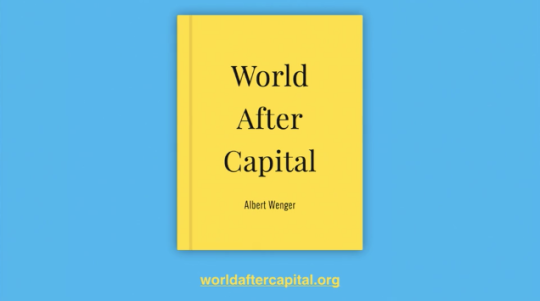

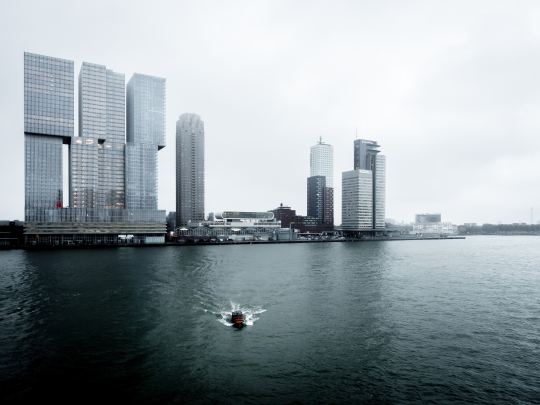
    Photo by Reginar on Unsplash

  • 121 E 22nd

    My friends in New York tell me that if you want to sell a luxury residential building, you need a name brand architect. People care about architecture and it’s part of the buying process: “Oh, it’s a Herzog building.”

    To that end, Toll Brothers City Living just released the following video for their 121 E 22nd project in New York. If you can’t see it below, click here. What’s notable, is that it is OMA’s first full building in New York. So the story is: star architect + first building in the city.

    [youtube https://www.youtube.com/watch?v=dSQq8W8od9g?rel=0&w=560&h=315]

    But there’s more. It’s almost unbelievable that, until now, OMA hadn’t designed and constructed a full building in New York. I reread this Dezeen article 5 times just to make sure I wasn’t missing something.

    So much of Rem Koolhaas’ career (founding partner of OMA) is centered around New York City. In 1978, he published Delirious New York, where he both dissected and celebrated the city’s “culture of congestion.” Oysters at the downtown athletic club, anyone?

    This book was so influential that I bet you’d be hard pressed to find an architect that doesn’t have it in their collection. I have his approximation of New York hanging on my wall. So this was clearly overdue. Kudos Toll Brothers City Living.

    Note: OMA’s New York office is led by Shohei Shigematsu.

  • Franchise starchitecture

    Back in 2014, Witold Rybczynski (who taught at Penn while I was there) wrote an article in The New York Times Style Magazine called The Franchising of Architecture. In it, he argued against the trend of “starchitecture.” 

    Here’s an excerpt:

    “Architecture, however, is a social art, rather than a personal one, a reflection of a society and its values rather than a medium of individual expression. So it’s a problem when the prevailing trend is one of franchises, particularly those of the globe-trotters: Renzo, Rem, Zaha and Frank. It’s exciting to bring high-powered architects in from outside. It flatters a city’s sense of self-importance, and fosters the perception of a place as a creative hotbed. But in the long run it’s wiser to nurture local talent; instead of starchitects, locatects.”

    Following this, James Russell (a longtime architecture critic) wrote a searing rebuttal called The Stupid Starchitect Debate. He called Witold’s story a piece of utter laziness and urged us to stop whining about celebrity architecture.

    Here’s an excerpt:

    “Celebrity architecture is not a franchise (McDonalds is a franchise), but branding. Branding is repellently ubiquitous, and it is pure romanticism to think architecture can escape a trend that so powerfully guides spending. A friend became a museum director in part because building a new building was part of the job. I thought he would bring up an energetic young local talent, but he ended up with an international big name because, he said, only the stars would bring in the donors. That’s sad, but emblematic of an era when private wealth builds the cultural facilities the public won’t pay for. That’s why celebrity architects are brands—a title none of them sought, though all are adept at exploiting. Even wealthy, sophisticated trustees like to bask in the glow of a name that’s got cachet, rather than look hard for someone with obvious talent but who is not well known.”

    This is a fascinating debate. And I would be curious to hear your thoughts in the comment section below.

    My own view is that, yes, it is wonderfully romantic to think that we can go back to a period of time when London architecture was designed only by English architects, Paris architecture designed only by French architects, and so on. But the world has changed. The genie is out of the bottle on that one.

    I also don’t think that brand needs to be a dirty word in the context of architecture. There’s value in brand equity. And everything can be construed as a brand. This blog is part of my personal brand. That’s our world.

    The problem I have with this line of thinking is when architecture gets reduced to style, to form, to a veneer. Architecture is an opportunity to solve problems and respond to real (including local) constraints. That also creates value – arguably much more value. And I don’t believe that only “locatects” have the ability to respond to that challenge.

    There’s so much more that can be said about this topic.

  • World after capital

    Albert Wenger is currently in the process of writing a book called World After Capital. The book isn’t finished yet. It still exists in a crude rough draft form. But already he has made it freely available online. You’re also welcome to comment and contribute to the book as he works on it.

    Why has he done it this way? 

    Because this format of publishing is in line with where he believes the world is heading. He believes we are headed towards a world where new forms of surplus – brought about by technological innovation – will create greater levels of freedom: economic freedom, informational freedom, and psychological freedom.

    His overall thesis is that the world has been moving through a series of scarcities. As hunter and gathers, the scarcity was food. In our agricultural period, we learned how to create food surpluses (which freed up more of our time), but it then produced land scarcity. Once the industrial revolution hit we once again freed up more of our time through surpluses, but then the scarcity became centered around capital. We also started to negatively impact the environment. Today, as we clearly move away from the industrial economy towards a knowledge and information economy, Albert believes the new scarcity is attention. (I wrote a related post about a month ago.)

    If you’re interested in this topic and don’t feel like diving into his book, I suggest you watch this 23 minute presentation by Albert Wenger. I watched it this morning and he talks about everything I mention above. 

    Here’s one of his slides that I felt was important to share:

    Why it’s interesting to think about this shift is because there will inevitably be positive and negative outcomes associated with it; there will inevitably be groups who, probably because of self-interest, would rather cling to the past; and because there are pressing global issues that we need to be focusing our attention on – issues such as climate change.

    I can’t help but wonder about all the ways this shift could reverberate through the economy and our cities. Earlier this week I wrote a post about architecture as a tool for capital. But with our current fixation on “starchitecture”, one could argue that we have already transformed architecture into a new tool – a tool for grabbing attention. If you believe that attention is the new scarcity, then this makes perfect sense.

  • VIA 57WEST in New York starts renting apartments

    image

    Bjarke Ingels’ West 57th Street project in New York (developed by The Durst Organization) has just started renting apartments (March 1). 

    Since I’m in the rental business, I thought it would be worthwhile to take a look at the rents – though I tend to obsess over all buildings and not just rental ones.

    Firstly, the project has a total of 709 apartments and 178 different unit types because of the architectural variations in the building. Of these units, 142 of them (20%) have been designated as affordable and were offered up via a lottery to people who fall within certain incomes ranges. 

    Here are the affordable rents via 6sqft.com:

    image

    I don’t know the exact numbers, but Curbed New York speculated – based on what was seen at other buildings on the west side – that the total number of applicants for these 142 units may have reached over 100,000!

    For the market-rate units, the average monthly rents are as follows (via Curbed NY):

    • Studio: $2,770
    • One-bedroom: $3,880
    • Two-bedroom: $6,500
    • Three-bedroom: $11,000
    • Four-bedroom: $16,500

    I wasn’t able to find average unit sizes (to calculate per square foot rents), but I estimate the overall average unit size to be around 1,000 square feet. 

    940,000 sf (total gross floor area)45,000 sf of retail x 0.80 efficiency (lower than average because of the shape of the building) / 709 units = approximately 1,000 sf of rentable area per unit. That’s just my rough guess based on what I could find online.

    Based on the Curbed comment section though, there are certainly some smaller units:

    image

    If anyone has any additional figures, please share them in the comments below. I think there are a few subscribers to this blog who are involved in the project.

    Image from via57west.com