Daily insights for city builders, delivered every morning at 6 AM ET. I’m Brandon Donnelly — a Toronto-based real estate developer and founder of Globizen. I’ve been writing here since 2013.

Tag: sports

  • Toronto should placemake a “sports alley”

    Being a sports fan is like having a bipolar disorder. The highs are high. And the lows are low. But right now — with the Toronto Raptors having clinched their first ever NBA Finals appearance — we are all on a high. Though the job is far from over, this city has waited 24 seasons for this moment. Turns out, all we were missing was one of the greatest basketball players of all time.

    https://twitter.com/donnelly_b/status/1132668677600501760

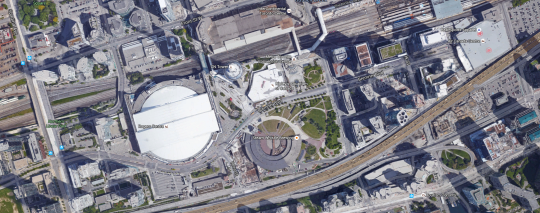
    It’s pretty amazing to see how far we have come both as a franchise, and as a global city. When Scotiabank Arena was completed in 1999, it, and the surrounding area, looked like this. On Saturday night after the win, it looked like this, a veritable “sports alley.” I have long thought that Bremner Boulevard should be placemade into a sports alley connecting Scotiabank Arena (on the east) and the Rogers Centre (on the west).

    From now until this Thursday, all is right in the world. Enjoy it Toronto, and Canada. Masai Ujiri made a bet that I think most, if not all, of us would agree has paid off. Had it not, Raptors fans across the country would be criticizing him for trading away our franchise player. But that’s par for the course in this bipolar world of sports fandom.

  • Toronto vs. Boston

    I worked late this evening, which is pretty typical these days. After I got home, I flipped on the Raptors vs. Celtics and sat down to write something about cities, as is the case every day.

    But the game was too close and too good to resist. The Raptors turned things around in Q3 and ultimately went on to spank the Celtics with a 10-0 run in the last few minutes of the game. It was sweet, particularly because Toronto and Boston are likely to end up at the top of the eastern conference this season.

    So needless to say, I spent more time watching basketball and less time writing about cities. But that’s okay because I am pretty excited about this year’s Raptors. Here are a few Kawhi Leonard highlights.

  • Thank you, DeRozan

    Look, I get it. 

    The Raptors had plateaued. When the Cavaliers swept them in the playoffs earlier this year we all knew there were going to be significant changes in the off-season. Many people who know more about basketball than I do also seem to believe that sending our franchise player DeMar DeRozan to San Antonio in exchange for Kawhi Leonard is a win for us. The betting odds also seem to reflect this win.

    But, like many people here in Toronto, the first emotion I felt this morning when I heard the news was sadness. Here is a guy who has played his entire professional career in Toronto (9 years) and has openly and continually expressed his loyalty to this city. He wanted to retire a Toronto Raptor. He declared himself to be Toronto.

    Of course in the end this is a business. And the primary goal of this business to win championships. If you don’t think you’re in a position to win championships – or lose to the Golden State Warriors in the finals, which is probably the most that teams can hope for right now – then it behooves you to make the necessary changes, however painful they may be.

    I have no idea how this all went down, but the Instagram story that DeRozan posted this morning makes it abundantly clear that he feels betrayed. He feels he was told one thing, and that one thing isn’t what ended up happening. That’s the truly sad part for me. But I’m not going to speculate. Instead, I would like to thank DeMar DeRozan for his dedication and loyalty to this city. He was one of Toronto’s finest city builders.

  • “I hate golf”

    I am a big fan of Malcolm Gladwell, and not just because he’s Canadian and went to the University of Toronto (my alma mater), although those facts certainly don’t hurt.

    I’m late to his podcast, Revisionist History, so in case some of you are as well, I would encourage you to check it out. Every episode reexamines something from the past and questions: Did we get it right the first time? It’s very Gladwell. It’s a must listen.

    The episodes span a secret research project setup by the Pentagon in downtown Saigon during the Vietnam War to why rich people are obsessed with the game of golf. Spoiler: He hates golf.

    The golf episode will be of particular interest to many of you because it deals with real estate. Malcolm wades into something known as California Proposition 13, which is a constitutional exemption that keeps property taxes artificially low.

    It is what has allowed these “vast, gorgeous, and private” golf courses to continue to exist in expensive cities like Los Angeles. Otherwise they would have long ago drowned under the property taxes following reassessment.

    This also leads to a philosophical debate about what constitutes a change in ownership, since many clubs are member owned and Proposition 13 requires that there not be a change in more than 50% of the ownership. 

    But I’ll stop there. Give it a listen. Malcolm is just excellent.

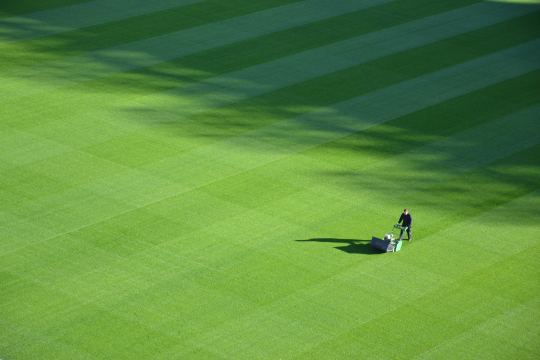
    Photo by Rémi Müller on Unsplash

  • Playoff time in the city

    I just finished watching the Raptors beat the Pistons in overtime to clinch a playoff berth. This is, by far, the earliest in the season that they have ever done that. They are also the first team in the NBA to do that this year. And this is after being down 17 tonight.

    The Raptors feel like a different team this year. They have the grit and toughness to come back and squeak out games like they did tonight. Seeing DeRozan run the floor and throw it down with less than 10 seconds left in the game is a powerful display of that. They are finding ways to win.

    As of today, FiveThirtyEight is giving the Raptors a 55% chance of making the finals. That would be a franchise first. And a 17% chance of winning the title. I am really enjoying watching the best Raptors team that this city has ever seen. And I’m looking forward to playoff time in the city. It transforms this place.

  • October baseball in the city

    You can have one of the best records in the league or you can be slumping right before the post-season, and none of that matters when the month of October hits. Such is baseball. And such is life.

    What does help, though, is being bold. The Blue Jays got lucky on Sunday night with Odor’s throwing error. But Donaldson was also willing to take a chance and make a run for home plate. It paid off in a big way. His instincts were right.

    I found the above image on social media without a source. If I’m pissing anyone off by posting it here, let me know and I’ll take it down. I just love how it captures the exact moment – with the ball still in the air – when Donaldson proclaims victory.

    Baseball will always be a special sport for me. I have never been a big hockey fan and the Raptors didn’t exist until the mid-90s. So as a kid growing up in Toronto, I played baseball and watched the Jays.

    So here’s to more October baseball. The playoffs are always such a fun time in the city. It has a way of cutting through our differences and uniting us all around a common dream. That doesn’t always happen.

  • #WeTheOther

    We may not all agree on things like bike lanes and transit, but if there’s one thing that can generally unite a city it’s playoff sports. 

    I love the solidarity that it creates. You may have nothing else in common with the person sitting next to you at the bar, but suddenly you’re best friends because your team is winning.

    As I write this post, #WeTheOther is currently breaking the internet after CBS Sports ran a cheeky online poll asking: Who will win the NBA title? The four options were:

    1. Warriors
    2. Thunder
    3. Cavaliers
    4. Other

    For those of you who don’t follow basketball, there are only 4 teams left in the NBA playoffs right now! So in what was likely a deliberate snub to the Toronto Raptors, CBS conveniently obfuscated them in their poll.

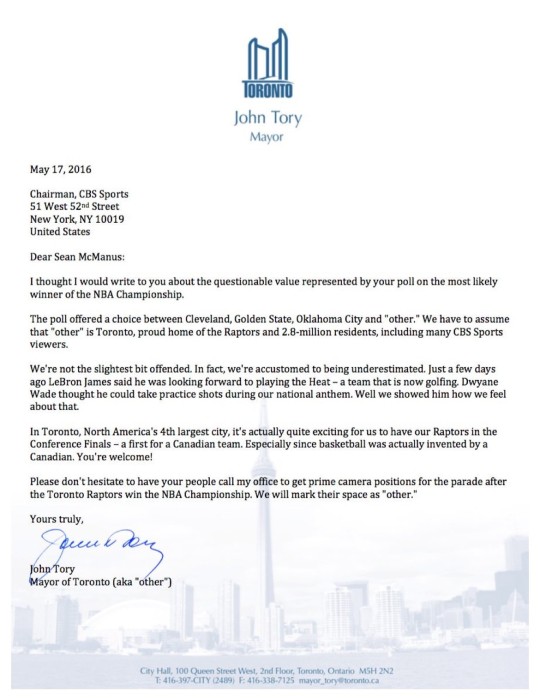
    Here’s how Mayor John Tory quickly responded:

    What would sports be without the trash talking?

  • The economic benefits of a winning sports team

    Jays Game 2 by Charles Bodi on 500px.com

    https://500px.com/embed.js

    I was having round 1 of (Canadian) Thanksgiving dinner with my father on Saturday night and we inevitably started talking about the Blue Jays.

    As I write this post, the Blue Jays are down 2-0 in the ALDS, but by the time you read this email in your inbox (assuming you subscribe), game 3 will have already happened. Either the Jays will be on their way to a great comeback or the season will be over. I am remaining fiercely optimistic.

    But in addition to the regular sports chatter, we also started talking about the possible economic benefits of the Blue Jays winning and being in the playoffs for the first time in decades. 

    We assumed that 50,000 people buying tickets, heading downtown, and spending money on food, alcohol, parking, transit, taxis, and hotels, would be a great benefit to the local economy. And immediately I thought to myself: this would make a great blog post.

    But it turns out that the local benefits of professional sports aren’t so clear cut.

    There’s been a lot of research on public funding for sports stadiums and a lot of the research suggests that it may not be in the best interest of taxpayers. A considerable amount of the spending does not get retained by the local economy and instead gets siphoned off to the respective league and to concentrated private interests.

    But Toronto already has the SkyDome, I mean, Rogers Centre. It’s a sunk cost. So looking forward, there must be some incremental benefits.

    Well, a recent article in the Chicago Tribune asked this same question in light of the Cubs heading to the playoffs. And it turns out that it’s also not so clear cut.

    Part of the problem is something called the “substitution effect.” When a sports team starts winning (and people jump on the bandwagon), money is simply redirected away from other forms of entertainment towards sports entertainment. In other words, instead of going to see a movie or going to the museum, people go to the game.

    In fact, a 2001 study by Dennis Coates and Brad R. Humphreys called, “The Economic Consequences of Professional Sports Strikes and Lockouts”, found that during sports stoppages, 37 metro areas with professional sports franchises actually experienced no negative financial impact. And in many cases they performed better.

    Interesting.

    Having said all this, there’s a powerful sense of solidarity that takes over a city when everyone is rooting for the same team to win. And that’s hard to attach a value to.

  • A sports and entertainment corridor

    On Sunday afternoon I went to see the Blue Jays. It was the last home game of the season before the postseason and the only game I’ve gone to see this season. (Thank you Chris for the ticket.)

    And what a last game it was. 

    We won 5-4, but we hustled for the win. We squeaked it out at the end with a pinch runner that stole 2nd base (and then tied the game in the bottom of the 8th) and with Josh Donaldon’s walk-off home run in the bottom of the 9th with 2 outs. I’m pretty sure the Jays were hungover from celebrating their first playoff berth in 22 years – that’s why it was so close. It certainly made for a gripping finish though.

    After the game everybody was jazzed up and spilling out onto Bremner Blvd in front of the Rogers Centre. I’m not sure if it was premeditated or not, but the entire street was closed to cars. And it reminded me of something that I’ve thought for years: that Bremner Blvd should be made into a kinds of sports and entertainment corridor connecting the Rogers Centre in the west with the Air Canada Centre and Maple Leaf Square in the east.

    Bremner is not a long street. But it connects the place where Canada’s only (MLB) baseball team plays and where Canada’s only (NBA) basketball team plays. Right now it’s a fairly nondescript street. But it doesn’t have to be that way. It could be something really special.

  • The Olympics are dead. Or are they?

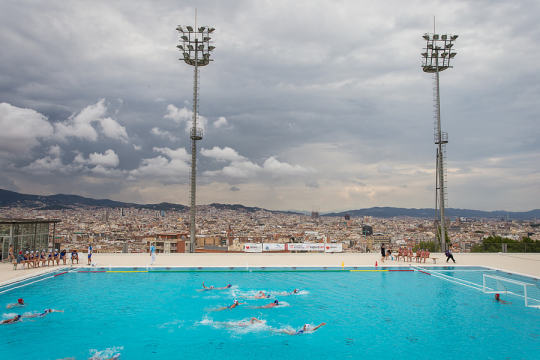
    Olympic Pool – Barcelona, Spain by Tom Weightman on 500px.com

    https://500px.com/embed.js

    Early this morning Professor Robert Wright – who is a regular reader and commenter on this blog – sent me an article from The Guardian called, ‘The Olympics are dead’: Does anyone want to be a host city any more? And that got me thinking.

    With Toronto having just hosted the Pan Am Games (the Parapan Am Games are still going on), there’s a lot of talk and debate happening in this city right now about whether or not we should make a go at hosting the 2024 Summer Games. The deadline for cities to express their interest is September 15th, 2015.

    The supporters (of which I would include myself) say it’s a great opportunity for civic (re)branding and urban renewal. It creates real deadlines to get things done. But the naysayers argue it’s a fiscal disaster waiting to happen. See 1976 Summer Olympics in Montreal.

    But in my view there are ways to host the Olympics and there are ways not to host the Olympics. Montreal (1976) is an example of what not to do. And Los Angeles (1984) and Barcelona (1992) are some of the best examples of what to do.

    The key is to think of the Olympics not as the end, but more as the beginning. In Olympic talk, they refer to this as legacy. Here’s what Los Angeles managed to accomplish as a result of the 1984 Summer Games (via Gizmodo):

    In 1979, the L.A. organizing committee had made a deal. If the games saw any profits, LA84 would give 60 percent back to the U.S. Olympic Committee and keep 40 percent for Southern California. At the end of the games, the total expenditures came in at a respectable $546 million, but even more impressive was the profit: A surplus of $232.5 million, meaning $93 million would stay in the region. This was huge. The only other games at the time which could claim to be financially successful at all were the other L.A. Olympics: The ones held in the city in 1932.

    The profits were used to create an endowment called the LA84 Foundation, which funds youth sporting events, resources, and facilities throughout the area. With smart management, the endowment has grown over the years, and over $214 million has helped an estimated three million children and 1,100 organizations in Southern California. Recently, the LA84 Foundation helped raise money to pay coaches and buy equipment at LAUSD high schools after budget cuts decimated their programs.

    The rest of the above article is definitely worth a read. It’s a great example of fiscal prudence.

    So what I am suggesting is not that we run blindly into hosting the Summer Games. But that we instead open our minds to the opportunities. Let’s great creative. If we could catalyze further city building, turn a profit, and leave meaningful legacies for this region (like what LA did), then why wouldn’t we want to have a go at it?