Daily insights for city builders, delivered every morning at 6 AM ET. I’m Brandon Donnelly — a Toronto-based real estate developer and founder of Globizen. I’ve been writing here since 2013.

Tag: southern ontario

  • Niagara’s wine country is missing something

    Neat B and I were in the Niagara wine region over the weekend and I was reminded of a few things:

    • Winemakers in Niagara will tell you that southern Ontario isn’t the easiest of places to grow and make wine. But whatever, I think that Niagara is highly underrated. Niagara has some exceptional wineries that you really should explore if you aren’t familiar. Ontario is also the largest ice wine producer in the world, by a long shot. We produce something like 90% of the world’s supply. Ice wine can be a bit of an acquired taste — they’re sweet. But if you get a chance, try one from Stratus. They are supposedly the driest in the world.
    • I don’t know how the wine demographics have shifted in other regions, but we were told over the weekend that 10 years ago it was mostly gray hairs who were out at wineries buying wine. Today, there are tons of young people in their 20s, 30s, and 40s. And we certainly saw that over the weekend. This shift has winemakers now adjusting their wines. I couldn’t tell you what a younger wine palate wants, but apparently it’s something.
    • Lastly, there is a complete lack of cool and modern boutique hotels in the area. I would imagine that part of this is because the Niagara wine region is still emerging. But I think the other reason has to do with my previous point: younger people now want to go to wineries and the hospitality sector hasn’t yet caught up. This strikes me as a massive opportunity.
  • Tiny, prefabricated, and expensive

    This is not a new video (click here if you can’t see it embedded above). It’s from 2015. But I still very much like the simplicity of the Vipp Shelter. It’s only 55 square meters.

    One problem is that it cost USD 585,000 at the time it was prefabricated. It goes to show you that prefabrication and small don’t necessarily equate to affordability. For this reason, Lloyd Alter called it a “problematic prefab” back in 2015.

    Of course, there are ways to make a home like this much more cost effective. I’ve been looking, on and off, for over a year for a piece of land that would be suitable for a project like this. I’ll let you all know if I find something.

  • The Future of Hamilton

    image

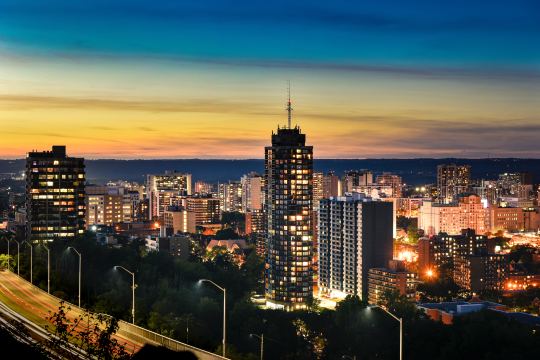
    As many of you know, we have a development project in Hamilton, Ontario – more specifically in the Corktown neighborhood. We filed our development application earlier this summer.

    Because of this I was invited to participate in a Bisnow event on The Future of Hamilton. It takes place the morning of Wednesday, September 12, 2018 in The Alley by Core Urban. I walked this space last summer while it was under construction and so I’m excited to see it finished.

    For those of you who aren’t familiar with Core Urban, they are doing some really great work in Hamilton and have established themselves as a responsible city builder with a focus on adaptive reuse projects.

    Steve Kulakowsky, who is co-owner of Core Urban, will be speaking at the event along with the mayor, some guy who has pretentiously included his middle name, and many other smart people. To see the full list of speakers and to buy a ticket, click here.

    Photo of Hamilton by Vivek Trivedi on Unsplash

  • Two thoughts on reviving post-industrial cities

    image

    Yesterday Adam Radwanski of the Globe and Mail published an interesting article called, Rust Belt revival: Lessons for southwest Ontario from America’s industrial heartland

    The article talks about some of the things that the Rust Belt is doing to revitalize their cities and the lessons that many cities in Ontario – which are facing similar fates – could learn from. It’s worth a read.

    I’m not going to summarize his article, other than to say that some of the key points were around tax increment financing, tax incentives, University connections, a DIY/entrepreneurial culture, and the American tradition of philanthropy – which Radwanski points out is probably the least imitable for Canada.

    And it’s this last point that I would like to focus on first. The US has a deep history of people getting rich and then giving back – certainly more so than in Canada in my opinion.

    If you think about the resurgence of cities such as Detroit, you’d be hard pressed not to think of people like Dan Gilbert. He has become the poster boy for Detroit’s resurgence by moving his companies to downtown and buying up most of the office buildings. If and when Detroit comes back (I think it’s a when), Gilbert will easily be one of the biggest beneficiaries.

    Now, you could argue that this is made possible because of greater income inequality, but there’s something to be said about powerful individuals acting on intrinsic passion. Gilbert is investing in Detroit because he personally wants to see his home city come back. And that’s hard to replace.

    The second point I would like to focus on has to do with this snippet:

    With oil’s current slide, Canada really can’t afford for it to remain a drag – and in fact there is some expectation that Ontario will instead reclaim its old role as the leader of Canada’s economic growth. Its premier, Kathleen Wynne, recently expressed optimism that plummeting oil prices and a sinking dollar will prove a boon to manufacturing. “I don’t wish for low oil prices and a low dollar for Alberta,” she said earlier this month. “But at the same time, we want our manufacturing sector to rebound. So if that [low oil price] helps, then that’s a good thing.”

    I don’t know what context this was said in, but I continue to feel strongly that we cannot rely on low oil prices and a low Canadian dollar for Ontario’s competitiveness. That is a terrible business model, and an unsustainable one. We need to figure out ways to create value and grow the economy without relying on currency differentials and other macroeconomic factors. Radwanski is right to point that out in his article.

    So let’s hope we don’t let any short term benefits go to our head. There’s lots of exciting work to be done.

    Image: Old Detroit auto factory via Flickr

  • The will to try new things

    image

    I’m a big fan of wine. But in particular, I like and I support Ontario wines. And last night I was in Niagara-on-the-Lake for the Stratus Vineyards annual harvest party. It happens every year and, as the name suggests, it kind of marks the end of the growing season for the vineyard. I say kind of because not all varietals have been harvested by this time.

    At one point during the evening, I was speaking with the winemaker, J-L (Jean-Laurent) Groux, who is a native of the Loire Valley in France and first learned how to make wine in Burgundy and Bordeaux. And I asked him: why Niagara? Why did you bring your talent to Niagara? (When he came, Niagara would have had a great reputation for crappy wines.)

    He first responded by saying that he had been traveling around the world to different wine regions, and Niagara just so happened to be where he was when he ran out of money. But he went on to say that he saw Niagara as a place of opportunity. It was a region on the rise and he knew that he would have the creative freedom to experiment and do whatever he wanted.

    And that just wasn’t the case in France where tradition dictated. Good for Niagara.

    But as he was telling me all of this, I couldn’t help but think that it’s the classic business story of incumbents and disruptors. I’m not saying that French winemaking will get disrupted. I’m just saying that in a world of established wineries, corporations and other groups, it would seem impossible for them to be threatened in any way by upstarts. They, the incumbents, have more money, more people, and more resources all around.

    But what they sometimes lose along the way, is the will to try new things.