Daily insights for city builders, delivered every morning at 6 AM ET. I’m Brandon Donnelly — a Toronto-based real estate developer and founder of Globizen. I’ve been writing here since 2013.

Tag: solar panels

  • Balkonkraftwerk

    Germany has, over the last 2 years, really gotten into balcony solar panels:

    The ease of installation and a potent mix of government policies to encourage adoption has made the wee arrays hugely popular. More than 550,000 of them dot cities and towns nationwide, half of which were installed in 2023. During the first half of this year, Germany added 200 megawatts of balcony solar. Regulations limit each system to just 800 watts, enough to power a small fridge or charge a laptop, but the cumulative effect is nudging the country toward its clean energy goals while giving apartment dwellers, who make up more than half of the population, an easy way to save money and address the climate crisis.

    Of course, there’s only so much that panels like these can produce. By some estimates, a “large well-positioned balcony” might only produce 15% of a home’s electricity needs. But hey, that’s still something, and it seems like something that Toronto should be looking at.

    We also have balconies.

  • Vertical solar panels

    Ordinarily, solar panels make the most sense on the roof of a building. This is often where you can harvest the most solar energy. But sometimes it can make sense to install them vertically, like in the case of the above building in Scuol, Switzerland. I am by no means an expert on solar, but I am told that this can make sense in snowy climates (where rooftop panels are likely to get covered) and in northern locations where the lower angle of the sun means a vertical position actually catches the sun more effectively (especially during the winter months). It could also be the case that you just don’t have any available roof space. Either way, you have to look at and model out the entire year when it comes to solar.

  • Ontario should have more solar energy

    I have a very close friend (Peter Vogel) who is in the solar business. He runs business development for a company called Otter Energy. And by volume, I believe they are the largest in Ontario. Since 2009, they have installed over 350,000 panels.

    So when Peter and I hang out, I get the benefit of learning about solar. And he is great at reminding me that installing panels on the roof of buildings in Ontario makes a ton of sense from both an environmental and financial standpoint.

    Generally speaking, the amount of benefit you will see depends on the building’s ratio of roof area to overall building area. Low-rise buildings with a lot of roof area (think industrial assets), are absolute no brainers. But it can also work very well on many other asset classes, including mid-rise multi-family.

    Here are some high-level figures that he recently walked me through:

    • As a rule of thumb, solar in Ontario typically generates between 12-14 kWh’s per year per square foot of roof area (usable flat roof).
    • The average payback period for an install is usually somewhere between 4.5 to 7 years.
    • However, on income producing properties, the permanent decrease in operating expenses and the corresponding increase in net operating income (NOI) will increase your asset value on day one.
    • Consider spending $100k on solar panels to increase your NOI — through lower electricity costs — by $10k. If you were to then capitalize this increase in NOI by 5%, it would mean your asset value has right away increased by $200k. If the cap rate for this asset is even lower, say 4%, the increase goes up to $250k.
    • These multiples can get even better with larger installs. Here are some numbers from a real-world 100,000 sf commercial building in Ontario. In this case, the solar system cost about $800k (net) and resulted in annual operating cost savings of about $140k. This means, that at a 5% cap rate, the owner spent $800k to increase the value of their asset by $2.8 million on day one.
    • Of course, in addition to all of this, you get long-term energy cost certainty. That’s worth something too.

    The business case is compelling. So I think more building owners should be looking at solar. We are certainly looking at it from a development perspective. If you’re interested in learning more, feel free to reach out to my friend. There are a lot of details that help strengthen the case for solar, including depreciation allowances and tax credits.

  • Comparing innovative technologies

    This is an interesting chart from Bloomberg Green comparing some of today’s innovations against innovations of the past. At the top of today’s innovations are EV batteries, which from 2010-2020, saw annual deployment growth similar to that of US WWII aircrafts. However, when it comes to reducing costs, both EV batteries and solar PV modules come out on top with annual declines approaching almost 20%.

    Of course, these probably aren’t perfect comparisons. If you look at EV batteries and solar PV modules from 2020 to 2023, their growth rates jump to 72% and 39%, respectively. So who knows if these are the right time slices to be using in order to accurately capture the “key expansion periods.” Regardless, it does provide some historical context and it does say something. These are important innovations.

  • Rise of renewables in the US

    Here are some fascinating figures (from Environment America) about the growth of renewables in the United States:

    • Between 2011 and 2020, renewable energy production (solar, wind, and geothermal) grew at an average rate of 15% per year. Assuming this same rate of growth, the US could be on target to meet all of its electricity needs with renewables by 2035.
    • The US produces 23x more solar power and 3x more wind power than it did in 2011.
    • The median efficiency for new residential solar panels increased by 37% from 2010 to 2019. At the same time, the cost of distributed solar photovoltaic systems fell by 71% and the cost of utility-scale systems fell by about 80% between 2010 and 2018.
    • During this same time period (2010-2018), the cost of land-based wind power fell by 66%.
    • The median range of new electric vehicles increased by more than 3x between 2011 and 2020. The median range is now more than 250 miles on a single charge. By the middle of this year, cumulative plug-in EV sales surpassed 2 million units.
    • Texas is the US state that currently produces the most renewable energy.

    To download the full report by Environment America, click here.

    Photo by Nuno Marques on Unsplash

  • Examining the solar potential of cities

    The MIT Senseable City Lab recently asked: How does urban morphology affect the solar potential of cities? If you assume that transparent photovoltaic cells are on the way and that building facades are soon going to become a place where we generate solar energy, then this is actually a pretty interesting question. Are some built environments naturally better suited than others?

    To answer this question, they looked at the “urban surfaces” of ten cities, including New York, Singapore, Toronto (pictured above), Hong Kong, Paris, as well as others. These surfaces included roofs, facades, and ground planes.

    What they, not surprisingly, discovered is that you need a lot of exposed facades to get the numbers up. And so the cities that come out on top in terms of annual solar irradiation are cities like New York and Singapore. They have a lot of tall buildings, but they also fluctuate in height, giving greater exposure to the facades.

    All of this is potentially relevant because — if building facades become a big deal for solar — it could start to inform how we plan our cities. In fact, I would go so far as to bet that, over the long-term, solar energy will have a greater impact on urban morphologies than this current pandemic.

    Image: MIT Senseable City Lab

  • Snøhetta completes energy positive building in Norway

    Snøhetta has just completed an office building in Trondheim that produces more than double the amount of electricity that it consumes. If you recall my recent post on Norway’s new coastal highway, you may remember that Trondheim is the northern terminus of highway E39. I mention this because of access to sun. Latitude 63.43.

    The office building is about 18,000 square meters and it is wrapped with about 3,000 square meters of solar panels. The roof is angled at 19 degrees in order to maximize sun harvesting, and any excess electricity is fed back into the city’s grid / neighboring facilities. Large batteries also help to help carry the building through the winter months (again, latitude 63.43).

    Here are a few photos of the roof (via Dezeen):

    I wish I had more of the details so that I could see how the numbers pencil. Hard costs, utility costs, office rents, government incentives/disincentives, embodied energy in the batteries, and so on. Because this looks like an extraordinary accomplishment for a city that is remarkably north.

    Images: Dezeen

  • Tesla introduces a battery for your home

    image

    By accident, this week on Architect This City seems to be turning into Elon Musk week.

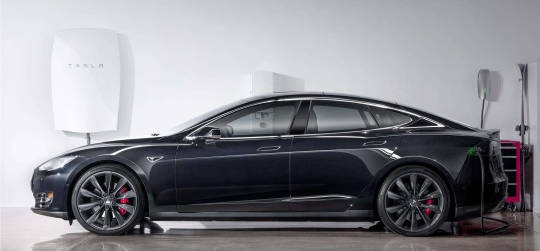
    Yesterday, Musk announced something called the Powerwall home battery. Measuring about 3′ x 4′, the shield looking battery pack will charge using the electricity generated from solar panels (or from the grid when rates are at their lowest) and then power your home.

    It’s designed for consumers and will cost between US$3,000 – $3,500 depending on capacity. The individual Powerwalls can also be daisy chained to increase capacity. It will be available starting this summer.

    A wall battery may not seem all that interesting to some, but I think this is actually a big deal for a few reasons.

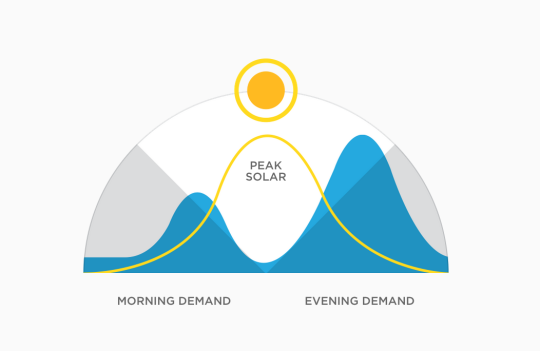
    Renewable energy is often both intermittent and produced when you don’t need it. Here’s a great chart from Tesla that shows what I mean:
    image

    During peak solar hours, most people aren’t home and most people aren’t consuming at peak levels. That’s why it’s important to be able to store the energy that you collect, whether it be from solar, wind or other renewal energy source. And from what I hear from my friends in the industry, storage has been a bit of an Achilles heel for adoption.

    It will also help to further decentralize energy production. What is produced locally (from say solar panels) will be stored locally for when it’s needed locally. This is in contrast to centralized production or producing energy locally and then feeding any excess capacity into the grid for use somewhere else. That requires transmission and will be by definition less efficient.

    Finally, the other interesting thing about Powerwall is that it closes the loop on two of Musk’s businesses: SolarCity and Tesla. SolarCity is about the production of renewable energy and Tesla is about the consumption renewable energy. But as the chart above shows, storage is often needed to link those two activities in an efficient way.

    All of this makes me excited about Powerwall.

    If any of you are an expert in this industry (which I am not) or you just have additional thoughts, I would love to hear from you in the comment section below.

    Images: Tesla
