Daily insights for city builders, delivered every morning at 6 AM ET. I’m Brandon Donnelly — a Toronto-based real estate developer and founder of Globizen. I’ve been writing here since 2013.

Tag: soho house

  • This is not a hotel

    I am not the target market for Restoration Hardware, I mean RH. But I do think it is interesting the way they are evolving their brand. At the beginning of 2021, the company announced a $105 million equity investment in a development project in Aspen, where it is planning a new guesthouse and, more broadly, a new “RH ecosystem” that will include residences, restaurants, a spa, etc. It hasn’t opened yet, but RH does now have a guesthouse in New York. To be clear, it is not a hotel:

    So what is RH trying to do with all this?

    Surface Magazine recently argued that they are trying to become the “public” version of Soho House. That is, a lifestyle omni-brand that isn’t membership-based, but that will still make you feel rich and special while you eat, sleep, play, and shop for various things for your home. Now, I do think that their target customers aren’t exactly the same person. But of course, I see the parallels. And it’s certainly interesting from an experiential retail, brand ecosystem, and real estate development standpoint. It gets the brand everywhere.

  • Soho House went public this week

    So Soho House went public this week. It is now trading on the NYSE under the ticker $MCG. It renamed itself the Membership Collective Group Inc. for the IPO given the myriad of brands that the company now operates. The company went public at $14 a share and with a $2.8 billion valuation. It raised $420 million through the offering.

    My first reaction when I heard the news was that going public is maybe at odds with being a cool, urban, and exclusive membership club. We’re all about creatives; also, buy our stock. But maybe I’m wrong. This is just the company maturing. At 26 years old, the company now has some 119,000 members and has 30 Soho Houses around the world in 12 different countries.

    Full disclosure: I am a member and a big fan of Soho House.

    But now that the company is public, we also know that it has never turned a profit. And it hopes to do that by next year, as well as open some five to seven new Soho Houses each year while trying to remain “asset light”. As the company does this and pushes toward profitability, there is, of course, a very natural question about what that does to the experience and the overall brand.

    Does it get diluted at all?

    I don’t think that necessarily needs to be the case. But of course the company will end up evolving. On a related note, if anyone from Soho House / MCG is reading this post (unlikely), I would love to connect about an opportunity here in the Toronto area. I think it has the potential to become something truly remarkable — not to mention, much needed. I can be reached, here.

  • 24514 Malibu Road

    The story of the Hunt House in Malibu, California — as recounted here by Soho House — has me wanting to serendipitously stumble upon an underpriced midcentury architectural gem along the coast of the Pacific Ocean so that I can spend my weekends fastidiously restoring it to its former splendor.

    I have already started looking.

    Originally built in 1957, the Hunt House at 24514 Malibu Road was designed by California modernist Craig Ellwood. It was the 1,400 sf weekend home of Dr. Hunt and his wife Elizabeth. Like many of the homes on this street, the minimalist entrance and front facade ultimately step down into a grand waterfront space. Photos and video tour, here.

    The current owners, architect Diane Bald and her husband Michael Budman, discovered the house while driving the coast in search of a rental. The Hunt House was marked as for rent or for sale. They rented it immediately.

    After four years in the house, an evil developer ended up buying the house with the intent of knocking it down and building something new. But he allowed them to remain living there during entitlements.

    Turns out it’s hard to build in Malibu, and so after another four years, he gave up and said, “you know what Diane? You’re the rightful owner of this house, I will never be able to build what I want.” (Quote from Soho House.) It is at this point that Diane bought the house and began restoring it.

    That process was documented here on Instagram.

    Top Image: Richard Powers via Soho House

  • Battle of the Bungehuis

    image

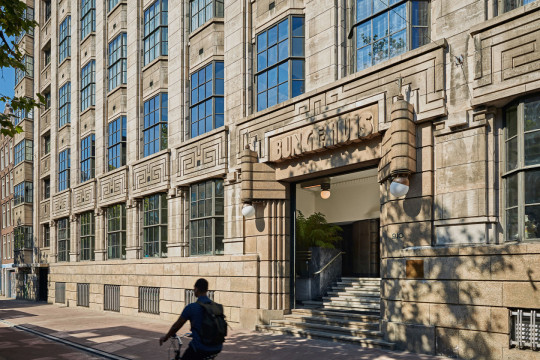
    This past July, Soho House Amsterdam opened up in the storied Bungehuis building. Not really news, other than the fact that FT just published this article talking about the building’s history and some of the project’s hurdles, which I of course found interesting.

    Completed in 1934, the Bungehuis originally served as the offices for a prominent trading company. The architect was ADN van Gendt. When he died during the building’s construction, Willem Jacob Klok took over.

    Also noteworthy about the building’s construction is that, according to Wikipedia, twenty houses had to be demolished in order for it to be constructed.

    This underscores a point that I have made before on the blog. Cities are not static. Most of us probably look at the Bungehuis and consider it to be quite a handsome piece of architecture. Some of us may even go so far as to say that we don’t make buildings like they used to.

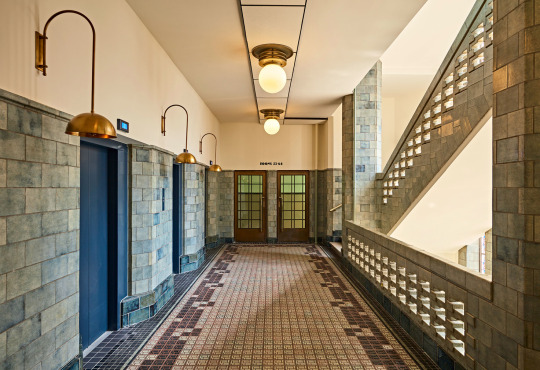
    Soho House is on record saying that they were “not very budget-conscious” during the renovation because of the sense of responsibility that they felt around the building and its history.
    image

    But I think it’s important to note that this building was initially built for a for-profit company and things had to be demolished in order for it to come to fruition. 

    I can’t say for sure whether this development was opposed in the 1930s, but it may have been. Cities and buildings have a way of ingratiating themselves over time.

    In any event, starting in the 1970s, the building became home to the arts faculty at the University of Amsterdam. And as recent as 2015, it became home to the Bungehuis occupations – a protest occupation started by students and staff of the University who were opposed to a slew of academic cuts.
    image

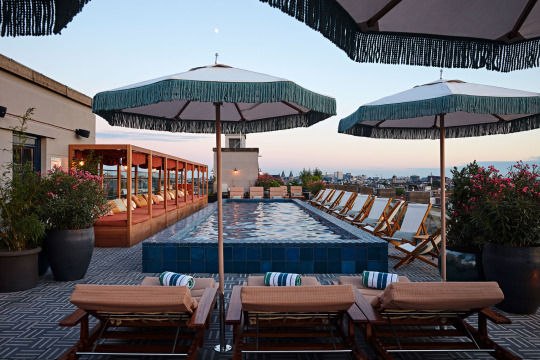
    Then in a state of poor repair, the building was ultimately sold to Aedes Real Estate, who now leases it to the Soho House Group for their private club and 79 room hotel. Above is a picture of the club’s rooftop pool and lounge.

    The big hurdle, or at least one of them, was the fact that Amsterdam currently has a moratorium on new hotels – as a way to try and mitigate “overtourism” – unless it can be demonstrated that it will represent “an extraordinary addition to the existing stock.”

    Since Soho House Amsterdam opened in July, I guess we know the answer to that test. But it sounds like it may have been a battle. That wouldn’t be a first for this building.

    Images: Soho House Group

  • Before & After — Miami Beach

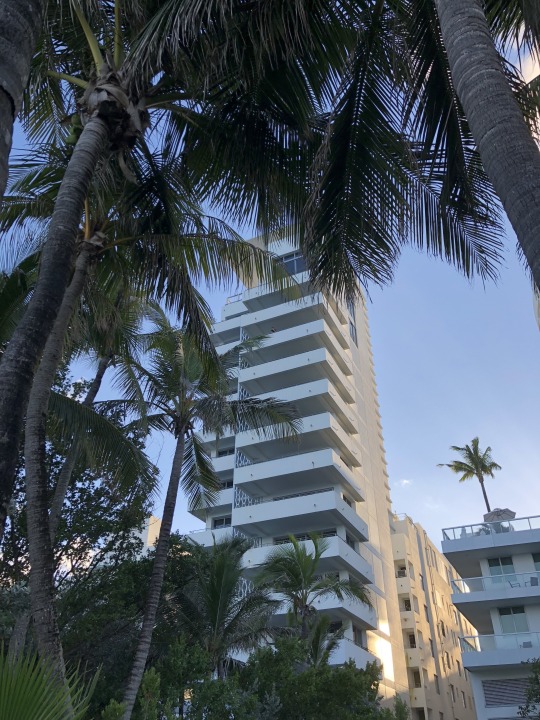
    We switched coasts today. Here is a photo of our Miami Beach hotel taken from the boardwalk with my iPhone:

    image

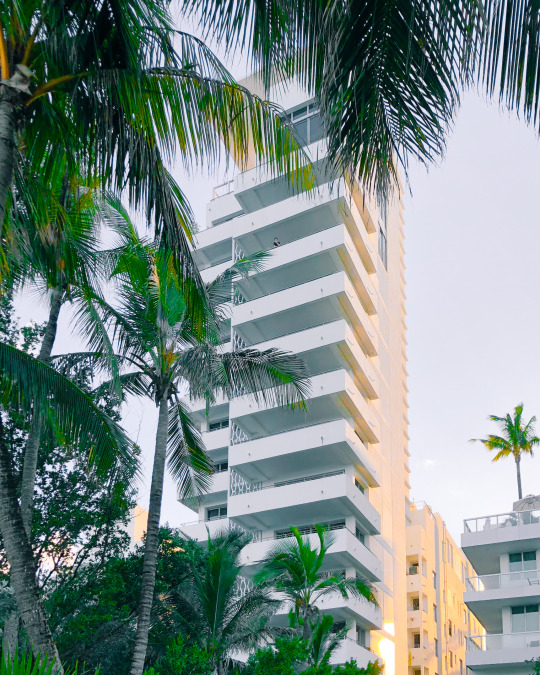
    And here is the after:

    image

    I took it into Lightroom. Fixed the alignment of the building. Whitened it, but brought out the beautiful warm sunset light on the north elevation. And I took the greenery in the foreground out of the shadows.

    The balconies remind me of one of Donald Judd’s “Untitled” pieces. He was one of my favorite artists. I also like the one dude leaning over that upper balcony. It gives the photo a tranquil feel, which is not usually how one would describe Miami Beach.

  • From country club to urban basecamp

    CityLab recently published an article talking about the difficult time that golf-centric country clubs are having in attracting young people (and minorities and women). Their reasoning is that Millennials are saddled with student debt and can’t afford the fees; Millennials find these sorts of clubs stuffy and overly formal; and Millennials are put off by the long history of these places being only for rich white males.

    The result is that golf and country club memberships are down about 20% since 1990. In the 90s there were more than 5,000 full service clubs of this type in the US. And today it’s somewhere south of 4,000. In the 90s, about 9 million people aged 18 to 34 played golf (again in the US). And today that number is somewhere around 6.2 million. All stats taken from the article.

    But at the same time, the article argues that Millennials may still like country clubs, they’re just about 10 years behind because of higher education, travel, and delayed family formation. The article also talks about the rise of private clubs like Soho House, as well as others. And so here’s one counter argument: Millennials are open to private clubs and many have the means. They just want them to be, well, cooler and more urban.

    As a young person who largely fits within the trend line described in the CityLab article, my gut tells me that this is largely a case of changing consumer preferences and urbanizing wealth. That’s why we’re seeing established country club operators open up “urban basecamps.” But that’s my view. What is yours? Let us know in the comments below.

    Photo by Andrew Rice on Unsplash