Daily insights for city builders, delivered every morning at 6 AM ET. I’m Brandon Donnelly — a Toronto-based real estate developer and founder of Globizen. I’ve been writing here since 2013.

Tag: software

  • A non-zero probability of copycats

    Software businesses are generally high margin businesses. But along with this feature comes some risks. Here’s an excerpt from a recent post by Scott Galloway (which is actually about FedEx):

    With any software start-up, there is a non-zero probability that you wake up the next day and find that a better-resourced firm (Microsoft, Oracle, Salesforce, Adobe) has deployed 200 engineers to copy your product, bundle it with their stack for free, or near free, and … welcome to zero. I believe this is happening to Slack, but more slowly than Netscape, as Microsoft’s General Counsel has likely coached Satya to charge a nominal fee for Teams and let Slack bleed out, instead of putting a bullet in its head and stirring the DOJ from a 3-Ambien slumber.

    Real estate, by comparison, doesn’t get disrupted in quite the same way. A location/city can lose its economic purpose (Great Grimsby is just one example), but as long as there are growth tailwinds the real estate should do well.

    Venture capitalist Fred Wilson has on many occasions written about how he (and his firm) made a fortune in the dot-com era, only to lose it all and have to remake it again over the subsequent decades.

    One the lessons learned from that experience (according to his blog), was to take some of that second tech fortune and invest it into hard assets — namely real estate. That feels right to me.

  • Uber Express POOL is kind of like public transit

    Uber is currently testing a feature in a few neighborhoods in Boston and San Francisco called Uber Express POOL

    Like the regular version of Uber POOL, this is a shared ride. But with Express POOL the app now automatically generates “smart spots” that are easy to drive to and close to the origin and destination of multiple passengers.

    So instead of a direct pick-up and drop-off, you now need to walk a few blocks to one of these dynamically created “smart spots.” In exchange for the added inconvenience, you get 25% off your fare.

    What’s immediately fascinating about this feature is that it further blurs the line between Uber and public transit. These “smart spots” are effectively low-volume and ephemeral transit stops that pop-up based on demand and then disappear.

    It makes the notion of a fixed stop and transit schedule, particularly in low usage areas, seem inefficient. Now imagine if we created some sort of visual marker on the street every time a “smart spot” was emerging based on demand.

    It is clear that Uber is trying to price these rides so that they are competitive with conventional public transit. And there’s no reason that this technology couldn’t also be applied to larger vehicles, such as buses.

    I find this fascinating. And it’s a perfect example of what we talked about in yesterday’s post. This is software and networks being layered on top of the built environment.

  • Moving up the stack

    The new GoPro HERO6 is a miraculous little camera.

    It now films in 4k at 60 frames per second. It has great image stabilization. And the screen on the back is new for me and a real game changer. The creative possibilities are endless.

    But probably more importantly you can tell that GoPro is investing heavily in their software. They have to make it easier for people to share the content they create.

    They also know that their survival likely depends on some sort of software layer.

    At its peak, GoPro was trading at $86 per share. Right now, as I write this post, it’s $9.40. Some think the company will be sold within the next year.

    Here is a recent quote from Benedict Evans:

    As we saw with first GoPro and now perhaps Sonos, if you’re riding the smartphone supply chain cornucopia but can’t construct a story further up the stack, around cloud, software, ecosystem or network effects, you’re just another commodity widget maker.

    To borrow Marc Andreessen’s line: Software is eating the world.

  • Why I write about tech on my city building blog

    I had a friend ask me this week about how I decide what to write on this blog. His comment was that I tend to write about a variety of different topics. He wondered: Isn’t it better to focus on one particular niche?

    The simple answer is that I write about what interests me. And secondary to that is any concern around what will get the most clicks. In fact, I try not to fall into the trap of worrying about the latter. Sometimes it can be paralyzing to fixate on what will appeal most to the tens of thousands of people who read this blog on a regular basis.

    The reality is that my interests are much broader than, say, just design and real estate; though these two topics are clearly central. 

    I learned a long time ago while studying architecture and art history that what we make as a society is generally a product of the cultural milieu at the time. In other words, the built environment doesn’t happen in a vacuum. It is the physical manifestation of what we believe to be true at a particular moment.

    Today, it’s pretty hard to ignore the importance of tech. Think of some of the most valuable companies in the world right now: Apple, Google, Amazon, Facebook, and so on. Now, technology has always shaped our cities, but what makes this moment different is the decisive shift toward software.

    It’s arguably no longer about who can build the best mousetrap. It’s about who can build the best software layer on top of that mousetrap.

    In 2011, venture capitalist Marc Andreessen (previously the co-founder of Netscape) published a widely shared essay called, “Why Software Is Eating the World.” And over the past 6 years he has been proven to be very right.

    The 3 main points he aimed to make with that essay are as follows:

    1. Every product or service that can become software will become software.
    2. Every company will have to become a software company.
    3. The winning companies will be the best software companies.

    Depending on your industry, this may sound ludicrous to you. Certainly in 2011 it probably seemed that way. 

    But a perfect example of this phenomenon is the iPhone. The phone itself is manufactured in China, albeit where a lot of great hardware innovation is taking place. 

    But at this point, phones have become fairly commoditized. The profits that Apple makes from the iPhone disproportionately come from the software layer and the app ecosystem it has developed.

    You could make a similar argument with Tesla. Autonomous navigation – which most of us can agree will have a profound impact on cities – is largely a software challenge. 

    And so if you believe that autonomous vehicles will be a fundamental part of the future of mobility, then it’s not that hard to believe in point number three: the winning car company will also have to be the best car software company.

    Some industries have been less touched by tech and software – real estate being one of them. But if Andreessen is right and it’s not a question of if, but a question of when, then it behooves all of us to think about the potential impacts.

    I love how Andreessen ends this podcast discussion with Barry Ritholtz of Bloomberg and so I’m going to repeat it here to close out this post. He says: “There are no bad ideas. There are only early ideas.” 

    And that’s why I write about tech on my city building blog.

    Photo by Michal Pechardo on Unsplash

  • The Silicon Valley of hardware

    I generally dislike derivative city monikers – such as the title of this blog post. But I appreciate that it quickly gets the point across.

    Fusion recently published an interesting article talking about how Shenzhen, China is quickly rising as the hardware innovation capital of the world. Rather than simply serve as the place of production for companies such as Apple, the Chinese government would like to see it serve as a place of creation. In fact, some organizations are suggesting a terminology change from  “Made in China” to “Created in China.”

    A big part of the reason for all of this is that Silicon Valley long ago moved “up the stack.” It focused itself on software and internet services, because hardware wasn’t where the margins were. It wasn’t sexy. And so production got moved over to a low cost market. But now, with the rise of IoT, drones, and many other physical products, one could argue that Shenzhen has become highly relevant in the innovation ecosystem.

    It’s also important to think about how Shenzhen fits in to the larger Pearl River Delta region. Here is an excerpt from the Fusion article:

    “Shenzhen has the geographical footprint of Los Angeles, but a population three times its size at 12 million people. It’s part of the Pearl River Delta, which also includes Hong Kong, the global financial capital and port city; Macau, the world’s largest gambling city; Guangzhou, home to one of China’s major ports, trading centers, and factories; and Dongguan, a manufacturing hub. It’s as if the tech talents of Silicon Valley, the big banks of New York, the manufacturing plants of Detroit and Pittsburgh, the casinos of Las Vegas and the shipping ports of Long Beach were all in one small part of the US, and a two hour drive from one another.”

    If you’re interested in this topic – both hardware innovation and the rapidly growing city of Shenzhen – take an hour and watch this documentary from Wired. Embedded below.

    [youtube https://www.youtube.com/watch?v=SGJ5cZnoodY?rel=0&w=560&h=315]

  • Building new, better cities

    Earlier today my friend Saadat sent me the following tweet:

    //platform.twitter.com/widgets.js

    It’s a link to a new research project by Y Combinator – the famed Silicon Valley seed accelerator. They want to explore the possibility of building new and better cities.

    I don’t have the time for something like this, but if any of you are city experts (I know a lot of you are) and you’re based in or willing to be based in San Francisco (I think they are flexible on this), you should absolutely consider applying to be their full time “Cities Researcher.” The deadline is July 30, 2016.

    Here’s a taste of what they are thinking about…

    There are many high-level questions we want to think through, for example:

    – What should a city optimize for?

    – How should we measure the effectiveness of a city (what are its KPIs)?

    – What values should (or should not) be embedded in a city’s culture?

    – How can cities help more of their residents be happy and reach their potential?

    – How can we encourage a diverse range of people to live and work in the city?

    – How should citizens guide and participate in government?

    – How can we make sure a city is constantly evolving and always open to change?


    And there are tactical questions we want to dig into, for example:

    – How can we make and keep housing affordable? This is critical to us; the cost of housing affects everything else in a city.

    – How can we lay out the public and private spaces (and roads) to make a great place to live?

    – Can we figure out better zoning laws?

    – What is the right role for vehicles in a city?

    – Should we have human-driven cars at all?

    – How can we have affordable high-speed transit to and from other cities?

    – How can we make rules and regulations that are comprehensive while also being easily understandable?

    – Can we fit all rules for the city in 100 pages of text?

    – What effects will the new city have on the surrounding community?

    The convergence of city building and tech is something that I’m deeply interested in. I also think it’s inevitable. And I think that Toronto – thanks to our robust real estate industry – is in an ideal position to be a leader in this space. So I would love to see someone from here take on this job.

    But even if you’re not from Toronto, you should still apply because it’s an exciting initiative 🙂

  • Lists, disciplines, and AI

    I have a bit of an obsession with my calendar, lists, and goals. On the home screen of my phone I have Wunderlist, Evernote, Google Drive, and 2 calendar apps (more on that in a second).

    This obsession is probably one of the reasons I write this blog. I like writing, drawing, and documenting things. It helps me sort through my thoughts. I have everything from a list of cities I want to visit to a list of billion dollar business ideas (yes it’s really called that).

    But the other reason I like to keep lists is because – as I said in this post – I’m trying to be cognizant about overcommitment. And when I write things down, it serves as a reminder of what I’m doing and what I’m allowed to focus on.

    One of the ways I do that is through repeatable goals (or disciplines). These are non-negotiable things that I’ve committed myself to and that I just have to grind out – such as writing on this blog every day. I can tell you that some blog posts come out a lot easier than others. But I’m a firm believer that there are few substitutes for just showing up every day and putting in the work.

    On that note, let me tell you why I have 2 calendar apps on my phone. I’ve been testing out the latest version of Google Calendar because of a new feature they rolled out this month called Goals.

    What it does is automatically schedule repeatable goals. So for instance, you could tell it that you want to work out 3 times a week for 1.5 hours each time and that you prefer to work out in the evenings. It will then go and find 3 times for you to do it every week for all of eternity. 

    If a conflict arises, that’s no problem. As soon as you enter another appointment, the app will automatically reshuffle your calendar goals to make sure that you still get your 3 workouts in. It’ll even learn your preferences as you make changes to these appointments over time. 

    So far I’ve been finding this feature really useful. I used to do this for myself manually, but now I have a computer that does it for me. Even better.

    It’s also a glimpse into the future that Sundar Pichai, CEO of Google, was talking about on a recent earnings call:

    “We’ve been investing in machine learning and AI [artificial intelligence] for years, but I think we’re at an exceptionally interesting tipping point where these technologies are really taking off,” he said. “That is very, very applicable to businesses as well. So thoughtfully doing that externally we view as a big differentiator we have over others.”

    “In the long run, I think we will evolve in computing from a mobile-first to an AI-first world,” Pichai said in closing. “And I do think we’re at the forefront of developments.”

    For the past 5 years, it’s been all about mobile. But now much of the tech community – including the CEO of a pretty big company – is saying that artificial intelligence is next. What do you think this will mean for cities?

  • The Death and Life of Great Italian Cities

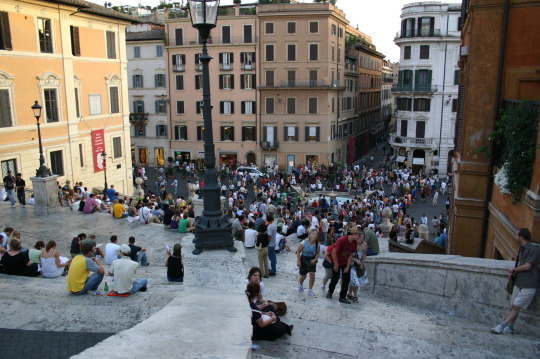
    image

    I am sure that a lot of you know where the title of this post comes from. It’s a riff on one of the most important and influential books in the world of city planning: The Death and Life of Great American Cities by Jane Jacobs (1961).

    But when Jane Jacobs first wrote this book, there was no such thing as smartphones and nobody was “checking-in” to hipster dive bars on Foursquare

    So instead of leveraging big data, her analyses and arguments were based on observation. She walked the streets of New York and Toronto and figured out what made cities thrive and what made cities die. That was her brilliance.

    Today, however, we have data – lots of it. And so recently, a group of researchers set out to test Jane Jacob’s theories using mobile phone data. The study was called, The Death and Life of Great Italian Cities:
    A Mobile Phone Data Perspective
    .

    More specifically, they set out to test the following 4 essential conditions:

    “She [Jane Jacobs] argued that, to promote urban life in large cities, the physical environment should be characterized by diversity at both the district and street level. Diversity, in turn, requires four essential conditions: (i) mixed land uses, that is, districts should serve more than two primary functions, and that would attract people who have different purposes; (ii) small blocks, which promote contact opportunities among people; (iii) buildings diverse in terms of age and form, which make it possible to mix high-rent and low-rent tenants; and (iv) sufficient dense concentration of people and buildings.”

    To accomplish this, the team assembled and studied data from the following sources:

    • Mobile phone activity (specifically internet activity)
    • OpenStreetsMap Data
    • Census Data
    • Land Use Information
    • Infrastructure Data
    • Foursquare Data (Venues API)

    Ultimately, they determined that Jane Jacobs knew what she was talking about. The above conditions are essential to urban vibrancy and they apply to Italian cities, just as they did and do to American cities. But this test was valuable, because the more that we can measure and quantify cities, the better I think we’ll get at creating and promoting urban vitality. 

    Now imagine if you overlaid the findings of their report with residential and commercial rents. I bet you’d also find that there’s a strong business case for urban vitality.

    I’ve heard a number of people say that, eventually, every company will be a software/technology company. And I don’t think we’re far off from that reality. To me, this study feels like an early example of what that might look like for city building.

    On a side note, the picture at the top of this post is of the Spanish Steps in Rome. I took it on a weekend trip in 2007. I was living in Dublin at the time.

  • The pull from services to products

    This morning I woke up to a fascinating post by designer Tobias van Schneider called: The agency is dead. Long live the agency.

    What he’s talking about is the phenomenon of design agencies being gobbled up or “acqui-hired” by product firms such as Facebook and Google. The latest of which is (or was) Toronto-based design agency Teehan+Lax. The partners have closed up shop and are in the process of moving to San Francisco to join Facebook Design.

    But what he’s really talking about is the pull from services to products.

    When you’re a services firm, you do work for outside clients and they pay you for that work. But there are only so many hours in the day, which is why the marginal cost of taking on new clients is relatively high – to scale up you generally need lots more people.

    On the other hand, when you’re a software company creating products, the marginal cost of serving additional customers is almost nothing. Sure, there are some variable costs, but the impact to your cost structure is not nearly as significant as when you’re a services firm. That’s how a company like Instagram can be bought for $1 billion with 30 million users and only 13 employees.

    So products are a bit of a holy grail in some circles. You can achieve greater scale. You can focus on fewer projects as opposed to jumping around from client to client. And you can make a lot of money.

    But it’s often easier said than done. Back in 2012, Teehan+Lax wrote a great post where they talked about the allure of products and the challenges they faced in trying to build their own:

    37Signals* was the worst thing to happen to services businesses trying to make products. They fucked it up for all of us, because they made it. For those of us old enough to remember, 37Signals was a services company like Teehan+Lax. They had clients and did work for hire. Of course, 37signals isn’t a services company anymore. They make amazing digital products and their success is enviable. (*37Signals became Basecamp)

    So why is it so hard to transition from services to products?

    Clayton Christensen, the father of disruptive innovation, says, “you can’t start a disruptive business from inside an incumbent one.” The incumbent business will always take the resources from the disruptive one. He argues that if you want to create a disruptive business you need to isolate it from the incumbent business. The disruptive business needs its own values, processes and resources to be successful.

    Regardless of whether you’re trying to build something disruptive or not, amazing products are hard to build. They take focus.

    But what’s also interesting about services and products is that there’s a parallel in the world of architecture and real estate development. As an architect, you’re basically a service provider. You have clients and they pay you for the work that you do. However, as a real estate developer, you offer a product: physical space. The cost structures are not nearly as beneficial as with software, but it’s a product nonetheless.

    And similarly, we’re already starting to see some developers bring architecture in-house. Will we see more of this in the future? Will there be a similar pull from services, to products?

    Image: Flickr

  • Opendoor.com launches in Phoenix

    Yesterday Opendoor.com finally launched their product in Phoenix. If you’re a regular reader of Architect This City, you might remember that back in July of this year I wrote about how they had just raised $10M of funding to make selling your home as easy as a few clicks.

    Well, since then, I’ve been following them like a hawk. I had all the founders on Twitter notification (so I got notified every time they tweeted) and I was eagerly anticipating their launch.

    Now that they’ve launched, we have a much better idea of how their business model is going to work. I say “better idea” only because there’s still portions of it that are a question mark for me.

    In any event, Opendoor basically provides instant liquidity to homeowners. You go on, tell them about your home, and they then make you an offer to buy, which looks like this and lasts for 3 days. The offer they make you is calculated using comparable sales and adjustments based on your home’s unique characteristics.

    Upon accepting their offer, they then schedule a home inspection (at their cost) to confirm your home’s condition. Once this is done, you just select your move out date and Opendoor handles the rest. The fee for all this is 5.5%, which the company claims is less than the 6% that realtors typically charge (this would be high for Toronto).

    After buying your home, Opendoor plans to turn around and resell it.

    What this reminds me of is a “bought deal.” In the world of investment banking, a bought deal is when the bank itself agrees to buy the entire offering of a particular security, as opposed to going out to the market and trying to raise the money. The advantage to the company (offering the securities) is that there’s no financing risk. They know they’re going to get their money. But it usually means the company gets a lower price.

    So what I wonder, is if this is what’s going to happen here. Since Opendoor is effectively taking on the selling risk, does that mean their offers will be lower? Or are all their costs built into that 5.5% and that’s truly their core business model? I’m sure some of this will surface in the coming weeks.

    I do, however, think they are smart to be focusing on the supply-side of the marketplace and offering virtually perfect liquidity to homeowners. Real estate is a unique asset in that it’s difficult to bring supply to the market. And so if control the supply-side, I think you have a pretty good shot at controlling the market as a whole.