Daily insights for city builders, delivered every morning at 6 AM ET. I’m Brandon Donnelly — a Toronto-based real estate developer and founder of Globizen. I’ve been writing here since 2013.

Tag: snowboard

  • Class action litigation filed against GoPro

    Snowboarding season is starting late for me this year. But that doesn’t mean it will be any less epic. So far this season Jackson Hole has had 221″ of snow.

    This year I’m introducing a GoPro gimbal stabilizer into the mix. Here is a good example video of the difference a stabilizer makes – buttery smooth video footage. I am a big nerd when it comes to gear and tech, and I guess many other things as well.

    But judging by GoPro’s stock right now and the cliff it fell off of at the beginning of this month, I may be in the minority when it comes to worrying about buttery smooth snowboarding videos.

    Sales over the holiday season were disappointing and they recently announced that they’re discontinuing the Karma drone. GoPro is now said to be shopping for a buyer.

    Part of the problem may be their narrow action sports use case. When I’m on a mountain, I love my GoPro gear. But when I’m not snowboarding, I struggle to find consistent value in it. We all just use our phones to capture photo and video.

    To make matters worse, class action litigation was recently filed against GoPro, and the company’s CEO and CFO. Investors are claiming that they failed to disclose, among other things, that demand for the GoPro brand had declined dramatically.

    Who do you think would be a good buyer for GoPro?
  • Saying no to “Mountain Modern”

    Jackson, Wyoming is one of my favorite places on the planet. (Here is a ski/snowboard video that my friends and I made a few years ago in Jackson.)

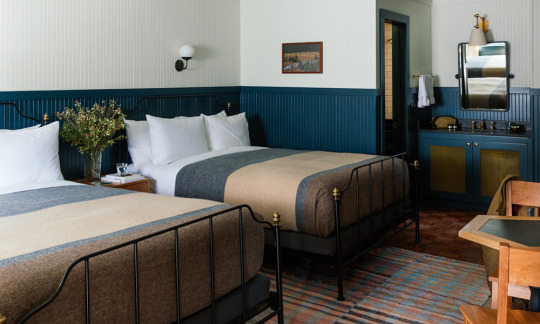
    Earlier this year, Eagle Point Hotel Partners and the Brooklyn-based design firm Studio Tack completed a renovation of the Anvil Motel in Jackson – it’s now the 49-room Anvil Hotel

    Apparently reclaimed motels are the new hospitality trend.

    What I appreciate about their approach, is the emphasis on creating something that feels local and contextual. Here are a couple of snippets from Surface Magazine:

    The designers wanted to avoid a rustic feel, or what Ruben Caldwell, one of Studio Tack’s four partners and an avid backcountry skier, calls “Mountain Modern,” referring to architecture, common in places like Vail, Colorado, and Lake Tahoe, California, that excessively uses reclaimed wood and Cor-Ten steel. “We knew we didn’t want to steer anywhere near that,” says Chou, a long-time snowboarder who more recently got into skiing. “It takes a bit of familiarity with ski towns to know what you don’t want to do.”

    The vibrancy of Jackson’s local culture impressed the design team—and Caldwell so much so that he moved there full-time last year. “As a design team,” Caldwell says, “we’re hyper-aware of the need for projects to be deeply embedded into the local scene.”

    It’s easier to copy and paste. But the results are always better when you take a bit of time to understand a place. 

    Image: Anvil Hotel

  • Follow the sun and sprawl

    image

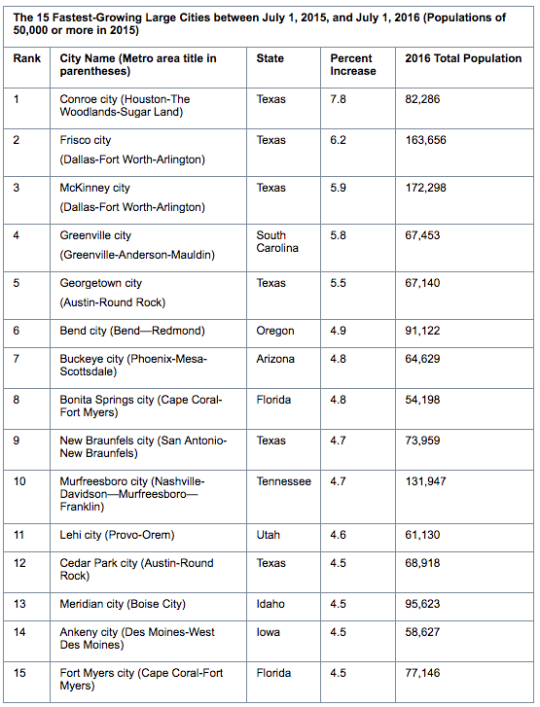
    The U.S. Census Bureau recently released it’s 2016 city and town population estimates. The press release can be found here.

    The headline isn’t a new one. Southern cities continue to grow quickly. This is not a new trend. Humans seem to like warm weather and the housing supply in southern cities tends to be more elastic. This keeps home prices relatively in check and allows the cities to more easily accommodate growth.

    From July 2015 to July 2016, 10 of the 15 fastest growing large U.S. cities were in the south (based on % growth). 4 of the top 5 were in Texas. 

    From 2010 to 2016, the population in large southern cities grew an average of 9.4%. Cities in the west clocked in at 7.3%. And cities in the northeast and midwest were at 1.8% and 3.0%, respectively.

    Two outliers near the top are Seattle and Denver. Since 2010, the population of these two cities grew 15.39% and 14.87%, respectively. I’m going to say it’s because of the skiing and snowboarding. Half-joking. For the top 25 large cities ranked by 2010-2016 growth rate, click here.

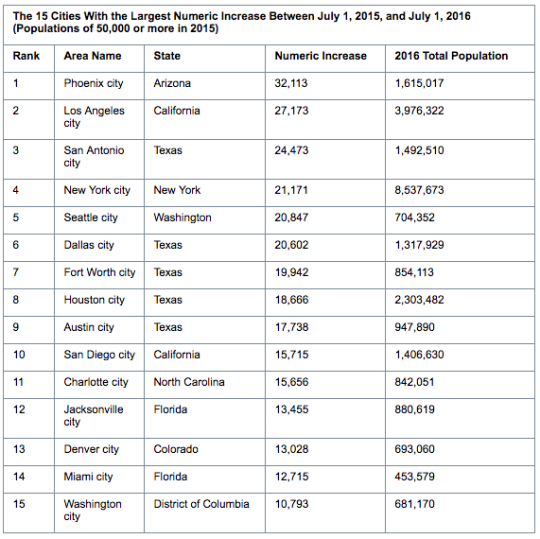
    In terms of absolute humans, Phoenix had the largest numeric increase between 2015 and 2016: 32,113 or about 88 people per day. After Phoenix it’s Los Angeles (27,173), San Antonio (24,473), New York (21,171), and Seattle (20,847). These are all city proper figures.

    It’s also worth noting which large cities aren’t growing. From 2015 to 2016, Chicago fell -0.32% and Detroit fell -0.52%. Philadelphia was only slightly positive at 0.19%. Going back to 2010, Chicago is still flat at 0.27% and Detroit is even more negative at -5.39%. Philadelphia is 2.5%.

    Follow the sun and the sprawl.

    The below charts are from the United States Census Bureau.

    imageimage

  • Merry Christmas

    Merry Christmas everyone! And, thank you all for reading this past year.

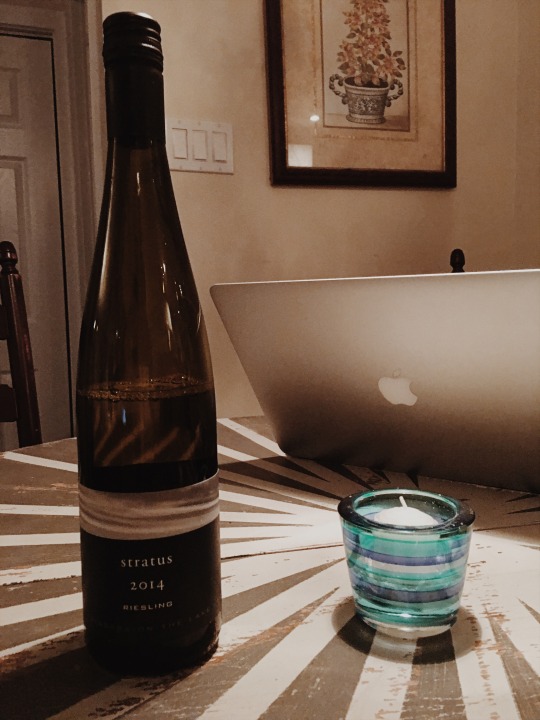
    I just checked into an Airbnb in Mont-Tremblant, Québec and will be spending the next few days here with family and friends. I’ve also brought along some of my favorite wines (see above) and, obviously, my snowboard.

    Hopefully that wherever you are and whatever you’re doing, that you’re with family and/or friends. I know that this time of year can be lonely for some people when things quiet down. So hopefully you have good people to spend it with.

  • GLUE

    I am all booked for my annual retreat to the mountains, which means I now have snowboarding on the brain. This year we are headed back to Whistler (/Powder Mountain) so that we can all check heli boarding (and heli skiing) off the bucket list. That’s one goal – among a few others – that I plan to accomplish in 2017.

    If you don’t snowboard (or ski), this probably means nothing to you. It can be hard to explain the feeling. Thankfully, Christian Haller (Swiss snowboarder), Kris Lüdi, and Stephan Maurer have just released a short film that may very well be the closest approximation to the real thing. It’s called GLUE.

    The whole point of the movie is to portray, in an authentic and visual way, what it’s like to snowboard. To do that, a lot of the footage was shot using a “follow cam.” There are also a lot of close-up shots. I just love the perspectives when it kicks in at 1:50.

    If you can’t see the video below, click here. And if snow and snowboarding aren’t your thing, check back tomorrow for regular scheduled programming.

    [vimeo 190544188 w=640 h=360]

    GLUE from Christian Haller on Vimeo.

  • New all-year, multi-valley, ski and snowboard destination approved in British Columbia

    I know it’s only August, but I am already thinking of snowboarding.

    And I just recently learned that the British Columbia government has given the go ahead for a new multi-peak and year-round ski destination near Valemount, BC. The summits will include Mount Pierre Elliot Trudeau, Twilight Glacier, Glacier Ridge, and Mount Arthur Meighen.

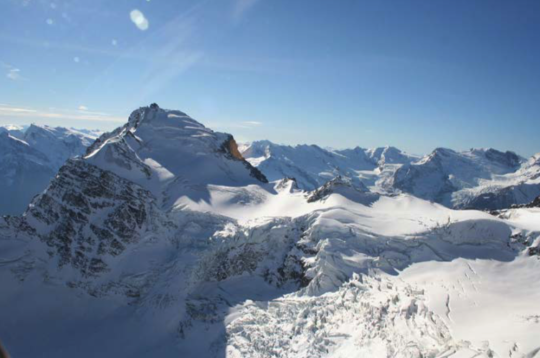
    Here is a photo of Mount Meighen (taken in September) from the project’s master plan.

    image

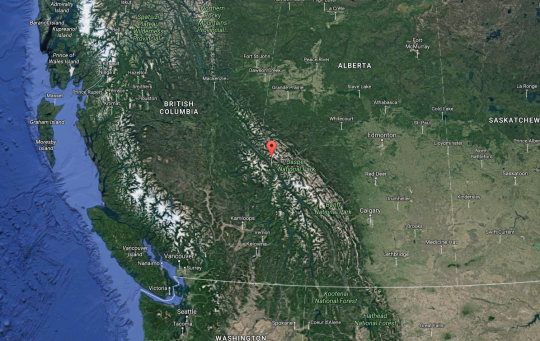
    Here is where Valemount is situated. It’s a 7 hour drive from Vancouver and a 5.5 hour drive from Edmonton.

    image

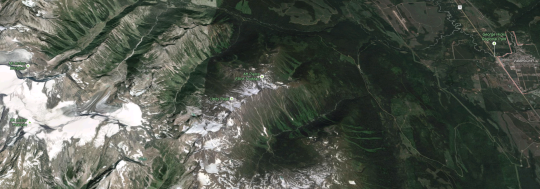
    Here is the mountain range in relation to Valemount. Right hand side of the image. Sorry, I know it’s small.

    image

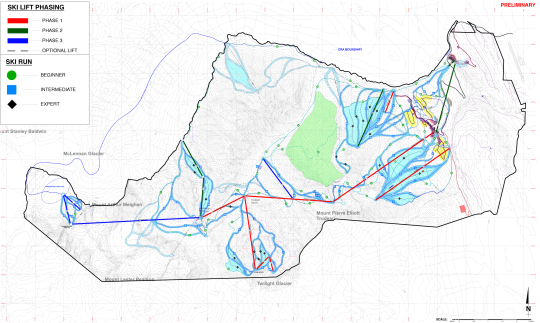
    Here is the master plan that just got approved. Valemount is once again on the right / east.

    image

    And here is why this is a big deal (at least in my world):

    – Valemount has the potential to be “the third largest lift-serviced non-contiguous vertical” in the world at 2,260m (7,415 feet). Zermatt, Switzerland and Chamonix, France are number 1 and 2. Of course, it would still get the title of the largest vertical drop in North America.

    – There are a number of glaciers that would allow for summer / year-long snowboarding.

    – They want to create a multi-valley snowboarding experience, similar to the European Alps.

    – The mountain range has one of the highest average snowfalls in Canada. Valemount gets 5.36m (211 inches) per year and at an elevation of 1,800m it’s 14m (551 inches) of snowfall per year. This is more than Whistler. Because of this, they are not planning any snowmaking.

    – There’s an airport nearby.

    – One of their guiding principles is to minimize the environmental impact.

    Construction is expected to begin in the spring of 2017 and the plan is to open to the public by December 2017. The first phase will include Twilight Glacier at an elevation of 2,530m (8,301 feet). So right from the outset, there will be summer skiing.

    If you’re curious what the master plan for a ski resort looks like, you can download the entire report here. It’s only 324 pages.

  • View From A Blue Moon

    image

    I don’t surf. I would like to learn, but I haven’t yet done that. I snowboard. That’s my thing. It’s what I look forward to doing every single winter. 

    But even as a non-surfer, I can’t begin to tell you how much I enjoyed the movie View From A Blue Moon. A friend told me about it last weekend and I immediately rented it on my Apple TV. (That’s the only thing I have to watch things.)

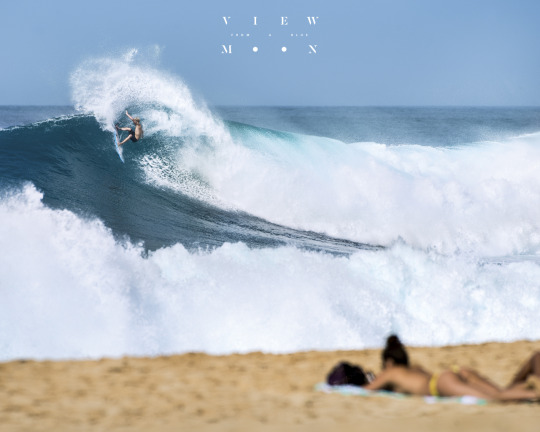
    It’s a movie about John Florence, who is arguably the world’s best surfer right now. He’s from Hawaii. But in addition to John’s incredible surfing abilities, it’s the cinematography and soundtrack that make this movie so special. 

    As soon as the movie ended, I immediately went on Soundcloud to find all of the songs. Quentin Tarantino once said that when you pick the right song for a particular scene/movie, you can then never listen to that song ever again without thinking of the movie. That’s how I now feel about this song.

    Here’s the trailer (apparently it’s the first surf movie filmed entirely in 4K):

    [youtube https://www.youtube.com/watch?v=bTqVqk7FSmY?rel=0]

    If you’re at all interested, I highly recommend you give it a watch. There are also some great urban shots for all of the city geeks who read this blog. Let me know what you think if you end up watching it or if you’ve already seen it.

    Image: View From A Blue Moon

  • A truly modern ski and snowboard resort

    Today my friends and I spent the day at Snowbird.

    In terms of the skiing and snowboarding, it’s way up there for me alongside Jackson Hole.

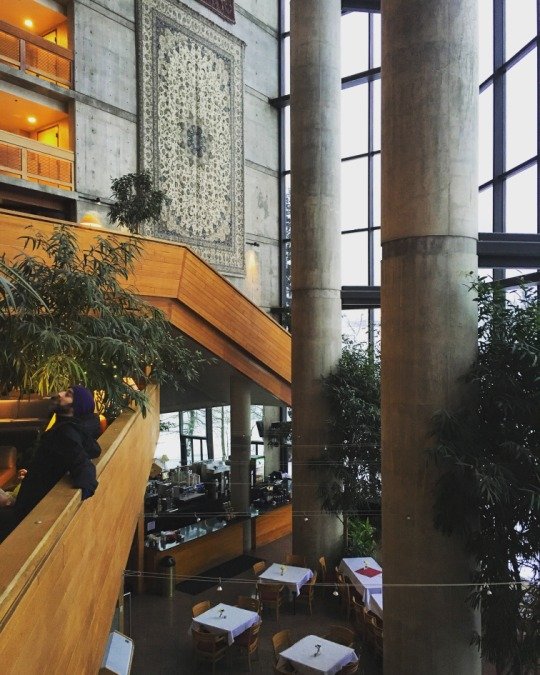
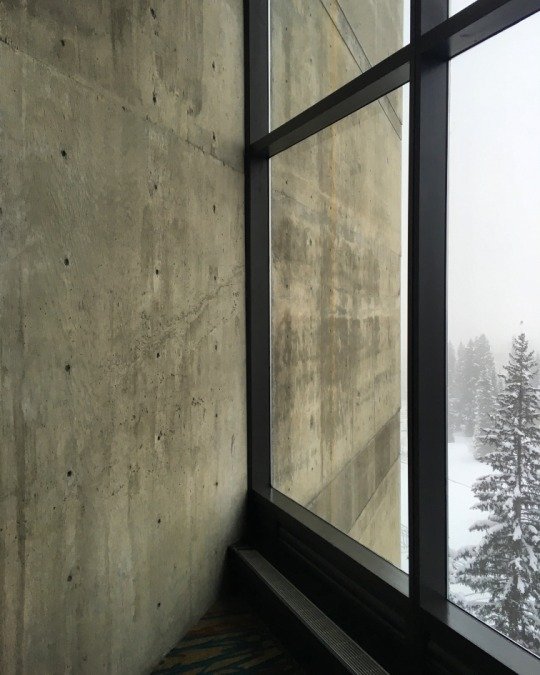
    But beyond the mountain, two things really stood out for me. Firstly, I really liked the overall brand and identity of the resort. Everything from the napkins in the cafeteria to the ski run signs were decidedly modern. Secondly, I loved the Brutalist architecture. And both of these elements combined to create what felt to me like a truly modern ski resort.

    Here are two photos that I took today:

    imageimage

    Developed in the mid-1960s by a man named Ted Johnson, the vision had always been to create a new kind of resort. In fact, Ted was insistent that they eschew the typical faux-alpine architecture that had come to characterize ski towns. 

    Here’s a brief summary of the parties involved and Ted’s design direction, via Salt Lake Modern:

    In 1965, the Snowbird Design Group was founded to create the first master plan. The original group was composed of Robert Bliss, Dean of the School of Architecture at the University of Utah, Jim Christopher, principal at Brixen & Christopher Architects, Dan Kiley, renowned landscape architect and site planning consultant based in Vermont, and architect Jack Smith. Johnson was adamant that the new resort not look “alpine lodgey” and based on the steep terrain and available land, the only choice for design would be to make it compact and dense. An aesthetic very unlike Alta, located just above Snowbird.

    For me, it’s the contrast between the rugged exposed concrete and the warm wood that I love. I left today thinking to myself that Snowbird is the most architecturally interesting ski resort I’ve ever visited.

    But as luck would have it and immediately after we left the resort, I discovered a community group called, “Save our Canyons.” And they don’t appear to be as smitten as I am with the Brutalist architecture. Here’s an excerpt from one of their articles talking about a new construction project at Snowbird:

    “Alas, more Snowbird droppings are fouling our Wasatch nest. Snowbird, already renowned for the hideous concrete bunkers at its base, has plopped another wad of architectural guano on top of Hidden Peak.”

    Of course, it is well known that Brutalist architecture isn’t often a crowd favorite. But when done well, it can be quite beautiful. Hopefully there are others who see what my friends and I saw today.

  • Off to the mountains

    image

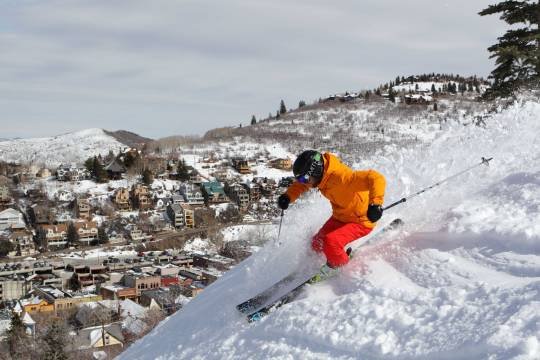
    I am leaving this morning for my annual retreat to the mountains. This year we are going to Park City, Utah, which we decided to do about a year ago.

    The reason we chose this particular place is because Vail Resorts spent $50 million over the offseason to merge Park City Mountain Resort with the neighboring Canyons Resort. 

    There’s now a mountain-to-mountain gondola and 7,300 acres of skiable area across the two resorts, which makes it the largest ski resort in the United States. And that’s why, this month, the New York Times named it one of the 52 places you need to visit in 2016

    But it’s not all puppy dogs and ice cream. What kickstarted this transformation was that the previous operator of Park City, Powdr Corporation, actually forgot to renew its sweetheart land lease.

    So if you’re at all interested in skiing, snowboarding, real estate, and/or lawsuits, you might be interested in what happened here. Curbed did a summary of the battle last year. It was big news in the ski world.

    Image via the New York Times

  • Brébeuf

    I woke up this morning at 5:30 am in a hotel in Ottawa.

    I then drove to Brébeuf, Quebec to meet some friends for a ski and snowboard weekend. (It’s beautiful here.)

    Upon arriving I was faced with a large hill that my rear-wheel car with all season tires was absolutely not prepared for. So that sucked up about an hour of time.

    After we unstuck my car, we then spent the day skiing and snowboarding at Mont-Tremblant. (First day of the season for me.)

    At this point all I can think about is a good night’s sleep, so I’m afraid that there won’t be much of a post today on Architect This City.

    But please feel free to hijack the comment section and talk about whatever you would like. Maybe we can get some action started there.

    I would actually be really curious to see what topics interest all of you.