Daily insights for city builders, delivered every morning at 6 AM ET. I’m Brandon Donnelly — a Toronto-based real estate developer and founder of Globizen. I’ve been writing here since 2013.

Tag: skyline

  • The views from Capital Point

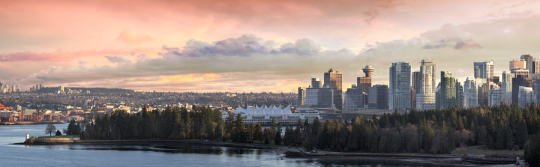
    These are two photos taken from the roof of our Capital Point project (office strata) in Burnaby, BC. They represent the views from about 19 storeys up. In the first photo you can see downtown Vancouver and the mountains that surround it. And in the second photo you can see the Metrotown town center (second largest in the region) and the SkyTrain station that services it. It’s certainly hard to beat British Columbia on a beautiful sunny day.

  • Merry Christmas

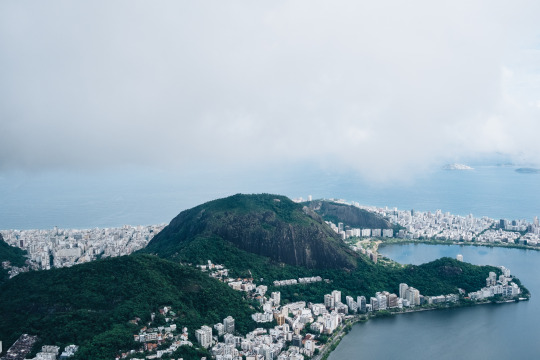
    Merry Christmas from Rio de Janeiro. 

    Even though I am still practicing my daily blogging ritual, this is about the only time of the year where I find it’s possible to “disconnect” a little. So hopefully you’re doing a bit of that yourself and spending time with family and friends, regardless of whether you celebrate Christmas or not.

    The above photo was taken from the feet of the Christ the Redeemer statue at the top of Corcovado mountain. Excluding its base, which is about 8m tall, the statue itself is 30m in height. That’s basically the same height as Junction House (a 9 storey midrise condominium).

  • Photoblog: Sunrise at Ten York

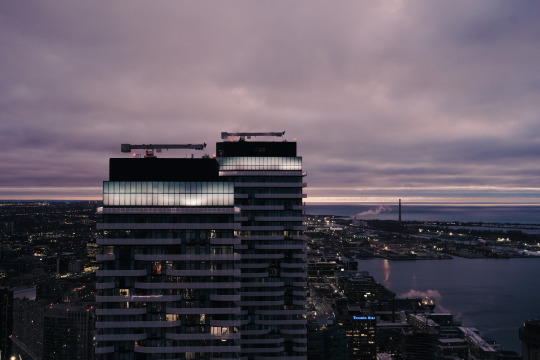
    This morning I watched the sun rise from the the roof of Ten York Condominiums, some 735 feet up. This is what that looked like (the sky initially had a purple hue to it):

    It was cold as all hell, but sometimes you have to work for your photos.

    Some of you may also remember that I wrote about this building a few months ago. Tridel, the developer, is calling the project its first “smart condominium.”

    Regular scheduled programming will resume tomorrow.

  • Photography heli tour

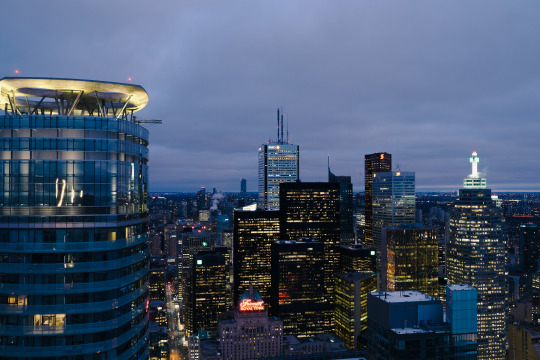
    Tonight I went a photography heli tour with @normandthegang

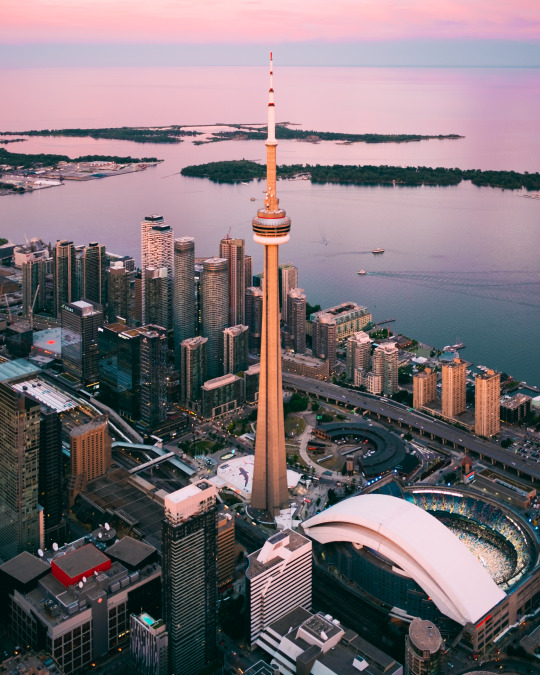
    I took almost 500 photos, including a bunch of aerials of our development sites. And we got lucky with a pretty spectacular pink sunset. 

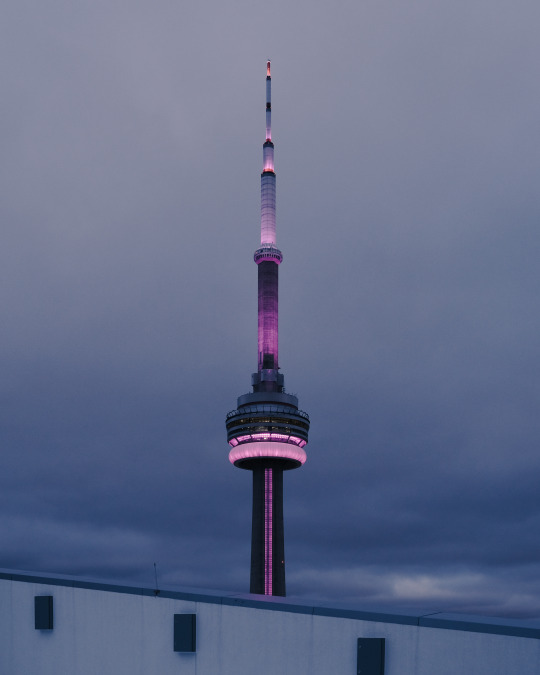
    Here is a photo that I took of the CN Tower with my Fuji X Series (35mm prime lens):

    Lake Ontario actually looked like that. This is not post-production chicanery. Follow me on Instagram to see the rest of the photo series.

    Thanks again for the invite Norm. That was a lot of fun. 

  • The City as a Place for People

    The City of London Corporation recently published a report called “The City as a Place for People”, which talks primarily about itself and how great London is as a magnet for talent. 

    But as self-serving as it may be – the report is timed to be ahead of this year’s MIPIM – there appears to be some data and interviews backing up the claims.

    58% of “institutional investors” said that London is the best European city for business. Dublin was next at 22%. 

    A separate survey of 2,568 “corporate decision makers” in Europe revealed that 21% of respondents felt that London was the best European city for business, followed by Paris (13%) and Frankfurt (7%). When asked which city had the best talent pool, the responses were fairly similar.

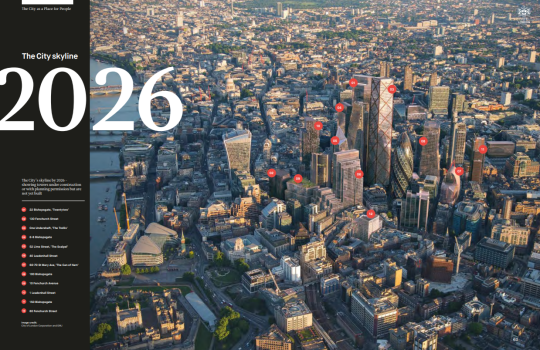
    Also included in the report is a rendering of the City’s skyline by 2026. These are always fun to see. Here is a screen grab:

    image

    It is showing all towers under construction and all towers with their planning permissions in place. If you’d like to download the full report, you can do that here.

  • Episode 15: The Master Builder

    My friend Ben Stevens runs a blog called Skyline where he interviews people involved in the built environment (architecture, real estate, planning, and so on). You might remember that I did an episode with him about a year ago where we talked about the overlap between architecture and development.

    His most recent episode is with San Diego-based architect-developer Jonathan Segal. I’ve mentioned Segal before on this blog and that’s because he is well known and admired in certain circles for (re)creating a process that places the architect in the position of “master builder.”

    He is singularly driven by one goal: to have ultimate control over the architecture that he creates. Making money is secondary. It is a byproduct of goal number one.

    To achieve this, he has worked to cut out every conceivable middle person. Design is in-house. Construction management is in-house. Property/asset management is in-house. He even avoids bringing on investors for his projects, out of fear that they will start to dictate what he can and can’t do.

    If this approach resonates with you, I definitely recommend you watch the interview. Click here if you can’t see it below.

    [youtube https://www.youtube.com/watch?v=r7UT–CAS1g?rel=0&w=560&h=315]

  • Big box stores are the new noxious-use

    As a follow-up to yesterday’s post on New Urbanism, I thought I would post an interesting video discussion between Andrés Duany and Ben Stevens. 

    Duany is the father of New Urbanism and Stevens runs a great blog called The Skyline Forum where he interviews notable city builders, developers, architects, planners, and so on. If you can’t see the video below, click here.

    [youtube https://www.youtube.com/watch?v=QfZZ61C4YOY?rel=0&w=560&h=315]

    Once again it’s a great reminder that so much of what we do and build in our cities is dictated by parking requirements. One of the ways Duany differentiates New Urbanism from “old urbanism” is that the new explicitly provides for the car. 

    Regrettably, I think we do that almost everywhere nowadays. But I take his point that New Urbanism happens almost as an intervention in areas where there are few or no other mobility options besides the car.

    I also thought it was interesting that Duany refers to big box stores as the new noxious-use in cities, rather than industry. He describes the parking, not the stores themselves, as creating a “flume of unwalkability.”

    It always seems to come down to parking.

  • 10 reasons to visit Philadelphia right now

    image

    Today’s ATC post – which happens to be a guest post – is coming to you live from on board the UP Express train that runs from Union Station in downtown Toronto to Pearson Airport. (Everywhere should have free wifi.)

    I’m on my way to Philadelphia and I’ve been wanting to try this train since it opened earlier this summer. It feels great to finally ride it. It’s everything I could have hoped for. It even has that new car smell 🙂

    Last month I wrote a post called, 10 reasons to visit Toronto right now. It was in honor of my good friend Alex Feldman’s visit. Well now it’s my turn to visit Philadelphia and he has decided to return the favor and do a Philly version of that same post. 

    Alex is to Philadelphia what I am to Toronto. He grew up in Philly. He was educated in Philly (we went to Penn together). And he’s super passionate about the future of Philly. And I think that’s how everyone should be about their city.

    So I hope you enjoy his list of 10 reasons to visit Philadelphia right now. It’s basically my to-do list for this weekend.

    ———————————————

    10. World Heritage City: Philadelphia is on track to become the first World Heritage City in the United States. This UNESCO designation will underscore the city’s historic importance as the birthplace of American Democracy as well as the historic urban fabric which gives the city it’s walkable, urbane character.

    9. Shopping: Philadelphia has come a long way as a shopping destination. Conde Nast Traveler recently ranked the city as number 2 out of the best shopping destinations in the world. 3rd Street in Old City has become a hotbed for independent boutiques while Rittenhouse Square has attracted new chains such as Uniqlo, Theory, and Vince. More is on the way with a complete re-make of the Gallery shopping mall slated to start soon and the new East Market complex under construction. 

    8. The Pope is Coming:  In case you haven’t heard, Pope Francis will make his first visit to the United States – with a 3 day visit to Philadelphia in late September. The visit will coincide with the World Meeting of Families gathering. A crazy number of visitors (2 million?) are expected to descend on the city – causing Philadelphians to panic, complain, and attempt to rent their houses for ridiculous amounts of money. But this important visit will help raise the profile of the city on the international stage.

    7. Building Boom: There is probably more development happening in Philadelphia right now then any other time in recent history. The skyline is growing with additions by Norman Foster, Cesar Pelli , and Kohn Pedersen Fox. New apartment buildings, condos, and rowhouses are under construction across the city (rental vacancy rates are less than 2%). In addition the Barnes Foundation and the new Singh Center for Nanotechnology mark impressive additions to the city’s architectural landscape.

    6. Public Spaces: Philly’s public realm has seen massive investment over the last several years. A complete remake of the landscape outside of City Hall has become the new Dilworth Park. The designers of NYC’s highline have added two public spaces to the city (Race Street Pier and the new Central Green in the Navy Yard). And Schulkill Banks recently added a new boardwalk which the New York Times raved about when they ranked Philly as the number 3 city to visit in 2015. More is on the way with the first phase of the Reading Viaduct Rail Park expected to start soon.

    5. Waterfront: Philadelphia’s Delaware River waterfront has long been cut off from the city by interstate 95. Things have started to change recently, with new trails and pier parks recently added to the working waterfront. Even Penn’s Landing, the city’s much maligned waterfront attraction is seeing improvements – including the tremendously popular Spruce Street Harbor Park – a pop-up park featuring floating beer barges, shipping container food stands, and tons of hammocks.

    4. Food: Philly is one of the best food cities in the United States. So much is happening right now in the city’s dining scene, it’s hard to keep track of the latest restaurant openings. Neighborhoods such as Fishtown and East Passyunk have emerged as hot dining districts with BYOB chef driven restaurants. More can be gleaned from the Washington Post which recently summarized the dining scene better than I can.

    3. Pop-up Gardens: One of the best reasons to visit Philly in the summer is the opening of the Pennsylvania Horticultural Society Pop-Up gardens. The wildly popular beer gardens, began several years ago as an initiative to remake underused or vacant lots into useful public spaces. This summer, 2 gardens – one on 15th and South and one at 9th and Wharton have been transformed into vibrant spaces for eating, drinking, and hanging out.

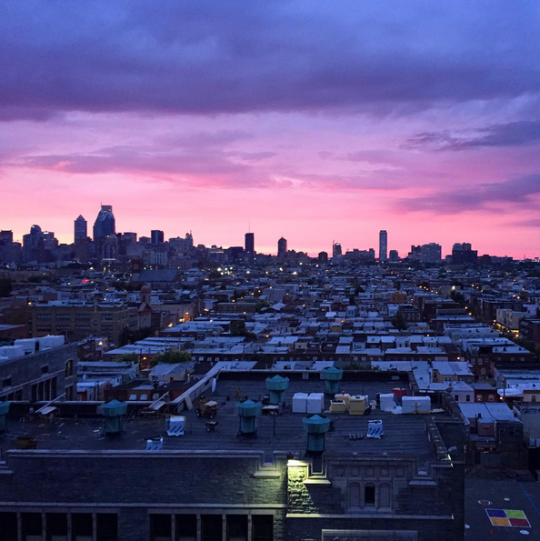
    2. Le Bok Fin: Speaking of temporary uses, the most recent addition to Philly’s pop-up (or iterative placemaking) scene is a rooftop bar called Le Bok Fin. Situated on the 8th floor of an old vocational high school in South Philly (and named after the school’s restaurant – which in turn is a play on one of Philly’s most famous French restaurants). This is the first iteration of development at what is planned to become an amazing new center for creatives inside the old school – being led by Lindsey Scannapieco and her team at Scout LTD. Check out Le Bok Fin for incredible views of the city skyline (especially at sunset).

    1. Bike Share: While a little late to the party, Philly recently launched it’s own bike share program – which is proving to be a huge success. Dubbed Indego, the new bike share is easy to use, has 60 stations, more than 600 bikes and is becoming one of the best ways to hop around town. Check one out and go explore Philly!

    Image: Alex Feldman

  • Vancouver isn’t immune to the urban-suburban divide

    https://500px.com/embed.js

    In the comment section of my post about Vancouver’s transit referendum, a reader suggested I take a look at an article by Peter McMartin called, The real Vancouver emerges (from the ruins of the plebiscite)

    McMartin’s argument is basically that Vancouverism – the name given to the city’s progressive architecture and planning approach – isn’t as widespread as it might seem. The reality is that Vancouver, much like Toronto and other cities, is divided.

    “Vancouverism might be a reality for two or three neighbourhoods huddling in the downtown, and that greener, more progressive ethos might hold sway in one or two more.

    But Vancouver — and I speak of it in the metro sense — is the sum of its parts, and most of its parts are suburban in their sensibilities, and that includes not just all of the suburbs but most of the neighbourhoods in the City of Vancouver proper.

    They’re resistant to change. They abhor densification. They’re conventional in their sensibilities and they’re highly dependent on the automobile. More importantly, they’re not just dependent on the automobile, they prefer it.”

    Here in Toronto, we know our city is divided. And many people see it as evidence that amalgamating the city in 1998 was a big mistake. The inner suburbs are holding back old Toronto and elitist old Toronto just doesn’t understand the priorities of the inner suburbs.

    But I’m not convinced that amalgamation is to blame.

    Most cities have long histories of amalgamating adjacent towns, villages, and cities, and I suspect that there was opposition all along the way. At what point is amalgamation acceptable and and what point is it problematic?

    The anti-amalgamation camp here in Toronto seems to believe that it would have allowed old Toronto to continue doing what it wants to do and allowed the inner suburbs to do what they want to do.

    But this to me feels parochial.

    Our cities need to think bigger than that. We need to think as cohesive urban regions. And as Vancouver demonstrated this past week, that’s not always easy. But I don’t think the answer is to just think smaller and ignore the people whose views don’t match our own.

    Interestingly enough, what a lot of this comes down to, I think, is built form. 

    Because different kinds of built form will encourage and often mandate different kinds of transportation choices. And how you get around a city will inform a big part of what you value and what you vote for.

    Over time though, I believe that we will see built form start to level out across our city regions through continued intensification. Many people won’t be happy about this change. But it is likely that it will end up creating more cohesive cities. 

    Built form is no small thing.

  • Fun Friday: Toronto Skyline Porn [Video]

    This video of Toronto has been making the rounds online over the past few days (click here if you can’t see it below):

    //player.vimeo.com/video/112944154

    It was created by 25-year-old filmmaker Ryan Emond and the aerial shots were filmed using a drone.

    He also made this one a few years ago called Toronto Tempo (click here if you can’t see it below):

    //player.vimeo.com/video/30788720

    I love his passion for this city. 10 years ago, it felt like it was almost fashionable to hate on Toronto. Young people would always talk about moving to some other more exciting city. But that has completely changed. Today there’s a real passion for this city. And I love that.