Daily insights for city builders, delivered every morning at 6 AM ET. I’m Brandon Donnelly — a Toronto-based real estate developer and founder of Globizen. I’ve been writing here since 2013.

Tag: ski

  • Western resort real estate is in very high demand

    People like ski and snowboard towns. Here’s an excerpt from a recent WSJ article talking about Park City:

    Prices continued to rise in most luxury ski towns this past year, but none grew as much as Park City, a former silver mining town 32 miles east of Salt Lake City. The average home sale price there grew 35% in 2023 from 2022, compared with a 9.4% increase at Vail and Beaver Creek and 3.2% at Aspen, according to the resort report by Summit Sotheby’s International Realty. 

    The main point of the article is this: Park City has gotten really expensive, and so people are now looking and buying homes further out in places like Heber City, Midway, and Kamas. Here’s how expensive expensive is:

    Over the last four years, Covid has stoked demand for western resort real estate. In Park City, single-family homes have sold for a median price of $4 million year-to-date, up from $1.996 million in 2019, according to Redfin, which averaged the monthly median sales prices weighted for the number of homes sold. One home was listed in September for $65 million, which could set a record for the state. It’s now under contract, according to listing agent Paul Benson of Engel & Völkers, who declined to disclose the sale price.

    This, of course, isn’t a novel phenomenon. It’s the whole “drive until you qualify” thing. But what’s interesting about this particular mountain example is that it’s not centered around access to a CBD or downtown; it’s centered around “how fast can I get to a ski and snowboard resort?”

    For example, Deer Valley has a new East Village that is expected to open up in 2025. This brings the cities mentioned above closer in. And buyers seem to be doing that math: “It’s a 25-minute drive today, but next year I’ll be able to get on a lift in 15 minutes. Score.”

    Given that Deer Valley also doesn’t allow snowboarders, it’s interesting to think about how these trends could be bifurcating the region between skiers and snowboarders. I don’t have any data on this, but I bet if you mapped it out, there would be some sort of clustering happen.

    The article also goes on to talk about transportation. Because you can’t talk about new development and real estate without talking about traffic. But I think Bill Ciraco (Park City Council) gets it exactly right in the article: This is a car problem, and less of a people problem.

    In my mind, the Wasatch Range is destined for something like this ONE Wasatch concept, which is/was a proposal to link seven resorts through a handful of new skiable connections. This is similar to what you’ll find in Europe, and it means less driving and more time on the mountain.

    That’s what everyone wants to be doing anyway.

    Photo by Lauren Pandolfi on Unsplash

  • How the ski industry price discriminates

    Snowboarding in Europe, of course, sounds really fancy. And don’t get me wrong, it can be fancy if you want it to be. But the reality is that it’s also a cheaper option. And that’s because the price of a single day lift ticket at most resorts in America is now many multiples of what it costs in Europe. Think $250 vs. €50.

    North America has become the expensive destination.

    According to a recent Economist article titled “the economics of skiing in America,” resorts in Europe are often owned by local or national governments. This is not the case in America, and it’s why the lift tickets in Europe seem, by comparison, cheap. But this price differential is also the result of an evolving business model.

    Historically, owning a ski resort has never been a stable business in the US. And this makes sense. Most resorts make their money on lift ticket sales. However, sales are dependent on snowfall. If you get a lot of snow, then you make a lot of money. If the planet starts warming up and you don’t get a lot of snow, then you don’t make a lot of money. Vail has since changed this.

    What they have done is made it so punitive to buy a single day lift ticket in North America, that even if you’re an occasional skier, the only sensible thing to do is buy a subscription-like pass in the spring — well before the next season starts.

    This is what I have started doing and it gives you unlimited skiing for less than the price of a few days. It also gives Vail a source of revenue that isn’t so dependent snowfall. Season passes now make up about 61% of their lift-ticket revenue, according to The Economist. At the same time, it is a model that relies on being able to price discriminate against single-day, non-pass users:

    In basic economic theory, excessive market power reduces the efficiency of an industry. Firms reduce output so as to be able to charge more. There is, however, an exception: if a monopolistic firm can charge different prices to different customers, it need not reduce output to increase its profit. The skiing industry shows the truth of this. As the industry has consolidated, daily prices have soared, extracting more cash from price-insensitive skiers.

    But this isn’t the only way to do it. There’s also the whole real estate thing. Last year, Reed Hastings, cofounder of Netflix, became the majority owner of Powder Mountain. And here, they’re trying out a different business model:

    This December, Powder Mountain in Utah announced that it would be moving to a model where only local property-owners are allowed to ski certain chairlifts. The idea is to profit from real-estate sales, by offering private skiing without the crowds. “To stay independent and uncrowded, we needed to change,” says Reed Hastings, the firm’s boss.

    Even still, neither of these approaches is making snowboarding and skiing more accessible. Which is why it’s not uncommon to come across stickers and t-shirts at local ski shops that say, “Vail — ruining ski towns since 1966.” People are missing the old days when lift tickets were cheap and the lines on powder days weren’t so long.

    What skiing needs is in fact much of what the economy more generally needs: supply-side reform, and especially the construction of new housing and transport in the most popular spots. Though there are more skiers than ever, there are in fact fewer resorts than there were a few decades ago.

    This sounds familiar.

    All quotes are from The Economist.

  • Cheese, bacon, and starch

    I kept spotting this backpack in Les 3 Vallées and I thought it was awesome because, well, in the words of the late Anthony Bourdain, “you can never have too much cheese, bacon, or starch.” Tartiflette is a casserole dish that is local to the Haute-Savoie region in the French Alps. Its main ingredients are potatoes, bacon, and cheese (reblochon to be exact). And yes, it is as delicious and filling as it sounds.

    I also liked that the slogan was specific to the region we were in, and so I went on a hunt to find this mysterious backpack. I must have gone into at least 8-10 stores looking for it. None of them had it. But eventually I learned that it was an online thing. It was for the “I like to ski and hang out in chat rooms” crowd, or at least that’s how one guy explained it to me. So I went online and ordered it back to Toronto.

    It finally arrived today, and I’m looking forward to using it when I snowboard, cycle, and attempt to make tartiflette for the first time. Now I just need to locate some reblochon. (Note to US readers: My understanding is that this cheese is considered contraband in your country because it is unpasteurized and does not meet US import laws. So you may need to find some sort of clandestine cheese market if you want to make it.)

    For those of you who also like to ski and hang out in chat rooms, you can find the bag and other merch, here. It’s all an extension of the Grenoble-based online magazine, skipass.com.

  • The Enchanting Village

    The story of Avoriaz 1800 starts in the 1960s.

    Downhill skier Jean Vuarnet, whose name is today found on cool sunglasses, had just become an Olympic Champion at Squaw Valley in California. He returned to his home in Morzine, France (located in Haute-Savoie) and was asked to help build a new resort on the empty plateau above the town.

    So he, and whoever else, raised some money, got the necessary approvals, and managed to successfully get the first lifts operational. But the resort quickly ran into financial difficulties and, apparently, bankruptcy became a possibility.

    The turning point came when he met Paris-based developer Robert Brémond. He had the capital and the experience, and so Vuarnet eventually ceded the project to him in 1962. In 1964, Robert then asked his son, Gérard, who was only 27 at the time, to lead the project. Supposedly he said to him, “the mountains are for the younger generation.”

    Gérard then went out and hired a young architect named Jacques Labro. He was also in his 20s at the time; 26 to be exact. The mandate he gave Labro was clear: design the ideal recreational resort. At the same time, he was asked to build upon Vuarnet’s original vision for Avoriaz. The result was an audacious masterplan designed around three guiding principles.

    First, it was to be a completely car-free resort, which was/is a big deal and an accomplishment that remains true today. To access Avoriaz by car you either need to park below in Morzine and take a gondola up, or park at the entrance to the resort.

    Two, it was to be an ideal place for skiing (snowboarding didn’t exist just yet). This meant that the entire resort had to be sloped correctly so that everything would be ski in and ski out.

    Finally, it was to have decidedly modern architecture that fit sensitively within the landscape. They didn’t want it to look like some ideal Swiss mountain village. What they wanted was bold, different, and highly sustainable. The result is some of the most unique mountain architecture to be found anywhere.

    For a preview of the village’s architecture, check out these photos by Alastair Philip Wiper. They were part of an exhibition called “Avoriaz: The Enchanting Village.” Along with this story, they will probably make you want to visit the place. That’s certainly the case for me.

    Photo by Rémi Bertogliati on Unsplash

  • Bar d’altitude

  • 13th annual+

    It’s that time of year again: the annual ski and snowboard trip.

    Regular readers of this blog will know that this happens each and every year, provided a global pandemic isn’t currently underway. Last year we went to Park City and this year we’re off to Lyon and Les 3 Vallées. Is there anything better than urban + mountain? I don’t think so.

    This year’s is also unique in that I selfishly upgraded it into a slash bachelor party for myself. And that’s why I’m calling it the 13th annual, plus.

    So what should you expect on this blog for the next 10 days or so?

    You should expect more travel, food, and snowboarding-related content, as well as more photos. I generally never travel without my Fujifilm. I’m also thinking about experimenting with more real-time posts, and possibly even multiple posts per day. Basically something more akin to a social feed. We’ll see if that happens.

    Regardless, if beautiful European cities and sublime mountains aren’t your thing, you may want to check back in early February for our regularly scheduled city building programming.

    Photo by Inés Álvarez Fdez on Unsplash

  • The impact of climate change on the Winter Olympics

    It was pure luck, but we couldn’t have timed this last week any better. It started snowing in the mountains around Salt Lake City on Tuesday, and it felt like it didn’t stop until Saturday. On Wednesday morning, which was peak powder, the main resorts were reporting anywhere between 23″ and 30″ of fresh now. It was the stuff of magical dreams.

    But snowfall is, of course, highly variable. SLC is having a record year, whereas many resorts in Europe weren’t able to open until mid-January because of a lack of snow. And from a macro perspective, things are generally getting worse. According to this report, for every one degree increase in the world’s average temperature, global snow cover is reduced by about 8%.

    What this mean is that, even in low emission scenarios, many of the places that previously hosted the Winter Olympics, may struggle to do so again in the future because of “non-reliable” snow cover. Freestyle ski and snowboard, for example, typically wants a minimum of 1 meter of snowpack as a base, and sometimes more if melting is expected.

    Things do not look positive for Vancouver, Garmisch-Partenkirchen, and even Chamonix in the below chart. (And as a further blow, the authors of the report also don’t know how to spell Vancouver.) Naturally, this is something that you might want to consider when looking at long-term investments that are dependent on fresh snow.

    You can, however, ignore Sochi in the above chart. Because this was never a great place for the Winter Olympics and it’s unclear to me why this place was ever chosen (other than for presumably nefarious reasons). It’s like: “We are one of the largest and coldest countries in the world. We have a lot of snow in Russia. But for fun, let’s choose one of the few places with a sub-tropical climate.”

    Excluding Sochi, though, this is an alarming chart.

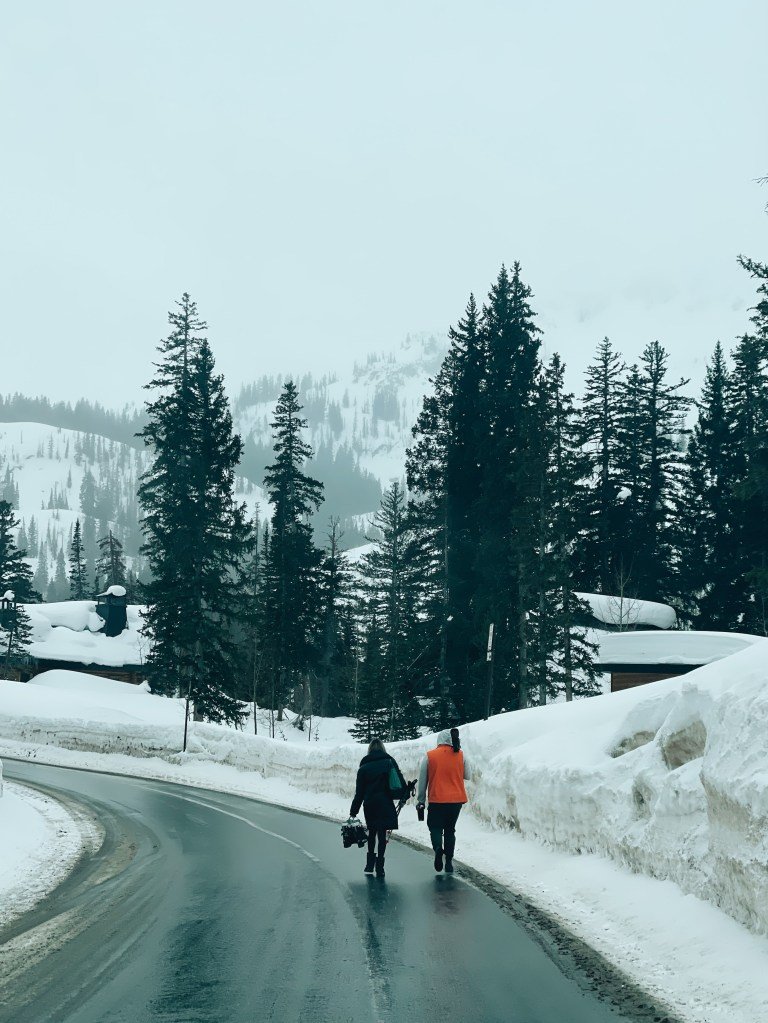
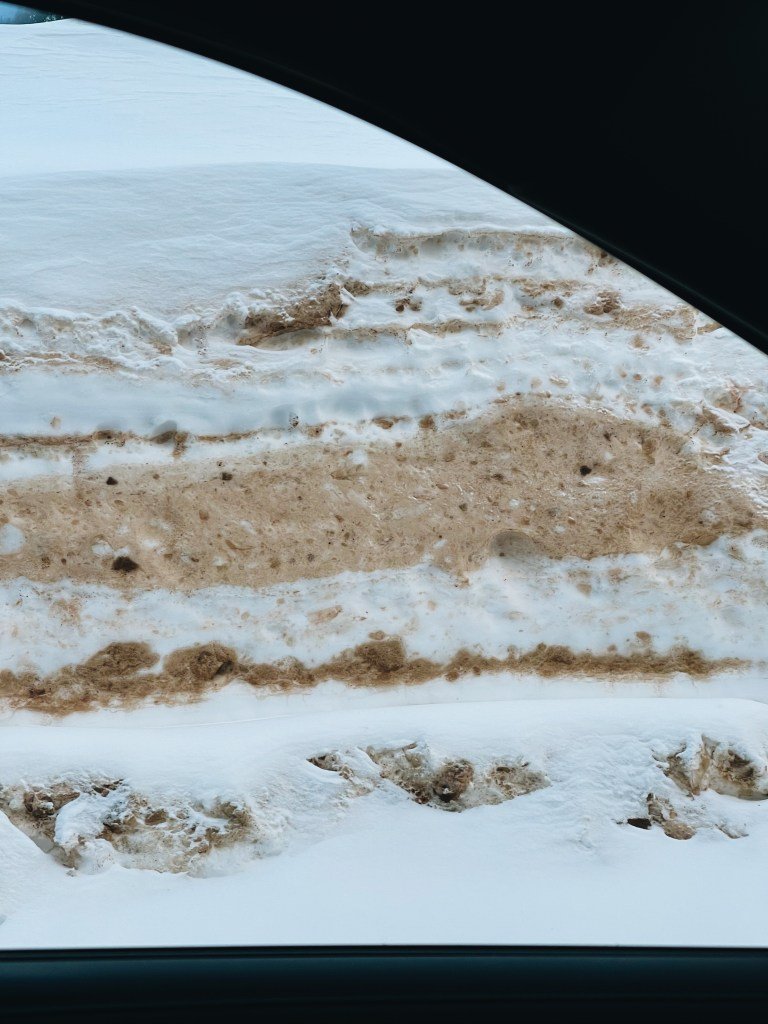
  • Big Cottonwood Canyon, Utah

    Today we went skiing and snowboarding at Brighton, which is in Big Cottonwood Canyon. It was cool seeing the landscape transform and the temperature drop as we went from 4,300 feet (in Salt Lake City) to 8,755 feet (at the base of the mountain). Here are a few snaps from the road.

    Shot on iPhone

  • 12th annual

    For those of you who are long-time readers of this blog, you might remember that I do an annual ski and snowboard trip with a group of close friends from both Canada and the US. This year should technically be the 14th annual, but we took two years off during the pandemic (though some of us did meet up to ski), and so we’re referring to this as the official 12th annual. The last one was in February 2020 in Fernie, BC, and this weekend we’re off to Park City, Utah.

    This annual trip is something that I look forward to all year. And it has really cemented my love of snowboarding and the mountains. For me, it’s this wonderful combination of outdoor activity, beautiful landscapes, unplugging, and catching up with friends that I have known, in many cases, for over 20 years. In fact, I know that this trip is the reason that a few of us decided to get together to build Parkview Mountain House (our upcoming “creative mountain retreat” in Park City).

    A big part of what we want to do with the house (when it’s hopefully ready next winter) is share our love of the mountains with others. We want others to experience what we experience when we go on these trips. At the same time, we felt like there was a huge gap in the market. Park City is a world-renowned ski and snowboard destination, and yet it still feels hard to find modern and design-focused places to stay. So we decided to create our own.

    There is, however, one small problem: my right knee. It has been bothering me for the last few years whenever I snowboard, and usually only when I snowboard, to the point where I have to get off the mountain. This obviously pisses me off. So I decided to spend the last 2 months training my tender knees with Noah Mandel. We’ll see if that did anything this weekend. But I’m so committed to the mountains that, if it helps, I’m even prepared to switch to skiing!

  • European Alps are home to a third of the world’s ski resorts — but they’re mostly closed

    This winter was supposed to be the 12th edition of a ski and snowboard trip that I do every year with a group of friends from both Canada and the US. Last winter we were in Fernie, British Columbia and this winter we were planning to go to Europe. But for obvious reasons, the trip has been cancelled. It’s going to be a tough season for the ski industry.

    According to this recent FT article, the European Alps are home to more than a third of the world’s 2,084 ski resorts. Typically, these resorts bring in about €28 billion in revenues over the course of a season, which is similarly about a third of the global total and almost 7% of the value of the European Union’s overall tourism market.

    But many/most resorts are closed right now. France has shuttered all ski resorts until at least January 7, 2021. And Switzerland, while “cautiously open,” is apparently getting pressure from its neighbors to close down again as further quarantine restrictions are put in place.

    Interestingly enough, some resorts are already reporting higher than normal early bookings for the 2021-2022 season. This is according to the same FT article. Instead of several hundred early bookings, which would be typical, they’re reporting several thousand. And many of the bookings have moved upmarket compared to prior years.

    What this starts to indicate is that we are likely to see an explosion in travel and leisure spending as soon as people feel safe and as soon as these restrictions are lifted. Demand is getting pent-up right now and that can mean only one thing: the 12th annual ski and snowboard trip needs to be a banger.

    Charts: Financial Times