Daily insights for city builders, delivered every morning at 6 AM ET. I’m Brandon Donnelly — a Toronto-based real estate developer and founder of Globizen. I’ve been writing here since 2013.

Tag: ski utah

  • Western resort real estate is in very high demand

    People like ski and snowboard towns. Here’s an excerpt from a recent WSJ article talking about Park City:

    Prices continued to rise in most luxury ski towns this past year, but none grew as much as Park City, a former silver mining town 32 miles east of Salt Lake City. The average home sale price there grew 35% in 2023 from 2022, compared with a 9.4% increase at Vail and Beaver Creek and 3.2% at Aspen, according to the resort report by Summit Sotheby’s International Realty. 

    The main point of the article is this: Park City has gotten really expensive, and so people are now looking and buying homes further out in places like Heber City, Midway, and Kamas. Here’s how expensive expensive is:

    Over the last four years, Covid has stoked demand for western resort real estate. In Park City, single-family homes have sold for a median price of $4 million year-to-date, up from $1.996 million in 2019, according to Redfin, which averaged the monthly median sales prices weighted for the number of homes sold. One home was listed in September for $65 million, which could set a record for the state. It’s now under contract, according to listing agent Paul Benson of Engel & Völkers, who declined to disclose the sale price.

    This, of course, isn’t a novel phenomenon. It’s the whole “drive until you qualify” thing. But what’s interesting about this particular mountain example is that it’s not centered around access to a CBD or downtown; it’s centered around “how fast can I get to a ski and snowboard resort?”

    For example, Deer Valley has a new East Village that is expected to open up in 2025. This brings the cities mentioned above closer in. And buyers seem to be doing that math: “It’s a 25-minute drive today, but next year I’ll be able to get on a lift in 15 minutes. Score.”

    Given that Deer Valley also doesn’t allow snowboarders, it’s interesting to think about how these trends could be bifurcating the region between skiers and snowboarders. I don’t have any data on this, but I bet if you mapped it out, there would be some sort of clustering happen.

    The article also goes on to talk about transportation. Because you can’t talk about new development and real estate without talking about traffic. But I think Bill Ciraco (Park City Council) gets it exactly right in the article: This is a car problem, and less of a people problem.

    In my mind, the Wasatch Range is destined for something like this ONE Wasatch concept, which is/was a proposal to link seven resorts through a handful of new skiable connections. This is similar to what you’ll find in Europe, and it means less driving and more time on the mountain.

    That’s what everyone wants to be doing anyway.

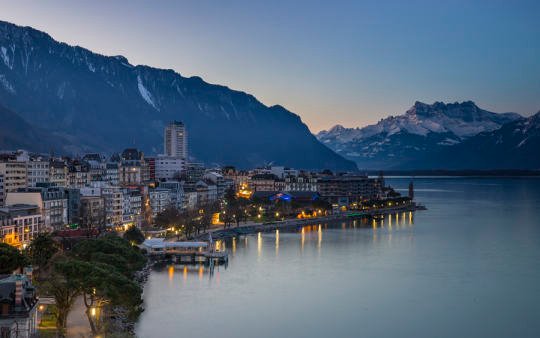
    Photo by Lauren Pandolfi on Unsplash

  • The final push at PMH

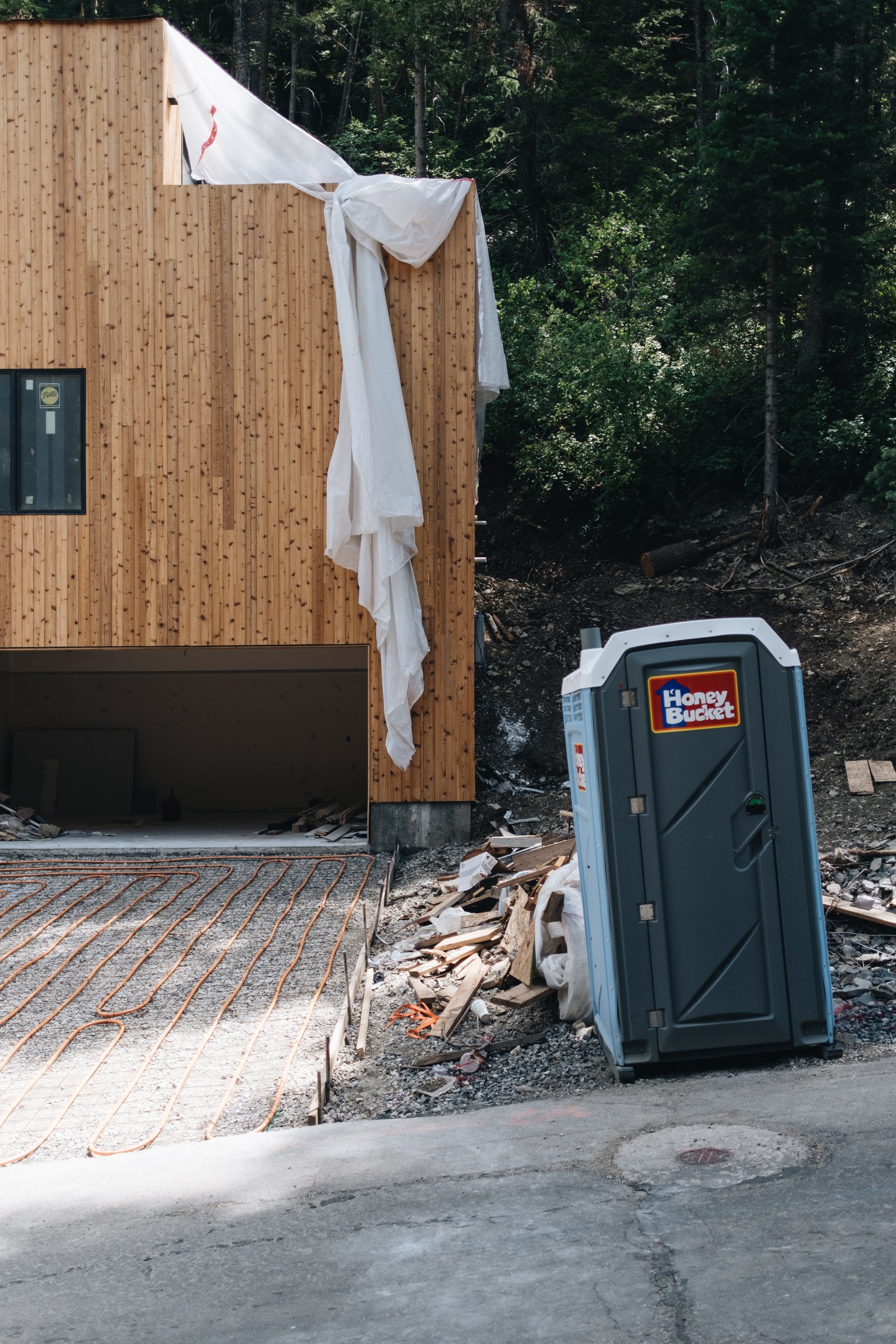
    We are into the final push at Parkview Mountain House. The radiant tubes are in for the heated driveway and walkway (essential), and the concrete is scheduled to be poured later this week. The kitchen countertops were installed this morning, and the backsplash was templated, with install scheduled for this Wednesday. The finish carpenter is back this week, and then the painters will be coming next week. The appliances and hot tub are also on standby in their respective warehouses and will be delivered to site as soon as the team is ready. As always, things are frenetic. But we’re pushing to get occupancy this month. I’m also excited to announce that we just hired an excellent management company. We’re in the midst of that onboarding process, and we’re looking forward to starting bookings sometime this fall. If you haven’t yet added yourself to our list, drop your email over here. We’ll be offering a bunch of discounted bookings on a first-come, first-served basis to the people on this list.

  • Ontario Silver Mining Company

    If you hang around Park City long enough, you will come across things with the name Ontario. There’s Ontario Avenue. There’s the Ontario hiking trail at Deer Valley. And I’m sure there are other things.

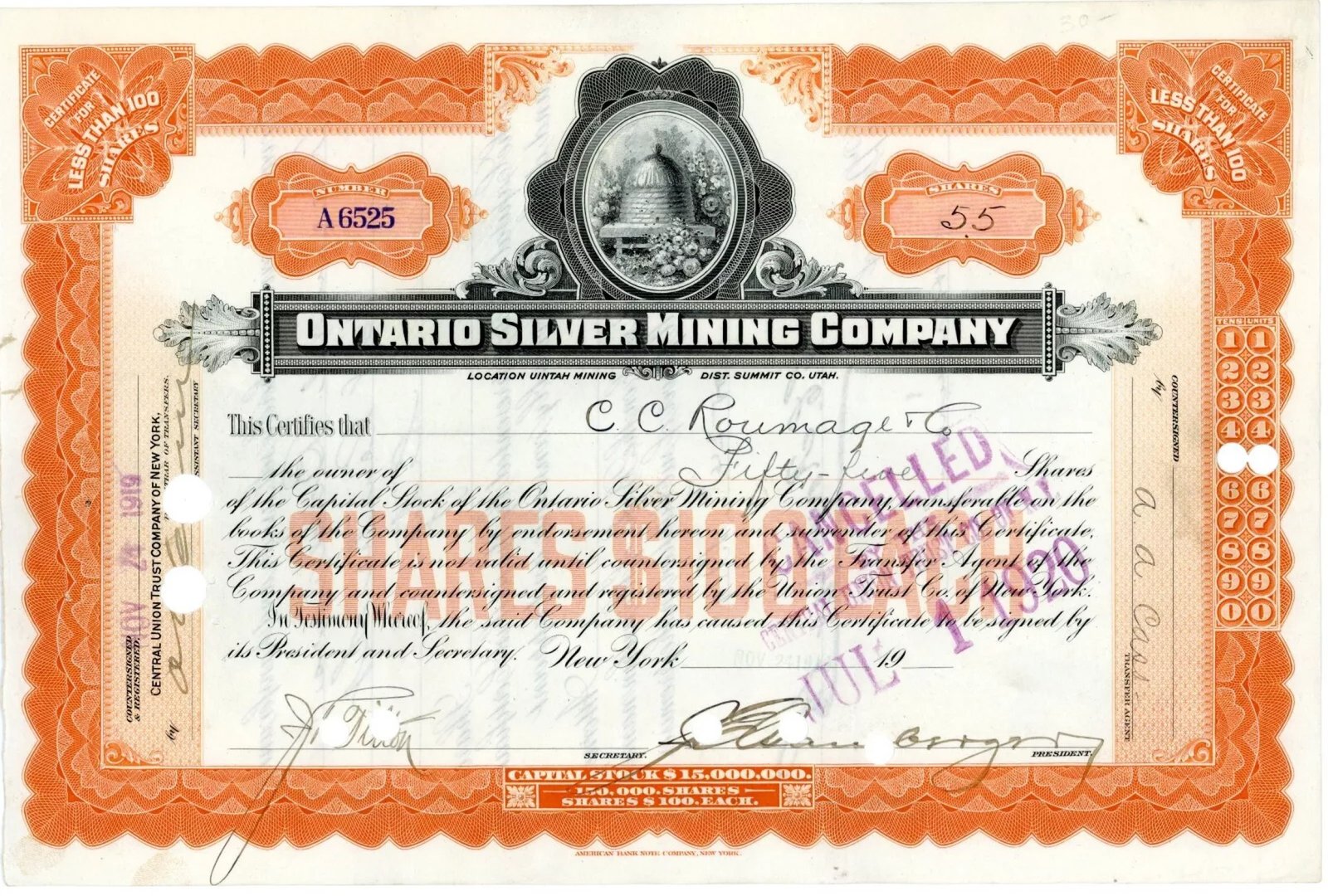
    As a Canadian, I couldn’t help but wonder why. So today I looked it up. And it turns out that the mining company that first put Park City on the map was the Ontario Silver Mining Company (see above stock certificate).

    Established in 1872, it was a major contributor to Park City’s economy (when it was a mining town) and it is usually credited as the mine that generated the most consistent yield in Utah during the late 19th century.

    Cool, so why was it called Ontario? Well, according to the Park City Museum, the mine was first discovered by prospectors from Canada (though they later sold off their claim to George Hearst for a handsome $30,000).

    I can’t seem to find any info about these Canadians, but the province of Ontario did get its name in 1867, so at least the chronology check outs.

    Image: Park City Museum

  • If a tree falls in a forest…

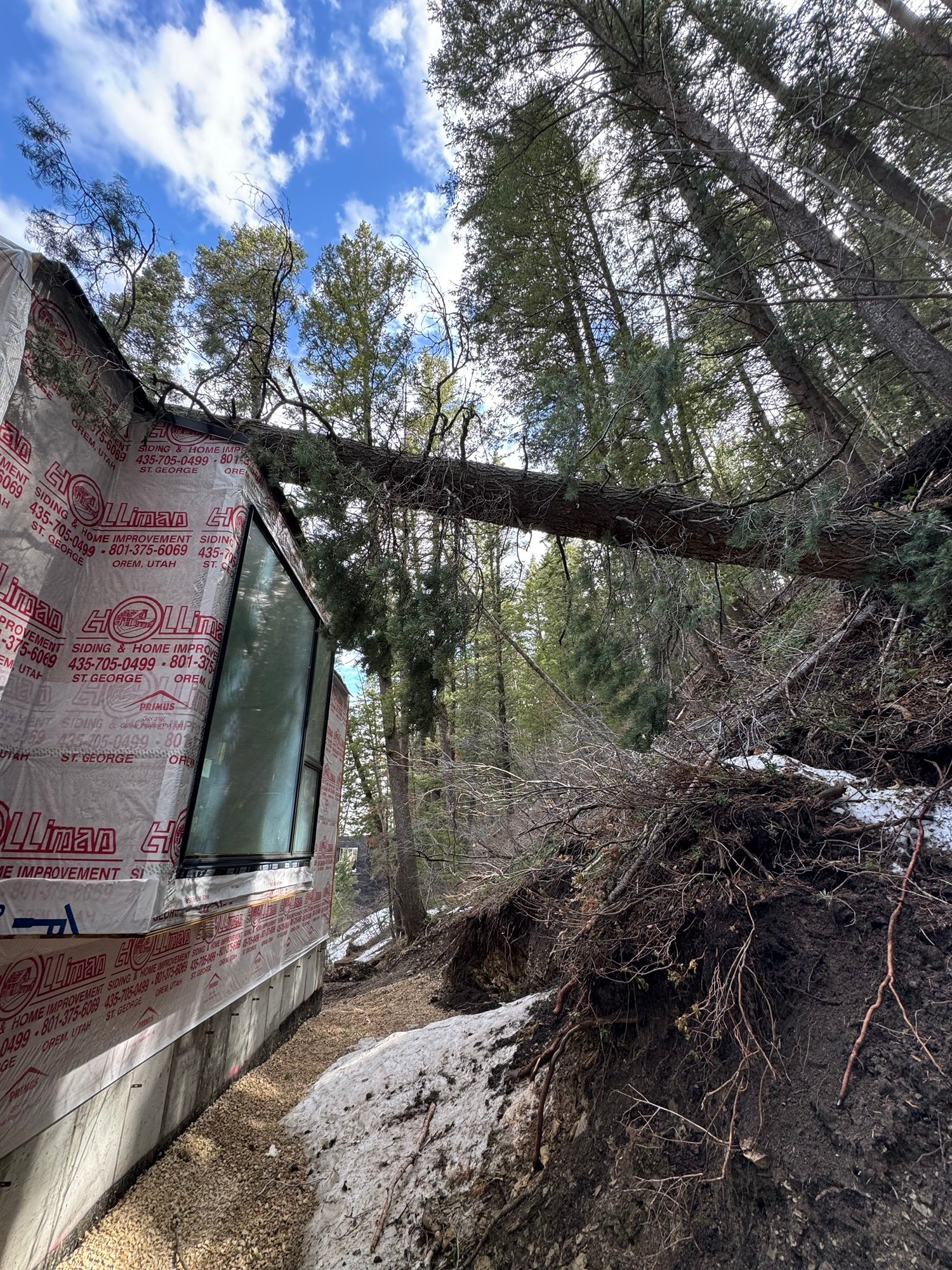
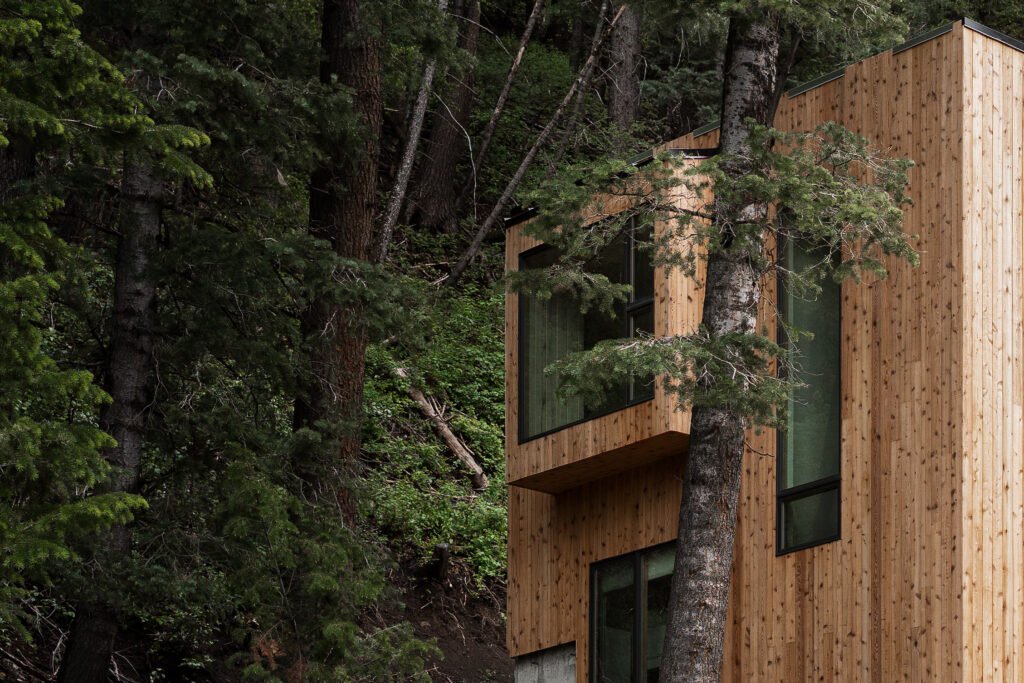
    Construction is risky. For example, last month a tree fell on top of Parkview Mountain House. The tree was located upgradient from the house and, it was so big, that pieces of it actually landed across the street on our neighbor’s property.

    Thankfully, it didn’t cause as much damage as it could have. It punctured the roof in a few places, but magically, the bay window that it landed on was perfectly fine. We also opened up the drywall around the window to inspect all of the structure.

    Needless to say, we didn’t have a line item in our budget for “trees that might fall on the house during construction.” We also didn’t have a line item to take down more trees behind the house, which is exactly what we decided to do after this happened. We called an arborist and asked them to fall anything that looked even remotely questionable. That ended up being 4 more trees.

    We were not expecting this.

    But this is why budgets have something called a construction contingency (although, we still have enough savings from some of our other contracts not to have to use it). In the end, we also learned something. If a tree falls in a forest and no one is around to hear it, the answer is — yes — it can still cost you a lot of money.

  • Snowboarders are annoying

    There are three resorts in the United States that do not allow snowboarding. They are: Deer Valley and Alta in Utah, and Mad River Glen in Vermont. New York-based Extell is also developing a new resort next to Deer Valley that was previously known as the Mayflower Resort. For a while, it was up in the air whether they would allow snowboarders, but this past summer it was announced that it will become part of Deer Valley and that their snowboarding ban will remain firmly in place.

    As a snowboarder, I’m not overly fussed by this. There are, of course, lots of other places that will welcome my kind. But I do think it’s both interesting and worth poking fun at. It speaks to the tribal-like nature of humans. I get down the mountain on this device and you get down the mountain on that device. So we are fundamentally different humans. And I do not want to associate with you. At the same time, I do respect the ability for private resorts to make their own decisions. And this seems to be what their paying customers want.

    But what about if the resort happens to be on public land? Does that make things any different? Deer Valley sits on land that is privately owned; whereas Alta sits on land that is owned by the National Forest Service. Which is why in 2014, a bunch of cantankerous snowboarders sued the resort, claiming that its ski-only policy violated the 14th Amendment to the Constitution. I’m not a lawyer, but I am told that this is typically used in cases involving discrimination.

    Alta ultimately won the case. They argued that even though the land they sit on is public, their lifts are still private. And so they get to decide who uses them. I guess that’s fair. But at the same time, this technically means that snowboarders are allowed on the mountain, they just can’t use any of the lifts. I tried to confirm this fact with Alta on X the other day, but they have yet to respond.

    In any event, my prediction is this.

    Snowboarding is a relatively young sport. It grew massively in popularity during the 1990s (which is when I switched over from skiing), and so its participants tend to skew younger (my assumption). This is probably why fancy resorts like Deer Valley don’t feel the need to cater to them. However, young people tend to both grow up and, you know, make more money. And so at some point — when there’s a real business imperative — we may find that people suddenly change their minds.

    If you’re trying desperately to sell luxury condominiums at the base of a resort and if snowboarders keep showing up at your sales office, for how long will you continue to say no to their money?

  • Cascading house in Park City lists for $29,000,000

    We were having pizza at Davanza’s the other night and I started flipping through one of those real estate magazines that you find scattered around places like Park City.

    Now, more often than not, when I come across a house listed for tens of millions of dollars, I usually look at it and think to myself, “okay, I know this is a really expensive home and it is likely that someone will want to buy it, but I objectively don’t like it.”

    However, as I was flipping through the magazine, I came across this listing and instead thought, “hey, this is actually a really cool house.”

    Designed by Wallace Cunningham, the 8,000 sf home features a cascading roof line that looks like an “S” in plan. (It also seems like all of the interior spaces were laid out in service of this plan design, which, depending on your own architectural proclivities, could be considered either a perfectly fine thing or an arbitrary thing.)

    It’s an interesting house. So here’s a video tour.

  • 10 city building predictions for 2016

    Dawn by Adrian Popan on 500px.com

    https://500px.com/embed.js

    Few things are better than waking up in the mountains and seeing a notification on your phone that 9″ of fresh snow have fallen overnight, bringing the 48 hour snowfall total to 16″.

    This is what people in mountain towns live for. They ski in the morning and then head to work in the afternoon. I heard a number of people on the mountain today saying that they, “want to be in the office after lunch.” It’s a lifestyle thing.

    On that note, today I’d like to focus on 10 city building predictions for 2016. I’ve been assembling this list over the past few weeks and now that I have had my fill of Utah powder for the day, I’m dedicating the rest of the afternoon to writing.

    These are never easy to put together. But here are my thoughts:

    1. We will see increased migration to secondary cities – outside of the alpha global cities – which offer a higher quality of life, more affordable housing, and the ability to live a particular lifestyle. This includes cities like Austin (creative startup hub) and Denver (outdoor recreation).
    2. As more and more cities wake up to the importance of lifestyle in attracting top talent, I think we will see a lot of cities follow the lead of Amsterdam and create “night mayors” or some other equivalent. These cities will begin to see nightlife as a competitive urban advantage.
    3. Global cities will start experimenting with different land use and property tax reform strategies to try and deal with rising income inequality and eroding housing affordability.
    4. We will see a barbell of residential unit sizes. We’ll see more well-designed small units as a way to try and promote housing affordability and we’ll see larger urban infill units for families and baby boomers who want to live/remain in walkable urban communities.
    5. In line with above, I think we will see a further rethinking of urban spaces. Flexible spaces, unique program mixes, and a continued blurring of public/private spaces. One example of this is the trend towards small private spaces surrounded by generous public/communal spaces.
    6. The Toronto and Vancouver real estate markets will continue to chug along because of low interest rates, a weak Canadian dollar, and increased foreign investment. That said, I think we will see more restraint when it comes to over-the-top luxury product.
    7. We will finally see a disruptive technology product that starts to get people in the real estate industry thinking that change is on the way. This will not be a product that ports an offline experience online; it will a new way of thinking about the industry.
    8. This will be the year that cities stop fighting Uber (and other similar marketplaces). Cities (and lobbyists) will finally accept that this is a new reality and then work to figure out the best way to create policy around it. Edmonton, Alberta has already become the first Canadian city to regulate Uber.
    9. Road pricing will get the attention it deserves in North America. Things will start out slow, but we will finally get ourselves on a path which recognizes that we can’t build our way out of traffic congestion in most major cities.
    10. I will publish a book on becoming a real estate developer.

    Many city building trends and shifts seem to happen in a global way. But I think it’s worth noting that a lot of these predictions were likely written with my North American lens on, and in some cases my Toronto lens on.

    It’s not easy sitting down and thinking about what will happen in the future. But it’s a worthwhile exercise. It forces you to take a stance and then, when the future does come, you can see how well you did. I saw Fred Wilson do this on his blog and I thought it was a great idea.

    Now I would love to hear what you think about my predictions and what yours are for this year. Please let us know in the comment section below.