Daily insights for city builders, delivered every morning at 6 AM ET. I’m Brandon Donnelly — a Toronto-based real estate developer and founder of Globizen. I’ve been writing here since 2013.
Below are the US counties with the highest per-capita income (as of 2018), according to this recent Bloomberg article:
Teton, WY is home to the Jackson Hole valley (which has some of the best skiing in the world). And Pitkin, CO is home to Aspen. Turns out, rich people like ski towns.
Interestingly enough, 2018 saw per capita income grow in the greatest number of US counties since 1981. According to the Bureau of Economic Analysis, it was 97% of all counties:
Jackson, Wyoming is one of my favorite places on the planet. (Here is a ski/snowboard video that my friends and I made a few years ago in Jackson.)
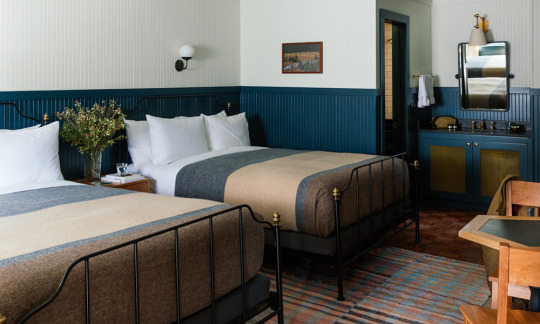
Earlier this year, Eagle Point Hotel Partners and the Brooklyn-based design firm Studio Tack completed a renovation of the Anvil Motel in Jackson – it’s now the 49-room Anvil Hotel.
What I appreciate about their approach, is the emphasis on creating something that feels local and contextual. Here are a couple of snippets from Surface Magazine:
The designers wanted to avoid a rustic feel, or what Ruben Caldwell, one of Studio Tack’s four partners and an avid backcountry skier, calls “Mountain Modern,” referring to architecture, common in places like Vail, Colorado, and Lake Tahoe, California, that excessively uses reclaimed wood and Cor-Ten steel. “We knew we didn’t want to steer anywhere near that,” says Chou, a long-time snowboarder who more recently got into skiing. “It takes a bit of familiarity with ski towns to know what you don’t want to do.”
The vibrancy of Jackson’s local culture impressed the design team—and Caldwell so much so that he moved there full-time last year. “As a design team,” Caldwell says, “we’re hyper-aware of the need for projects to be deeply embedded into the local scene.”
It’s easier to copy and paste. But the results are always better when you take a bit of time to understand a place.
Few things are better than waking up in the mountains and seeing a notification on your phone that 9″ of fresh snow have fallen overnight, bringing the 48 hour snowfall total to 16″.
This is what people in mountain towns live for. They ski in the morning and then head to work in the afternoon. I heard a number of people on the mountain today saying that they, “want to be in the office after lunch.” It’s a lifestyle thing.
On that note, today I’d like to focus on 10 city building predictions for 2016. I’ve been assembling this list over the past few weeks and now that I have had my fill of Utah powder for the day, I’m dedicating the rest of the afternoon to writing.
These are never easy to put together. But here are my thoughts:
We will see increased migration to secondary cities – outside of the alpha global cities – which offer a higher quality of life, more affordable housing, and the ability to live a particular lifestyle. This includes cities like Austin (creative startup hub) and Denver (outdoor recreation).
As more and more cities wake up to the importance of lifestyle in attracting top talent, I think we will see a lot of cities follow the lead of Amsterdam and create “night mayors” or some other equivalent. These cities will begin to see nightlife as a competitive urban advantage.
Global cities will start experimenting with different land use and property tax reform strategies to try and deal with rising income inequality and eroding housing affordability.
We will see a barbell of residential unit sizes. We’ll see more well-designed small units as a way to try and promote housing affordability and we’ll see larger urban infill units for families and baby boomers who want to live/remain in walkable urban communities.
In line with above, I think we will see a further rethinking of urban spaces. Flexible spaces, unique program mixes, and a continued blurring of public/private spaces. One example of this is the trend towards small private spaces surrounded by generous public/communal spaces.
The Toronto and Vancouver real estate markets will continue to chug along because of low interest rates, a weak Canadian dollar, and increased foreign investment. That said, I think we will see more restraint when it comes to over-the-top luxury product.
We will finally see a disruptive technology product that starts to get people in the real estate industry thinking that change is on the way. This will not be a product that ports an offline experience online; it will a new way of thinking about the industry.
This will be the year that cities stop fighting Uber (and other similar marketplaces). Cities (and lobbyists) will finally accept that this is a new reality and then work to figure out the best way to create policy around it. Edmonton, Alberta has already become the first Canadian city to regulate Uber.
Road pricing will get the attention it deserves in North America. Things will start out slow, but we will finally get ourselves on a path which recognizes that we can’t build our way out of traffic congestion in most major cities.
I will publish a book on becoming a real estate developer.
Many city building trends and shifts seem to happen in a global way. But I think it’s worth noting that a lot of these predictions were likely written with my North American lens on, and in some cases my Toronto lens on.
It’s not easy sitting down and thinking about what will happen in the future. But it’s a worthwhile exercise. It forces you to take a stance and then, when the future does come, you can see how well you did. I saw Fred Wilson do this on his blog and I thought it was a great idea.
Now I would love to hear what you think about my predictions and what yours are for this year. Please let us know in the comment section below.
We already know that many successful cities are struggling with housing affordability. But what you may not know is that a similar phenomenon is happening in many ski towns. Supply is constrained and demand is high.
Local officials and housing experts say it is a symptom of widening economic inequality, one that is especially sharply felt in tiny resort towns hemmed in by beautiful but undevelopable public land. While the wealthiest can afford $5 million ski homes and $120-a-day lift tickets, others work two jobs and sleep in shifts to get by.
“It’s so much worse today than it’s ever been,” said Sara Flitner, the mayor of Jackson, Wyo., where the median single-family home price rose 24 percent last year to $1.2 million, according to the Jackson Hole Report.
It’s for reasons like this that some ski towns have strict criteria around who is an eligible resident. For example, Banff, Alberta does this to ensure, “that housing remains available for those whose primary objective is to live and work in the community.”
In small landlocked ski towns – where it’s difficult or almost impossible to increase supply – there are only so many options.
I have a soft spot for Jackson Hole, Wyoming. It’s a beautiful town and, out of all the places I’ve snowboarded, it’s easily my favorite.
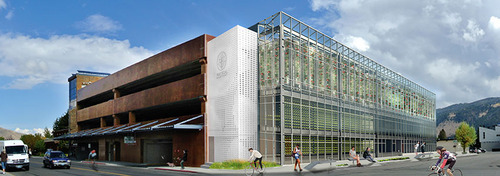
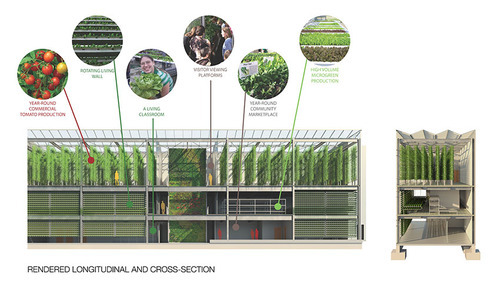
That’s why I was excited to learn that Jackson is currently building one of the first vertical farms in the world (and in a cold ski town at that). Using a vacant site in the middle of town, a new venture called Vertical Harvest is building a three storey, 13,500 square foot hydroponic greenhouse. It’s being done as a public/private partnership.
The business will operate year round and supply fresh produce to the local community – replacing food that was previously being shipped in from Mexico and California.
The site itself is 1/10 of an acre, but it’s expected to have the same output as a 5 acre piece of land using conventional agriculture methods. 95% of their product is already committed through pre-purchase agreements.
Here are some of the businesses that have jumped onboard:
Rendezvous Bistro
Il Villaggio Osteria
Q Roadhouse
The Kitchen
Jackson Hole Mountain Resort’s five restaurants
Snake River Brewery
St. John’s Medical Center’s Refuge Grill
What makes this project even more exciting is their commitment to employing members of the local community with disabilities. This is apparently a growing concern in Jackson, and so Vertical Harvest will be doing their part to address that.
If you’d like to learn about the design of the facility, check out this article by Fast Company. The team was was very methodical in ensuring that this facility would consume less energy than the status quo of shipping in food from out of state.
The go-live date is this fall (2015). I should probably plan another trip to Jackson.
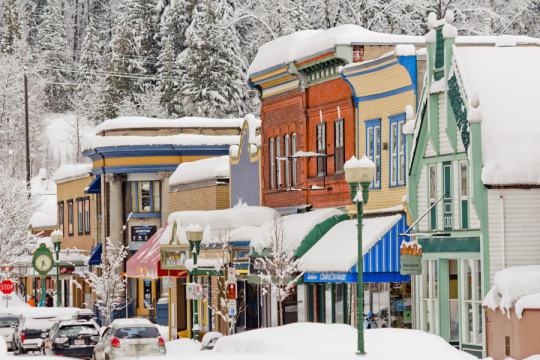
Despite being rainy and unusually warm, I had a great time in Revelstoke, BC. I first heard about the city a few years ago when I told a close friend of mine (who is an avid snowboarder) that I was going to Whistler. He told me: “Forget Whistler. Go to Revelstoke.”
Revelstoke has been on the map for skiers and snowboarders for decades. Some consider it to be the helicopter skiing capital of the world. But there are only so many people who can afford $1,000+ per day skiing, so it wasn’t until 2007 when the first gondola opened up on Mount Mackenzie that people started calling Revelstoke the next Whistler, the next Jackson Hole, the next Zermatt, and so on.
As both a snowboarder and a real estate developer, this is of course exciting. Everybody wants to be a part of the next big thing and they want to call it before anyone else. That’s how you make money – by being right about things before the masses catch on and/or when everyone else thinks you’re wrong.
But 2007 happens to come before 2008. And 2008 wasn’t a kind year to the real estate community. Revelstoke was no exception.
The condos at the base of the mountain weren’t selling (about half of the ones that did sell were sold to Canadians I was told). Expansion plans to become the largest ski resort in the world were scaled back. And the resort teetered on the brink of bankruptcy. But since then, new ownership has taken over the resort and the sentiment on the ground seems to be that Revelstoke – as a real estate play – is somewhere near the bottom.
But something even more interesting is happening in Revelstoke, beyond just luxury condos at the base of a mountain. And since I was on the disabled list for the second half of my vacation, I had time to explore.
I was fortunate enough to meet a local entrepreneur (who happened to also be from Toronto) and his message to me was clear: Ontario is moving in. Both talent and capital from Ontario are starting to flock to this small mountain town of almost 8,000 full-time residents (it’s technically classified as a city). And from my experience at the bars and restaurants in town, he appears to be right.
Now, you might be thinking these people are just ski bums looking for an excuse to live in a mountain town. But is that such a unique and bad thing? Today’s up and coming generation is looking for lifestyle + career. And so if your city or community can offer both, you have a competitive advantage when it comes to attracting talent.
Revelstoke knows they have the outdoor amenities and the “epic pow”, so now all they need to do is bring the businesses. And that’s exactly what Revelstoke wants to do. If you’re an entrepreneur or business owner, Revelstoke wants you to move there. I’m serious. The vision is to create a sustainable live, work, and play mountain community in the BC interior.
I hope that happens.
Drop me a line if you want to talk mountains and business.
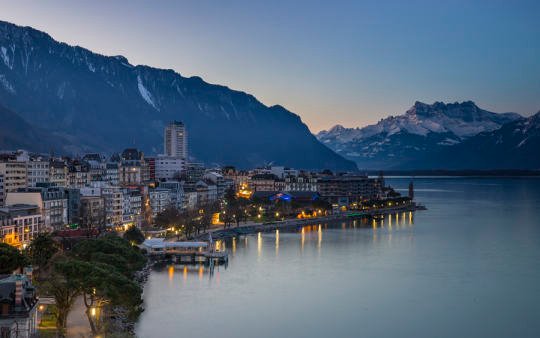
Post Update: The beautiful photo of Revelstoke at the top of this post was taken by Ian Houghton out of BC. This is his business website and this is his Facebook page.
I went snowboarding today and so I’ve got it on the brain right now. It’s one of my passions. But besides the actual act of riding down the mountain on a flexible board, there’s something much more about the sport to me.
First, I love the small villages that develop – ideally organically – at the base of ski mountains. Here’s a neat video of Zermatt, Switzerland that makes it look like a “miniature" town. Click here if you can’t see it below.
And second, I love the vistas that you get. I don’t know exactly how to describe it, but I find that they really pull you away from your everyday life. Here’s a stunning time-lapse video called the Mountains of Valais (Valais is the Swiss canton that Zermatt is located in). You need to watch it. Click here if you can’t see it below.
The town of Zermatt is almost completely surrounded by high mountains and is home to Switzerland’s highest peak at 15,203 feet above sea level. I think it’s time I added it to my bucket list.
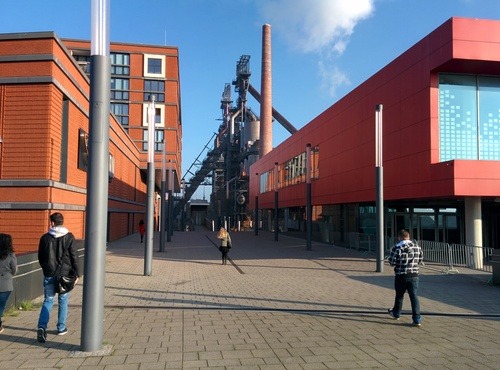
After yesterday’s post on Belval in Luxembourg, I started thinking more about authenticity. I ended the post by talking about some of the industrial elements – blast furnaces and so on – that will be preserved in the neighborhood and argued that those types of things are great for creating a sense of place. But I also said that it’s always better when those things are authentic.
But what does it mean to be authentic? What if some savvy developer created new blast furnaces and inserted them into their new neighborhood in order to simulate the feel of an old industrial steelworks? Would that change how you felt about the space and area?
Another example is Intrawest’s ski resorts. Intrawest is quite famous for creating attractive ski villages that give you the impression of being in some old European mountain village. They include a mix of uses and many people visit them even if they don’t intend to ski. But does it matter that it’s not really an old European ski town or that many of them look the same?
Clearly, in both of these examples, one is more “authentic” than the other. But all that really changes is the story. In one case, you get to tell yourself, and others, about an old steel mill that used to be where you now have your Scandinavian desk and Retina display MacBook. And in the other case, all you get is a simulacra or imitation of some blast furnace thing.
While this may seem immaterial to some, I don’t think it is. I’m not saying that customers always demand 100% authenticity. We don’t. But let’s not forget how much we all love a great story.