Daily insights for city builders, delivered every morning at 6 AM ET. I’m Brandon Donnelly — a Toronto-based real estate developer and founder of Globizen. I’ve been writing here since 2013.

Tag: ski resort

  • The Enchanting Village

    The story of Avoriaz 1800 starts in the 1960s.

    Downhill skier Jean Vuarnet, whose name is today found on cool sunglasses, had just become an Olympic Champion at Squaw Valley in California. He returned to his home in Morzine, France (located in Haute-Savoie) and was asked to help build a new resort on the empty plateau above the town.

    So he, and whoever else, raised some money, got the necessary approvals, and managed to successfully get the first lifts operational. But the resort quickly ran into financial difficulties and, apparently, bankruptcy became a possibility.

    The turning point came when he met Paris-based developer Robert Brémond. He had the capital and the experience, and so Vuarnet eventually ceded the project to him in 1962. In 1964, Robert then asked his son, Gérard, who was only 27 at the time, to lead the project. Supposedly he said to him, “the mountains are for the younger generation.”

    Gérard then went out and hired a young architect named Jacques Labro. He was also in his 20s at the time; 26 to be exact. The mandate he gave Labro was clear: design the ideal recreational resort. At the same time, he was asked to build upon Vuarnet’s original vision for Avoriaz. The result was an audacious masterplan designed around three guiding principles.

    First, it was to be a completely car-free resort, which was/is a big deal and an accomplishment that remains true today. To access Avoriaz by car you either need to park below in Morzine and take a gondola up, or park at the entrance to the resort.

    Two, it was to be an ideal place for skiing (snowboarding didn’t exist just yet). This meant that the entire resort had to be sloped correctly so that everything would be ski in and ski out.

    Finally, it was to have decidedly modern architecture that fit sensitively within the landscape. They didn’t want it to look like some ideal Swiss mountain village. What they wanted was bold, different, and highly sustainable. The result is some of the most unique mountain architecture to be found anywhere.

    For a preview of the village’s architecture, check out these photos by Alastair Philip Wiper. They were part of an exhibition called “Avoriaz: The Enchanting Village.” Along with this story, they will probably make you want to visit the place. That’s certainly the case for me.

    Photo by Rémi Bertogliati on Unsplash

  • It always starts with a bold idea

    This is a photo taken from the base village of Val Thorens. I took it while we were sitting on a massive terrace in the middle of it. But what stood out to me even more than the terrace itself was the buildings that frame it. They are all about 8-9 storeys, have no step-backs, and were clearly orchestrated to create a defined “street wall.”

    These framing buildings can be just as important as the public spaces themselves; they form the “walls” of the public realm and create a sense of enclosure. In this case, the buildings also follow a similar aesthetic. They were designed to pay homage to traditional Savoyard architecture, which is known for its use of local woods and stones.

    The other thing I find noteworthy is that all of this is only about 50-some years old. Val Thorens the resort opened in 1971. And it only became an idea sometime around 1969 when Pierre Schneblelen — an engineer and developer — decided that he wanted to build Europe’s highest ski resort. (The base of the resort sits at 2,300 m and the peak elevation is 3,230 m.)

    As time passes, it’s easy to take these kinds of places and experiences for granted. But they only exist because someone, at some point, had a vision. And when that vision was initially presented, it was probably perceived by many, or by most, to be crazy. That’s just how these things go, and so I like reminding myself of that.

  • Saying no to “Mountain Modern”

    Jackson, Wyoming is one of my favorite places on the planet. (Here is a ski/snowboard video that my friends and I made a few years ago in Jackson.)

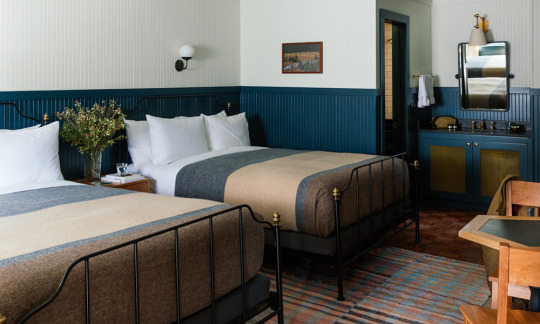
    Earlier this year, Eagle Point Hotel Partners and the Brooklyn-based design firm Studio Tack completed a renovation of the Anvil Motel in Jackson – it’s now the 49-room Anvil Hotel

    Apparently reclaimed motels are the new hospitality trend.

    What I appreciate about their approach, is the emphasis on creating something that feels local and contextual. Here are a couple of snippets from Surface Magazine:

    The designers wanted to avoid a rustic feel, or what Ruben Caldwell, one of Studio Tack’s four partners and an avid backcountry skier, calls “Mountain Modern,” referring to architecture, common in places like Vail, Colorado, and Lake Tahoe, California, that excessively uses reclaimed wood and Cor-Ten steel. “We knew we didn’t want to steer anywhere near that,” says Chou, a long-time snowboarder who more recently got into skiing. “It takes a bit of familiarity with ski towns to know what you don’t want to do.”

    The vibrancy of Jackson’s local culture impressed the design team—and Caldwell so much so that he moved there full-time last year. “As a design team,” Caldwell says, “we’re hyper-aware of the need for projects to be deeply embedded into the local scene.”

    It’s easier to copy and paste. But the results are always better when you take a bit of time to understand a place. 

    Image: Anvil Hotel

  • Off to the mountains

    image

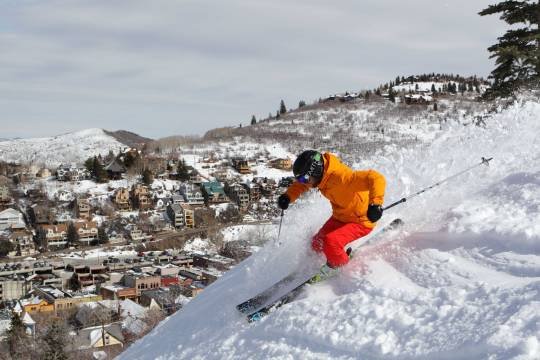
    I am leaving this morning for my annual retreat to the mountains. This year we are going to Park City, Utah, which we decided to do about a year ago.

    The reason we chose this particular place is because Vail Resorts spent $50 million over the offseason to merge Park City Mountain Resort with the neighboring Canyons Resort. 

    There’s now a mountain-to-mountain gondola and 7,300 acres of skiable area across the two resorts, which makes it the largest ski resort in the United States. And that’s why, this month, the New York Times named it one of the 52 places you need to visit in 2016

    But it’s not all puppy dogs and ice cream. What kickstarted this transformation was that the previous operator of Park City, Powdr Corporation, actually forgot to renew its sweetheart land lease.

    So if you’re at all interested in skiing, snowboarding, real estate, and/or lawsuits, you might be interested in what happened here. Curbed did a summary of the battle last year. It was big news in the ski world.

    Image via the New York Times

  • Does urban authenticity matter?

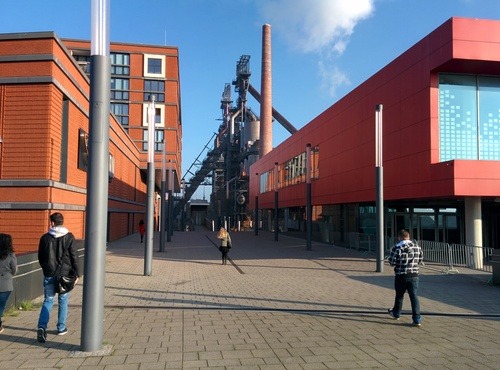
    After yesterday’s post on Belval in Luxembourg, I started thinking more about authenticity. I ended the post by talking about some of the industrial elements – blast furnaces and so on – that will be preserved in the neighborhood and argued that those types of things are great for creating a sense of place. But I also said that it’s always better when those things are authentic.

    But what does it mean to be authentic? What if some savvy developer created new blast furnaces and inserted them into their new neighborhood in order to simulate the feel of an old industrial steelworks? Would that change how you felt about the space and area?

    Another example is Intrawest’s ski resorts. Intrawest is quite famous for creating attractive ski villages that give you the impression of being in some old European mountain village. They include a mix of uses and many people visit them even if they don’t intend to ski. But does it matter that it’s not really an old European ski town or that many of them look the same?

    Clearly, in both of these examples, one is more “authentic” than the other. But all that really changes is the story. In one case, you get to tell yourself, and others, about an old steel mill that used to be where you now have your Scandinavian desk and Retina display MacBook. And in the other case, all you get is a simulacra or imitation of some blast furnace thing.

    While this may seem immaterial to some, I don’t think it is. I’m not saying that customers always demand 100% authenticity. We don’t. But let’s not forget how much we all love a great story.

    Image: Belval (Fräntz Miccoli)