Daily insights for city builders, delivered every morning at 6 AM ET. I’m Brandon Donnelly — a Toronto-based real estate developer and founder of Globizen. I’ve been writing here since 2013.

Tag: skateboarding

  • Skateboarding to debut at the Summer Olympics in Tokyo

    The 2020 Summer Olympics, which will be held in Tokyo, have added 5 new sports, one of which is skateboarding. As someone who grew up skateboarding as a teenager, and is all too familiar with being chased out of public spaces, this lends a great deal of legitimacy to the sport.

    It’s hard to think of a sport that is more closely connected with architecture and, more specifically, public architecture. Curbed’s recent long-form article about “the public spaces that shaped skateboarding” is a good reminder of that. Here is an excerpt (EMB refers to Embarcadero Plaza in San Francisco, which was previously known as Justin Herman Plaza):

    When skateboarding debuts at the Tokyo Olympics next summer, some three decades after the first polyurethane wheels hit the bricks at EMB, it will have completed the long, improbable trip from criminal act to social and institutional acceptance. But even as an Olympic sport, skateboarding will remain a direct physical response to the varied terrain of American public architecture.

    Interestingly enough, one could go on to argue that the history of skateboarding is really steeped in the adoption of public spaces that had, in many cases, failed to serve their intended purpose. In other words, skateboarders were often the only people using these urban spaces:

    “What made Justin Herman Plaza attractive to skateboarders and work for skateboarders was its inappropriateness to the traditional city scale and function,” King says. “You had all these planners and architects in the 1950s and ’60s saying cities need these grand, celebratory spaces—and they really didn’t.” But apparently skaters did.

    Welcome skateboarding to the 2020 Summer Olympics in Tokyo.
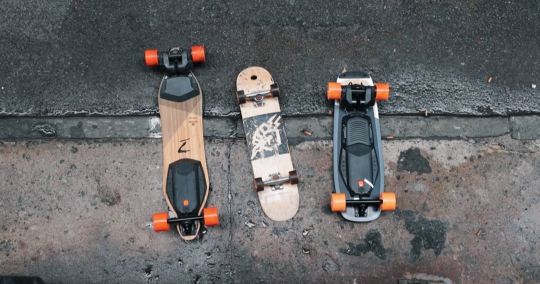
    Photo by Frans on Unsplash


  • A celebration of skateboarding culture

    I used to skateboard when I was growing up and so I have a lot of respect for the sport. This summer, from June 30 to August 12, The Bentway here in Toronto will be working with Build for Bokma and Vans to transform its outdoor (ice) skating trail into a summer-long celebration of skateboarding arts and culture. This is great.

    I am sure you all know Vans. But you may not be aware of Build for Bokma. They are a non-profit whose mission is to create skateable public structures. And their long-term goal is to develop a permanent skatepark that commemorates the late Canadian pro skateboarder, Justin Bokma.

    A big part of skateboarding culture is reimagining spaces and adapting to different urban environments. And if you think about it, that’s exactly what The Bentway is doing. They are reimagining a part of this city’s urban infrastructure. So I think this is a perfect fit and I am excited to see it come to life this summer.

  • New, mini, electric skateboard

    image

    Boosted — which is a California-based company that makes electric skateboards — has just released a new smaller and more affordable version called the Mini S.

    Casey Neistat — who helped popularize the original models through his wildly successful YouTube channel — recently vlogged about it and it ended up crashing their website. That’s how things work these days.

    Now, this new version is still USD 750 (so CAD 1,000), but it is significantly less than their other, bigger, models.

    The Mini S goes up to 18 mph and lasts for about 7 miles (optional extended range battery available). So it’s perfect for short jaunts around the city and as a solution to that pesky last mile problem. 

    I am seriously considering getting one for my short commute to the office. That way I’m not breaking a sweat in my suit. But $1,000 remains an awful lot for a skateboard.

    What do you think?

    Image: Casey Neistat via Boosted

  • Skater’s Paradise: On/Off

    This skateboarding video is incredibly well done. I particularly like the 42 second mark. If you can’t see it below, click here.

    [vimeo 227394921 w=640 h=280]

    It’s incredible from a filmmaking standpoint, but – as I have said many times before on this blog – it also showcases the deep relationship between skateboarding and the urban environment.

    I can’t think of many other sports with that kind of relationship.

  • Second Nature

    There is a deep connection between skateboarding and cities. Skateboarders are constantly surveying the built environment and looking for new and creative ways to engage with it. I think it’s a beautiful way to experience cities. (Sadly, we often respond by making it illegal.)

    The below video is a perfect example of this connection. It’s a 20 minute documentary about pro skater Janne Saario (of Finland) who eventually went on to become a successful landscape architect. Here is his firm. And if you can’t see the embedded video below, click here.

    [vimeo 46685196 w=640 h=360]

  • Zaha Hadid’s Miami condo is on the market for $4,350 psf

    Today, Google is celebrating the famed Iraqi-born British architect Zaha Hadid, who died last March (2016) in Miami of a sudden heart attack.

    She was the first woman ever to receive the Pritzker Architecture Prize, which is the prize of all prizes for architects.

    Here is Google’s front page:

    The building that is featured is the Heydar Aliyev Center in Baku, Azerbaijan. It’s an extraordinary piece of architecture. And in case you aren’t familiar with it, below is a Red Bull video of Maksim Kruglov skateboarding the building and its grounds. The building is just screaming to be skated. (Click here if you can’t see it below.)

    [youtube https://www.youtube.com/watch?v=J7lEGbAIU6M&w=560&h=315]

    I’m not exactly sure why Google chose today to feature Hadid. Initially I thought it might be the anniversary of her death, but she died in March. Whatever the case may be, a quick search revealed that her Miami condo was just listed for $10,000,000. That’s probably not what they are celebrating.

    It’s located at 2201 Collins Avenue (Unit 730) in the W Hotel Miami Beach. It’s 2,299 sf and features a totally separate guest apartment, which itself has one bedroom. The main suite was initially 2 units, but Zaha had them combined into a generous one bedroom.

    Only $4,350 per square foot.

    Below is a quick video prepared by the broker. You don’t need the sound on for this one. (Click here if you can’t see it below.)

    [youtube https://www.youtube.com/watch?v=9CD_xwYPbf8&w=560&h=315]

  • Scootering around New York City

    image

    I am writing this post on a Porter flight from New York back to Toronto.

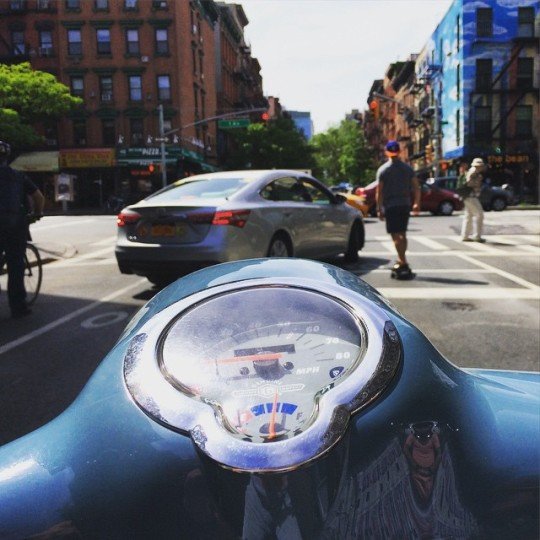
    For my last day in New York, my close friend and I rented scooters and rode all around Manhattan and Brooklyn. It was a great way to cover a lot of ground, but also a great way to still absorb the city. It’s harder to do the latter in a car and I never have any desire to drive in New York.

    Because the great thing about New York is that as a pedestrian you feel like you control the streets. When you’re waiting at a crosswalk, you’re never actually waiting. You walk off the sidewalk and onto the street so that you can assert yourself in front of the cars and wait for an opening. This serves to narrow the portion of road that the cars can actually drive on and reminds the drivers who is boss.

    At the same time, there are many instances throughout the city where New York has purposefully reallocated the space dedicated to pedestrians (and cyclists) and the space dedicated to cars. They’ve created new public spaces, widened the areas where people can walk, and seemingly blanketed the city with bike lanes. And that makes a lot of sense given that in many (most?) areas of the city, pedestrians greatly outnumber cars.

    So does that mean New York is at war with the car? (I’d be curious to know – in the comment section below – if those kinds of discussions take place in the city.)

    I suppose you could spin it that way. But New York also does things for cars. While riding around on the scooter today, I was so impressed by how well timed the streetlights were along the avenues. It made it incredibly easy to go downtown or uptown. In Toronto, I often feel like we time our lights to make driving as slow as possible.

    But make no mistake; New York is not a driving city. 

    New York is about walking, biking, taking transit, and hailing cabs. There is a reason they have the highest transit ridership in the US. The city is built for it. And unless driverless cars and ride sharing completely changes the equation, I will continue to believe that transit is the most efficient backbone for any big city.

  • Fun Friday: Skateboarding city tours (Brisbane & Porto Alegre)

    Some of you told me that yesterday’s post on careers was actually quite sad. That it came across as if I were advocating for people, not to do what they love, but to instead do what makes them the most money. But that was not my intention. 

    There were a lot of reasons why I got into real estate development, and perhaps I oversimplified yesterday. But a lot of it actually came down to the fact that I’m passionate about building great cities (hence this blog).

    And I thought it was ultimately unfair that some investment-banker-turned-developer, who doesn’t really care about cities, might end up having more say over the built environment than me, the architect. 

    So I decided to sacrifice designing individual buildings in the hope that I’d one day be able to give back to cities on a much larger scale. And I still hope to be able to do that.

    In any case, to end the week on a more fun note, I thought I would do a post called Fun Friday and link to 2 city tours: one of Brisbane, Australia, and one of Porto Alegre, Brazil. 

    But these aren’t just any city tours. They are by local skateboarders showing you their city. I posted one for Toronto about 8 months ago, so some of you might be familiar with the series.

    I love how differently skateboarders look at the urban environment. I hope you can appreciate it as well. 

    Brisbane, Australia:

    [youtube https://www.youtube.com/watch?v=KEFQLjnhKT4?rel=0]

    Porto Alegre, Brazil:

    [youtube https://www.youtube.com/watch?v=taF71igPZY0?rel=0]

  • SKATE city videos

    Two weeks ago I wrote a post called “Skateboarding and the city.” If you liked that post, I recommend you take a look at this 5 minute video called SKATE Toronto. It’s part of a series where local skateboarders provide a guided tour of their city.

    [youtube=http://www.youtube.com/watch?v=SEb4QvJzFVU&w=560&h=315]

    You’ll find similar videos for New York, Los Angeles, Miami, Philadelphia, Hong Kong, etc. What I like about them (other than the skating, of course) is that they clearly demonstrate the unique way in which skateboarders examine and engage with cities.

  • Please don’t walk on the grass

    The blog of Gehl Architects, called Cities for People, wrote a post this morning called, “Reflecting on Urban Play in Denmark.

    It’s a good follow-up to the post I did a week ago called, “Skateboarding and the city”, because in many ways, the example I gave (LOVE Park) is an extreme case of what Cities for People is talking about:

    “This sign, and other familiar signs such as “Please Don’t Walk on the Grass” characterize a common understanding of the urban landscape and its features as something to visually admire from a distance rather than interact with. While play and physical interaction with our surroundings is an intuitive social behavior, playful uses of the urban landscape and its features are often regarded as an illegitimate use of city space.”

    It’s the equivalent of buying a sofa, covering it with plastic, and not letting anyone sit on the damn thing. What’s the point?

    Fortunately, Copenhagen seems to be bucking that trend. Here are a few examples.