
Daily insights for city builders, delivered every morning at 6 AM ET. I’m Brandon Donnelly — a Toronto-based real estate developer and founder of Globizen. I’ve been writing here since 2013.

Tag: single family dwelling

  • The impact of laneway housing in Vancouver

    In 2009, Vancouver created policy and legalized laneway homes. (If you’re not up on laneway housing, click here. I’ve written too much about this topic.)

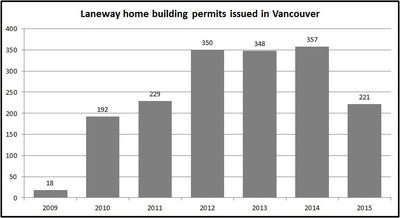
    Since then, the number of laneway homes built in Vancouver has steadily increased to the point where roughly 350 new homes are built every year. 

    Here’s a chart I found showing the number of laneway home building permits issued in Vancouver since 2009 (the year to date number for 2015 is up to and including June):
    image

    This is pretty interesting in its own right.

    But as soon as I saw this chart I started wondering how these numbers fit into the overall new home construction landscape. So I decided to dig up the City of Vancouver’s Statement of Building Permits Issued for June 2015.

    As the chart above shows, the number of laneway dwelling units built (well, permits issued) was 221 as of June 2015. But what’s really fascinating is that this numbers exceeds the number of building permits issued for single family dwellings, which was only 192!

    Also super interesting is the significant spread in building permit value. 

    For single family dwellings, the total value was $156,086,861 (or $812,952 per dwelling unit). On the other hand, for laneway dwellings the total value was $36,478,785 (or $165,062 per unit).

    Now to be fair, if you add single family dwellings with a secondary suite into the mix, you get a total count of 608 new dwelling units (as of June 2015). But at 221 new units, laneway dwellings still make up a meaningful portion of the new construction market.

    So while laneway houses might seem fringe for Toronto and other cities right now, they’re really not that fringe. In fact the numbers above start to show that they can be a viable source of new and relatively affordable single family housing.

    Eventually other cities will realize this too.
  • Rethinking single family neighborhoods

    image

    Earlier this week a good friend of mine sent me a scanned article from this month’s issue of Urban Land Magazine called: Rethinking PADs–Private Accessory Dwellings. He said, I know you have a thing for PADs, so here you go. 

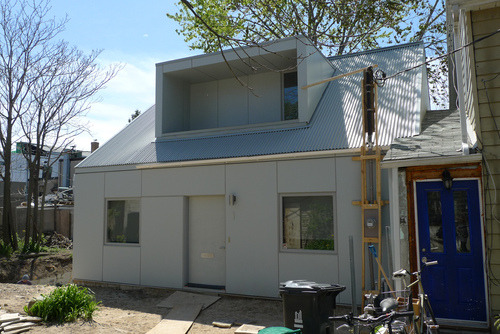
    PADs, or private accessory dwellings, is simply another term for nanny flat or laneway house. Whatever you want to call it, the concept is the same. It’s about taking a single family house and adding an additional dwelling onto that same lot. 

    In many cities around the world, this is not allowed. Each lot is to have only one dwelling unit. And that’s because the single family home – particularly in North America – has been considered sacrosanct.

    But as I’ve argued and demonstrated before, I think we’re on the cusp of this changing. Here’s a snippet from the Urban Land article (unfortunately, I don’t think the full article is available online):

    “If PADs can be added in appropriate scale and number, existing housing, zoned land, and current infrastructure could be efficiently used to increase housing supply and to stabilize and even reduce housing prices. Moreover, since PADs are by definition smaller than existing dwellings, they will attract both younger and older residents who will enrich the intergenerational composition of both urban and suburban communities.”

    I’m happy to see Urban Land (the magazine of the Urban Land Institute) giving this topic some air time. There are a number of social, economic, and environmental benefits to intensifying single family neighborhoods. And the most progressive cities in the world are already doing it.

    What is your city’s position on accessory dwellings? Toronto doesn’t support them. But there are instances where people have gotten them approved.

    Image: Kensington Market Laneway House, Toronto via Flickr