Daily insights for city builders, delivered every morning at 6 AM ET. I’m Brandon Donnelly — a Toronto-based real estate developer and founder of Globizen. I’ve been writing here since 2013.

Tag: sidewalk labs

  • Letter from Toronto on Google’s city of the future

    Politico Magazine recently published this article about Sidewalk Toronto. It’s called: Google Is Building a City of the Future in Toronto. Would Anyone Want to Live There? 

    If you’re familiar with what Sidewalk Toronto is up to, the first bit will likely cover things you already know. But later on it gets into an interesting discussion around data privacy, among other things.

    One argument is that if you strip any personal identifiers from the data you collect, then you’ve effectively eliminated the issue of privacy. 

    But what about “collective privacy?” 

    What if you could, for example, identity signs of concentrated drug usage within certain districts, communities, or even buildings? Does that start to get a little too personal?

    This is the great debate surrounding Quayside, the area that Sidewalk is focused on. The article also touches on what Quayside could mean for the future of Toronto.

    Just about all players involved believe that if Sidewalk can be successful at Quayside, it has a shot at the adjoining 800-acre Port Lands, a swath of problem space big enough to become home to a dozen new neighborhoods in a growing metropolis. Townsend, the consultant, says of the Port Lands: “That’s a city they’re going to build there. This is just the warmup, this little piece.”

    Full article, here. There’s also an audio version in case that’s your preferred consumption method. It’s about 40 minutes long if you do it that way (and don’t speed it up).

  • City building reading list (and an event)

    Today’s post is going to be about a handful of things that have caught my attention.

    – Gary Hack, who is the former dean of the University of Pennsylvania School of Design, recently published a book called Site Planning: International Practice. It is a textbookish guide to planning processes, new technologies, and sustainability, with an emphasis on rapidly urbanizing countries. Thank you to my friend Michael Geller for bringing this to my attention.

    – Sidewalk Labs Toronto is opening a new experimental workspace here in Toronto at 307 Lake Shore Boulevard East (Queens Quay & Parliament) on Saturday, June 16th from 12 – 6pm. It’s an old fish processing plant that they have turned into their office. The team will work there during the week and on the weekends they will open to the public to showcase what they’re up to. Register for the June 16th event, here. I just did.

    – Alexandra Lange has a recent piece in the New Yorker called, The Hidden Women of Architecture and Design. It’s about the important role that women have played in the “design of childhood”, which is the title of a book by Lange. There’s also a short but interesting story about Detroit’s Lafayette Park (Mies van der Rohe) at the beginning of the article.

    – Finally, here is a blog post by Witold Rybczynski where he talks about the shortcomings of architectural education. Obscure theories. Technical or made-up jargon. And no concern for budgets and schedules. I have always shared a similar view and have long felt that there needs to be more business school in architecture school.

    Hopefully there’s something in here that is of interest to you.

  • Meet Replica

    Sidewalk Labs is currently building out a platform called Replica that will support them in their development plans here in Toronto. Replica is

    “a user-friendly modeling tool that uses anonymized mobile location data to give planning agencies a comprehensive portrait of how, when, and why people travel in urban areas.”

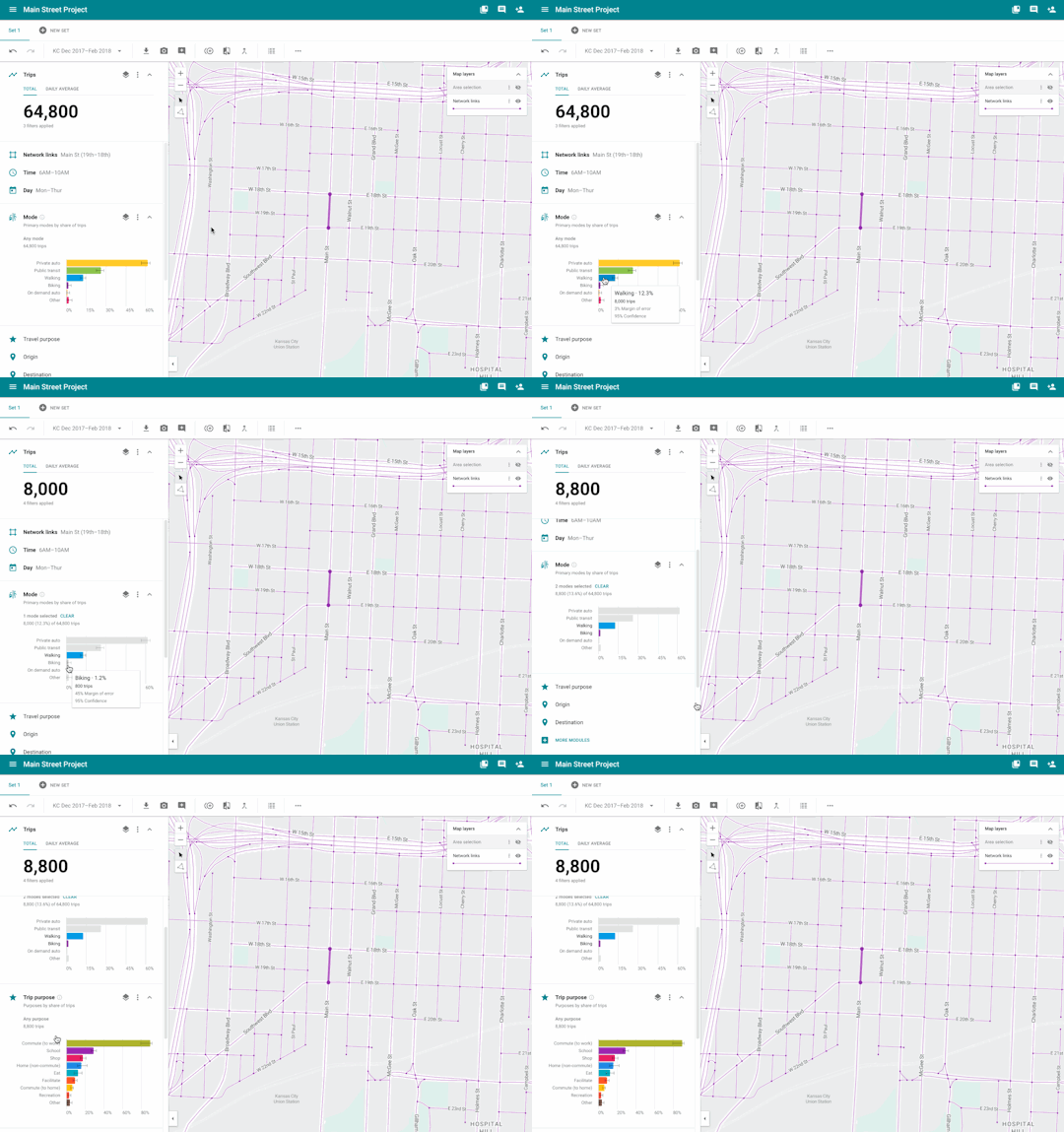
    Here is a preview of the Replica dashboard showing a section of Main Street in Kansas City. I hope the animated GIF shows up for you.

    The platform uses a combination of mobile location data (~5% of the population) and on-the-ground checks, typical stuff like manual traffic counts and transit boardings.

    The goal is to understand in real-time who is using a street, as well as how (driving? cycling?) and why (going to work?).

    Their introductory blog post obviously stresses the importance of personal privacy, but I am curious how they determine where people are going.

    I suppose if they pair journeys with destinations (and the durations at those destinations) they can make reasonable assumptions around the why.

    I think the benefits to all of this are clear. But does any or all of this worry you from a privacy standpoint?

  • Planning dinner, smart cities, and privacy

    image

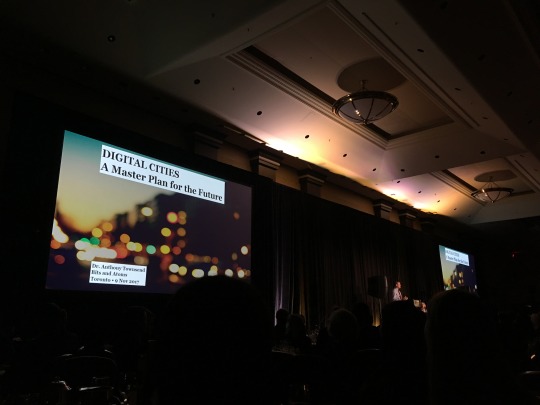
    This evening I attended the 27th Annual Toronto Planning Dinner. It’s an annual dinner for people in planning and development, put on by the University of Waterloo Planning Alumni of Toronto. Thank you Wood Bull LLP for the invite.

    The keynote speaker was Dr. Anthony Townsend. He is the author of SMART CITIES: Big Data, Civic Hackers, and the Quest for a New Utopia. I haven’t read it (yet), but his talk offered a preview of it and I think it would be of interest to all of you.

    It deals with many of the topics that we discuss on this blog, one of which is the interrelationship between our physical environment and the networks and software layers that we are now building on top of it.

    These layers have the potential to augment and enhance our cities (maybe make them smarter), but they also have the potential to do us harm. One important issue that Townsend brought up is that of privacy.

    Cities used to enable anonymity. 

    When essayist and art critic Charles Baudelaire wrote about “modernity” in 19th century industrializing Paris, it referred to an ephemeral and fleeting kind of urban environment. Pass someone on the street and you may never see them again. That must have felt sad at the time.

    Today we live in a fish bowl. 

    Networks connect us, check us in, ping us when we are nearby people we know, and help us find people to meet and date. And we already have devices, like Alexa, that spy on us in our homes so that companies can serve us targeted ads. (This is deplorable by the way.)

    Will the city of the future endeavour to do the same as we equip it with more “smarts”?

    I guess that’s why Townsend believes that privacy will define a big part of 21st century urbanism. There’s no doubt that it will be very important.

  • The neighborhood of the future

    image

    Daniel Doctoroff (chairman and CEO of Sidewalk Labs and former deputy mayor of New York City) and Eric Schmidt (executive chairman of Alphabet and former CEO of Google) recently contributed a piece to the Globe and Mail about “why Toronto is the ideal place to build a neighborhood of the future.” 

    It’s about the partnership they working on with Waterfront Toronto. I wrote about that announcement, here.

    Here is an excerpt from the Globe article:

    “The eastern waterfront will be a place where residents, companies, startups and local organizations can advance new ideas for improving city life. It’s where a self-driving test shuttle will take its first steps toward becoming a next-generation transit system that’s cheaper, safer and more convenient than private car-ownership. It’s where new insights into advanced construction methods will start to reveal a path toward more affordable housing development. It’s where explorations into renewable energy and sustainable building designs will show promise toward becoming a climate-positive blueprint for cities around the world.”

    These are some of the first details that I have heard about their vision for Toronto’s eastern waterfront. 

    Some of you are probably worried – after reading the above excerpt – that by focusing on self-driving vehicles, we are setting ourselves up to repeat our previous mistakes. But if self-driving vehicles are destined to become a reality (and it certainly feels that way), it is critical that we understand their impact and how they might best dovetail with the public transit systems we already have in place.

    I am thrilled that all of this will be happening right here on our doorstep.

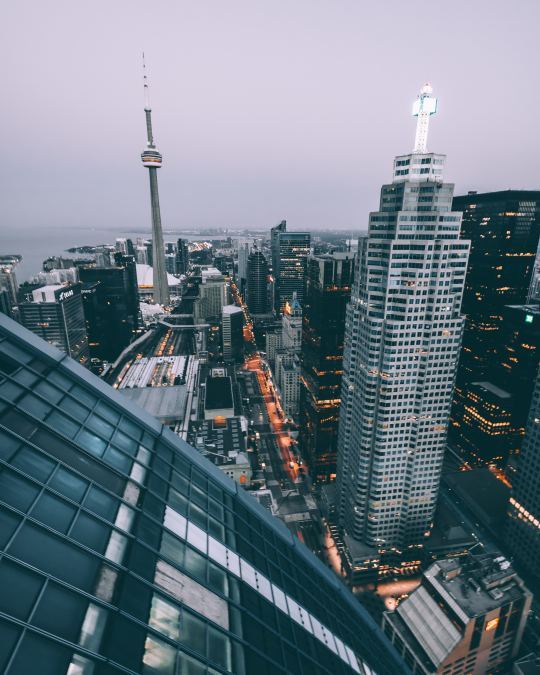
    Photo by Brxxto on Unsplash

  • Sidewalk Labs, Amazon HQ2, and the Milanese Leonardo

    Earlier this week the WSJ announced that Sidewalk Labs (Alphabet Inc.’s urban innovation organization) is close to a deal with Waterfront Toronto to develop a new 12-acre section of the eastern waterfront. Sidewalk Labs would be their innovation and funding partner. It’s not final yet and it’s still subject to board approval, but the sentiment is that it should go.

    There aren’t a lot of details about the project – other than the fact that it will be fairly big, up to 3 million square feet – but the overall intent is digital city building. It’s about imagining what a city could be if you built it today “from the internet up.” More info about Sidewalk Labs, here.

    I thought of this project as I read Seth Godin’s daily blog post this morning in bed. Here are two snippets from that post:

    When a new technology arrives, it’s often the nerds and the neophiliacs who embrace it. People who see themselves as busy and important often dismiss the new medium or tool as a bit of a gimmick and then “go back to work.”

    There’s never a guarantee that the next technology is going to be the one that moves to the center of the conversation. But it’s certain that a new technology will. It always has.

    Openness matters.

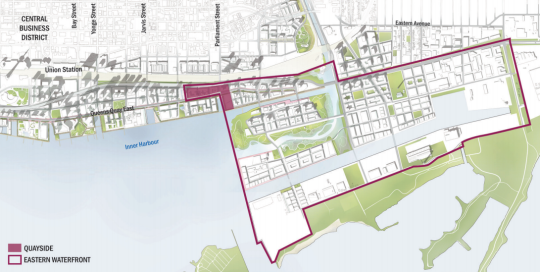
    I’m anxious to learn more details about the project, but this is obviously very exciting. It also creates momentum and strengthens the case for Amazon HQ2 in Toronto. The above 12-acre Quayside area is only the tip of the iceberg. There’s the rest of the eastern waterfront and also East Harbour.
    image

    Some people have been critical of this city’s push for Amazon HQ2. Anthony Lacavera, chairman of Globalive Capital, called this “the biggest Trojan Horse of all time.” His view is that Amazon would simply use HQ2 Toronto as a mechanism for cheaper labor (USD > CAD) and to siphon the best and brightest down to the US.

    Now, I agree that it would be more impactful to create the next Amazon then to simply lure in its second headquarters. Big entrepreneurial successes are what fuel the darwinian evolution of startup hubs. The founders, early employees and investors make boatloads of money and then they start reinvesting that back into the ecosystem by, among other things, backing the next generation of entrepreneurs.

    But does this necessarily mean that an Amazon HQ2 would be detrimental to Toronto by acting as a conduit to the US? Will it discourage entrepreneurship? Should we eschew all US firms out of fear that this may in fact happen? I don’t think so.

    There’s tremendous value in concentrating smart people in one place – ideas build on ideas. And I don’t think technology has been able to disrupt that, at least not yet. One example of this is a theory that Paul Graham calls the Milanese Leonardo:

    You can see how powerful cities are from something I wrote about earlier: the case of the Milanese Leonardo. Practically every fifteenth century Italian painter you’ve heard of was from Florence, even though Milan was just as big. People in Florence weren’t genetically different, so you have to assume there was someone born in Milan with as much natural ability as Leonardo. What happened to him?

    And his reasoning is as follows:

    Nothing is more powerful than a community of talented people working on related problems. Genes count for little by comparison: being a genetic Leonardo was not enough to compensate for having been born near Milan instead of Florence. Today we move around more, but great work still comes disproportionately from a few hotspots: the Bauhaus, the Manhattan Project, the New Yorker, Lockheed’s Skunk Works, Xerox Parc.

    Xerox Parc (Palo Alto Research Company) is a great example of the kind of positive externalities that can happen as a result of smart people being in close proximity to each other while they wrestle with similar problems. It has been well documented that it was Steve Jobs’ visit to Xerox Parc that inspired many of Apple’s early innovations.

    So my view: let’s increase Toronto’s urban metabolism and make it the Florence of 1450.

    Ed Clark – who is leading the charge for HQ2 in Toronto – has been clear that large taxpayer subsidies are not on the table for Amazon. That would not be fair to the existing companies in this city. If that is what it is going to take, then we are not going to win. We will win based on our city, our human capital, and our openness to the rest of the world. That feels right.

    Welcome Sidewalk Labs. Welcome Amazon. This city is open for business and to new ideas. 

    Image: Waterfront Toronto

  • What e-commerce may do to our streetscapes

    Sidewalk Labs recently ran a thought experiment where they came up with 5 possible scenarios for the future of retail and, more specifically, what they may mean for our streetscapes. You can read all about them here, but my mind lumps them into 3 broad categories.

    First, there’s the temporary/pop-up/independent scenario. This one is all about flexibility and speed. It’s about web-first retailers who don’t have, need or want permanent stores and about empowering small scale business owners. This makes sense. The internet has decentralizing forces.

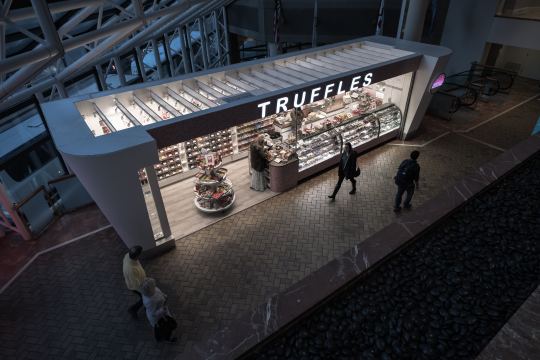
    The second one takes retail in the opposite direction. It’s about going all in on physical stores; upsizing them and making them even more over the top and Instagram-able. This one also seems intuitive given that we’re already seeing this trend with malls. Many/most are dying and the surviving ones are trying to go as high end as possible.

    The last scenario takes vacant and underutilized retail on the fringe and turns them into “digital dispensaries.” This one is entirely utilitarian and void of any streetscape/urban considerations. It’s about autonomous electric vehicles picking up your goods through drive-thrus and on-demand drones dispatching your toilet paper after you hit that Amazon Dash Button.

    This feels like a good list. I think you could argue that the writing is on the wall for all of these scenarios.

    Photo by Lance Anderson on Unsplash

  • Building a city from the internet up

    There has been a lot of exciting tech + urbanism news this week in Toronto. Uber announced that it’s building a new artificial intelligence team in the city and it came out that Sidewalk Labs (Alphabet company) had responded to an RFP put out by Waterfront Toronto. 

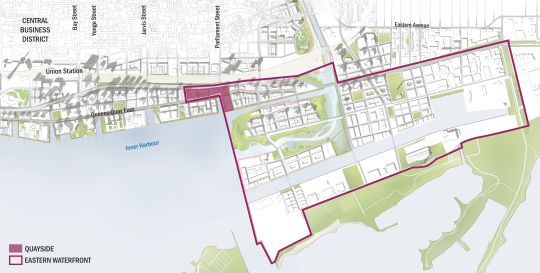
    The RFP, which closed at the end of last month, was to find an “innovation and funding partner” for the 12-acre Quayside precinct shown above in purple. It’s the first parcel of the “eastern waterfront.” (Click here if you’d like to download a copy of the actual Request for Proposal.)

    These days, it’s easy to be cynical about these sorts of announcements. Every day you hear about some new innovation center or tech hub. But what’s perhaps unique about this one is that Sidewalk Labs is thinking crazier than most and they have the financial backing that crazy sometimes needs.

    If you’re not at all familiar with Sidewalk Labs, I suggest you read this post about how the company wants to build cities “from the internet up.” It’s by their CEO, Daniel L. Doctoroff. 

    Not surprisingly, they are thinking about everything from automated trash systems and autonomous vehicles (including their impact on built form, cost of living, productivity, etc.) to exchange-based thermal grids and more cost effective construction methods. And it’s not just about the technology. It’s about marrying tech + urbanism.

    Also interesting is their model of setting up a “hyper-focused labs”, which are each run by entrepreneurs-in-residence. These internal labs are focused on things like housing affordability, the health challenges faced by low-income city residents, and so on. 

    It’s all very exciting. So let’s ensure this moves forward and let’s hope Sidewalk Labs keeps thinking crazy. Toronto is ready to lead and show the world how a city built from the internet up should perform.

  • Local rail-driven agglomeration economies

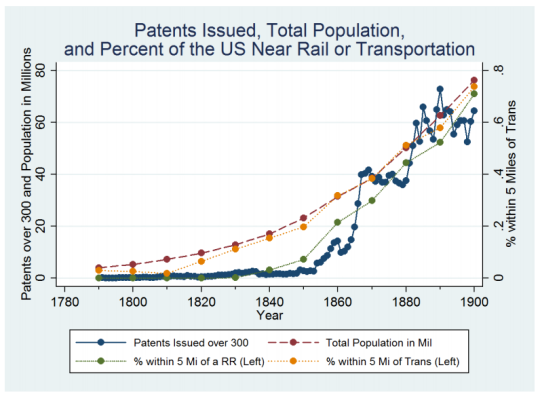
    This morning I came across the below graph in a Medium article by Eric Jaffe of Sidewalk Labs. It is taken from a research paper by Elisabeth Ruth Perlman called, Dense Enough To Be Brilliant: Patents, Urbanization, and Transportation in Nineteenth Century America.

    What this chart shows is patents issued – a proxy for innovation – in all U.S. counties between 1790 and 1900. This data is then compared against access to transport, such as rail. The discovery is a statistically significant relationship between innovation (patents issued) and rail (transport) access.

    The spike in the 1850s (shown above) is as a result of increased rail access.

    But Perlman takes it a step further and asks: what is causing this spike in innovation? Is it because inventors and creators started responding to the larger market now accessible to them because of rail connectivity? Or did transportation somehow improve productivity and the flow of information?

    To answer this question, she dug into the patents themselves (over 700,000 of them) to try and identify how ideas and key words were spreading. What she found is that rail access alone doesn’t encourage innovation. References to new technologies did not increase.

    What mattered was what happened locally. Transportation improvements promoted urbanization and density during her study period, and that’s what drove innovation. Connectivity created agglomeration economies at the local level.

    Obviously a lot has changed since the 19th century. But whether it’s rail connectivity or internet connectivity, have the rules really changed? Place still matters. What happens locally still matters. Perhaps even more. 

    This is an important lesson to consider as we build our cities and invest in transportation. Rail alone isn’t enough. What matters more is what we build around it. Are we dense enough to be brilliant?

  • Project Sidewalk

    One of Alphabet’s subsidiaries is a company by the name of Sidewalk Labs. Some of you, I’m sure, have been following it. The goal of the company is to leverage technology in order to solve some of our biggest urban challenges.

    Initially, they were fairly under the radar, but more recently they’ve become a lot more public with their projects and their mission. Here is a snippet from a recent blog post written by their CEO, Daniel L. Doctoroff

    “The world is poised for a fourth urban-tech revolution — an age of connectivity capable of reshaping cities as much as the steam engine, electricity, and automobile have in the past. New technologies will help citizens and elected officials tackle those intractable urban challenges that Larry outlined last summer, but making sure this age imposes fewer social costs than those previous shifts is critical.”

    Earlier this week it was also announced that the company is likely to enter the real estate development business and construct a new city precinct in order to pilot some of their ideas and projects. The initiative is called Project Sidewalk. 

    Here is an excerpt from the Wall Street Journal:

    “According to people familiar with Sidewalk’s plans, the division of Alphabet is putting the final touches on a proposal to get into the business of developing giant new districts of housing, offices and retail within existing cities.

    The company would seek cities with large swaths of land they want redeveloped—likely economically struggling municipalities grappling with decay—perhaps through a bidding process, the people said. Sidewalk would partner with one or more of those cities to build up the districts, which are envisioned to hold tens of thousands of residents and employees, and to be heavily integrated with technology.”

    When I read this, I immediately thought of the Port Lands area in Toronto. Not because Toronto is decaying – far from it – but because it’s a massive 880 acre site that is both adjacent to downtown and entirely underutilized. I can’t wait to see this area transformed into a thriving waterfront community.

    In any event, if or when Project Sidewalk gets off the ground, it will be very interesting to see what a Google-backed real estate development company looks like.