Daily insights for city builders, delivered every morning at 6 AM ET. I’m Brandon Donnelly — a Toronto-based real estate developer and founder of Globizen. I’ve been writing here since 2013.

Tag: sicily

  • How to create narrow European-style streets

    If you’re a regular reader of this blog, you’ll know that I have a thing for narrow streets. Which is why when I travel I sometimes (okay, oftentimes) bring a laser distance measuring device with me. I like measuring things so that I have dimensions that I can feed back into our own development projects. But perhaps most importantly, it allows me to appear as nerdy as humanly possible while traveling. Walking around with just a camera in hand isn’t enough. You need to try harder than that. And so far the narrowest street that I have come across was in Noto, Sicily at just over 1.3m wide.

    If you also like to fawn over narrow European streets, you may enjoy this recent video by City Beautiful. In it, Dave Amos compares European cities, like Rome, to US cities, like Salt Lake City and Philadelphia, and then asks: Can the US build European-style street networks? His immediate answer is, “probably not.” And this is something that we have talked about before on the blog. Street networks tend to be really sticky. They’re hard to change. However, there is another possible solution: create new smaller mid-block streets. And that’s the focus of Dave’s video:

    But if you think about it, this condition already exists in a number of cities. Here in Toronto, we have somewhere around 300 kilometers of laneways, which tend to range in width from 4 to 6m. These are European-scaled streets and amazingly they’re already in place! The only difference is that, today, they mostly serve a back-of-house function. They provide access to garages. However, that is quickly changing with the introduction of laneway suites. And so over a long enough time horizon, our laneways are going to inevitably flip from back-of-house to primarily residential.

    Though maybe there’s even more we could do with this asset. European cities manage to fit retail, restaurants, patios, and more within 6m. Why not do the same with some of our narrowest streets?

  • Seoul crush

    We have spoken a lot over the years about the benefits of narrow and pedestrian-focused streets. Most recently, I even ran around Europe with a laser distance measuring device to collect a few field samples. Here’s an example from Marseille and here’s an example from Sicily.

    But given all this, I think it is important to recognize that what happened in Seoul over the weekend — a deadly crowd crush that killed over 150 people — is both a horrible tragedy and a result of too many people in a narrow and pedestrian-focused street. So clearly there can be a flip side to what we talk about here. At the time of writing this post, investigations were still ongoing.

    I am not a crowd-control expert, but I have spent time in dense Asian cities during major events and holidays, and never have I felt so claustrophobic. I have lined up for hours to get into subway stations and I have lined up to get into entire city districts — presumably because they were trying to avoid things like what happened this past weekend.

    My heart goes out to all of the people and families that were impacted by this horrific incident.

    🇰🇷 🇨🇦

  • Last night in Sicily

    The first time I went to Italy was, I think, when I was about 18 or 19 years old. My friend and I took the train down to Milan from Zug, Switzerland (where his father lives), and we got out of the train station without any idea as to where we were going or where we were going to stay. We were young and brazen and clearly not very prepared. I was probably also wearing Diesel jeans and holding a Sony Ericsson T68 in my hand. Sadly, neither of these things were all that helpful as travel aids.

    Today it’s impossible to imagine traveling without our smartphones and apps like Google Maps, Google Translate, Airbnb, Uber, and many others. I know that Uber has received its share of criticism over the years, but if you want to fully appreciate what Uber brought to the world, go to a place that you don’t know, that is generally unsafe, and where you don’t speak the language. It becomes invaluable. (This was Rio de Janeiro for me.) But even without all three of these things, it’s an incredibly powerful tool.

    In situations where there is zero overlap in languages, I have also used Google Translate to have entire conversations. When push comes to shove, I prefer this approach over trying to impose English (or French) on someone. After all, I am the visitor. I should be the one bending as much as possible. You can also use the app to photograph a restaurant menu and have the entire thing translated in realtime. This to me — realtime reading — feels like a powerful use case for when augmented reality arrives.

    I also like to use to Google Maps to fastidiously track where I want to go and where I have been. I love logging my travels, and that is much easier to do today compared to the Diesel jean days. I also try and remember to pre-download whatever maps I need so that I’m less reliant on roaming. Here is what Marseille and Sicily look like right now following our trip:

    (If any of you are looking for recommendations, CRABE-TORO was our absolute favorite restaurant in Marseille and Càssaro was our favorite place for a drink in Noto, Sicily. We, unfortunately, never tried the food at the latter, but I’m sure it’s terrific.)

    Technological change has always elicited criticism, negative externalities, and some people wishing that things would just remain as they are. And there is, of course, something liberating about getting off a train in a foreign city and figuring out things as you go. In Milan, we simply walked into various hotels, asked them what their rates were, and then probably got taken advantage of as two young Canadians.

    At the end of the day, though, I am a firm believer that the world is a better place because of technological progress. From the Gutenberg printing press to Google Maps, technology empowers us as humans. And I have little doubt that 10 years from now we’ll all be traveling with some sort of augmented reality device and romanticizing the good old days of pins on a Google Map.

    For the Canadian readers out there, I wish you all a happy Thanksgiving weekend. I am back in Toronto and regularly scheduled programming will now resume on the blog. I hope you enjoyed some of the post diversions over the last 10 days.

    Photo taken at La chiave in Catania, Sicily

  • Some Sicilian inspiration for #KioskTO

    I have written before about how Lisbon’s kiosks both anchor and beautify the city’s public spaces. I have also written about how Toronto should have something similar — #KioskTO anyone?

    Some of you might remember an expanded street food program that the city piloted many years ago. It was a complete and utter failure. In my opinion (and from what I can remember), it was too heavily regulated. The food ended up being far too expensive and, frankly, none of it was very good.

    That’s not how this should work. The entire point of things like food trucks and street kiosks is that they are cheaper alternatives to a conventional physical location. You can also more easily place them in locations where demand is being underserved.

    The one pictured here is in Catania, Sicily. I carried my beer over from a panini shop down the street and then we ordered three espressos for a total of 2€. I tried to sit on a crate they had lying on the ground but I ended up breaking it. Sorry, guys. So we stood instead. It was all rather civilized.

    Let entrepreneurs figure out what to sell and where. It will be a boon for both small business and for our public spaces.

    P.S. I tweeted this photo out earlier today and it elicited a good discussion on Twitter. Toronto wants this.

  • The even narrower streets of Noto, Sicily

    So it turns out that the narrow streets in Le Panier (in Marseille) are actually far too wide at nearly 13 feet. What were the planners even thinking back in 600? Here’s a street I found in Noto, Sicily at just over 4 feet. I’m not sure if this is considered some sort of tertiary lane or not, but it had a street sign, addresses, and businesses in a courtyard at the end of it. So I’m going to assume it’s a bona fide street. It’s hard to imagine getting much tighter than this. I wonder if Jeff Bezos delivers here.

  • Out of office

    I have been fortunate to be able to travel a fair bit this year. But the vast majority of that travel has been me working remotely. In my mind, that means a few things: (1) I remain committed to staying on top of and clearing out my inbox each day; (2) I still take all meetings as if I were 100% in the office (which is my preferred way to work); and (3) I don’t put on an out-of-office reply. That’s the signal that you should expect a response. Today, however, is not one of those days. I just finished putting on my out-of-office reply and that is me capitulating against the looming email torrent.

    On past vacations I have done things like turn this blog into more of a photoblog. I will probably do a bit of that, but my plan this time around is to concoct some combination of a photoblog, travel blog, and foreign city building blog. Travel is a great way to learn from other cities, and I will endeavor to share some of what I find in France and Sicily. (Sicily is in Italy, but not really, right?) Some of you seem to get a little grouchy when I stray from our regularly scheduled programming on this free and personal blog. So if this doesn’t sound all that appealing, you may want to check back in October.

  • Sicilian town is giving away free houses

    https://500px.com/embed.js

    Buy real estate. It always goes up. That’s the mantra, right?

    Few things in life are that black and white.

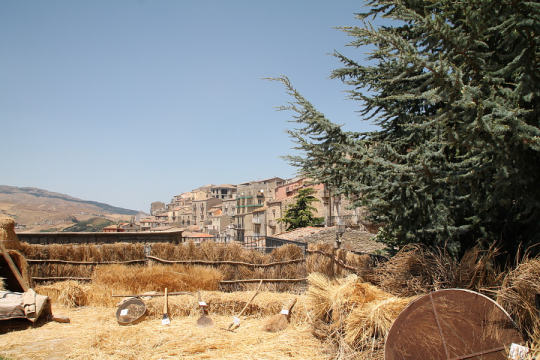
    A small town in Sicily called Gangi is in the midst of a novel urban renewal experiment. They are giving away houses for free to people who will agree to renovate them within a 4 year time period.

    Here’s the “free houses” notice from the Comune Di Gangi explaining how it works and who to contact. You have to be an Italian or EU citizen to participate.

    Free can be a powerful business model, as we see all the time with tech companies. And sometimes cities and towns aren’t all that different.

    So if you’re looking for a vacation home or want to move to Sicily, now might be a great time.