Daily insights for city builders, delivered every morning at 6 AM ET. I’m Brandon Donnelly — a Toronto-based real estate developer and founder of Globizen. I’ve been writing here since 2013.

Tag: selling

  • What the NAR’s $418 million settlement could mean for the real estate industry

    The $418 million commissions lawsuit that was settled last week with the National Association of Realtors (NAR) is certainly a big deal. The NAR is trying to sound positive, but all signs point to this outcome being meaningful for the industry. TD Cowen Insights is forecasting that commissions paid in the US each year could fall by some $25 to $50 billion (from a total of ~$100 billion). And this is the headline you’ll see everywhere right now. But how might this actually happen?

    As we’ve talked about before, the status quo commissions set up is a good one for agents:

    • Sellers are typically the party who pays 100% of the commissions
    • But sellers don’t pay until the agent sells and they have fresh cash
    • Money being deducted from proceeds (a “take rate”) is a lot less noticeable and has a lot less friction than cash you just have to pay out of pocket
    • Buyers kind of don’t pay — or at least that’s how they’re supposed to feel

    This is “good” because it perpetuates the existing model. If buyers feel like they’re mostly not paying, they’re just going to go to the marketplace with the most supply of homes. And that marketplace is the Multiple Listing Service (MLS). However, this marketplace also does things like tell buyer agents how much commission they will make as part of each deal. And the belief is that practices like this are anticompetitive.

    So as part of the above settlement, the following new rules are expected to go into place by July 2024 in the US:

    • Seller agents will no longer be able to set compensation for buyer agents
    • All fields on MLS displaying broker compensation will need to be removed
    • Furthermore, agents will no longer even need to subscribe to an MLS in order to accept compensation
    • Buyers working with an agent will need to enter into their own buyer broker agreement and negotiate compensation separately
    • However, there’s nothing stopping buyers and sellers from negotiating whatever commission structure they want; the idea is simply that it will be more transparent and negotiated by each participant

    Why this is meaningful is that it decouples buyer agents and seller agents in a way that they aren’t today. Instead of everything originating from the sell side, each side of the transaction is now going to — theoretically at least — negotiate what they believe is fair compensation for their representation. At the same time, there’s no obligation to even subscribe to an MLS.

    This leads us to, at least, two important things to think about:

    1. What is fair compensation? Well, it should depend. If I’m a first-time buyer, I may want someone to walk me through the entire process. But if I’ve done it many times before, maybe I need very little. Or, if I’m an investor looking to renovate homes, maybe I want representation that is also an expert on construction. The point is that, in a truly open market, one should be able to find an agent and pay them based on the value that they’re creating. And this is presumably why everyone is expecting commissions to fall precipitously.
    2. If there’s no obligation to even subscribe to an MLS, does this then open the door for new and more open listing platforms? Right now, I don’t know how this will play out. I’d like to better understand more of the details around this settlement item and what it could mean for the landscape. But I do know that the way to spur the most amount of innovation would be to have the marketplace run on something like a blockchain, and then allow anyone to create their own listing platform on top of it. One day.

    This will be fascinating to watch play out. And I’m sure it’s only a matter of time before it spurs similar changes here in Canada. Expect further coverage of this topic on the blog.

    Photo by Tom Rumble on Unsplash
  • Wonderful real estate

    At the highest level, I agree with the premise of this tweet from The Real Estate God. The overarching argument is that one’s main criteria for selecting a real estate market in which to enter should be “the place with the least competition.” And the reason for this is that less competition equals less price discovery, which then equals more mispriced assets and more opportunities to generate outsized returns.

    Going even further, the argument here is that you’re actually taking on less risk by buying mispriced assets in less competitive markets because you can model reality (things like in-place cash flows and market rents) as opposed to betting on the future (things like rental growth and/or cap rate compression). Said in a different way, it’s easier to find deals and “make money on the buy”; and, once again, I would mostly agree with this.

    But in my mind there’s a very important caveat. And it’s akin to the advice that the late Charlie Munger supposedly gave to Warren Buffet: “Forget what you know about buying fair businesses at wonderful prices; instead, buy wonderful businesses at fair prices.” While it is true that you might find wonderful pricing in less competitive markets, there remains the question of whether you’re also buying wonderful real estate.

    And I think that’s an important consideration.

  • Toward positive ZOPAs

    This example, by Matt Levine, is a funny way to understand how many negotiations work:

    In negotiations, it is often helpful to have someone else, some “absent principal,” to blame for your position. You go to a car dealership, the salesperson says “this car costs $25,000,” you say “I want to pay $21,000,” she says “I like you, I want you in this car, but my boss won’t let me go lower than $24,000,” you say “$22,000,” she says “I really want this to work out, let me check with my boss,” she goes into the break room and watches TikToks on her phone for five minutes, she comes back and says “my boss is really mad at me but I talked him down to $23,500.”

    The boss is a crutch, an excuse. The salesperson is adversarial to you — she wants to charge more, you want to pay less — but wants you to feel like she’s on your side, so you trust her and agree to her proposals.

    Now, Matt ultimately goes on to talk about how in some situations, such as in the financial industry, this could be considered criminal behavior. But that’s a more nuanced topic for his column, and not for this blog. Here, we’re just going to use it as a lead-in to say that negotiating is kind of important for real estate.

    In fact, when I was in grad school, my mentors used to always say to me, “everyone should take a negotiating class.” And so I went and did that. It was a lot of fun. I remember us being given “positions”, and then we’d have to go out and see what we could negotiate.

    One particular concept that I often find myself coming back to is something referred to as the “ZOPA.” The Russians in my class were quick to point out that this sounds like the word ass in their language, but in the world of negotiating it stands for “Zone of Possible Agreement.”

    What it describes is whether there’s an overlap between what both parties are willing to accept. For example, if a buyer is willing to pay as much as $100 for a particular piece of real estate, and the seller is willing to go as low as $80, then there is a positive ZOPA of $20.

    This means that a deal should theoretically happen. However, interestingly enough, I discovered in my classroom simulations that negotiations can still arrive at an impasse, even with a positive ZOPA. Some people want to do deals, and some people like to extract everything they can from a negotiation.

    Of course, if you have a negative ZOPA (i.e. no overlap in what the parties are willing to accept), then it’s obviously pretty hard, if not largely impossible, to come to a deal. And since 2022, you could say that the real estate industry has been characterized by a greater number of negative ZOPA scenarios.

    But if my predictions for this year are correct, then 2024 will be the year where we start to see some more positive ones.

  • Real estate commissions are probably going to come down

    Real estate commissions on homes in the US are typically between 5-6%. And it is usually split between the seller’s agent and the buyer’s agent (or it goes all to one agent in the case of dual-ended deals). It is also customary for this commission to be paid entirely by the seller (through the proceeds of their sale), though you could argue that buyers end up paying for it indirectly. All of this is generally true in Canada as well.

    This is a good set up:

    • Sellers don’t pay until they sell and have fresh cash
    • Money being deducted from proceeds (the “take rate”) is a lot less noticeable and has a lot less friction than cash you just have to pay out
    • Buyers kind of don’t pay

    This last point is one of the most important features of how real estate commissions work. Because you have one side of the transaction that feels as if they’re mostly not paying, it generally helps to perpetuate the status quo. If both sides had to directly fork out cash, you’d likely have a lot more people saying, “hey, why don’t we consummate this transaction over here, on the side, and not pay these fees.”

    But it turns out that the US Department of Justice isn’t happy about some of these policies and practices. More specifically, when the National Association of Realtors does things like this:

    • Prohibiting multiple listing services (“MLSs”) from disclosing to prospective buyers the amount of commission that the buyer broker will earn if the buyer purchases a home listed on the MLS (“NAR’s Commission Concealment Rules”);
    • Allowing buyer brokers to mislead buyers into thinking that buyer broker services are free (“NAR’s Free-Service Rule”);
    • Enabling buyer brokers to filter MLS listings based on the level of buyer broker commissions offered and to exclude homes with lower commissions from consideration by potential home buyers (“NAR’s Commission-Filter Rules and Practices”); and
    • Limiting access to lockboxes that provide licensed brokers physical access to a home that is for sale to only those real estate brokers who are members of a NAR-affiliated MLS (“NAR’s Lockbox Policy”).

    In fact, these practices were found to be anti-competitive; they were arguably keeping commissions artificially high. So much so that a federal court recently awarded $1.8 billion in damages. It was also decided that no rule or practice should exist that:

    • Prohibits, discourages, or recommends against an MLS or MLS Participant publishing or displaying to consumers any MLS database field specifying the compensation offered to other MLS Participants;
    • Permits or requires MLS Participants, including buyer brokers, to represent or suggest that their services are free or available to a client at not cost to the client;
    • Permits or enables MLS Participants to filter, suppress, hide, or not display or distribute MLS listings based on the level of compensation offered to the buyer broker or the name of the brokerage or agent; or
    • Prohibits, discourages or recommends against the eligibility of any licensed real estate agent or broker, from accessing, with seller approval, the lockboxes of those properties listed on an MLS.

    Some believe that this ruling — which will create more competition — could reduce the $100 billion or so of commissions paid each year (in the US) by as much as 30%. This is possible. I have no idea how this estimate was calculated. But it does make intuitive sense that commissions should come down. This ruling gets at the heart of what sustains the industry: one side of the marketplace needs to feel that they’re, mostly, not really, paying.

  • A mismatch of expectations

    Seth Godin’s blog post this morning, called “I hate this restaurant,” is really excellent. I would encourage you all to read it. In it, he talks about a mismatch of expectations. More specifically, he gives the example of somebody going to a restaurant and not liking what’s on offer, and therefore being upset. It’s not that the food was bad or that the restaurant has failed, it’s just that the person didn’t get what they were expecting. There’s a mismatch. And this, of course, happens all over the place and not just in restaurants. In his view, this failure is caused by a few different factors that ultimately result in us — the people that are involved in everything from the arts to business — having to make a decision about the kind of operation we would like to run. Below is an excerpt of those things. For the full post, click here.

    This failure comes from a few contributing factors, all amplified by our culture:

    First, you can’t know if you’re going to like an experience until you experience it. All you know is your understanding of what was on offer. And because there are so many choices and there’s so much noise, we rarely take the time to actually read the label, or we get carried away by the coming attractions, or we just don’t care enough to pay attention until we’re already involved.

    [And marketers are complicit, because in the face of too much noise, they hype what’s on offer and overpromise…]

    Second, because many people are afraid. They’re afraid of the new and even more than that, afraid of change. Most people in our culture would like to be entertained not transformed, lectured at instead of learning.

    Third, the double-edged sword of giving everyone a microphone means that we’ve amplified the voices of dissent at the same time we’ve given people a chance to speak up about their desires. This means that mass culture is far more divisive than it ever was before, and it also means that bubbles of interest are more likely to be served.

    And so the fork in the road:

    You can either turn your operation into a cross between McDonald’s and Disney, selling the regular kind, pandering to the middle, putting everything in exactly the category they hoped for and challenging no expectations…

    Or you can do the incredibly hard work of transgressing genres, challenging expectations and seeking out the few people who want to experience something that matters, instead of something that’s merely safe.

  • Why do more people in Quebec sell their home without an agent?

    If you ask most people, they’ll tell you that real estate agents will never ever disappear. 

    Despite the internet, mobile phones, social networks, and companies (here in Canada) such as comFree and PropertyGuys, the bulk of the market still employs an agent when it comes time to buy and/or sell a home. This is true both in Canada and the United States. And it may always be true.

    But there are lots of entrepreneurs and people in the real estate community experimenting with different models. OpenDoor and Open Listings are two new startups out of the US that I’ve been following closely.

    At the same time, there is a certain fraction of the market that is willing to go at it alone. By some estimates this number could be as high as 25% in Canada. Of course, this is a hard number to measure accurately since there isn’t just one method of selling a home privately and many transactions likely go untracked.

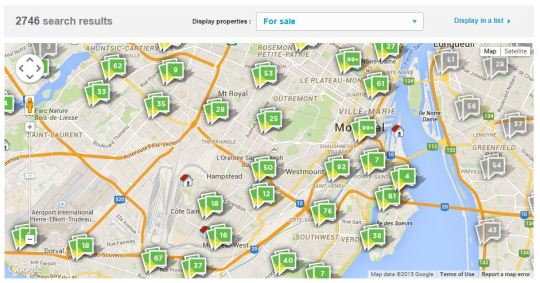
    But one thing that I’ve been wondering for awhile now is why the percentage of private home sales is seemingly so much higher in the province of Quebec. According to Wikipedia, this number might be greater than 50%. And a quick search on comFree (duProprio in Quebec) seems to suggest that this may indeed be the case.

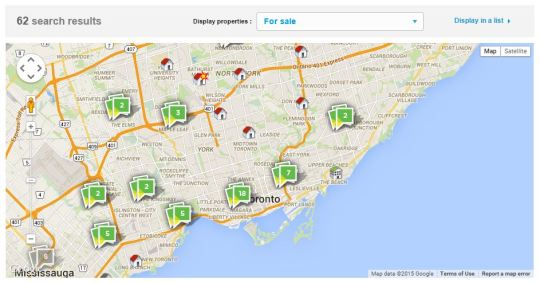
    Here are the comFree search results for downtown Toronto. There are 62 properties.

    image

    And here are the duProprio search results for downtown Montreal (notice I tried to maintain the same zoom level). There are 2,746 properties.

    image

    If anyone has any insights on this phenomenon, I would love to hear from you in the comment section below. I don’t know why this is the way it is.

  • The importance of storytelling

    Last night I was out for drinks with a friend of mine who runs an architecture firm in the city called Reflect Architecture. We started talking about the importance of marketing and storytelling in city building and then got onto the topic of Danish architect Bjarke Ingels and his firm BIG.

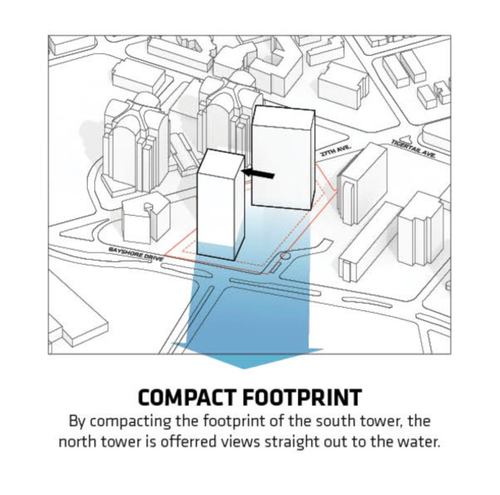
    At only 39, Bjarke Ingels has become a celebrity architect at a relatively young age. He’s working on projects all over the world from Vancouver to New York to Shenzhen. And he describes his work as a combination of “shrewd analysis, playful experimentation, social responsibility and humour.” But what has always interested me about BIG is their use of dead, simple, diagrams (see above for an example).

    A diagram is just a graphic way of communicating information. And lots of architects use them as a design tool. But what BIG does is use them to create a narrative around each and every project. If you look at their website you’ll see that every project is presented using a series of diagrams that outline the process used to arrive at the final design. You’ll never just see the final product. You always see the steps involved. Click here for an example from Vancouver.

    What’s powerful about this approach is that it demonstrates that there’s a logic behind every design outcome (even if sometimes it might be contrived or done after the fact). It’s not form for the sake of form; it’s form as a result of the uses in the building, the urban context, and so on. 

    But at the same time, I think it taps into a deeper psychological phenomenon: people love stories. In fact, research shows that when we’re told stories, our brains actually become more active. We pay closer attention.

    I mean, just think about how much people enjoy hearing about rags-to-riches stories. Nobody likes to talk about some rich person who was born rich. That’s not an exciting or interesting story. And it changes how we perceive that person. We want to hear about that guy or girl who came over from a war torn country and built an empire from nothing. Now that’s a good story.

    What I’m getting at is that I think a big part of Bjarke’s success has come from his ability to masterfully storytell and market both himself and his projects. Architecture schools don’t usually teach you how to market and sell; they teach you how to design. But the reality is that you need to sell. And storytelling is a great way to do that.

    If you liked this post, I recommend you check out this TED talk by Bjarke Ingels and this short interview with marketer Gary Vaynerchuk where he talks about how he used storytelling to sell wine.

  • Without trust, you have nothing

    I was reading Fred Wilson’s AVC.com blog this morning (as I do every morning), and I thought his post on trust was a really important one. He was talking about it in the context of building successful web applications, but I don’t think it’s only applicable to internet businesses.

    As marketer Seth Godin wrote on his blog earlier this year, the most important questions are not:

    Is my price low enough?

    Is it reliable enough?

    Do I offer enough features?

    Am I on the right social media channels?

    Is the website cool enough?

    Am I promising enough?

    No, the most important question in marketing something to someone who hasn’t purchased it before is,

    “Do they trust me enough to believe my promises?”

    Without that, you have nothing.

    I thought this was such an awesome, yet simple, post that I actually circulated it to a bunch of people in the office after I read it. Because whether you’re marketing widgets, marketing private cloud storage, marketing to investors, or marketing new condominiums, that question of trust is paramount.

    And it’s for that reason that I think social media and mediums such as blogging have become so important. Customers want to feel like they trust you before they buy your product. The best brands know this and forge “relationships” with their customers. And with the tools at our disposal today, it’s become a lot easier for companies to do that.