Daily insights for city builders, delivered every morning at 6 AM ET. I’m Brandon Donnelly — a Toronto-based real estate developer and founder of Globizen. I’ve been writing here since 2013.

Tag: self driving cars

  • Current state of autonomous vehicles

    This is an interesting piece by Bloomberg summarizing the current state of autonomous vehicles and in particular the (supposed) dominance of Waymo (Alphabet’s self-driving vehicle arm). Many believe they will be the first real entrant into the market.
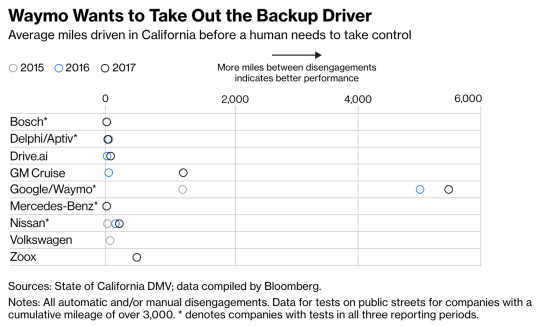
    The company is currently running an “Early Rider” program in 25 cities. But its Phoenix trials are the furthest along, which isn’t at all surprising given the city’s car orientation and suburban fabric. Already Waymo has started offering passenger rides without a backup driver in the car.

    Overall, the company has come forward with four main business priorities:

    • Ride hailing
    • Trucking
    • Personal vehicles
    • Public transit

    But I still think that we’ll see a blurring of these priorities, if not outright cannibalization, as the cost per mile plummets. I mean, why own a personal vehicle if it is flat out easier and cheaper to just hail a robotaxi? 

    Here is an excerpt from the article talking about pricing:

    Tasha Keeney, an analyst at ARK Invest, says that Waymo could choose to offer an autonomous ride-hailing service today at around 70 cents a mile—a quarter of the cost for Uber passengers in San Francisco. Over time, she says, robotaxis should get even cheaper—down to 35 cents a mile by 2020, especially if Waymo’s technology proves sturdy enough to need few human safety monitors overseeing the autonomous vehicles remotely. “You could see software-like margins,” Keeney says.

    I can’t wait to be driven around for cents on the dollar. Click here to read the full article.
  • Network effects for autonomous vehicles

    In my recent post about why I write about tech on this city building blog, I made a pithy comment about autonomous vehicles and why it is “largely a software challenge.” 

    The argument I was trying to make was that the hardware, similar to smartphones today, will likely become a commodity. More of the value will end up flowing to the firms that control the software.

    Benedict Evans has an excellent deep dive into this topic on his blog. The post is called: Winner-takes all effects in autonomous cars.

    Here’s an excerpt about hardware:

    To begin with, it seems pretty clear that the hardware and sensors for autonomy – and, probably, for electric – will be commodities. There is plenty of science and engineering in these (and a lot more work to do), just as there is in, say, LCD screens, but there is no reason why you have to use one rather than another just because everyone else is. There are strong manufacturing scale effects, but no network effect. [My link, not his.]

    And here’s his conclusion:

    So, the network effects – the winner-takes-all effects – are in data: in driving data and in maps.

    That said, it is still early days for autonomous vehicles. Who knows if these network effects will end up being highly defensible or weak. There are still lots of assumptions and questions at this stage.

    From a city building perspective, one of the major concerns with autonomous vehicles is that they could tempt us back to car-centric city planning. That would be a shame.

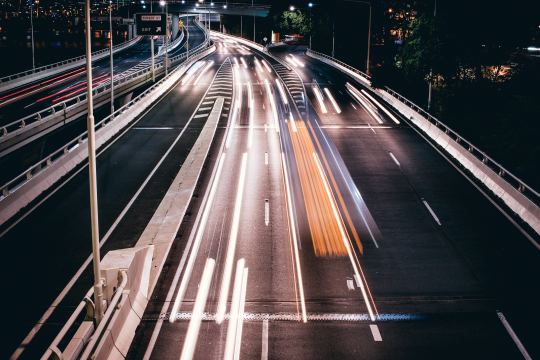
    Photo by Zachary Staines on Unsplash

  • The death of Big Oil

    Designing a building for 5+ years into the future can be tricky. The pace of change in the world today is astounding.

    Last month Seth Miller published a Medium article called: This is how Big Oil will die. His argument is that the cost of running an electric self-driving vehicle will be so low – simpler technology and no labor cost – that the personal vehicle as we know it will come to an end. People are inevitably going to give up their cars, which will result in a peaking of oil consumption.

    We’ve talked about this future many times before on the blog. But Miller’s argument ties it back to oil and also comes with a set of predictions taken from a report prepared by the consulting company RethinkX:

    – Self-driving cars will launch around 2021.
    – A private ride will be priced at 16¢ per mile, falling to 10¢ over time.
    – A shared ride will be priced at 5¢ per mile, falling to 3¢ over time.
    – By 2022, oil use will have peaked.
    – By 2023, used car prices will crash as people give up their vehicles. New car sales for individuals will drop to nearly zero.
    – By 2030, gasoline use for cars will have dropped to near zero, and total crude oil use will have dropped by 30% compared to today.

    If all of these predictions prove to be true, then what should we be doing today to prepare our cities for this future?

  • Autonomous vehicles are the new big box store

    I would like to pull out one more idea from Derek Thompson’s article, What in the World Is Causing the Retail Meltdown of 2017? It is this prediction that self-driving cars could maybe become the new retail store:

    “Once autonomous vehicles are cheap, safe, and plentiful, retail and logistics companies could buy up millions, seeing that cars can be stores and streets are the ultimate real estate. In fact, self-driving cars could make shopping space nearly obsolete in some areas. CVS could have hundreds of self-driving minivans stocked with merchandise roving the suburbs all day and night, ready to be summoned to somebody’s home by smartphone. A new luxury-watch brand in 2025 might not spring for an Upper East Side storefront, but maybe its autonomous showroom vehicle could circle the neighborhood, waiting to be summoned to the doorstep of a tony apartment building. Autonomous retail will create new conveniences and traffic headaches, require new regulations, and inspire new business strategies that could take even more businesses out of commercial real estate. The future of retail could be even weirder yet.”

    It’s an interesting idea. And perhaps not as far fetched as it may seem. Delivery timelines are constantly being compressed. And as the purchasing data gets better, it may be possible to anticipate sales before they even happen such that you’re minimizing the amount of unsold product being hauled around.

    I’m going to end here because it’s now time for some Raptors playoff basketball. But what are your thoughts?

  • We’re still on road pricing

    The New York Times recently argued that self-driving cars can’t cure traffic, but that economics can. Here is the key soundbite:

    “Maybe autonomous cars will be different from other capacity expansions,” Mr. Turner said. “But of the things we have observed so far, the only thing that really drives down travel times is pricing.”

    The argument here is that capacity expansions – such as additional lanes – never solve the problem of gridlock. Yes lane widening projects increase capacity, but the latent demand is so strong that the problem never gets solved. Even in places like Houston.

    We talked a lot about this phenomenon on the blog a few years ago when Toronto was embroiled in debate over the Gardiner Expressway East. But it’s interesting to think about self-driving cars as simply another incremental capacity expansion.

    I have no doubt that this technology will make more efficient use of our roads. Carpooling will be a lot easier – as is already the case. Cars will be able to drive closer together. We’ll be able to stop abrupt breaking and swift land changes, which actually create systemic traffic problems for everybody else.  And the list goes on.

    But there will still be limits to how many people can be efficiently moved on a particular strip of road. Exactly how there are limits to how many people can be efficiently moved via a particular subway tunnel, streetcar line, and so on.

    So if latent demand continues to outstrip available capacity, which has historically been the case, then we are once again back to the politically unpopular idea of pricing away congestion. As much as people criticize it as regressive, I believe that’s where we’re headed.

  • Tesla is winning the arms race

    “If we have data, let’s look at data. If all we have are opinions, let’s go with mine.” – Jim Barksdale, former Netscape CEO

    Fred Wilson wrote a post yesterday about Tesla’s data advantage in this self-driving car arms race that we are currently living through. (I found the above quote in the comment section of the post.)

    In their Q3 2016 update, Tesla claims to have logged more than 1.3 billion miles on its vehicles equipped with Autopilot hardware. This is important because the more data it collects – across diverse road and weather conditions – the better the vehicles get at driving without human intervention. As Fred Wilson put it: “more data is better than more software engineers.” So that places Tesla ahead of Google, Uber, GM, et al.

    I spent a lot of time driving over the past week, certainly more than usual, and I couldn’t help but think about how much better it would have been to instead sit in the backseat and read a book (or mindlessly scroll through Instagram).

    I always try and use cruise control on long drives, but unless the road is fairly empty, I find it doesn’t work very well. Everyone is driving at different speeds and so I usually end up having to reset it / adjust it every so often.

    The big question in my mind is still: How does the world look when driving longer distances doesn’t suck so much? What changes when you can get into your / a car (important distinction) at bedtime, fall asleep, and then wake up in a new place?

    A lot, I think.

  • Slot-based intersections

    If you don’t follow the work of MIT’s Senseable City Lab, I highly recommend that you start. 

    Earlier this year, researchers from the Massachusetts Institute of Technology, the Swiss Institute of Technology, and the Italian National Research Council developed something that they call “slot-based intersections.” In a world where cars have sensors and drive themselves, it is intended as a more efficient alternative to traditional intersections. Goodbye traffic lights.

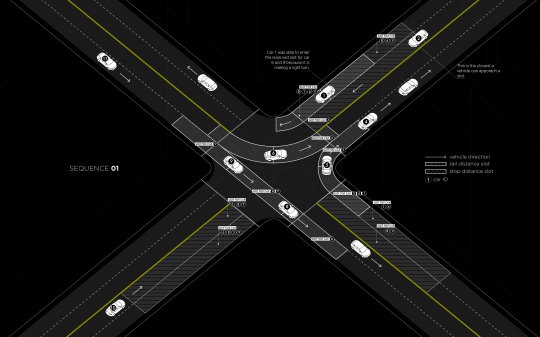
    Much like air-traffic control, the way the system works is by assigning individualized time slots to each car for when they may enter an intersection. For example, in the diagram below (Sequence 01) the car approaching from the bottom left (#10) has a “stop distance slot” in front of it reserved for 3 of the cars that are currently in the intersection. The two that are traveling perpendicular to it and the car currently turning left into the same lane as #10 (on the other side of the intersection). The car in the midst of turning right (#5) is exempt because there’s no possibility of collision. 

    image

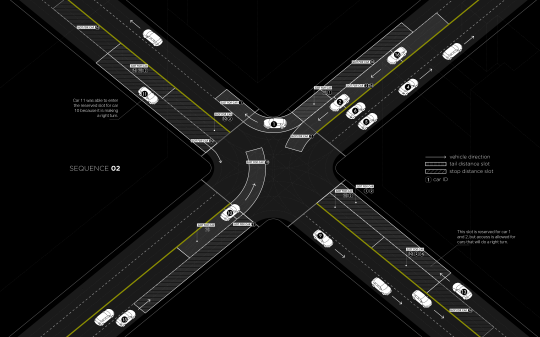
    In Sequence 02 (below) you can see that car #10 is now turning left, which means it has its own time slot in the intersection. Other approaching cars now have a “stop distance slot” dependent on car #10.

    image

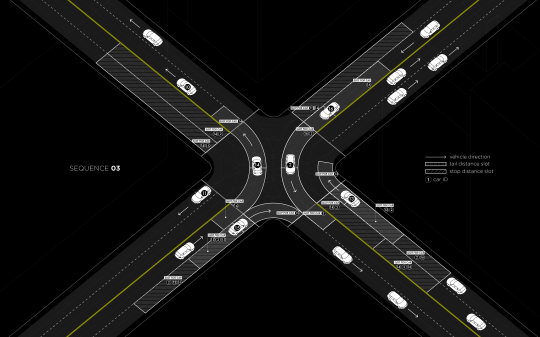
    In all cases, cars making a right turn are able to move freely, provided they will not interfere with any other cars.

    image

    The researchers estimate that real-time slot allocation might double the number of vehicles that a traditional traffic-light intersection can handle today and, in some cases, it might completely eliminate stop and go traffic.

    Often when I write about self-driving vehicles I hear people tell me that cars are still cars. It doesn’t matter whether they are self-driving or not. The same inefficiencies apply. They are not the solution to urban gridlock. Elon Musk was also criticized (following his Master Plan) for not properly understanding urban geography.

    But self-driving cars will create new efficiencies. I am not saying that they are a silver bullet, but I am saying that they will help a great deal. I don’t think that anyone truly understands the extent of these efficiencies, but there are a myriad of possibilities. This Senseable City Lab project is a perfect example.

    What I am grappling with right now is the relationship between self-driving vehicles and traditional forms of public transit. Until we get a handle on the efficiencies and overall impact, it’s hard to ascertain how these different forms of mobility will work together. My gut tells me that the lines are bound to get blurry and that self-driving “cars” will feel less and less like the cars we know today.

    Below is a video that was published along with the research. If you can’t see it, click here.

    [youtube https://www.youtube.com/watch?v=4CZc3erc_l4?rel=0&w=560&h=315]

  • Your own 24/7 chauffeur

    image

    If you had a free 24/7 chauffeur to drive you anywhere you wanted, do you think that would impact where you lived, worked, and played? 

    Put differently, if you were relieved from actually having to contend with traffic yourself and if you never had to worry about parking and/or drinking and driving, would you be more inclined to live further out of the city to get bigger and cheaper housing?

    This is the question I tried to ask in a Twitter poll this morning:

    //platform.twitter.com/widgets.js

    Personally, I think that this scenario would impact my behaviour, only slightly. I would certainly take advantage of the free chauffeur, but I would not be more inclined to live 1 or maybe even 2 hours of the city.

    Sure, I would be able to get more real estate, but I wouldn’t want to sit in a car every morning – even if I wasn’t the one driving. Maybe I’d be more inclined to have a cottage out of the city, but I can’t imagine a big commute. In my view, minimizing commute times is one of the most effective ways to up your quality of life.

    I’m thinking about all of this because of this TechCrunch article, arguing that technologies such as driverless vehicles and VR (for telecommuting) will soon cause rapid decentralization. This reminds me of what was said during the dot com era. Real estate was out of favor and it was all about tech. 

    Though I am sure that there are technological impacts that you or I cannot foresee right now, I think it’s important to remember that people live in cities for many different reasons. It’s not only for access to a labor market, it’s also for access to a dating market, as well as other things that involve people coming together. I believe that we are inherently social beings. And technology is not going to make that disappear overnight.

    I would be curious to see how you all feel about this topic. Please leave a comment below so we can discuss.

  • Politics and bike lanes

    image

    Recently a good friend of mine told me that I had conflicting views in the world of politics.

    She more or less said to me: I know you’re a real estate developer and obviously a capitalist (read: right of center), but you also support what are often considered to be left of center issues. Issues like tearing down the Gardiner Expressway and building more bike lanes.

    I thought this was an interesting comment because, regardless of whether or not you agree with the categorization she was making, the unfortunate reality is that sometimes (oftentimes?) city building issues do become about left vs. right. Bike vs. cars. Urban vs. suburban. And the list goes on.

    My response to her was that I don’t care about what side of the political spectrum an issue supposedly falls on. That’s a distraction. When I think about something, I try and apply rationale thought and facts to the best that I can. 

    For instance, in the case of bike lanes, I have asked myself: would cities be better off if we had more, or less, people cycling? Simple question. And when I think about this and look at some of the numbers, I see a lot of benefits (this is a non-exhaustive list):

    – More people cycling means we’re moving people more efficiently, which you could argue improves urban productivity and overall quality of life. 

    – More people cycling means we will naturally start prioritizing more compact types of urban form, which in itself has a myriad of socioeconomic benefits. 

    – More people cycling means we’re actually taking action to try and fight climate change.

    – And more people cycling means we’re improving health outcomes. Given that public spending on health care is one of the largest government expenditures in OECD countries, I bet you could find measurable financial savings.

    With all of this, I am not naively suggesting that all cars should disappear from our cities and that everyone should only cycle. I think electric vehicles and self-driving vehicles are going to be an important part of the mobility equation in the future. But I am saying that more, not less, cycling strikes me as an obviously positive thing for our cities. 

    On that note…

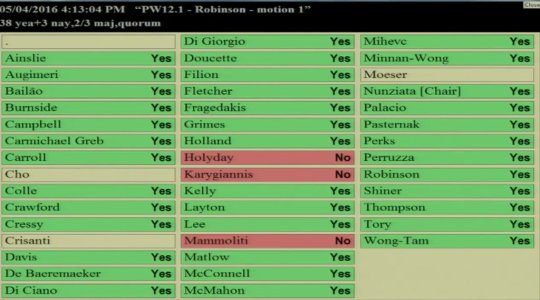
    Toronto City Council voted today in favor (38-3) of a pilot project that will bring separated bike lanes to Bloor Street. The image at the top of this post is how each Councillor voted. So today, we appear to have not fallen into the divide that my friend was talking about. And that makes me, as well as many others, quite happy.

    //platform.twitter.com/widgets.js

    I would be curious how all of you feel about this particular issue. And I would also be curious if you find yourself being more issued based rather than aligned across the political spectrum. That’s certainly how I feel these days.

    I bet we could have a great discussion on this topic in the comment section below 🙂

  • 16 mobile theses and how tech might change the built environment

    Caucasian woman standing near passing subway in train station by Gable Denims on 500px.com

    https://500px.com/embed.js

    One of the things that I try and do here on this blog is examine the intersection of design, real estate, and technology. I didn’t explicitly set out to do that, but more and more I find myself thinking that way when I’m writing and when I’m giving talks.

    Part of that is because of my passions, but part of it is because there is a big and important overlap. One example of that is autonomous, self-driving cars. The tech community is enamoured with driverless cars, but everyone involved in the built environment should also be thinking about their impacts. Because it’ll be significant.

    Benedict Evans – who is a venture capitalist with Andreessen Horowitz in the Valley – recently published a post called, 16 mobile theses. It’s a look at 16 topics, trends, and shifts that are happening in the tech space. (There’s also a related podcast discussion.)

    If you’re involved in internet products, you absolutely need to give it a read. But I also think it’s interesting to read it through the lens of a designer or real estate person. Productivity is changing. Notions around the living room are changing. And yes, autonomous vehicles are going to have a profound impact on the urban landscape of our cities – just as cars did initially.

    Below are 3 excerpts from Benedict’s post that I really enjoyed.

    The first is about mobile and just how massive it is:

    “The mobile ecosystem, now, is heading towards perhaps 10x the scale of the PC industry, and mobile is not just a new thing or a big thing, but that new generation, whose scale makes it the new centre of gravity of the tech industry. Almost everything else will orbit around it.”

    The second is about how “networked” is quickly becoming a given:

    “Our grandparents could have told you how many electric motors they owned – there was one in the car, one in the fridge and so on, and they owned maybe a dozen. In the same way, we know roughly how many devices we own with a network connection, and, again, our children won’t. Many of those uses cases will seem silly to us, just as our grandparents would laugh at the idea of a button to lower a car window, but the sheer range and cheapness of sensors and components, mostly coming out of the smartphone supply chain, will make them ubiquitous and invisible – we’ll forget about them just as we’ve forgotten about electric motors.”

    And the third is about those self-driving cars:

    “The move to electric and the move (if and when) to autonomous, self-driving cars fundamentally change what a car is, but also what the whole automotive system might look like. Electricity changes the mechanical complexity of cars and hence changes who might build them and what they might look like. Autonomy and on-demand services change who buys them, meaning the buying criteria will be different. But they could also change the urban landscape just as much as cars themselves did – what do mass-market retail or restaurants look like if no-one needs to park?”

    Can you think of other ways in which tech will impact cities and the spaces we occupy?