
Daily insights for city builders, delivered every morning at 6 AM ET. I’m Brandon Donnelly — a Toronto-based real estate developer and founder of Globizen. I’ve been writing here since 2013.

Tag: self-driving cars

  • Waymo is coming to Toronto, but it won’t fix car dependency

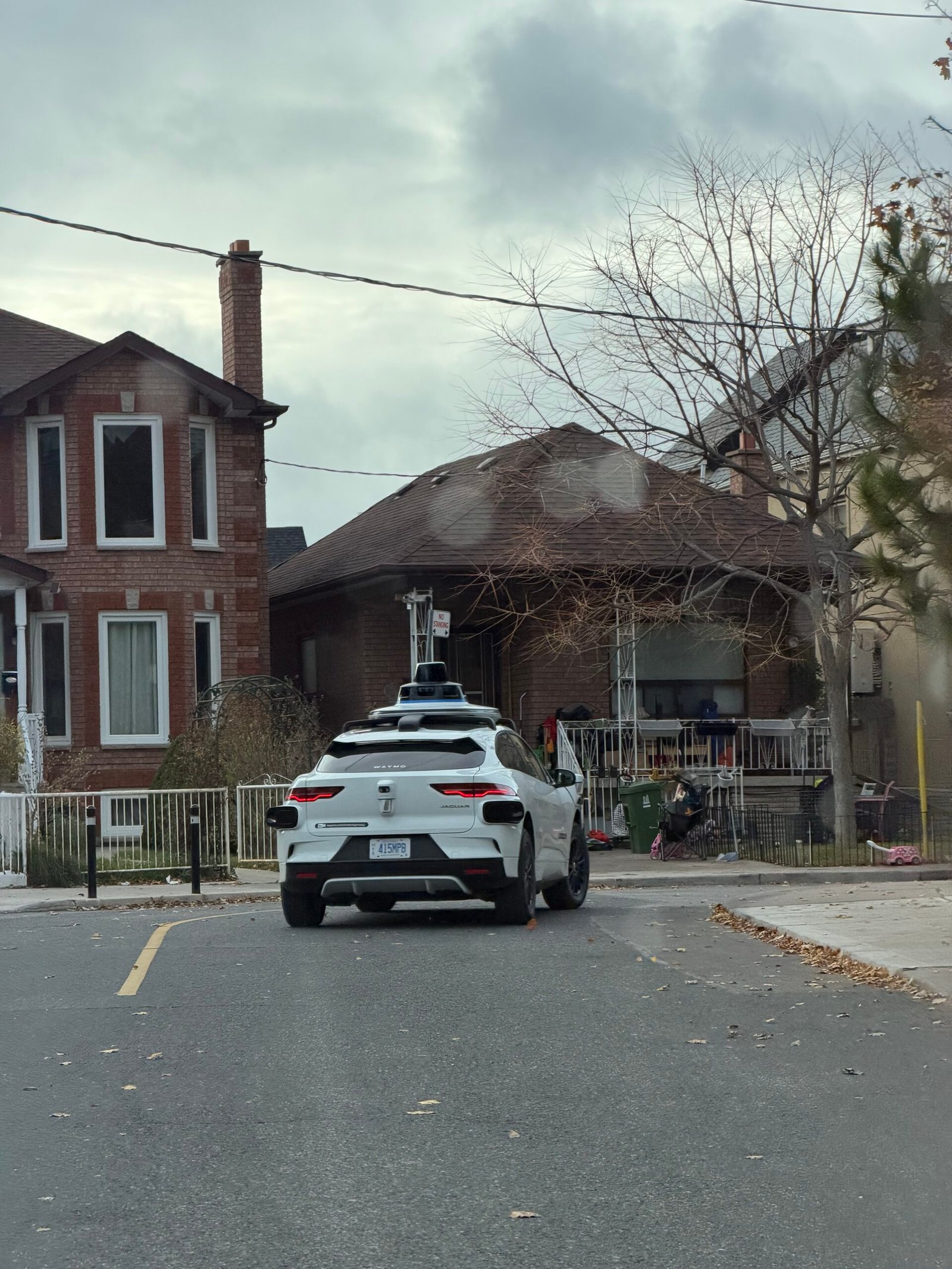
    I saw my first Waymo training vehicle over the weekend in Toronto. There was a human in the driver’s seat, and collectively they seemed to be obeying all of the rules of the road in a cautious and predictable manner.

    If you’re a regular reader of this blog, you’ll know that I’m excited about the rollout of autonomous vehicles in the city for a few reasons: one, it’s the future; two, they’re already dramatically safer than human drivers; and three, I hate driving and would love to never have to drive again. I also think that right now is the absolute perfect time for Toronto to finally implement road pricing.

    But we should also be clear about what autonomous vehicles won’t mean for Toronto. In the early days of Uber and the promise of self-driving cars, there was a core belief (or at least a marketing proposition) that ride-hailing and the like would reduce private car ownership.

    We now know that isn’t the case. Once the venture capital subsidies dried up, Uber became more expensive and less luxurious, eliminating a cost incentive to change. And to date, Waymo pricing is on par with or even higher than Uber, despite there not being a driver.

    What we know definitively is that the most effective way to reduce car ownership and dependency is to combine dense, mixed-use communities with effective public transit and support for other non-car forms of mobility.

    Autonomous vehicles will certainly have an impact on our cities, and in ways we are not yet thinking about, but I have yet to see evidence for a more efficient built form and mobility approach than the one cities have been building since they were first created.

  • Who actually wins the autonomous vehicle future?

    There was once a time when Uber was heavily investing in autonomous vehicles and rides. Then that stopped in an effort to become profitable. But now, out of necessity, it’s back. Uber recently announced that the company will invest “$10 billion of capital over the coming years to bring AVs to market at scale.”

    Uber’s belief is that the self-driving car industry won’t be dominated by just one company. Instead, it will be a mixed ecosystem where some companies build their own cars and ride-hailing apps, and others plug into existing networks. And in this world, it is these networks — like Uber — that will become the most valuable piece of the puzzle.

    Perhaps.

    Whether they believe this or not, Uber basically has to say this because they are the platform aggregator. They do not build or operate any self-driving vehicles of their own — at least not anymore. These parts of their business were sold off.

    Autonomous vehicles are a wicked technical challenge. The edge cases are extraordinarily difficult to solve. If only a select few companies solve them, and solve them well, then there’s an argument to be made that they will capture the majority of the market.

    But if AV technology becomes commoditized and it ends up being all about the brand and who can aggregate demand the best, well then, Uber could very well be right. They already have global scale.

    My view is that Waymo has such a commanding lead when it comes to AVs that they have the leverage in the short and medium term. There are also zero switching costs for ride-hailing customers. I’ll use whatever is better. So if I’m Uber, I’m worried about Waymo, which is presumably why they are starting to have differing opinions.