Daily insights for city builders, delivered every morning at 6 AM ET. I’m Brandon Donnelly — a Toronto-based real estate developer and founder of Globizen. I’ve been writing here since 2013.

Tag: school

  • Does above-grade parking kill street life?

    Here’s an unproven hypothesis that you can all challenge me on: many or most people only care about the environment while it is convenient to do so. Said oppositely, once it becomes inconvenient to care about the environment, we tend to start prioritizing other objectives.

    The example I have in my mind right now is parking. Now, to be clear, cars are not the best mobility solution for the environment. But let’s assume for a minute that you need parking and you have only two available options: below-grade parking or above-grade parking.

    The former is worse for the environment. If you were to look at the embodied carbon in below-grade parking versus above-grade parking, it would be higher. So from an environmental perspective, you want above-grade parking.

    It also makes for more flexible spaces. It’s hard to convert below-grade parking to much else. Again, this strengthens the environmental case, because now you’re building something that can be repurposed in the future.

    However, unless you’re forced to only build above-grade parking (as is the case in Miami), many/most cities tend to shun it. The most common objectives are (1) that it’s unsightly, and therefore needs to be wrapped with occupiable spaces, and (2) that it kills street life.

    What this suggests is that (1) and (2) are seen as being more important than the environment. And I think this is noteworthy in its own right. But here’s the other thing: this is arguably a false dichotomy. I mean, does above-grade parking necessarily kill street life?

    The above two street view images are from 1111 Lincoln Road in Miami Beach. It’s a parking structure and area of the city that I have visited many times. And I have to say, the street life seems fine to me. What do you think?
  • The next hot thing

    When I was in grad school at Penn I was active in two clubs: the real estate club and some tech/entrepreneurship club (I can’t remember the exact name). These were two areas that I was interested in and so I wanted to hang out with people who were also interested in these things and I wanted to hear from experienced people who were active in these fields.

    At that time, which was before the Great Recession, the real estate club was bigger and more active than the tech club. I think it was something like 3 to 1. But I remember one of my professors telling me that participation across the various clubs generally ebbs and flows. Before the dot-com bubble, the tech club was where you wanted to be. But that asset bubble had burst, and so people had moved onto real estate, which, at that time, was in the midst of creating its own asset bubble.

    What we students were effectively doing — by way of deciding where to spend our time — was chasing the next hot thing. They were chasing where they thought they’d be able to make the most money coming out of school. There is, of course, nothing wrong with this. The pursuit of profit is fundamental to capitalism. But at the same time, I think it’s crucially important to have some conviction.

    Right now we are going through another cycle. Real estate was hot last year and it is not right now. Tech was hot last year and it is not right now. NFTs were hot last year and they are not right now. The list goes on. But if you like these things and if you have some conviction, is it really the time to move onto the next club? You may find the opposite to be true. Now is actually the time to ramp up participation.

  • First-year building project

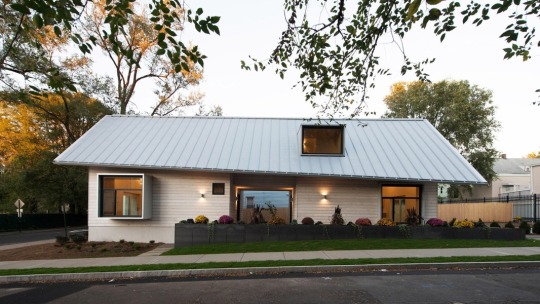
    Each year, first-year graduate students at the Yale School of Architecture are tasked with designing and then physically building a new single-family house in an economically depressed neighborhood. Sometimes, like this year, the house may have multiple dwelling units.

    I have always thought that this is a great exercise both from a pedagogical standpoint and from a positive impact standpoint. Young architecture students get to experience designing and building something from scratch, and lower-income families get a new house. I toured one of the completed houses in New Haven back in, I think, 2005. 

    This building project, which was started in 1967, is fairly unique among architecture schools, though others have replicated the model. When I was living in the US, I spent a few weekends working on homes for Rebuilding Together Philadelphia. But the scope was fairly limited. It was nothing like this.

    I think more schools should do this. And I also wonder if there aren’t permutations of this model that could live outside of the university context.

    Image: Yale

  • Winner take all

    We have talked a lot on this blog about the concentration of economic activity in global cities. Here is an old post about a paper called “winner-take-all-cities”, which documents the overrepresentation of talent, economic activity, innovation, and wealth creation in a select number of alpha cities.

    But this same phenomenon is playing out in a myriad of different ways. Aaron Renn calls this the “superstar effect” and has been writing about it for years. Another more recent example is this post by Richard Kerby called: Where did you go to school?

    Kerby looked at where venture capitalists in the US went to school and discovered that around 40% of them have gone to one of two schools: Stanford or Harvard. His argument is that not only is the venture capital industry lacking in gender and racial diversity, but it’s also lacking in cognitive diversity.

    My point with this post, though, is one of hyper-concentration. Tech is a dominant force in today’s economy. And in 2017, nearly 45% of all venture capital investment in the US went to companies located in the Bay Area – meaning San Francisco and San Jose.

    So here is an example of a select number of schools training a select number of minds that then go on to invest in a select number of cities. Fred Wilson, who is a venture capitalist, has a good response to this problem of diversity in the VC industry.

    But, of course, this is bigger than just the VC business.

  • Apple and the humanities

    image

    This morning I came across two news item that are interesting in their own right, but also have a noteworthy relationship.

    $AAPL now has a market cap that exceeds $1 trillion. And not surprisingly, everyone, from the New York Times to Bloomberg (photo essay), is talking about it.

    But the one thing that continues to stand out for me about this story is what Steve Jobs said back in 2011 when he unveiled iPad 2.

    He said that fundamental to Apple’s DNA is its ability to marry technology with the liberal arts and the humanities. Its secret sauce is not technology alone.

    Now let’s move on to the second piece of news that caught my attention.

    As of 2017, less than 5% of college and university students in the US were studying one of the big four humanities majors – a sharp cliff-like drop from 2011 according to this data.

    That’s almost certainly because business degrees and STEM degrees are thought to be more valuable and in demand in the labor market. And I’m sure they are right out of school.

    But perhaps we shouldn’t forget Apple’s trillion dollar lesson. And I think this goes for both the tech space and the real estate industry, as well as others.

  • New School of Cities

    The University of Toronto just announced a new School of Cities. It will begin operations on July 1 of this year (2018) and bring together researchers from various disciplines to address the world’s most critical urban challenges. 

    Insert stat here about the percentage of the population that will live in an urban area by 2050.

    There are more than 220 faculty members across 40 different academic divisions at the University of Toronto who are doing urban-focused work. The School of Cities is intended to bring those minds together.

    So far there are plans for a “global cities summit” and an “urban lab” that will also bring students, faculty, industry, and government together. The intent is for the School to act as a city builder both locally (Greater Toronto Area) and globally.

    This once again goes to show just how important we are all taking urban issues today. But I am sure this blog audience didn’t need to be reminded of that.

    If you would like to sign up for updates from the School of Cities, you can do that here.

    Photo by Jorge Vasconez on Unsplash

  • Assortative mating at elite colleges

    When demographers talk about how educated a city or place is, they often refer to the percentage of the population with a 4-year college degree. This may seem crude, but so far it has been found to be one of the best predictors of higher income levels and overall urban prosperity.

    When you add in the fact that people tend to marry people that are similar to themselves – often called assortative mating – you get a driver for income inequality. People with high incomes are marrying other people with high incomes.

    In this recent New York Times article they dive into the sorting that can happen even within colleges, including elite colleges. 

    According to data from the Equality of Opportunity Project, if you were born between 1980 and 1984, went to Princeton, and came from a family with a household income in the top 20%, you had a 56% chance of being married by the time you hit 32-34 years old.

    However, if you came from a family with a household income in the bottom 20%, you only had a 34% of being married by the time you hit the same age bracket. One possible explanation is that if you’re from a lower income family, you simply aren’t privy to the same “clubs”, where people mate, even though you still got into Princeton.

    To reinforce this point even further, the above data suggests that only about 1.3% of Princeton students that come from a poor family will ultimately end up a rich adult. About 72% of Princeton students come from a household in the top 20 percent.

    When I look at the numbers for Penn, my alma mater, the marriage spread isn’t quite as dramatic. The marriage rates are 55% and 48%, respectively, for the top and bottom 20%. Maybe that makes it more egalitarian. Or maybe not.

  • Building relationships

    2003/2004 was roughly the time period when I started to become interested in development as a career. My good friend Rick Sole and I used to talk about it all the time in architecture school. How do we break into this space? There are no formal paths, like law for instance, and so we felt like we had to create our own opportunities.

    What I ended up doing was creating a list of every developer that I felt was doing cool and interesting work. I didn’t know enough about the industry at the time to assess other things and so that was really my only criteria. Do they care about design in their projects? I then started cold emailing and cold calling.

    Not everyone got back to me, but many did and some agreed to meet with me. This was at a time when I had zero experience and I was frankly not very valuable as a hire. So I am incredibly grateful to all of the people who said yes and took the time to speak and meet with me.

    As you go through your career, this curve eventually flips. You go from having no experience and begging people to meet with you to having experience (and other things you can offer people) and people now wanting to meet with you. Generally people want to meet when they think they can gain from you.

    But the best way to build a relationship is to start when you don’t need anything. I will never forget the people that met with me when I had nothing to offer them. And you can bet that I will always have all the time in the world for them.

    I’m not going to claim that I respond to every one of my cold emails. I definitely do not. But I respond to as many as I can and I try and pay it forward with some time. You could say it’s playing the long game, but it’s probably also the right thing to do.

    How do you approach relationship building?

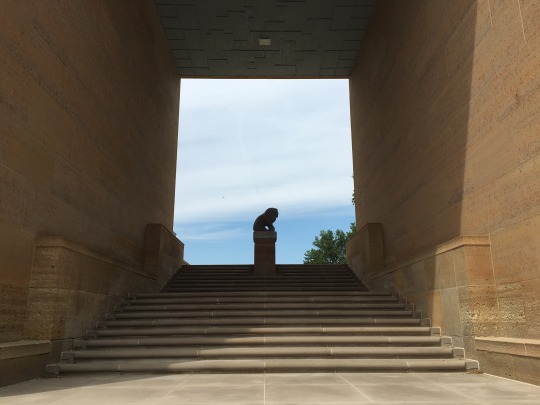
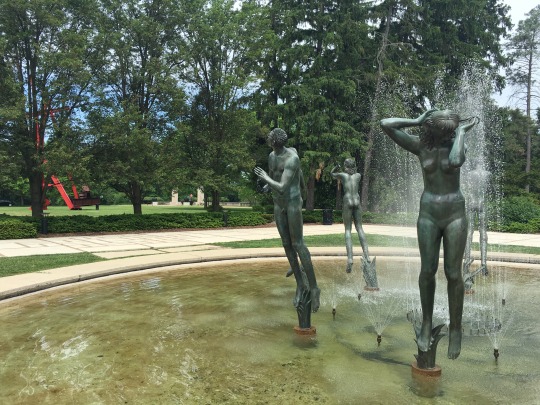
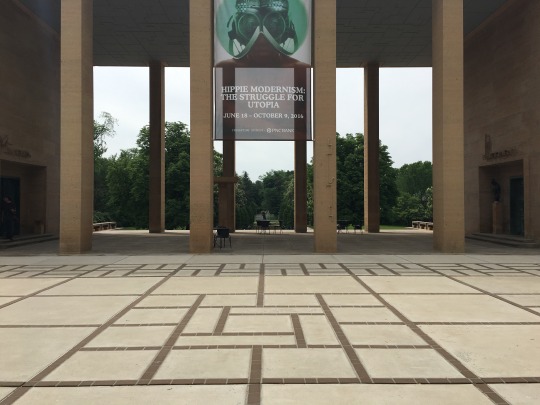
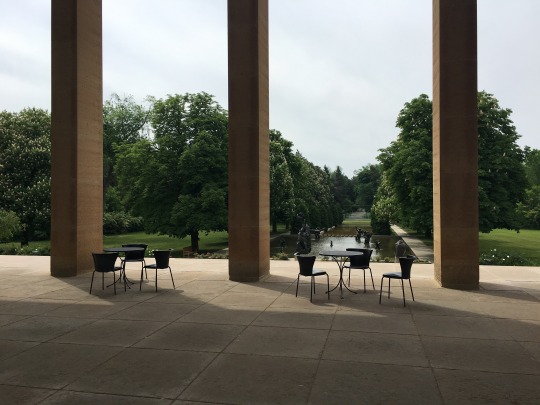
  • Photoblog: Cranbrook Schools

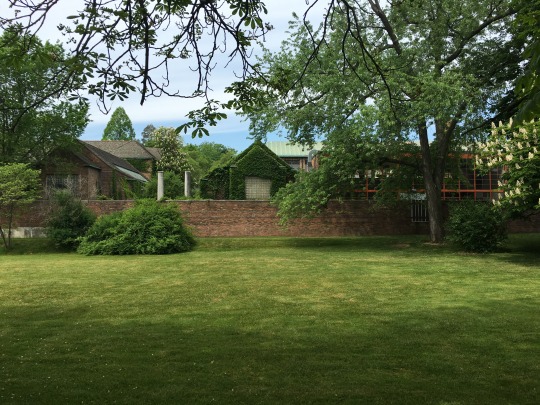
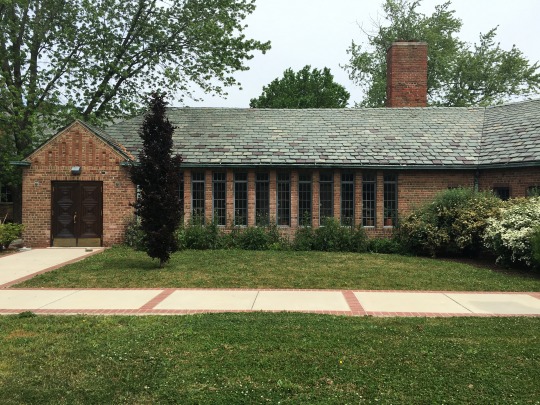
    My spring allergies have gotten the best of me today. So instead of a regular post, I’m going to share some of my photos of the Cranbrook Schools. I toured the campus this afternoon.

    Cranbrook Schools is a private boarding school (PK – 12) in Bloomfield Hills, outside of Detroit. It has an endowment fund of about $233 million, which is one of the largest of American boarding schools. In 1989, the campus was designated a National Historic Landmark.

    The photos are in the order in which they were taken.

    A man happen to be playing a violin in the space below.

    The stone shingles below get smaller as they move up the roof to give the illusion that the building is larger than it really is.

    And here are my fellow architecture nerds, Matthew and Rick.

  • School of Real Estate

    I’ve been getting a lot of (email) questions lately about what to study in order to become a real estate developer. So I thought I would reblog this post that talks about exactly that. I wrote it over a year ago and I almost forgot it existed.

    At the same time, I’m reminded of something: I think these questions really speak to the fact that there’s a significant opportunity (particularly in Canada) in terms of real estate development education. 

    Oftentimes when I get these questions, I end up recommending the Master of Science in Real Estate Development (MSRED) at ColumbiaMIT, and USC. Why don’t we have something similar (and better) in Canada? We are falling behind.

    I have raised this with some Universities here in Toronto, but the response I got was that they felt the real estate courses being offered as part of their existing MBA programs were more than sufficient. I think we can do a lot better.

    One professor suggested that I line up a big donor and work with them to spearhead the creation of the (Insert Donor Name Here) School of Real Estate. I think that’s a great idea, but not something I have the capacity for right now.

    Hopefully somebody else out there is of the same mind.

    Post Update: 3 days ago the Schulich School of Business (York University) announced a one-year full time Master of Real Estate and Infrastructure (MREI) program – the first of its kind in Canada. 

    This is great news. 

    Now I would love to see the University of Toronto and Ryerson University (as well as others) step up and leverage their respective architecture schools. Schulich is already out of the gate on this one.