
Daily insights for city builders, delivered every morning at 6 AM ET. I’m Brandon Donnelly — a Toronto-based real estate developer and founder of Globizen. I’ve been writing here since 2013.

Tag: ROI

  • Uber’s seed investors made this much money

    $UBER went public on Friday. Notwithstanding the initial stumble, Uber will go down in history as one of the most lucrative venture capital investments of all time.

    The stock is down from its IPO price of $45 per share, but at that price, the initial seed investment of $510,000 that First Round Capital made back in 2010 was worth about $2.5 billion on Friday.

    Here is a list of some of the other notable investors from Uber’s seed round and what their initial investments grew to over the course of 9 years (chart from the WSJ):

    Of course, for every Uber, there are many more failed companies. And for every investor who turns $5,000 into nearly $25 million, there are many more who decided to pass on the opportunity.

    In the case of Uber, many early investors couldn’t see how the product could go mainstream. It initially started upmarket with limousines, which was actually a clever way to hack the chicken-and-egg problem that plagues marketplaces.

    Many also wondered how many metro areas outside of San Francisco had the kind of urban density and supply and demand drivers to support this kind of a service.

    Today, some nine years later and many billionaires later, lots of people — including myself — are still wondering: Will Uber turn out to be a great (i.e. profitable) business? Hindsight is always 20/20.
  • Preserving place

    I was recently asked: How do you go into a neighborhood, build new, and not erase and/or sterilize what makes that neighborhood interesting in the first place? 

    Gentrification is a controversial topic in city building. Too often I think we ignore what happens when we don’t invest in communities, but that doesn’t mean we shouldn’t be deliberate when we do make investments.

    Development is filled with tensions. We are constantly trying to navigate through constraints and balance out the wants of each and every stakeholder. It becomes an art. It doesn’t always work out as planned.

    To state the obvious, I would say that it starts with caring. If you’re not interested in community and city building, then the default response will be to simply replicate what worked on the last project.

    But every place has a local culture. And if city builders are to have any hope of preserving and building upon what makes that place unique, we have to first understand it. What made it successful in the first place? What is its DNA?

    Because then you’re in a position to think about both built form and programming in a way that is culturally sensitive.

    One example that comes to mind is the proposed redevelopment of Honest Ed’s / Mirvish Village here in Toronto. 

    The “micro tower” design is intended to create the sense that the area was built up organically over time. And the fine grain retail (50-60 individual retail spaces) is intended to house local retailers, micro retail startups, and pop-up shops. To me, both of these elements speak to the history and fabric of the area.

    Adopting a unique approach can also sometimes mean rethinking how you measure ROI. If all you care about is who will pay you the highest rent – right now – then you’re going to make a decision based on that metric.

    Maximizing revenue is not a bad thing. That’s what businesses are supposed to do. But sometimes there is or should be a larger vision at play. And sometimes you need to take a longer view.

    In Toronto’s Distillery District, the developers made the decision to eschew large chains and franchises (in favor of more local retailers) so that they could create a very particular place. Ultimately that particular place became a great place to sell condos, but they suffered early on for it.

    I like how Gary Vaynerchuk put it when he asked: What is the ROI of your mother? Sometimes you may not be able to measure it, but that doesn’t mean the ROI isn’t there.

    Any other suggestions?

  • Streetcars are just a tool

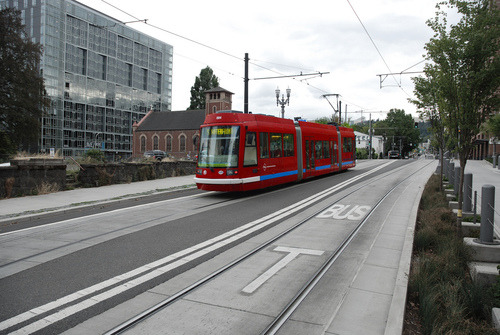
    Earlier this month the Toronto Star published an article talking about the resurgence of streetcars in American cities. According to the Star, 89 cities in the US are currently implementing or at least considering building some form of surface-rail system.

    But the article also goes on to argue that it could be a snobbish fad. Streetcars are new. They’re shiny. And they make yuppies –  who don’t like taking buses – feel better about themselves. But is the ROI really there? Is the economic impact of streetcars as big as people are making it out to be?

    To support this argument, the Star quoted transportation planner Jarrett Walker, who I’ve mentioned here before on Architect This City. But according to a follow-up post that Walker did on his blog, it would appear that he was misrepresented in the article. Here’s a snippet of his response:

    Here’s the bottom line. Streetcars are just a tool. They can be used in smart ways and in stupid ways. Asking a transit planner for an opinion about a transit technology is like asking a carpenter what his favorite tool is. A good carpenter sees his tools as tools and choses the right one for the task at hand. He doesn’t use his screwdriver to pound nails just because he is a “screwdriver advocate” or “hammer opponent”. Yet the Toronto Star assumes that nobody involved in transit debates is as smart as your average competent carpenter.

    I wanted to share this because I think it’s a great way to approach transportation planning and because I think it gets at a larger issue that we continue to face here in Toronto: We keep politicizing mobility tools. Cyclists have become pinkos. Streetcars are a war on the car. And the list goes on. How about we just look at the problem, and figure out what solution would work best?

    Image: Flickr

  • What’s a bean worth?

    Yesterday I tweeted this picture out from Chicago:

    //platform.twitter.com/widgets.js

    Many of you, I’m sure, have seen this public sculpture before, either in person or somewhere online. It’s called Cloud Gate and it’s by Anish Kapoor – though its nickname has become, quite simply, the bean.

    Given that it’s been a hugely successful piece of public art, I asked what people thought the ROI of it might be. Obviously I wasn’t expecting any sort of number, but I wanted to draw attention to the fact that the right kind of investment in public art can pay huge dividends. Oftentimes we, developers and others, don’t think of it in this context though.

    And it’s probably because it’s so hard to figure out what those dividends might be. What’s the value of a big recognizable bean that everyone around the world associates with your city? But if you think about it, it’s not that different than a corporate logo that everyone knows is yours, which is why I’m interested in the branding of places.

    However, as Gil Meslin rightly pointed out in his tweet storm response to my tweet, it’s hard to consider the bean investment in isolation. I mean, the whole point of the bean is to reflect the surrounding urban landscape. So if it wasn’t for the larger Millennium Park investment and the beautiful historic buildings along Michigan Avenue, maybe that bean wouldn’t be the bean that it is today.

    Ultimately, that just makes coming up with any sort of defensible ROI even more difficult. But that shouldn’t deter us. Because as I’ve said before, just because you can’t measure or prove it (right now), doesn’t mean it isn’t a good idea. In this case, I think it’s pretty clear that this bean has been a hugely successful investment.

  • Culture in our society and economy

    Last week I was reading the blog of James S. Russell, who used to be the architecture critic for Bloomberg News. He’s no longer the architecture critic, because Bloomberg got rid of his column:

    My column, along with almost all cultural coverage, was eliminated at Bloomberg late last year in favor of a yet-to-be completed revamping that focuses on luxury and lifestyle. 

    Obviously, the decision saddens me personally, but it’s also a regrettably powerful signal that culture doesn’t matter in our society and economy.

    As someone who spent a great deal of time studying art, architecture and design, his post really resonated with me. This is a depressing thought. It may be hard to measure the ROI of the arts, but that doesn’t mean there isn’t a return.

    Ironically, Bloomberg–the former mayor of New York–understood this:

    As Mayor of New York, Michael Bloomberg, the company’s founder, championed arts as valuable to the vibrancy of the city and as a powerful force for economic development. The city has seen unprecedented growth in arts facilities, thanks both to his administration’s efforts and his personal philanthropy. His post-mayoral activities are intended to nurture cities as fields of wealth creation by helping them become cauldrons of innovation, which he recognizes is entwined with vibrant cultural and lifestyle trends.

    That sounds about right.