Daily insights for city builders, delivered every morning at 6 AM ET. I’m Brandon Donnelly — a Toronto-based real estate developer and founder of Globizen. I’ve been writing here since 2013.

Tag: river

  • Der Wickelfisch

    A colleague in the office recently introduced me to a Swiss invention called the Wickelfisch (or baby fish). Below is a video showing you how they work. They’re so neat. So Swiss. And I obviously just ordered one. They’re available via this US company for $12-20, depending on the size.

    The video is of people swimming in the Rhein. Because swimming downstream in rivers — and ending up in a different location — is so popular in Switzerland, the Whickelfisch was invented as a way to keep your clothes and belongings dry. It also acts as a flotation device.

    I’m not planning on floating down the Don River anytime soon, but a Wickelfisch looks like the perfect bag to bring to the beach. Especially if you don’t want to leave your stuff unattended to while you go for a swim.

    Of course, the other neat thing about this video is that it shows you how awesome it is to have clean and swimmable water running through the middle of a city. Most people I know are afraid to swim in Lake Ontario out of fear they might grow a 6th toe.

    That’s too bad.

  • Living on water

    Phaidon has a new architectural book out that surveys 55 homes, all of which have some sort of connection to water, whether that be an ocean, lake, river, or pool. It’s called Living on Water. I don’t (yet) have a copy, but it looks like the perfect coffee table book for a cottage, summer home, or studio apartment with zero connection to water. Monocle on Design recently interviewed the editor of the book (podcast episode here). So if beautiful homes on the water are your thing, maybe check it, and the book, out.

  • Drone footage of Chicago’s riverfront

    Dezeen just published the below video of Chicago’s revitalized riverfront. The Chicago Riverwalk extension and renovation was completed in 2016 by Boston-based Sasaki Associates and Ross Barney Architects, and the video is by Chang Kim. It does a great job showcasing the city’s enviable connection to the water. If you can’t see it below, click here.

    [youtube https://www.youtube.com/watch?v=7T9xH2C-Ggk?rel=0&w=560&h=315]

    On a separate but somewhat related note, I am continually impressed by the work that is coming from filmmakers, vloggers and YouTubers like Casey Neistat and Sam Kolder (who, by the way, is from Toronto). Individual content creators continue to change the way we all consume content and, consequently, the way companies now need to market.

  • When the crowd builds a city

    I’ve been following and checking out Kickstarter pretty much since the beginning. But it wasn’t until last night that I backed my first project. 

    After doing that, I immediately started thinking about urban projects that might be able to also get crowdfunded using Kickstarter. How could it be used for city building? A Kickstarter project, after all, just has to be something with a defined scope and a clear end goal.

    Not surprisingly, this has already been happening for many years now.

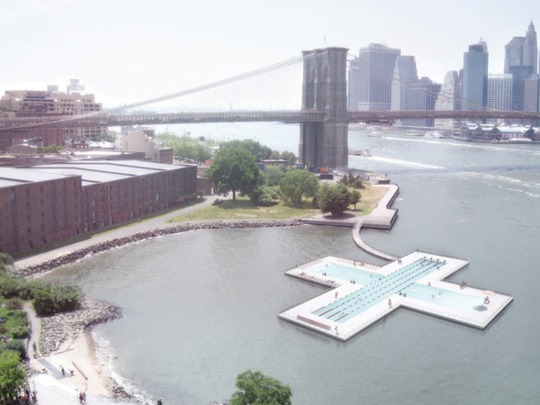
    A great example is +Pool in New York, which is an initiative to build a publicly accessible floating pool that also filters river water. The project launched in June 2011 and by July 2011 they had raised $41,648 USD to build and test different filtration techniques.
    image

    Today, the project is still moving ahead and they are now offering up the opportunity to buy and have your name engraved on tiles within the pool. If I lived in New York, I would be all over this.

    But what’s powerful here is the ability for crowd-based platforms (like Kickstarter) to both get radical new ideas off the ground and to empower local communities to affect change. Here’s a quote from PSFK:

    It’s very difficult to get funding for these ‘out there’ ideas that regular systems might not support. Creators have to take risks and be imaginative, as well as put their ideas out there and let the public decide. There are no traditional guidelines on crowd-sourced platforms—they’re much more meritocratic. You can think in big scope and that changes what gets made and who can access it. Anybody with a couple of doubles can voice what they want to be built, and in that way we see the entire community having a huge say in the design world.

    And when I see projects and platforms like this, I can’t help but wonder if (when) city building is going to become even more decentralized. 

    Last night I was also at an event – being put on by Ryerson University’s City Building Institute – called Bridging Divides: What Can Cities Do? And one of the suggestions that came up was that Toronto needs more local and granular community councils (there are currently 4) in order to bridge some of the divides that are happening in our city.

    But in a world where it’s possible for each and every person in a city to not only have a say but to quickly say it from their smartphones, why can’t we go even more local? Instead of 4, 10, or 90 community councils, why can’t we have everyone more engaged?

    I think we’re headed in that direction.

  • The infrastructure sandwich

    Today I came across the following tweet by Brad Tabke. (Brad is the mayor of Shakopee, Minnesota.)

    //platform.twitter.com/widgets.js

    On the left of the image is downtown Memphis. On the right is the Mississippi River. And in the middle is, well, a bunch of elevated highways. 

    It’s a powerful image regardless of where you happen to be from. But if you’re from Toronto, you might know why I’m posting it today.