Daily insights for city builders, delivered every morning at 6 AM ET. I’m Brandon Donnelly — a Toronto-based real estate developer and founder of Globizen. I’ve been writing here since 2013.

Tag: richard florida

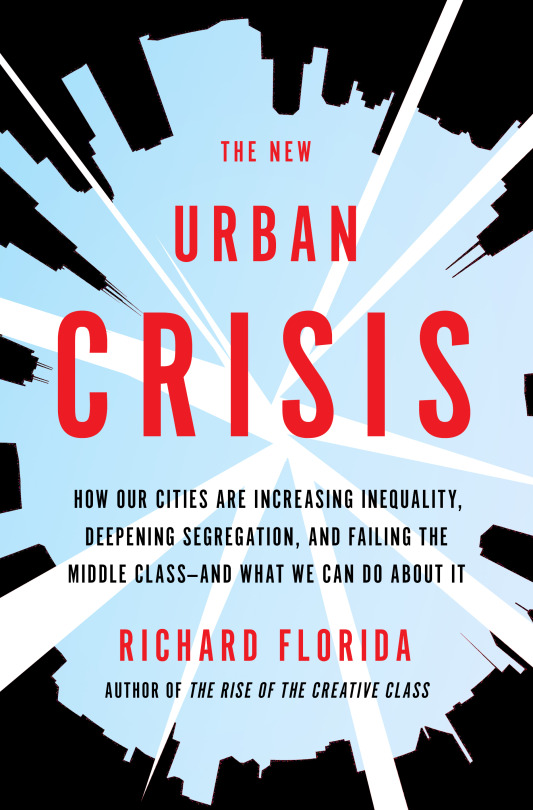
  • The New Urban Crisis

    Richard Florida has a new book coming out in the spring called, The New Urban Crisis

    Noteworthy about the book is that he has changed his tune with respect to the potential of the “creative class” to form the new middle class. Here’s a quote from the Houston Chronicle:

    “I got wrong that the creative class could magically restore our cities, become a new middle class like my father’s, and we were going to live happily forever after,” he said. “I could not have anticipated among all this urban growth and revival that there was a dark side to the urban creative revolution, a very deep dark side.”  -Richard Florida

    Regardless of what you think of the work of Richard Florida, I’m sure this book will be bedside for most urbanists. The focus is on creating a new kind of inclusive urbanism, which is top of mind for so many of us today.

    If you’d like to pre-order it, you can do that here.

  • Has there been a “great inversion?”

    Urbanist Richard Florida has spoken a lot about a “great inversion.” This is about poverty moving to the suburbs and the core of cities becoming a kind of “gated suburb.” (i.e. wealthy)

    In response to this narrative, City Observatory recently published a post where they call this a new mythology. Joe Cortright argues that it is simply an exaggeration that sounds good in media headlines. And indeed, if you look at some accounts of poverty, the swings haven’t been that dramatic.

    However, if you dig into this study by Luke Juday at the University of Virginia (cited in the City Observatory article), there have been some interesting changes. 

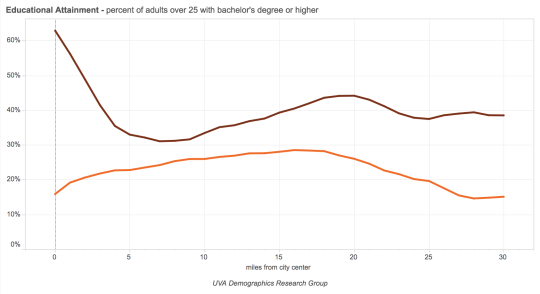
    Below is a chart that shows the percentage of adults (over 25) with a bachelor’s degree (or higher) sorted by distance from the city center. This particular chart is a composite of 7 northeastern (US) cities. The brown line is 2012 and the orange line is 1990.

    As you can see, there has been a huge spike in educated people living in city centers – at least in the northeast.

    Here is that same chart for Atlanta:

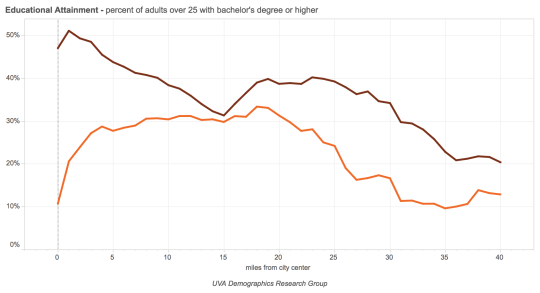
    New York:

    In the case of New York, it looks like the entire city just became more educated.

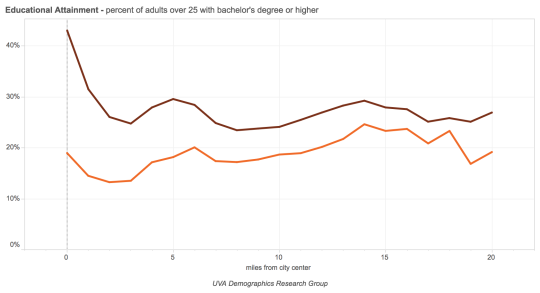
    Miami:

    Educational attainment is often the single biggest determinant of income. So there is something to be said about highly educated people concentrating themselves in city centers. We may not want to call it an inversion of great proportions, but it’s a meaningful shift.

  • 6 things about cities from Richard Florida

    Last week Richard Florida headlined an “Urban Lab” panel at the NYU Schack Institute of Real Estate. It was moderated by Sam Chandan, who is dean of the Shack Institute. 

    Here are 6 takeaways from the discussion, with a few of my own thoughts attached:

    1. Suburban brain drain. This is happening. Florida states that (real estate) development is the key to rebuilding the suburbs. It will challenging to reorient the suburbs away from the car (though suburbs vary greatly), but I do agree that many suburban areas need a refresh to keep them relevant against this brain drain.

    2. Decline in home ownership. Florida believes we will see owning vs. renting drop to about 50-50. This would be a pretty big change given that US homeownership is currently hovering in the low 60s and this is already at historic lows. However, the trend is towards urban and that often means more renting.

    3. New city characteristics. Access to urban amenities, cultural capital, and transportation is critical and should drive new development. Transit and rail infrastructure can “open up” new areas and combat issue #4, below.

    4. Housing affordability. Florida reiterates “the great inversion.” Poverty moving to the suburbs; cities now housing the rich. He also isn’t sure that capitalism alone will solve this problem. Gives example of Manhattan where market is focused on high-end luxury residential.

    5. Florida argues that planning and real estate knowledge need to come together to overcome some of the information-asymmetries inherent in the development industry. I’ve written about similar ideas before. I try and apply this sort of multi-disciplinary thinking to urban issues.

    6. Micro-living is not a silver bullet for “chronic poverty.” I think it serves a segment of the housing market.

  • Corporate disaggregation (and some book suggestions)

    The truism is that both people and companies are moving back to downtowns. We are living in an urban era. But when you really look at the data, it is clear that the suburbs are far from dead. And when it comes to companies, the way in which they are relocating to downtown is not the same as it was in previous generations.

    The Economist calls it “corporate disaggregation.” Aaron Renn calls it “executive headquarters.” And it is the idea that it is primarily the elite executive jobs that are moving back downtown. The routine jobs are remaining in the suburbs or are being pushed out to even further outposts. On top of this, a move downtown can also provide the impetus for downsizing.

    Here’s an excerpt from The Economist:

    “The best book to read if you want to understand corporate America’s migration patterns is not Mr Florida’s but a more recent study, Bill Bishop’s “The Big Sort”. It argues that Americans are increasingly clustering in distinct areas on the basis of their jobs and social values. The headquarters revolution is yet another iteration of the sorting process that the book describes, as companies allocate elite jobs to the cities and routine jobs to the provinces. Corporate disaggregation is no doubt a sensible use of resources. But it will also add to the tensions that are tearing America apart as many bosses choose to work in very different worlds from the vast majority of Americans, including their own employees.”

    It is interesting, and probably disconcerting, to note that the divisiveness we are seeing in politics is also manifesting itself in our cities. The causes are likely the same. We may be living in an urban era, but we are also living in an era where, sadly, broad-based urban prosperity appears to be declining. See Elephant Graph.

    Another somewhat related book that may be of interest is Overcomplicated: Technology at the Limits of Comprehension. It is about the increasing complexity of our cities and our inability to properly understand it all. It argues that it may be time to seek out new tools.

  • Where the world’s billionaires live

    The Martin Prosperity Institute here in Toronto recently published an interesting report called The Geography of the Global Super-Rich.

    What they did was use the Forbes 2015 Billionaire List to chart billionaires and billionaire wealth by location and by industry. They also looked at the wealth gap in each location and whether the wealth was self-made or inherited.

    A correlation analysis was also done to see what key variables – such as population, density, economic output, global city standing, VC investment, and so on – were positively correlated with a greater concentration of super rich people.

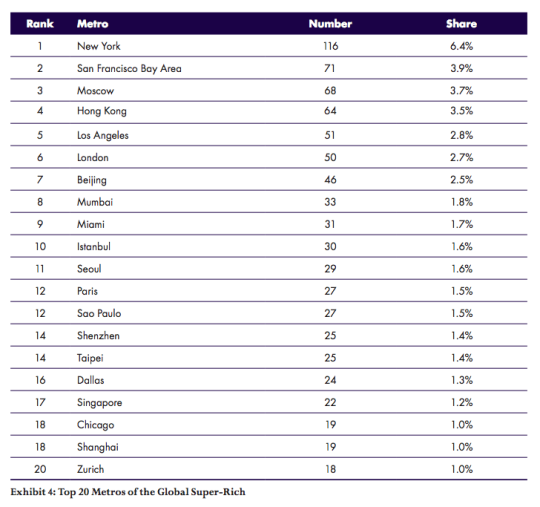
    There are 1,826 billionaires across the world according to Forbes. The researchers were able to match 99% of them to a specific metro area / primary residence.

    Here are the top 20 metro areas in terms of the number of billionaires:

    image

    Look at Miami at #9. 

    I suspect that this may surprise some of you. But Miami has grown into a significant global city. As one of my friends from Miami likes to tell me: “The best thing about Miami is that it’s a Latin American city that’s so close to the United States.”

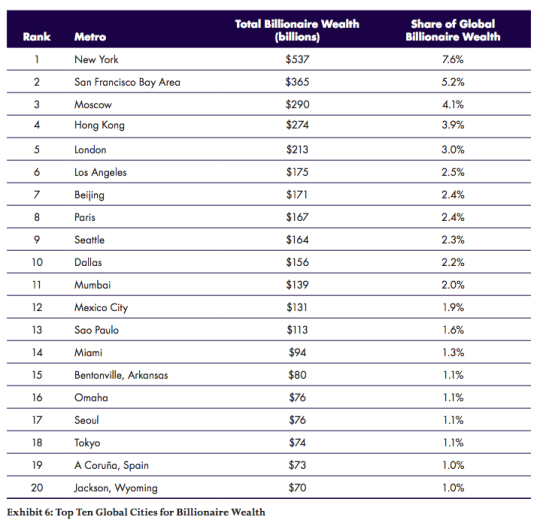
    Here are the top 20 metro areas in terms of total billionaire wealth: 

    image

    A bunch of changes on this list because of extremely wealthly people and families in places like Bentonville (Arkansas) and Omaha.

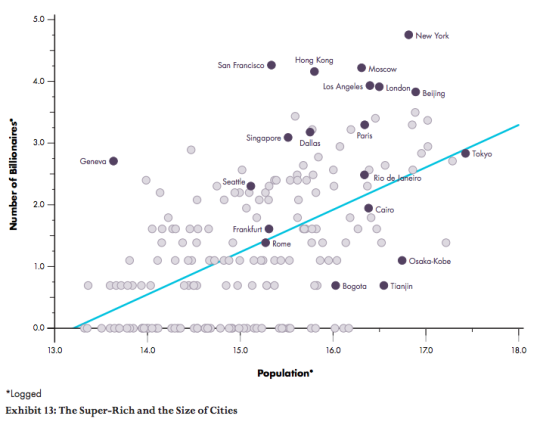
    One of the conclusions of the report is that the size of the city generally matters:

    “The geography of the super-rich is a function of larger cities. Both the number of billionaires and their net worth are positively associated with the population of global cities, with correlations of 0.56 for the number of billionaires and 0.44 to their net worth.”

    Here is a chart comparing population to the number of billionaires:

    image

    Cities such as New York, Moscow, and Hong kong, which sit far above the blue line, have more billionaires than their population size would predict.

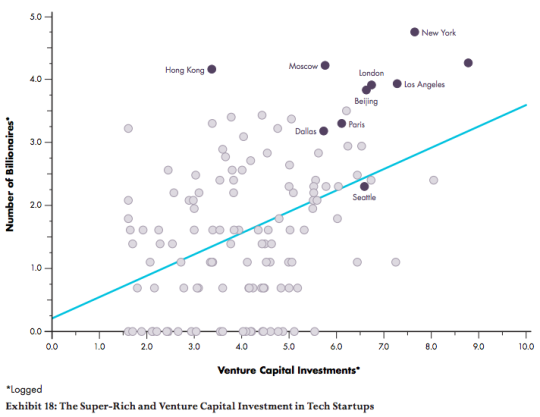
    Here is a similar chart comparing venture capital investment to the number of billionaires:

    image

    Once again, there is a positive association.

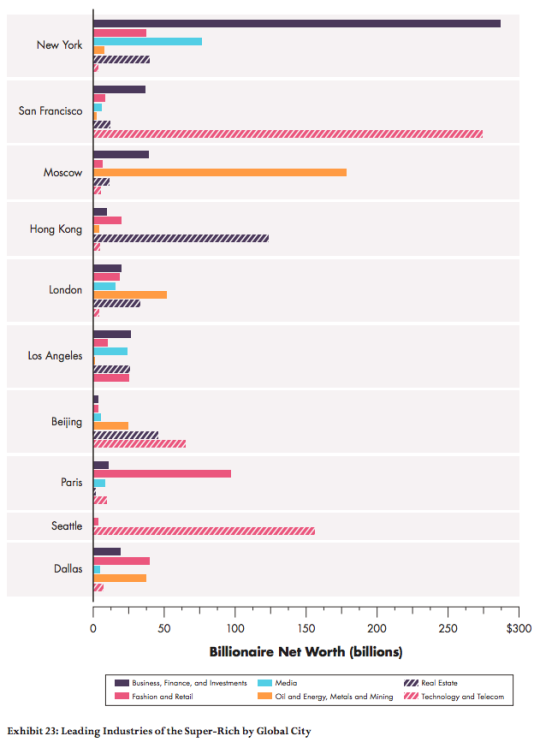
    Finally, here are a two charts that show which industries have produced the most billionaires:

    imageimage

    If you’re interested in this study, you can download the full report here. All of the charts were sourced from the report.

  • The top 20 US neighborhoods for venture capital investment

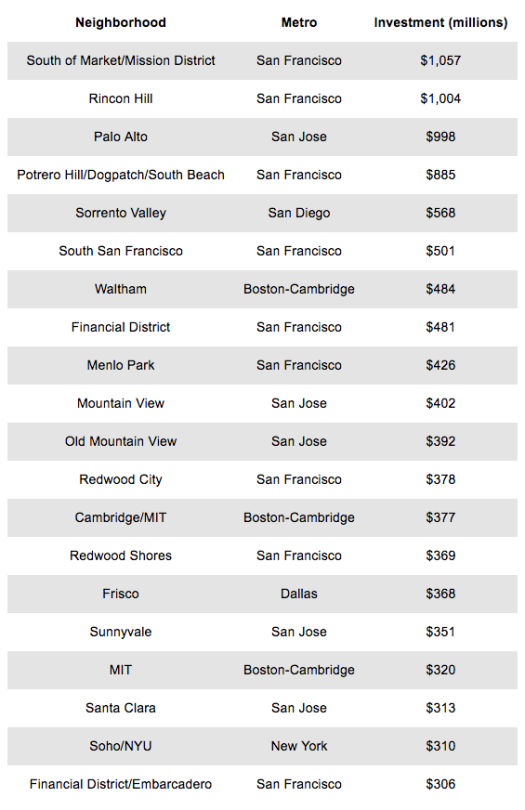
    There’s a lot of talk about how venture capital investment has shifted from the suburbs to cities and how it is also concentrated in certain metro areas. But a new report from the Martin Prosperity Institute has dug even deeper to look at the top 20 neighborhoods (zip codes) in the US for venture capital investment.

    Here’s a summary of what they found:

    “The top 20 neighborhoods or zip codes for venture investment include nine in San Francisco, five in San Jose, three in Boston-Cambridge (one in suburban Waltham and two in Cambridge close to MIT) and one each in San Diego (close to the University of California, San Diego), Dallas, and New York (close to New York University).”

    And here’s the full top 20 list:

    image

    Initially I looked at this list and thought that neighborhoods such as Menlo Park and Redwood City shouldn’t be labeled as San Francisco, since they are outside of the county. But technically they still fall within the San Francisco Metropolitan Area

    It’s amazing how San Francisco dominates this list.

  • Moving to the big city

    When I was 18 years old, I
    moved from the suburbs of Toronto to Waterloo, Ontario, which is about an hour
    west of the city.

    I largely did this for two reasons.

    Firstly, I had started
    visiting friends at both Wilfrid Laurier University and the University of
    Waterloo while I was in high school, and I thought that I wanted
    that kind of University town experience.

    Secondly,
    I started University as a Computer Science student and I figured that Waterloo
    was a pretty good place to study that. Research In Motion (later renamed to
    Blackberry) was an important company at the time and interesting things were happening.

    Though
    to be clear, I was a student at Laurier and not at the University of Waterloo – the better of the two schools for Computer Science – because I didn’t have
    the grades for the latter.

    But a
    funny thing ended up happening. I hated living in Waterloo. I felt so out of
    place. So much so that I spent every weekend back in Toronto visiting my
    friends who had instead decided to go to the University of Toronto.

    And I
    remember vividly how I felt during those weekends. I would stand in my friend’s
    apartments – most of which had dens and solariums that were hacked into
    bedrooms so that they could afford to live there – and I would look across the skyline and
    think to myself: why the hell do I not live here?

    So I
    transferred to the University of Toronto. And that solved that.

    The
    reason I bring up this story today is that I was reminded of it while reading a recent CityLab article by Richard Florida called, The
    Self-Confident City
    .

    The three
    main arguments in the article are:

    (1) Where
    we choose to live has a massive impact on our life outcomes.

    (2) Self-confident
    people – according to a recent study – seem to be drawn to big cities.

    (3)
    Self-confidence can also be a self-fulfilling prophecy
    for people in big cities.

    Now,
    I don’t know if it was really self-confidence and youthful hubris that told me I needed to live in a bigger city than Waterloo. (It was probably part of it.) All I know is that I
    wanted to live in a super dynamic place that felt bigger than me. I wanted to
    feel like I was a small fish in a big pond trying to make some sort of
    meaningful dent.

    That
    was true for me when I was 18. And it remains true for me today at 32.

  • Top 20 cities for venture capital investment

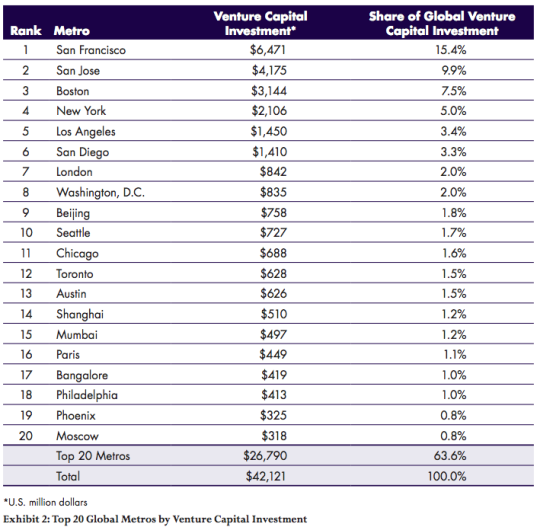
    The Martin Prosperity Institute here in Toronto recently published a new report that looks at worldwide venture capital investment by city. The report is called Rise of the Global Startup City.

    The data is from 2012, because that’s what was available from Thomson Reuters, so keep in mind that there might be some variation in the rankings if we were to look at more recent data. Some of the cities sit fairly close.

    Nonetheless, here are a few of the broader takeaways (from the report page):

    “The United States accounts for nearly 70 percent (68.6 percent) of total global venture capital, followed by Asia (14.4 percent) and Europe (13.5 percent).”

    “Just two broad regions — the San Francisco Bay Area and the Boston-New York-Washington Corridor — account for more than 40 percent of global venture investment.”

    “Global venture investment is highly uneven and spiky — it is concentrated in a small number of large cities and metros around the world.”

    Here are the top 20 cities by total venture capital investment (in USD millions):

    image

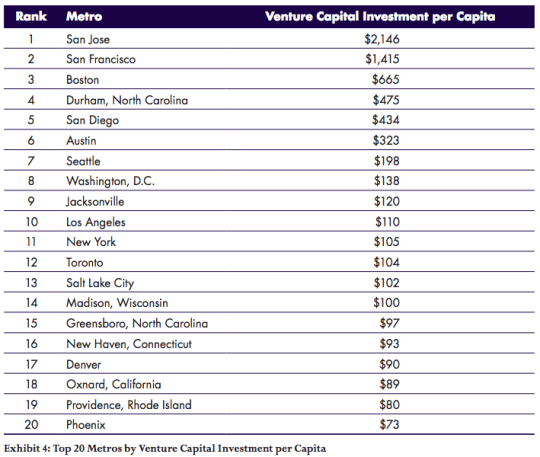
    And here are the top 20 cities according to venture capital investment per capita:

    image

    Given the variation in these two lists, you realize that some cities are largely benefitting from sheer size. London, for example, drops off the list when you look at venture capital investment per capita. 

    In fact, in this second list, 19 of the 20 cities are in the United States. The only non-American city that remains is Toronto.

  • A year in review — 2015 on Architect This City

    Thanks to this blog, it’s pretty easy for me to go back and look at what I was doing and thinking throughout the year. That’s one of the benefits of writing a daily blog/journal. And as is usually the case, 2015 was a year of ups and downs.

    For my annual ski and snowboard trip with the guys, we went to Banff (Alberta) and Revelstoke (BC). But we got stuck with unseasonably warm weather in the west (the opposite of what’s happening this winter) and I got injured on day 3. That put me in the emergency room and knocked me out of snowboarding for the rest of the season – as well as from the gym for a number of months.

    Shortly after that I also got struck with some family health issues. That was pretty scary for a good solid month, but in the end, everything seems to have worked out. What a relief.

    Towards the end of March, I did a brand partnership between Architect This City and Porter Escapes, which brought me to Quebec City for a weekend. That was a lot of fun and gave me the opportunity to be a real flâneur in one of the most interesting cities in Canada.

    In April, I left my real estate development job at TAS and shortly after I joined CAPREIT (TSE: CAR.UN) to help build out their (real estate) development platform. Previously their/our focus had just been on acquiring existing rental assets. But now it is time to build.

    Later this month I also participated in the Toronto filming of a documentary called Waterfront Cities of the World. That was a lot of fun. But come to think of it, I don’t think I ever watched the final video.

    In May, I started lobbying hard for the removal/replacement of the eastern portion of the Gardiner Expressway East here in Toronto. If you’ve been reading this blog since the summer, I am sure you remember this period. With the help of a colleague of mine, I even started a petition that ended up getting presented at City Council.

    But in June, Toronto City Council voted to demolish and then rebuild the elevated expressway along our waterfront. I am still surprised by that. What a shame.

    In July, we (CAPREIT) announced our first joint venture development project. A mixed-use project – 506 rental apartments on top of about 160,000 square feet of retail – in Toronto’s Liberty Village. 

    In August, I went back to Philly to relive my Penn days. I do that every couple of years just to make sure that Bob and Barbara’s is still offering up “The Special.” The Special is a can of PBR and a shot of Jim Bean for $3. It’s famous in Philly, but it always sounds like a far better idea the night before, as opposed to the morning after.

    In this same month I also hit the 2 year mark here on Architect This City. That’s 2 years of getting up every single day and staring at a blank blog post screen and thinking of something insightful to say. 

    The following month on September 11 (I’ll never forget this date), I got laser eye surgery. More specifically, I got custom wavefront LASIK. And today it’s pretty hard to imagine that I used to have to reach for my coke bottle glasses as soon as I woke up every morning.

    Later in September, I also gave a talk at my alma mater, the Rotman School of Management, to a delegation of about 70 urbanists from Portland. It was an honor to be invited alongside rockstars such as Richard Florida and Jennifer Keesmaat.

    In October, I featured a guest post from the former mayor of Toronto, John Sewell. I don’t often do guest posts on my blog, but John had just published a new book and I thought it would be a good way to change things up here. John and I aren’t necessarily on the same page with many urban issues, but we did agree on the Gardiner East.

    For the remainder of October, it was basically just the Jays.

    In November, I spoke at a Product Hunt event focused on real estate + tech. It was incredibly encouraging to see so many entrepreneurs here in Toronto focused on the intersection of real estate and tech. There are lots of opportunities in this space and I am sure that there are many success stories in the making right now. Toronto is the perfect place for real estate + tech innovation.

    And finally, in December, I crossed something off my bucket list and attended Art Basel Miami Beach. I have wanted to go for well over a decade; pretty much since I started studying art history in undergrad. I don’t know what took me so long.

    Oh, I also announced that I was writing a book on becoming a real estate developer

    What a year. I can’t wait for 2016. 

    What do you have on your to-do list for next year?

  • Interview with urbanist Richard Florida

    UrbanToronto.ca recently published an extended interview / discussion with urbanist Richard Florida about cities and, in particular, the future of Toronto. What it’s doing wrong. What it’s doing right. And what it should be doing to properly position itself for the future.

    What became clear to me after reading the interview is that Toronto is really at an inflection point. We are transitioning into a much bigger global city and we have yet to fully embrace the city that we are quickly becoming:

    “…the city was—and is—still too dominated by a NIMBYist, faux-progressive left that refuses to engage with having to build a dense, transit-oriented, and inclusive city.”

    The interview is packed with information and it’s definitely worth a read this morning. There’s a lot I agree with, including his views on transit and his positions on the Island Airport and the Gardiner East – which is a topic that is near and dear to me.

    In case you don’t have time to read the full interview, below are 3 excerpts.

    First, on the Gardiner East:

    “There’s also a learning curve to Mayors, and I think they tend to get a better understanding of urbanism over the course of their tenures,” Florida adds, hoping that Tory, self-described as an “ideologue on very few issues,” will make pro-urban decisions as his time in office continues. “For one thing, I really hope that he reverses his decision on the Gardiner,” Florida continues, highlighting Tory’s controversial support for renovating—as opposed to demolishing—the eastern portion of the Gardiner Expressway as an example of especially poor urban policy.

    Second, on the need for a true urban agenda at all levels of government:

    Offering prescriptions for the future, Florida calls for a “virtual moratorium on road-building,” arguing that the perpetuation of an automobile culture hinders a city’s creative capacity, with little exchange of ideas and culture occurring when people are sitting in their cars, and not engaging with life on the street. “The city also needs a more committed Federal partner,” Florida adds, calling for a ’ministry of cities’ to help provide a vision for growth and fund urban infrastructure projects. 

    And third, on the value of Toronto’s openness:

    “A huge reason for the city’s continued success—as we trudge along despite our lack of urban vision and reactionary tendencies—is the fact that we continued to be so open to newcomers, allowing a great deal of global creative energy to be harnessed. It means we can fuck up a lot, but as long as we continue to remain open, we’ll have an important edge.”

    There’s a lot of great discussion fodder here. I would love to hear your thoughts in the comments below.