Daily insights for city builders, delivered every morning at 6 AM ET. I’m Brandon Donnelly — a Toronto-based real estate developer and founder of Globizen. I’ve been writing here since 2013.

Tag: revitalization

  • The Cherry Street Lakefilling project

    It’s going to take a generation to build it out, but one of the most exciting revitalization projects in Toronto is going to be the Port Lands area. However, before that can really start happening and new communities can be built, the entire area needs to be flood protected. Currently about 290 hectares (717 acres) in this part of the city are prone to flooding.

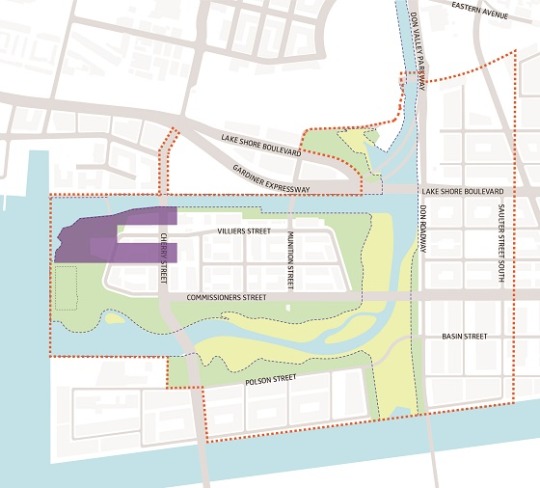
    One component of the flood protection program is the Cherry Street Lakefilling Project. Below is a plan of what that means (from Waterfront Toronto). The area in purple is new land that will be created as part of the process. Supposedly this is important for a few reasons. For one, it will allow the Cherry Street bridge to be relocated, which, in its current location, is creating a pinch point during floods.
    image

    I am mentioning all of this today because I am personally excited about this revitalization project. Hopefully I’ll see it complete in my lifetime. And maybe I’ll be fortunate enough to work on some of the buildings when that time comes. I also really wanted to share the below video with you all, showing the lakefilling in action. I bet many of you aren’t aware that this is happening.

    If you can’t see the video below, click here.

    [youtube https://www.youtube.com/watch?v=C0q_Wvn91zE?rel=0&w=560&h=315]
  • My Piece of the City

    A friend of mine just sent out a group city builder email about My Piece of the City, which is a new documentary that is screening all weekend here in Toronto at the TIFF Bell Lightbox.

    The film is a critique on the revitalization of Regent Park, told through local residents and their efforts to stage a community musical (which happened in real life).

    The Daniels Corporation, in partnership with Toronto Community Housing, is the developer and builder for the entire 69 acre community. The Daniels Foundation also funded the musical and this documentary.

    But, despite this backing, the Globe and Mail has said that it remains a “healthy critique” of this entire process. And the trailer certainly gives you that impression.

    I am sure that this documentary will be of interest to many of you, so if you would like to grab tickets for this weekend, you can do that here.

  • Collective action problem

    I like this excerpt from City Observatory:

    “More broadly, this paper reminds us of the salience of stigma to neighborhood development. Once a neighborhood acquires a reputation in the collective local consciousness for being a place that is risky, declining, crime-ridden or unattractive, it may be difficult or impossible to get a first-mover to take the necessary investment that could turn things around. The collective action problem is that no one individual will move ahead with investment because they fear (rationally) that others won’t, based on an area’s reputation. A big part of overcoming this is some action that changes a neighborhood’s reputation and people’s expectations, so that they’re willing to undertake investment, which then becomes a self-fulfilling prophecy.”

    It’s taken from an article called: Getting to critical mass in Detroit. The article itself is a response to some of the criticism circulating around that Detroit’s rebound is lopsided toward downtown. But Joe Cortright argues

    (rightly)

    that this is indeed the way to go about it. Concentrate efforts. Establish a critical mass. And then expand from there.

    What I like about the above excerpt is that it’s a reminder that optics, storytelling, and identity all have an important role to play in city building. It’s also a reminder that momentum can develop in either direction and that neighborhood reputation’s can get exaggerated.

  • Sicilian town is giving away free houses

    https://500px.com/embed.js

    Buy real estate. It always goes up. That’s the mantra, right?

    Few things in life are that black and white.

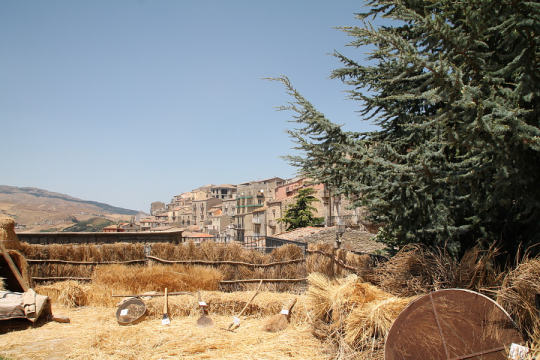
    A small town in Sicily called Gangi is in the midst of a novel urban renewal experiment. They are giving away houses for free to people who will agree to renovate them within a 4 year time period.

    Here’s the “free houses” notice from the Comune Di Gangi explaining how it works and who to contact. You have to be an Italian or EU citizen to participate.

    Free can be a powerful business model, as we see all the time with tech companies. And sometimes cities and towns aren’t all that different.

    So if you’re looking for a vacation home or want to move to Sicily, now might be a great time.

  • Before & After: Queens Quay Boulevard

    Yesterday I spent the evening walking Toronto’s new Queens Quay Boulevard, which fully reopened this past Friday after a number of years of construction. 

    It is part of Waterfront Toronto’s revitalization efforts and represents a solid decade in the making. West 8 of Rotterdam and DTAH of Toronto won the international design competition for the central waterfront back in 2006. And this past weekend a big component of that vision was unveiled.

    But first, let’s take a look at what Queens Quay Boulevard used to be like. Here’s a Google Streetview image from 2009:

    image

    The streetcars ran in the middle of the street. Cars drove on the north and south side on both sides of the tracks. And the sidewalks were fairly small and usually at capacity during the busy summer months. It wasn’t a great street.

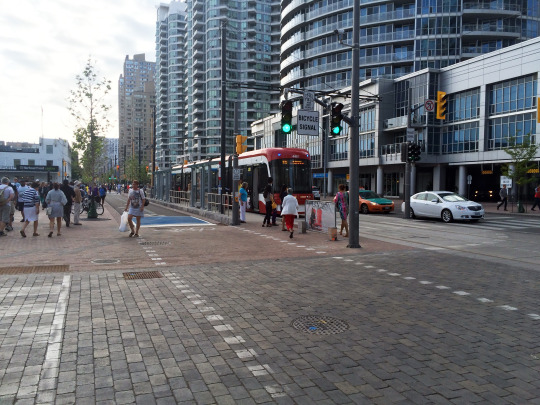
    Now here’s a photo that I took yesterday from that same vantage point (2015):

    image

    The street has been completely reorganized. On the north side of the streetcar tracks is where the cars now drive in both directions. On the south side of the tracks the lanes of traffic have been replaced with a 2-way bike trail (part of the Martin Goodman Trail). And on both sides the pedestrian areas have been greatly expanded. It’s now a magnificent street.

    If you haven’t yet been down to the new Queens Quay, I would encourage you to check it out on either foot or bicycle. (If you go on bicycle, let me know and I’ll join you.) 

    Toronto may have taken a giant step backwards with its recent decision on the Gardiner East, but we also took a giant step forward with the reopening of Queens Quay Boulevard.

  • Thoughts on urban renewal and Geary Avenue

    Photograph dupont survivor by Josemaria de Churtichaga on 500px

    dupont survivor by Josemaria de Churtichaga on 500px

    I was on CBC radio this morning talking about the revitalization of Dovercourt Village and Geary Avenue in Toronto. 

    The funny thing about this topic is that it’s one I actually held off writing about. I’ve been thinking about this street and area for probably about 5 years now. However, I do have to keep some secrets to myself 🙂

    But then I started feeling like the cat was already out of the bag. Everyone in my circle was talking about it. So I wrote a post calling Dovercourt Village the next Ossington. I had no idea it would get the traction that it has gotten, but in hindsight it makes total sense. It makes a great headline: “Toronto’s ugliest street to become the next Ossington.” Boom.

    The tough question that Matt Galloway asked me this morning was: What happens to all the blue collar businesses when/if Geary Avenue and the area really takes off? My response – given that it was only a 5 minute radio piece – was that it comes down to preservation vs. progress. 

    This is a topic that I’ve written about with respect to heritage buildings, but the same concept applies to communities as well. How do you allow neighborhoods to receive new investment while at the same time not erasing its past and the things that made it interesting in the first place?

    It’s not easy, that’s for sure.

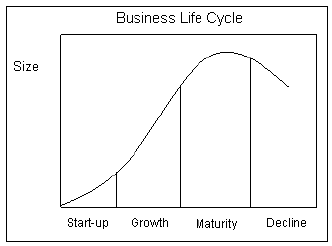
    I absolutely believe that there are things that developers can do to respect the neighborhoods in which they build in. But at the same time there are economics at play. In business school, they teach you this:

    It’s the lifecycle of businesses and industries. 

    The key takeaway here is that the rise and decline of businesses is actually quite healthy for markets. History is littered with examples. The word processor replaced the typewriter. The mobile phone replaced the landline. Air travel replaced rail travel. And the list goes on.

    Today, I think we’re at a moment in time where our relationship to cars is changing dramatically. How we get around and how we own and operate them is being called into question. 

    So just because there’s auto shops on Geary Avenue today, doesn’t mean they’ll be there tomorrow regardless of whether the area takes off or not.

  • Belval: From Luxembourg’s largest steelworks to mixed-use community

    Early this morning, before the sun even came up here in Toronto, I had a video conference call with a sharp and talented entrepreneur in Luxembourg. His name is Fräntz Miccoli and he’s working on an interesting startup called KonnectR.

    The idea is to create a platform to connect with new people at any point in time and wherever you might happen to be. It may sound like a “hook-up” app, but that’s not the intent. He came about the idea while traveling and looking for other smart and engaging people to hang out with.

    When we started the video conference call this morning, I showed him my window so that he could see the sun just starting to rise. He then showed me his coworking space, which made it seem like he is working out of an old industrial steel mill. Turns out, he is.

    The area of Luxembourg he’s working out of is called Belval, which is a neighborhood in the west end of the country’s second largest city, Esch-sur-Alzette. The neighborhood used to consist of the largest steelworks in the country. But with the decline of steel production in Luxembourg, the area fell into decline. Today, it’s being reborn as a 21st century mixed-use community.

    The developer behind the project is called Agora. And the site – equal to about 120 soccer fields – will house everything from residences and offices to shopping and cultural institutions. The University of Luxembourg has also centralized their campus in the new neighborhood. Having institutions “anchor” a community is becoming quite common for urban renewal programs. Here in Toronto, we did a similar thing with George Brown College along the waterfront.

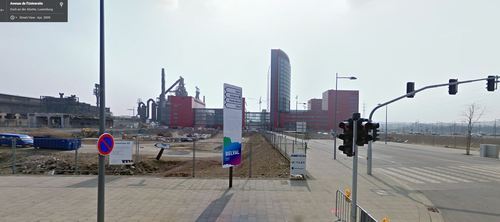
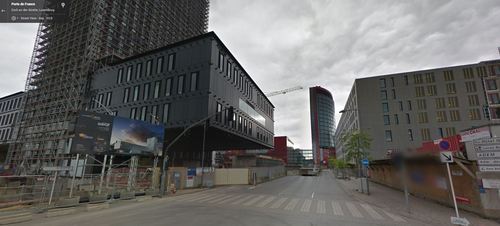
    To give you a better sense of the transformation taking place in Belval, here’s a streetview photo from 2009:

    image

    Here’s another one from the same intersection in 2013 (notice the same tower in the background):

    image

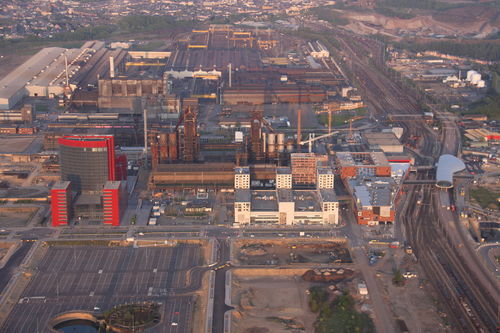
    And here’s an aerial view from 2010:

    image

    I’m always fascinated by urban renewal projects of this scale because it so clearly speaks to the evolutionary nature of cities. Industries die. Businesses disappear. And new uses need to be found. In this case, the area has gone from steel production to tech startups. That’s not surprising.

    But at the same time, I think it’s important that we don’t completely erase the past. Here, I think it’s great that they’re preserving some of the blast furnaces and other industrial structures. It gives the area character and a sense of place – which is oftentimes hard to manufacture and always better when it’s authentic.

  • The new Regent Park

    Yesterday morning I went for a swim at the new Regent Park Aquatic Centre. I used to swim regularly when I was in grad school in the US, but it fell off when I moved back to Toronto and there wasn’t a convenient place for me to walk to. Having to drive to a gym or to a pool can really cut hurt how often you’re able to go.

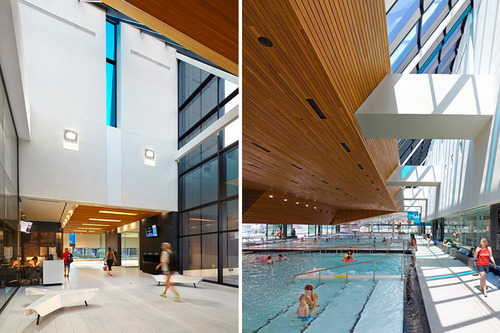
    In any case, the pool was fantastic. On the west side of it are glass sliding doors that face the park. And since yesterday was such a beautiful day, they were all open while everyone was swimming lanes. The wooden ceiling also gives the space a nice, warm feel.

    The biggest surprise for me though was the universal change rooms. I had never been in a co-ed change room before – or one that was completely open and visible to the pool (there are small private rooms so you can actually change). For families, it makes a lot of sense. Everyone can go in together and it’s easy to watch your kids in the pool from within the change room.

    After my swim, I rode my bike around Regent Park and tweeted this out:

    What’s happening in Regent Park is incredibly exciting. To me, it feels like a return to the fundamentals of city building. They’ve reconnected the old street grid – which had previously been removed to create the old “towers in a park” scheme – and they’re clearly working towards a proper urban neighborhood with retail at grade and buildings pushed right up against the street.

    A big measure of success, though, will be how animated the streets become and how well the retail does. Because all of that isn’t quite there yet. But we’re on our way. And already I feel like we’re about to forget what the old Regent Park used to be like. Toronto may have lived with that neighborhood for over 60 years, but future generations will barely know it existed.

    Image: Shaigil

    //platform.twitter.com/widgets.js

  • Cawthra Park revitalization

    I must have been living under a rock because I just discovered this weekend that Toronto is in the midst of hosting WorldPride. I obviously knew that it was Pride Week, but I didn’t realize that we had outbid Stockholm in 2009 in order to be awarded the event. 

    I also didn’t realize that Cawthra Park near Church Street & Wellesley Street was being revitalized in preparation for both WorldPride 2014 and for the Pan Am & Parapan American Games in 2015 – which Toronto will also be hosting.

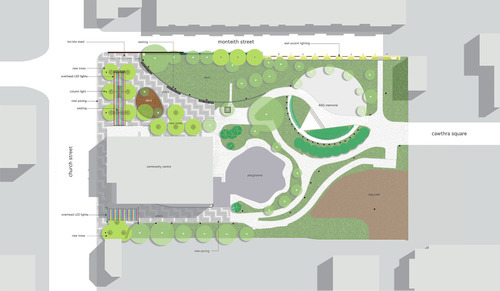
    Here’s a site plan of the final design:

    image

    And here’s what the completed design looks like:

    image

    image

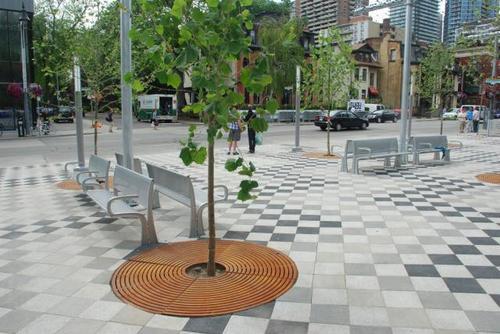
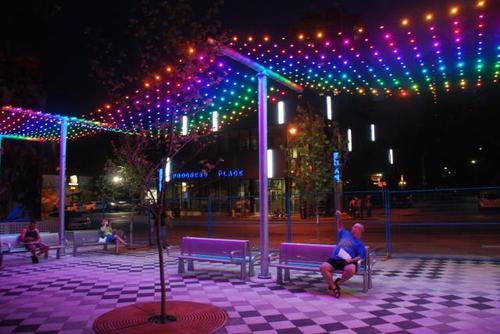
    I like the pavers and I like the overhead LED lights. Those may not seem like big additions, but it’s amazing how those small little details can impact the way a space feels. I think it creates an intimate and inviting space. What do you think?

    Images: thinc design