Daily insights for city builders, delivered every morning at 6 AM ET. I’m Brandon Donnelly — a Toronto-based real estate developer and founder of Globizen. I’ve been writing here since 2013.

Tag: retail space

  • 2.6 meters wide

    The width of a standard parking space in Toronto is generally 2.6m. I say generally because it depends on a few other factors, such as whether it’s “obstructed” or whether it’s being accessed off a substandard drive aisle. But for the purposes of this post, let’s agree that the width of a standard Toronto parking space is 2.6m.

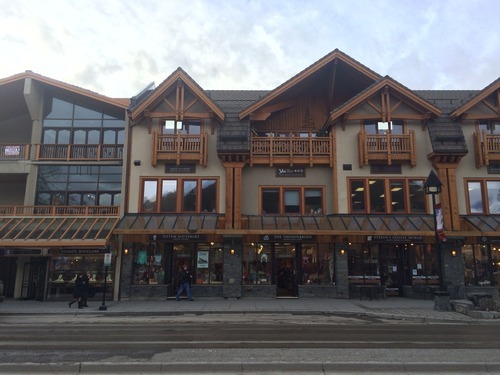
    The reason I mention this is because Onexn Architects has recently completed a 2.6m wide cafe in Shenzhen called Joys. Pictured above, the 9 square meter space used to house an air conditioner repair shop.

    Now, some of you are probably looking at the photos and thinking that this maybe isn’t such a big deal. But small spaces force you to be creative.

    Look at the grey exterior paving that creates the impression that the cafe is spilling out onto the sidewalk. And look at how they used an illuminated 5 meter tall canopy to try and accentuate the space.

    In some places and in cities, a retail space like this might easily become forgotten space. But here, it was something worth designing.

    Photography by Li Jinhui via Dezeen
  • Apple and the Milanese piazza

    image

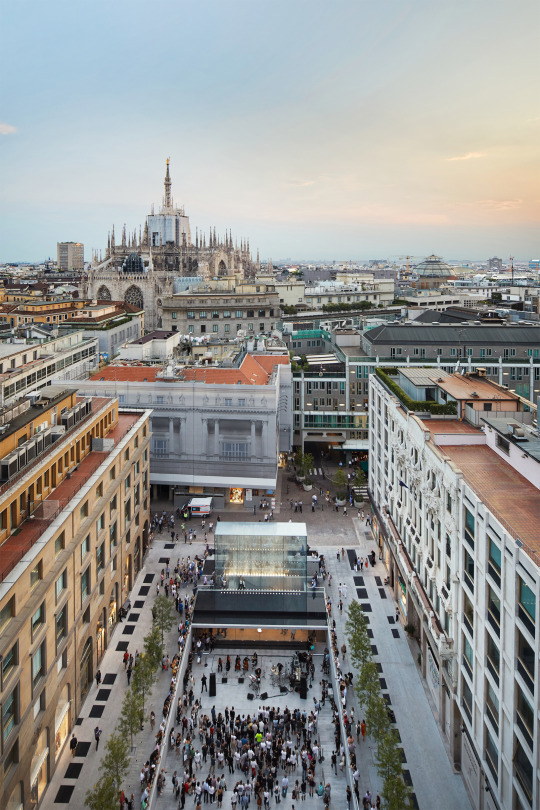
    This past July, the Apple Piazza Liberty opened in Milan. Above is a photo from the opening via Apple. There’s a band playing in the middle of the piazza.

    The store is central to Apple’s vision of transforming its retail locations into “town squares.” And in this case, the store is quite literally an Italian piazza.

    There’s a lot that is interesting about this store and this strategic move, as well as what this could signal about the future retail. (Curbed discusses that here.)

    The urbanists who read this blog will likely lament the privatization of public space. Because at the end of the day, it is a gray area. Can I hang out an Apple Town Square all day and just read a book?

    But at the same time, this is not necessarily a new idea. From the very beginning, the modern shopping mall was intended to be a new kind of town square. Or at least that’s how Victor Gruen saw it.

    However, what is perhaps new is this appropriation of public spaces for the purposes of what is arguably a new kind of retailing experience – one that almost feels paradoxical. 

    In the case of Apple Piazza Liberty, as well as in some of its other town squares, the actual retailing space is mostly hidden. Here it is underground. (How much to rent the basement?)

    And yet, Apple’s presence feels monumental and almost sublime. Glass box, waterfall, and subtle Apple logo sitting in the middle of a beautiful Milanese piazza.

    What a statement.

    Image: Apple

  • New York City’s retail vacancy problem

    The New York Post has some interesting articles, here and here, on the growing retail vacancy problem in NYC. (Thank you Michael for the link in the comments this week.)

    The vacancy rate on Amsterdam Avenue in the Upper West Side is said to be around 27% and it is said to be around 20% on a stretch of Broadway in Soho. It has become such a problem that Mayor Bill de Blasio wants to implement some sort of retail vacancy tax:

    “I am very interested in fighting for a vacancy fee or a vacancy tax that would penalize landlords who leave their storefronts vacant for long periods of time in neighborhoods because they are looking for some top-dollar rent but they blight neighborhoods by doing it,” he said on WNYC. “That is something we could get done through Albany.”

    But this is based on the assumption that greedy landlords are simply holding out for exorbitant rents. It doesn’t consider the fact that, maybe, there is simply too much retail space:

    Only a few grasp the true scope of the problem. Vornado Realty Trust titan Steven Roth said we can only cure the national plague through “the closing and evaporation” of up to 30 percent of the weakest space — which would take five years.

    All of this, of course, has me thinking about the future of ground floor main street retail. What are your thoughts?

  • Fifth floor retail

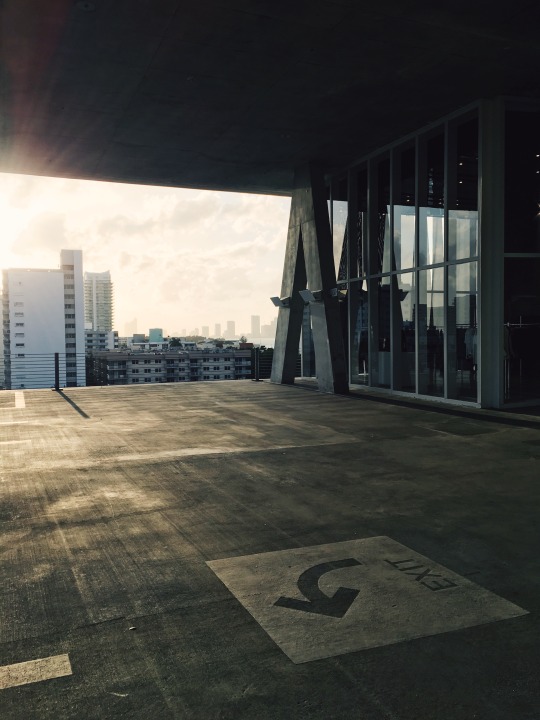
    I spent a bit of time this afternoon photographing 1111 Lincoln Road in Miami Beach. For those of you who aren’t familiar, 1111 is a parking garage that’s so well designed that people throw events – like weddings – in it. It was designed by the Swiss architecture firm Herzog & de Meuron.

    I’ve been through the building before, but one thing I missed the last time around was the 5th floor retail space pictured above. Conventional wisdom would tell you that upper level retail doesn’t really work all that well. But here you have a boutique shop with nothing around it besides parking stalls.

    What makes this case different? Is it the architecture? The desirability of this particular structure? Or is it that the store has enough of a following that it can draw people up and into it?

  • Banff’s second floor

    image

    I have good news and bad news.

    The bad news is that I took a gnarly spill yesterday afternoon on the mountains. The nose of my snowboard got stuck in deep snow and I fell forward onto my shoulder and then compressed my back. I tore a shoulder ligament and possibly fractured two ribs. So snowboarding season is over for me this year.

    The good news is that I now have more time to relax and enjoy the town of Banff, and then Revelstoke this weekend.

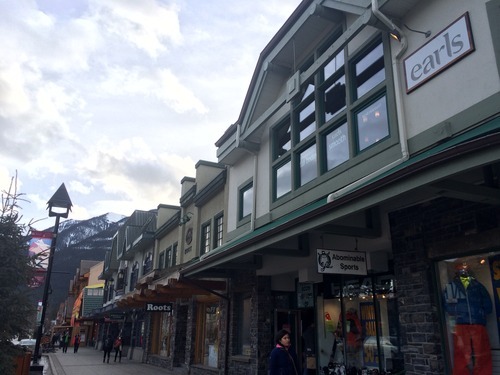
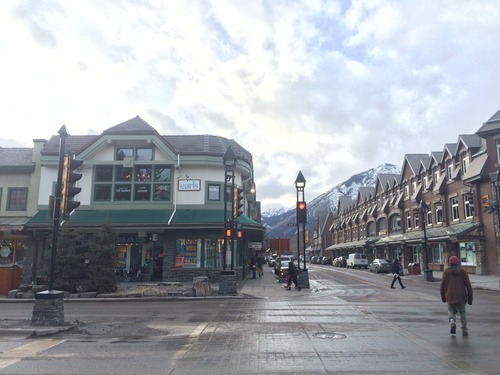
    Banff is a beautiful town. It’s compact, walkable, and surrounded by snow capped mountains. How could you not love it?

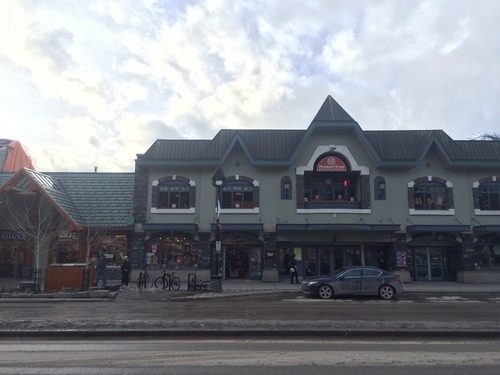
    One of the more subtle things that stands out for me though is the ubiquity of second level retail and restaurants. There’s a lot people in the (North American) real estate industry that will tell you that second floor retail just doesn’t work (you want ground floor). And indeed, it can be hard to pull off. As I’ve said before, getting retail right in general can be difficult.

    But in Banff, many of the bars and restaurants are up top. Here are a few examples (there’s an Earls, Boston Pizza, and a Korean restaurant, respectively):

    image
    image
    image

    So why does it work here?

    Given the town’s small footprint and location within Banff National Park, the market is supply constrained. That’s why Parks Canada imposes a number of restrictions on residency. They’re trying to ensure that the people who actually work in the community can find housing and it all doesn’t become second homes.

    So my gut tells me that in order to get enough retail/commercial space to serve the area and its tourists, they had no choice but to go up. They simply ran out of ground floor space. Because if the town was able to instead sprawl outward, I suspect that’s exactly what it would have done. And then more ground floor space would have been created.

    To be fair, most of the second floor examples I came across were bars and restaurants, which is arguably easier to pull off than straight retail. But it’s still something. 

    If any of you are familiar with real estate and planning in Banff or just have a better hypothesis, I’d love to hear from you in the comment section below.

  • Airbnb for retail spaces raises $7.3 million

    Though it’s sometimes common to downplay “this for that” startups (that is, derivative startups that try and borrow a model and use it in another market), Storefront–which can be described as Airbnb for retail spaces–has just raised a $7.3 million Series A round.

    Storefront is a marketplace for short term retail space (think pop-up shops). People with space simply create a listing and decide how much they would like to charge per day, per week or per month. In doing so, Storefront “helps all sorts of brands, sellers, and merchants to create their first brick and mortar retail experience.”

    What I find interesting about Storefront, and other startups like Airbnb, is that they’re really rewriting the way real estate marketplaces work. Instead of large retail landlords (Storefront) and multinational hotel operators (Airbnb), technology is allowing individuals to now participate in these marketplaces. Supply is being decentralized and anyone with extra space can participate.

    You could argue that these sorts of informal and short term rentals are nothing new, but I don’t think there’s ever been the possibility of scaling up like there is today. I mean, just look at how much attention Airbnb has been getting in New York. These startups are having an impact on the way the larger market functions.

    Change is coming. And I think we’ll see a lot more of it in the real estate space.