Daily insights for city builders, delivered every morning at 6 AM ET. I’m Brandon Donnelly — a Toronto-based real estate developer and founder of Globizen. I’ve been writing here since 2013.

Tag: residential real estate

  • Interest rates are expected to start coming down this summer

    Last week was “forum week” in Toronto. (That is, it was the Toronto Real Estate Forum.) And as is the case every year, Benjamin Tal, deputy chief economist of CIBC, opened up the event with his usual macro view of the world. For those of you who missed it (as I did), here are some of his key points (via RENX):

    • The Bank of Canada’s overnight rate will ultimately/likely settle into the 2.75-3% range (currently it sits at 5%). He expects rates to start coming down this summer.
    • Inflation is down, but we’re not yet at the 2% target. The “last mile” is always the toughest.
    • But as we know, the BofC will take a recession over high inflation, any day.
    • The mortgage market has fallen faster than in the early 90s recession. Tal said that the residential real estate market in Canada is right now facing “the biggest test” since then.
    • Canada is in what he calls a “per capita recession”. But for the million or so immigrants that the country accepted over the last year, we’d be in a full-blown official recession.
    • Finally, he called this correction in the housing market both “real” and “healthy”; he spoke about normalcy returning in 1-2 years; and he posited that the market will be “crazy” when it does return because of a supply deficit.

    This last point is an important one. New housing supply is mostly shut off right now. I say mostly because there are obviously still projects under construction, and there have been and there will continue to be some successful launches. But by and large, most developers are waiting right now, principally because the absorption isn’t there. They have no other choice.

    But Canada continues to grow. People from around the world continue to want to move here. And there continues to be a need for a lot more new housing. So when the market does return — and it, of course, will — there is going to be a supply-demand imbalance. And as is always the case in real estate, there will be a lag in responding to this imbalance.

    This is what Tal means by “crazy”.

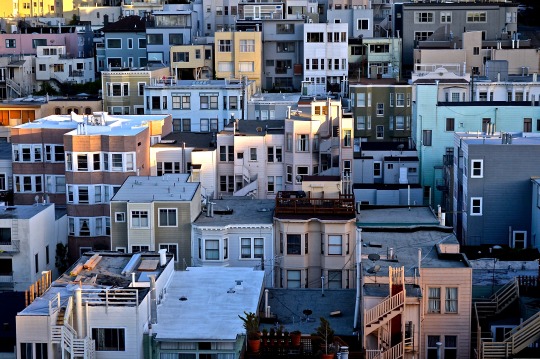
    Photo by Wiktor Karkocha on Unsplash

  • If it’s cheap, buy it

    Reading Howard Marks’ investment memos is up there with reading Paul Graham’s essays. You just need to do it. Howard’s latest is about “taking the temperature” of the market and I think you’ll find the lessons invaluable for everything from equities to residential real estate.

    Here’s an excerpt that I liked:

    We don’t say, “It’s cheap today, but it’ll be cheaper in six months, so we’ll wait.” If it’s cheap, we buy. If it gets cheaper and we conclude the thesis is still intact, we buy more. We’re much more afraid of missing a bargain-priced opportunity than we are of starting to buy a good thing too early. No one really knows whether something will get cheaper in the days and weeks ahead – that’s a matter of predicting investor psychology, which is somewhere between challenging and impossible. We feel we’re much more likely to correctly gauge the value of individual assets.

    These are investing words to live by. Avoid your own emotionality and value the asset. If it’s not cheap, don’t buy it. If it’s cheap, buy it. Then take a long-term view. It all sounds simple enough, but it’s clearly not so easy. And that’s why we have extreme highs and extreme lows in the market.

    Eighteen months ago, everyone wanted to buy residential real estate. Today, prices are lower, but fewer people want to buy residential real estate. Part of this is obviously because of interest rates. But part of it is also just because of emotion.

  • Non-Canadians can’t buy a lot of real estate

    The Prohibition on the Purchase of Residential Property by Non-Canadians Act — which came into effect in January of this year and bans foreigners from buying residential real estate in the country for two years — is weird.

    We can debate whether banning foreigners from buying residential real estate is really helpful for housing affordability and if it’s the most impactful place to focus our attention (and we have talked about this many times before), but the part that is particularly odd is this feature here:

    …the law’s definition of residential property includes land that is zoned for residential use or mixed use, which covers huge swaths of commercial land across the country. As well, an entity is deemed foreign if a non-Canadian owns a minimum of 3 per cent of the entity.

    What this means is that the following scenario is now technically a problem (not actual legal advice!):

    • You own a commercial property with zero homes
    • You have long-term commercial leases in place that also generally preclude you from building new homes in the foreseeable future
    • The zoning of your property allows for residential uses (which you like having in your back pocket)
    • And your cousin from Italy owns 3% of the entity that owns the real estate

    This is a scenario where residential homes do not exist and they are unlikely to exist any time soon. It seems clear cut, but I suppose one could argue that it’s exceedingly onerous to try and figure out which sites are soft sites and could actually be developed with new residential. And so if you have the potential to build and then own residential, you should be regulated as if you might ultimately own some of it one day.

    But even here, I don’t know why we would want to restrict the supply side of the housing equation. If you’re a developer in Canada where housing is known to be kind of expensive and you want to build more of it for Canadians, isn’t that a good thing? And isn’t it also a good thing if we can get some non-Canadians to help pay for these new homes?

  • China’s homes are currently valued at $52 trillion

    The Journal published a piece this past week talking about China’s $52 trillion residential property bubble. According to a recent study by Goldman Sachs, this is the current value of all Chinese homes (built homes and developer inventory). And to put this number into perspective, it is twice that of the U.S. residential market.

    Now, I don’t know all that much about the Chinese housing market and I have no idea where prices will go next. But it is interesting to look at some of the data, particularly in light of this current pandemic. Urban home prices in China were up 4.9% year-over-year in June, and 1.9% year-to-date. Shenzhen appears to be one of, if not the hottest market. Why is that?

    At the same time, it is believed that about 21% of urban homes in China were vacant as of 2017. I don’t know what the figure is today, but this is a high number. As of last year, urban China also had a homeownership rate of about 96%. (Here is a look at how this number compares with other countries around the world.)

    What is clear is that Chinese households are going long property, and eschewing other investments such as stocks and bonds. Above is a chart showing how China compares to the US, where bonds lead, followed by stocks. Presumably it is because property is viewed as a safer and more lucrative investment in China.

    According to a report by China Guangfa and the Southwestern University of Finance and Economics, urban Chinese have on average about 78% of their wealth tied up in residential real estate. Many own multiple homes. In the U.S., this figure is about 35%. (I don’t know what the number is for Canada, but I would be interested to know.)

    Call me old fashioned, but I think it’s important to keep in mind things like rental demand and cash flow when thinking of property.

    All figures and charts from the WSJ.

  • Software eats real estate

    At the beginning of this year, a16z announced that they co-led a $175 million investment in the real estate company Loft. Based in São Paulo, Loft is doing in Brazil what Opendoor is doing in the US. They are bringing more liquidity to the residential real estate marketplace, and it turns out that the need for this is even greater in Brazil. That has apparently made Loft one of the fastest growing real estate companies in the world today. Here are some interesting facts about residential real estate in São Paulo. And here is a talk by Alex Rampell (general partner at a16z) on how software is going to eat the real estate world.

  • The most expensive housing market in the world

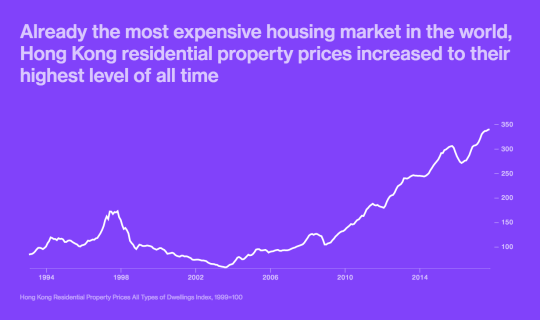
    It’s that time of year again. Time to get contemplative about the last year. Bloomberg recently posted this: 2017 – The Year in Money. Below is a capture from the real estate section.

    Here you can see the run up to the 1997 Asian financial crisis and also the Hong Kong “handover”. Initially, I thought the uncertainty of the handover would have reduced demand, but I guess there were other factors.

    According to the book Hong Kong 20 Years after the Handover, the property and stock markets at the time were being fuelled by high inflation and low interest rates. This made real interest rates negative and created a strong incentive to borrow and invest.

    I love seeing longer range indices because it helps to put things into perspective. If you started your career in real estate in Hong Kong around 2003-2004, you might think that prices generally always go up. 

    But consider how long it may have taken to get back to where you were if you had instead bought at the peak of 1997-1998.

  • A money back guarantee on your next home

    image

    I’ve written about Opendoor.com a few times. As far as I can tell, they are the furthest ahead in terms of disrupting the residential real estate market. So I like to follow them quite closely.

    They’ve recently launched some new features, so I figured it would be a good time to check-in on what they’re up to. But first – for those of you might not be familiar with Opendoor – here’s what they do.

    Opendoor offers instant liquidity to homeowners by buying homes site unseen. The fee they charge seems to amount to less than 10% of the value of the home. 

    They also say that they typically offer prices that are about 1-3% less than the market value of the home 3 months into the future. (Apparently 3 months is the average time-on-market for the cities in which they operate.)

    Once they’ve bought the home, they then make improvements and put it back on the market. As of today, they are buying about 10 homes a day in the two markets in which they operate (Phoenix and Dallas). They are spending about $75 million a month buying homes.

    To mitigate their risk, they won’t buy a home built before 1960, a home that was pre-fabricated, a home with a solar lease, and so on. They also stick to values that are between $100,000 to $600,000. But apparently this covers off about 90% of homes in the United States. (You can read their full FAQ here.)

    To accomplish all of this, they have raised about $110 million in venture capital.

    What’s fascinating about all of this is that they are starting to create a seamless marketplace. As they continue to buy more homes (and aggregate supply), more buyers are starting to come to their marketplace. They also allow people to easily find local contractors.

    Over time as they gain scale and as their algorithms improve, one could imagine their pricing becoming more competitive, them taking more of the market, and them bearing much less market risk as homes quickly trade. 

    They liken their model to car trade-ins. Apparently 60% of people who buy a new car are trading in an old one. That’s an interesting comparison that I hadn’t thought about before.

    So what’s new?

    Two things

    First, they are offering a 30 day full refund on new home purchases. In other words, if you buy a home through their platform and, for whatever reason, you end up not liking it, they’ll buy it back (minus some transaction costs and so on).

    Second, they are providing a 180-point inspection report to buyers and if anything breaks in the first two years of ownership (presumably it is something that contravenes the inspection), they’ll come and fix it.

    These additions are helpful because it starts to target buyers, which will help them fill out the other side of their marketplace. It also promotes greater transparency because now they’re partially on the hook for the home’s performance.

    I like what they are doing and, again, I can’t think of any other company making such big bets in this space.

  • Prime property appreciation around the world

    Every year for the last decade, Knight Frank has published something called The Wealth Report. I’ve written about it before, but it’s basically a look at “prime property” and global wealth.

    As part of the report, they have something called the PIRI 100. It’s their “Prime International Residential Index”, which looks at luxury residential property prices around the world. They generally define “prime property” as being the top 5% of each market according to value.

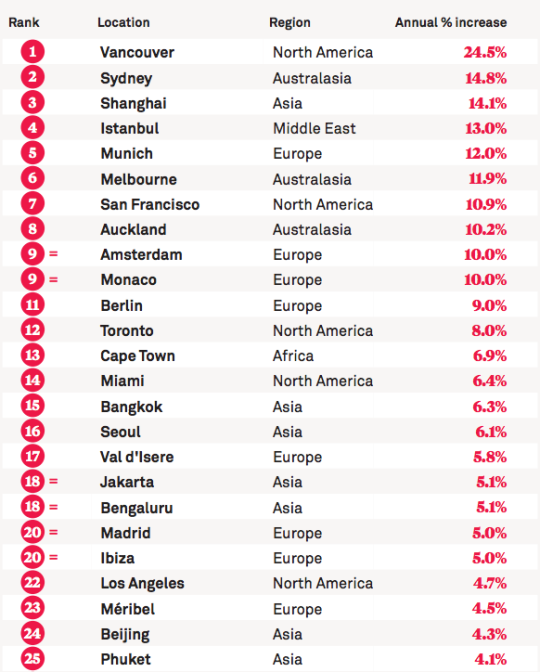
    This year, the top 25 locations in their PIRI 100 are as follows (for the most part, the data is up to December 2015):

    image

    Here in Canada, we like to talk about the insanity of the Vancouver and Toronto real estate markets. This list helps to put that into perspective. Even by global standards, Vancouver is at the top of the pack by quite a significant margin. 

    It’s worth noting that since this is a “prime property” index, it’s pretty safe to assume that the buyer profiles for these sorts of properties would have a significant international bias. So in a way, this list is really about global capital flows.

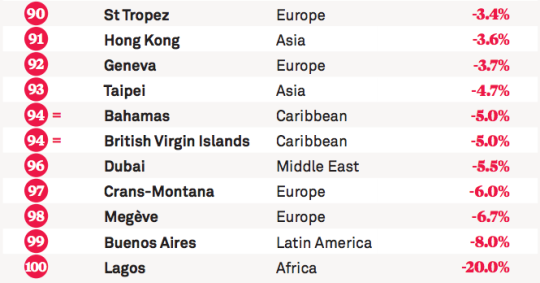
    Here are the bottom 10 locations on this year’s list:

    image

    If you’d like to see the full list, click here.

  • The biggest international buyers of American homes

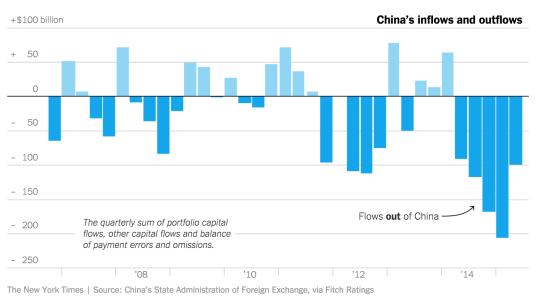
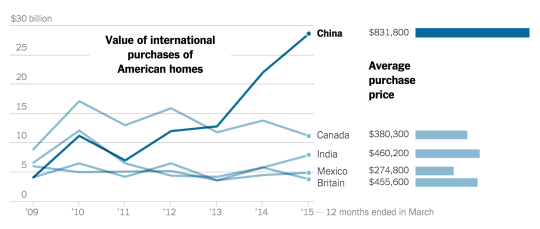
    A reader recently sent me a New York Times article talking about Chinese buyers flooding into the US residential real estate market. This is something that I’ve written about before, but I liked the “graphic” section called The Roots of China’s Real Estate Rush.

    Here are two of the graphs:

    imageimage

    The second chart shows you just how much more significant Chinese buyers are compared to the next biggest foreign customer of American homes: Canadians. And with the Canadian dollar where it is, it is no surprise that we are trending downwards. That doesn’t seem to be the case with the Chinese.

  • The Philadelphia (real estate) story

    Real estate is a local business. And this weekend in Philadelphia really reminded me of that.

    Here’s what I mean.

    The real estate story in Toronto is condos. We’re buildings lots and lots of condos. When my friend from Chicago recently visited Toronto for the first time, he told me that it feels very similar to Chicago, except that we have modern glass condo towers going up everywhere and they don’t. That’s our story right now.

    Low-rise housing in Toronto is becoming increasingly unaffordable (the average price of a detached home is well north of $1M) and so high-rise condos are now what many people can afford. When young people in Toronto talk about buying their first place, that now usually means a condo.

    But that’s not the story in Philadelphia.

    In Philadelphia, you can buy a 1,600 square foot, 2 storey, 2 bedroom rowhouse in a respectable neighborhood for sub US$400,000. And in speaking with my friends in Philly this weekend, that’s what young people are buying.

    This doesn’t mean that Philadelphia isn’t building new high-rise condos and apartments. It is. Obviously nowhere near as many as Toronto. But it is building. Far more than when I lived there before the Great Recession.

    However, the condo market is typically more upmarket. The target market isn’t so much first time buyers and the mass market; it’s more people who want full floor apartments in Rittenhouse Square. (I’m exaggerating only slightly.)

    Philadelphia is also building more rental towers than condo towers. (Rental has only recently become fashionable again in Toronto.)

    I’m guessing that a lot of this has to do with the fact that Philadelphia draws in a lot of transient students and academics each year. In fact, the most noticeably changed area from when I lived in Philly was University City. That’s the area that houses the University of Pennsylvania and Drexel University.

    So there seems to be strong demand for new rental housing in the city. I’m told vacancies are very low. But when it comes time to buy, young people don’t look to condos like they do in Toronto. They are looking mostly to rowhouses.

    This is interesting to me because it’s the exact opposite of Toronto. In Toronto, low-rise is expensive and so lots more people are buying high-rise. In Philadelphia, high-rise is expensive and so people are buying low-rise.

    I guess that’s why they say real estate is a local business. What works in one city may not work in another.