Daily insights for city builders, delivered every morning at 6 AM ET. I’m Brandon Donnelly — a Toronto-based real estate developer and founder of Globizen. I’ve been writing here since 2013.

Tag: rental market

  • Q2 2021 rental market update for the Greater Toronto Area

    The Greater Toronto Area builds a lot more condominiums than purpose-built rental units. This isn’t the case everywhere though. I was recently reading an article about Salt Lake City and how developers there don’t want to build condominiums. It’s mostly rental housing. There’s simply too much risk and liability with condominiums. I guess this is one of the reasons why real estate is often said to be a local business.

    In any event, because of this dynamic in Toronto, condominium rentals are often used to measure the health of the overall rental market. There are simply more recent comparables to point to when you’re trying to figure out what is “market.” The Toronto Regional Real Estate Board recently published its Q2-2021 rental market report and here is what they found when it comes to condominium apartment rental transactions in the Greater Toronto Area:

    Q2-2021 – 14,920 transactions

    Q1-2021 – 13,168 transactions

    Q2-2020 – 7,300 transactions

    What this report tells us is that rental demand is returning. Transactions and rents are up compared to the first quarter of this year and certainly compared to Q2 of last year (2020), which was the low point of this pandemic. We are not yet back to where we were in Q1-2020 when the city was firing on all cylinders, but I have no doubt that we will get there and ultimately surpass those figures.

    For the full rental market report, click here.

    Photo by Narciso Arellano on Unsplash

  • VIA 57WEST in New York starts renting apartments

    image

    Bjarke Ingels’ West 57th Street project in New York (developed by The Durst Organization) has just started renting apartments (March 1). 

    Since I’m in the rental business, I thought it would be worthwhile to take a look at the rents – though I tend to obsess over all buildings and not just rental ones.

    Firstly, the project has a total of 709 apartments and 178 different unit types because of the architectural variations in the building. Of these units, 142 of them (20%) have been designated as affordable and were offered up via a lottery to people who fall within certain incomes ranges. 

    Here are the affordable rents via 6sqft.com:

    image

    I don’t know the exact numbers, but Curbed New York speculated – based on what was seen at other buildings on the west side – that the total number of applicants for these 142 units may have reached over 100,000!

    For the market-rate units, the average monthly rents are as follows (via Curbed NY):

    • Studio: $2,770
    • One-bedroom: $3,880
    • Two-bedroom: $6,500
    • Three-bedroom: $11,000
    • Four-bedroom: $16,500

    I wasn’t able to find average unit sizes (to calculate per square foot rents), but I estimate the overall average unit size to be around 1,000 square feet. 

    940,000 sf (total gross floor area)45,000 sf of retail x 0.80 efficiency (lower than average because of the shape of the building) / 709 units = approximately 1,000 sf of rentable area per unit. That’s just my rough guess based on what I could find online.

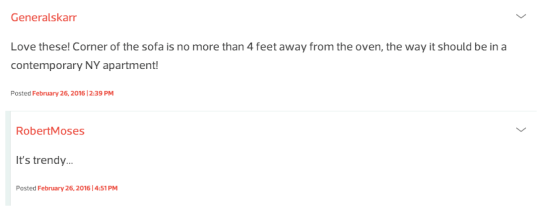
    Based on the Curbed comment section though, there are certainly some smaller units:

    image

    If anyone has any additional figures, please share them in the comments below. I think there are a few subscribers to this blog who are involved in the project.

    Image from via57west.com

  • When rent control goes too far

    I was catching up with a friend of mine over coffee this morning and he was telling me about his recent trip to Porto, Portugal. I’ve never been, but it’s fairly high up on my list of places to visit.

    He was telling me about how beautiful the center of the city is and how it’s a UNESCO World Heritage Site. But he was also telling me how eerie it was to see so many abandoned and decaying buildings.

    And part of the reason for this – I learned – is that up until fairly recently, Portugal had some incredibly onerous pro-tenant rent controls in place that dated back to the beginning of the 1900s.

    In fact, they were so onerous that, by some estimates, roughly 150,000 households in Portugal were paying less than €50 per month in rent before the laws were changed!

    Because of this, landlords in many cases could not, and cannot, actually afford to maintain their properties. Buildings were left to decay, and in some cases they were completely abandoned. That was their only option. And it led to a virtually non-existent rental housing market (according to the IMF).

    Clearly, this is a problem. If you have a market distortion as serious as this one – where there’s virtually no incentive to invest – you’re on a highly unsustainable economic trajectory.

    Which is why when Portugal received its bailout package from the International Monetary Fund and European Union following the 2008 financial crisis, it was asked to reform its rent control laws – which it agreed to do.

    The hope was that the reforms would allow Portuguese landlords to charge more reasonable and market-oriented rents, as well as do other crazy things like evict tenants that don’t actually pay their rent. Not surprisingly, many fought the changes.

    I don’t know precisely how these reforms have ultimately played out in the market over the past few years (if you do, I’d love to hear from you in the comments below), but I do believe that liberalization of the market was, and probably still is, needed.

    While paying €5 a month for a 4 bedroom apartment in a desirable central neighborhood might be great for that one individual family, it’s not so great for the economy as a whole. And ultimately that comes around to impact even that household.

    Image: Flickr

  • Q&A on Toronto’s condo rental market

    Earlier this week I connected with a Ryerson student doing a piece on Toronto’s condo rental market. She emailed me and asked if I would mind answering a few questions. Here are my responses.

    Generally speaking, why is Toronto continuing to see such a rapid increase in the number of condos in development? 

    A lot of what we’re seeing is policy driven. It stems from the Places to Grow Act and the continued push towards intensification. It actually mirrors a similar boom we saw in the 70s. In both cases, it was policy driven and the market responded.

    The other factor is a growing consumer preference for more walkable and urban neighborhoods. People are sick of long commutes and so we’re seeing a return to city centers and downtowns. This is happening across all demographic segments, though Millennials and Baby Boomers seem like particularly strong ones.

    Is that boom, and the consequent rush by developers to create new units for rapid sale, affecting the quality of design and accessibility in new condo developments in Toronto?

    When you have a hot market, you’re going to get lots of people rushing in and trying to make money. Whether it’s real estate, tech or some other industry, it’s to be expected. And I’m sure it impacted some projects negatively. But that market is gone in Toronto.

    And regardless of the pace of development, there will always be varying degrees of quality across builders. The unfortunate thing for consumers is that it’s not always easy to tell which is which.

    One of the things we’re trying to do (at TAS) is integrate consumer education more into our sales and marketing programs. Mechanical equipment, as one example, isn’t the most exciting thing to to talk about, but we want consumers to know what they’re buying into.

    Prices are rising (you could buy a house outside the city for the price of some of Toronto’s tiny bachelor units, if I’m not mistaken…) – So what is making condo ownership so desirable in spite of the high cost relative to space? 

    Again, it’s being driven a lot by lifestyle. People want walkable communities, they want to be close to amenities and they want to drive less. And they’re willing to give up space for that. 

    When considering and comparing the cost of a home, I think it’s important to consider some of the indirect costs, such as transportation costs, travel times, quality life and so on.

    Sure a home in the suburbs may be a lot cheaper, but what’s my total, all-in, cost? If you need to own 2 cars and you spend 2 hours commuting everyday, there’s a real cost to that. If you place a big value on your time (as I do), the cost equation isn’t so skewed all of a sudden.

    Are more people choosing to live in rental condos instead of buying, because of the inaccessible cost? If so – why are we still seeing so many new ‘rental condo units’ being built, rather than purpose-built apartment units?

    Condos are being built because, in most cases, it’s the highest-and-best use for the land. It’s the most profitable. And investors have been more than willing to step up and fill the rental needs of the market. But with the condo market now coming down from record levels, I wouldn’t be surprised if we start seeing more purpose-built apartments.

    Would you say that the majority of condo rentals on the market are owned by foreign investors who depend on building management to liaise with renters? If so, why are they choosing to buy units in Toronto?

    I have no idea. It’s even hard to tell how many units are just investor owned, let alone local versus foreign. Because there are tax implications if you don’t owner occupy a unit, buyers have an incentive not to disclose. Overall, I find it problematic that the marketplace is so opaque. I wish there was a way to bring perfect information.

    With respect to why they choose to buy in Toronto, there are a bunch of reasons. Real estate has been a phenomenal investment in Toronto over the past decade and that’s attracted a lot of investor attention. There are also segments that just want capital preservation in a safe and stable country. Even without great returns, that’s a valuable proposition for some foreigners. And of course, Toronto is a great city. Talent wants to live here and that’s important.

    Generally speaking, is there a certain LOCAL demographic (ie, boomers, post-boomers) that are investing in condos for the purposes of renting them out? What makes that investment so desirable?

    Again, there isn’t great data on this. 

    What I will add to the investor topic is that, despite the fact that investors often get a lot of flack, they do serve two important needs in the marketplace for both developers and consumers. The first one we’ve already talked about. Investors provide rental housing in Toronto at a time when few, new, purpose-built rental apartments are being constructed.

    The second one is that investors help to get projects under construction and built. I’ve heard one developer refer to them as providing a kind of short-term financing. Because consumers don’t always want to commit to a unit that might be built 4-5 years out, developers rely on investors to buy pre-sale units so that the project can get underway. Once construction is complete, these units then often get sold to end users who are now ready to commit and move in.