Daily insights for city builders, delivered every morning at 6 AM ET. I’m Brandon Donnelly — a Toronto-based real estate developer and founder of Globizen. I’ve been writing here since 2013.

Tag: real estate

  • Speed, price, and quality

    Project-triangle.svg

    Project-triangle” by Cosmocatalano – Own work. Licensed under CC0 via Wikimedia Commons.

    When I was in business school, one of my friends – who runs his own agency – explained to me the Project Triangle and the “pick any two” philosophy. 

    Whether you’re building a building or building a mobile app, projects can be typically broken down in terms of 3 constraints: speed, price, and quality. The “pick any two” philosophy is that – because these dimensions are interrelated – you can only really get 2 of these dimensions at any one time.

    So for example:

    • If you want a project done really quickly and you want it to be high quality, then it’s not going to be cheap. It’s going to be expensive.
    • If you want something done really quickly and you want it at the lowest price possible, then it’s not going to be high quality. It’s going to be low quality.
    • Finally, if you want something high quality and you want it done cheaply, then it’s not going to be done quickly. You might get it done, but it will be deprioritized by whoever is doing it.

    Few things in life are truly black and white, but I really like this framework. It acknowledges the fact that something has to give. It’s unsustainable to think you can always get super fast, high quality work at rock bottom prices.

  • From seigneurial land tenure to condominium plans

    One of the things I noticed this past weekend when I was on my Porter Escape in Quebec City was that there’s still evidence of the seigneurial land use system. I saw it on île d’Orléans.

    Established in 1627 in New France, the seigneurial system was a feudal way of distributing land and creating subsistence farming for those who occupied it. It was ultimately abolished in 1854, but you can still see vestiges of it.

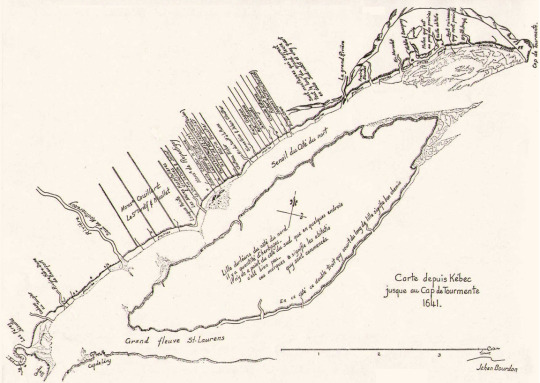
    With the seigneurial system, a typical farming lot was a long and narrow strip of land emanating from the water, which in this particular case was the St. Lawrence River. Here’s a map from 1641 showing what that looks like:

    image

    The reasoning behind this spatial arrangement was rather simple. By having long narrow lots, it meant that you could maximize the number of farmers who had direct access to water. This was needed for navigation, but also for many other obvious reasons. This was an efficient layout.

    At the same time, the long strips meant that each farmer had access to a broad cross section of different kinds of land. They had fertile land for growing, land for their home, and frequently land with trees so that they had material to build, fuel to burn, and so on. It also meant that, despite the overall lot sizes, people actually lived fairly close to each other. It created communities.

    Of course, there’s a lot more to the seigneurial system than just its physical form and there are reasons it was eventually abolished. But today I just want to focus on spatial layout. Because I think there are parallels to how we continue to plan our communities.

    If you live in a city you’ve probably come across a narrow rowhouse, a narrow townhouse, and/or a long and narrow condominium – which many people like to pejoratively refer to as a “bowling alley” plan. In these cases, the width of the home could be somewhere between 10 and 13 feet.

    If you stop and think about this, it’s exactly the same spatial principles as the seigneurial land use system. But instead of maximizing the number of people with access to the St. Lawrence River, it’s about maximizing the number of people who front onto the street and who have access to natural light.

    In tight urban conditions, it’s not uncommon to have no “side yard windows.” In my case, I live in a condominium with 20′ feet of windows on one side only. The other 3 sides of my box have none. And that’s a fairly common urban condition.

    I find this interesting because as much as the world is rapidly changing, some things don’t actually change all that much.

    Image: Wikipedia

  • Architect This City x Porter Escapes (in Québec City)

    Towards the end of last year I received a one line email from a reader asking me what I thought about Porter (the airline that operates out of Toronto’s island airport downtown).

    I followed suit and responded with one line: “I’m a big fan.” I then pasted a few links to posts I had written where I talked about Porter, the island airport, and why I think they are good for Toronto.

    It turns out that was the right answer 😉

    Because today I’m excited to announce a fun collaboration between Architect This City and Porter Escapes. This weekend I get to explore Québec City and do something I love to do, which is photograph cities, think about cities, and write about cities. (And eat poutine.)

    Here are my travel essentials for the weekend (I wish it was a better photo):

    image

    The first thing I should tell you though is that Porter Escapes is different than simply Porter. Porter Escapes is their “packaged vacation” company, so it’s designed for people who want a simple way to book entire getaways (flight, hotel, activities, and so on).

    In my case, I’m going to be staying at the Château Laurier. I also have a bunch of activities planned out for Saturday during the day. Stay tuned.

    I had initially planned to squeeze in some snowboarding at Le Massif and try out the nicely branded train that goes from Québec City right to the mountain. But my back and shoulder are still tender from my spill in Banff.

    Still, I hope you’ll follow along on Twitter, Instagram, and Snapchat, and using #PorterEscapes. And if you happen to be in Québec City this weekend, let’s grab a pint and poutine.

    I’ve also been told that Porter Escapes will be launching a special promotion over the next few days for escapes specifically to Québec City.

    Note: I’m supposed to tell you that it’ll be at a price point that you should never expect to see again (i.e. it’ll be a steal).

    Happy Friday 🙂

  • Towards more publicness

    Back when the commercial internet first started to take off it was uncommon to use your real name online. Instead people relied on usernames and other pseudynoms to represent themselves. I honestly can’t remember what I used in those days, but I’m sure it was something ridiculous.

    Over time though that started to change. 

    Blogging started to take off in the late 1990s. And we started to become more comfortable sharing personal information online. Perhaps the biggest shift though, came with the introduction of Facebook in 2004 (over 10 years ago!). All of a sudden people – young college students initially – started sharing lots of personal information online, including photos of themsleves and their friends.

    But this wasn’t an overnight change. When Facebook first launched, privacy was an important component. It still is, but I would argue that it has become less central given how public a lot of other social media platforms are today. Twitter, for instance, is what it is today largely because of its publicness. 

    For my own social media accounts, I have made every single one of them completely public. From Twitter to Facebook to Instagram to Snapchat, nothing I post to social media is restricted in any way. And I do that because I believe we are headed towards a world with more – not less – openness, transparency and publicness.

    Of course, I’m not just talking about social media and tech. I’m talking about open data in general.

    Earlier this year, the Toronto Real Estate Board clamped down on real estate brokers who were publishing historical sales data online. Citing privacy concerns, TREB ordered them to stop or lose their access to the MLS system. 

    For those of you not from familiar with the Toronto real estate market, historical sales data for homes is not open and published online. You generally need to go through a realtor to get access to this data. Some think this is the right approach. And others think it is antiquated.

    But as I explained above, our conception of what should be private can, and will, evolve over time.

    Here are the details on my home:

    I purchased it in September 2012 for exactly $400,000 (Canadian). It’s a 650 square foot condo in the St. Lawrence Market neighborhood of Toronto. It has one bedroom, a 400 square foot terrace, one parking spot, and 10′ ceilings.

    Sooner or later, I believe this information will be freely available online. But since that’s not the case today, I figured I would just tell you. Sharing this information is not a big deal for me.

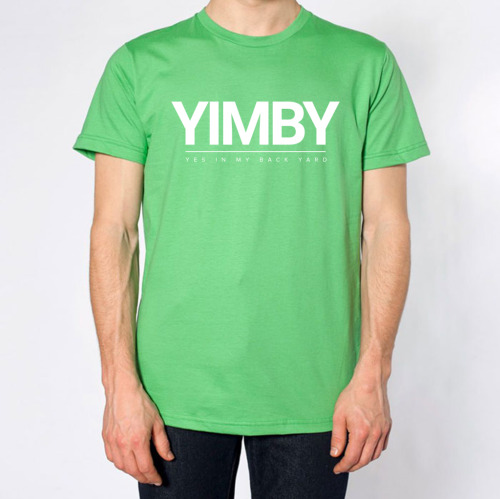
  • I’m giving away a free Architect This City t-shirt

    I’m giving away a free t-shirt on April 1st, 2015 exclusively to Architect This City subscribers. There’s no catch. And no this is not an April Fool’s joke! I just want to say thanks to the people who read ATC on a regular basis. It’s that simple.

    So how does it work?

    1. You need to be an Architect This City email subscriber (either daily or weekly). If you’re not yet a subscriber, you have until midnight on Tuesday, March 31st, 2015 to make that happen. You can do that by clicking here. It’s free.
    2. You need to visit architectthiscity.com and pick the t-shirt you want. There are currently 5 different ones to chose from (the original ATC tee comes in both ATC orange and black).
    3. Finally, you need to leave a comment at the bottom of this post telling the community 2 things: which t-shirt you want and your favorite thing about your own city. That’s it.

    On April 1st I will randomly select somebody from the comments, check to see if they’re a subscriber, and then send them a free t-shirt.

    Simple, right? I’m really looking forward to giving away a t-shirt.

  • Cities without people

    Some people believe that cities are all about bricks and mortar. While other people believe that they are first and foremost about people. Though I wholeheartedly believe that our built environment has a profound affect on our lives, I am in the latter camp. 

    Real estate to me is an outcome. It is the result of people needing space. A new condominium is built because people need a place to live. A new office building is built because somebody built a great company and it needs to house its growing workforce. So at the end of the day, what is a city without people?

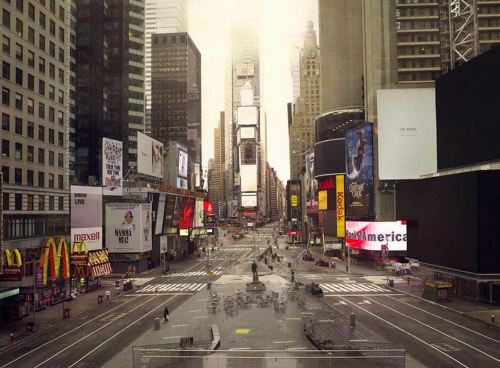
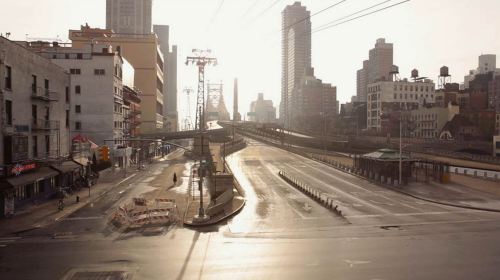
    Perhaps the best way to demonstrate this point is to show you what cities look like without them. This morning I stumbled upon an interesting series of city photographs where almost all of the people have been removed. They are by artists Lucie & Simon and the project is called Silent world.

    The top image is Times Square and the bottom image is Queensbridge in New York.

    Images: Lucie & Simon

  • Reading between the lines of a midtown triplex

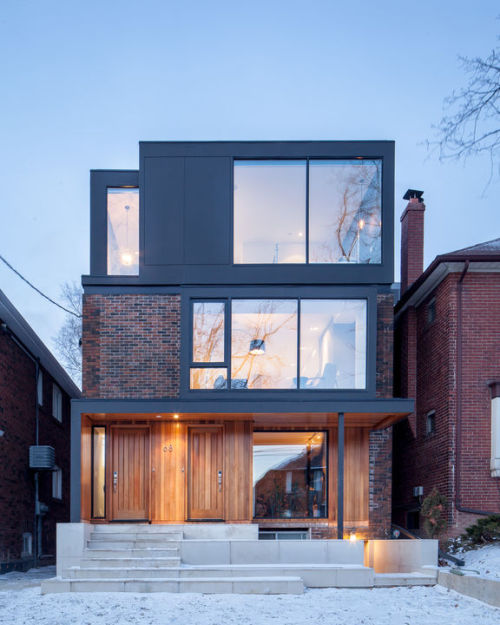
    A few days I retweeted the above home from Dwell Magazine. Then yesterday I was driving through midtown Toronto and I stumbled upon it. And that got me thinking more about this kind of project.

    The house is a triplex with, presumably, one unit in the basement, one unit on the main floor, and one unit across the 2nd and 3rd floor. The existing detached house was only 2 storeys and so a third floor was added to create what is likely the “owner’s suite.”

    It’s not uncommon for many of the houses in central areas of Toronto to be converted into duplexes and triplexes or to flip back into single family homes after being subdivided for rentals. It goes to show how adaptable the single family house can be.

    But it’s not everyday that you see such a high end triplex being built as, what seems to be, a permanent residence and kind of dream home for the owners. Historically, when people built their dream home it has meant a single family home.

    This might not seem like an important distinction, but I think it demonstrates a growing acceptance of intensification within low-rise single family neighborhoods.

    Part of this I’m sure has to do with rising housing costs. But I think it also has to do with valuing location over raw space and with an acceptance of urban density.

    I don’t know about you, but I would have no concerns with permanently laying down roots in a house like this. It’s beautiful.

    Image: Dwell

  • 3 risks that real estate developers face

    Photograph 'Jailhouse Rock' by Michael Hill on 500px

    ‘Jailhouse Rock’ by Michael Hill on 500px

    Real estate development is a risky game. So much so that some people in the business like to say that their primary function is to mitigate risk. 

    Today I’m going to focus on 3 risks that developers face. There are, of course, others risks, but these are some of the biggest. Some people might also categorize them differently, but this is my simplified way of thinking about it.

    The first risk is approvals. Oftentimes in development you need some sort of special permissions to build what you hope to build. These permissions come in many different forms, but whatever the case may be, there is risk associated with this part of the process. 

    What happens if you’re not able to build what you were hoping to build? Is the project still feasible? Do you have a viable plan B? Did you budget for a redesign? Have you now overpaid for the land? There’s a lot of uncertainty in this phase and uncertainty generally means risk.

    Assuming you’re able to obtain your entitlements (this is more of an American term), the next big risk factor is the market. Can you sell or lease out the space that you’re about to build and can you do it at the rates you were assuming when you acquired the site? 

    In a bull market this isn’t usually a problem. In fact, prices and rents may actually exceed your early assumptions. But what if you bought the site in 2006 and now it’s 2008 and you’re hoping to go to market. Now you might be in trouble. In business school I learned to do sensitivity analyses and stress tests. How far does the market need to drop before I lose my shirt? Those are good exercises to do in development.

    Assuming though that the market holds up and you’re able to pre-sell and/or pre-lease your new project and obtain financing, you would then be ready for construction – another big risk. This is why many developers bring construction in-house. It’s them trying to exercise more control over the process and mitigate risk.

    Construction is messy both literally and figuratively. There’s a lot to consider. 

    Are the drawings that you’re using to buy construction properly coordinated? Because if they’re not, you’re going to pay for it later. Is that Chinese curtain wall a great bargain or are you going to end up on a flight to China when it never shows up on your construction site? Are the trades hungry for work or are they busy? If it’s the latter, you’re going to get higher prices. And oftentimes there’s nothing you can do about it. You’re just buying construction at the wrong time.

    But we all know that with risk there’s reward. So if weren’t for all these risks, real estate development just wouldn’t be the same. 

    If you’re in the business, what keeps you up at night? Did I miss something? Let us all know in the comment section below.

  • Are we becoming more or less entrepreneurial?

    Aaron M. Renn of The Urbanophile, recently wrote an interesting article in Governing called, Where’s America’s Entrepreneurial Economy? In it, he argues that despite the fact that there’s a perception that entrepreneurship is on the rise, overall rates are actually declining.

    The Brookings Institution found that so-called “firm entry rates” have declined since the 1970s and that they suffered a steep fall post-2005. And though millennials are often seen as an entrepreneurial generation, The Wall Street Journal reports that business ownership among those under the age of 30 recently hit a 24-year low. Self-employment has seen a similar downward trend. A study by Economic Modeling Specialists International found that both the total number of self-employed and their share of jobs have fallen since 2006.

    His argument is that outside of tech — where yes, the barriers to entry have fallen significantly over the years — it has actually become harder to start a company in a lot of other cases. And he specifically mentions two industries where he believes that is very much the case: construction and real estate.

    Why is that?

    Well, he cites a number of possible factors, one of which is increased licensing requirements for many industries. But the two most interesting for me are slow disruption cycles and the presence of large dominant firms.

    Real estate has both of those. 

    It’s also a capital intensive industry. And it’s becoming harder for smaller private players to compete with larger institutions and pension funds who struggle with “moving the investment needle”, not with access to capital. Real estate is no longer the fringe asset class it once was.

    In contrast, you have the tech space with fast disruption cycles and low barriers to entry. Yes, you also have large dominant players (Apple, Google, Facebook, Amazon, and so on), but even they don’t have complete immunity in an environment where new ideas frequently trump access to capital.

    A culture of entrepreneurship across all industries is important for our society. I hope we never lose that.

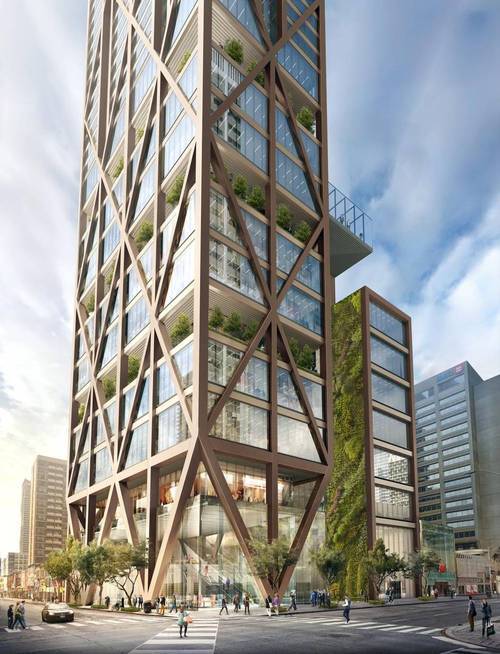
  • What do you think of 1 Bloor West? [Poll]

    image

    Over the past few weeks I’ve been running a little experiment on Twitter where I tweet about a new development project in Toronto and I ask people to vote on it. If they like the project, I ask that they retweet (RT) it. And if they don’t like it, I ask that they favorite it (FAV).

    Here’s what it looks like in tweet form:

    As you can see from this experiment, about 69% of the people who participated seemed to be in favor of this project (at least at the time of writing this post). That said, the discussion following this tweet was a lot more negative than I would have expected.

    Somebody also pointed out that in my experiment I’ve created a bias towards supporting the project, since a retweet means the project gets shared, whereas a favorite doesn’t do that. I would argue that the more distribution the better for an accurate consensus, but point taken.

    So today I thought I would do this same experiment here on Architect This City. 

    At the bottom of this post, I’ve featured a comment from myself asking if you support the 1 Bloor West project. If you like the project, I ask that you “up vote” my comment. And if you dislike the project, I ask that you “down vote” it. You can do so by using the up and down arrows towards the bottom left of the comment.

    Hopefully this hack will create a more neutral voting framework. I hope you will participate. If you’re reading this via email, you’ll need to open up the post in your browser by clicking “read more” at the bottom.

    If you’d like to learn more about the project before voting, check out this article from the Globe and Mail. Happy voting!