Daily insights for city builders, delivered every morning at 6 AM ET. I’m Brandon Donnelly — a Toronto-based real estate developer and founder of Globizen. I’ve been writing here since 2013.

Tag: quayside

  • Sidewalk Labs, Uber, Lime, and the demise of urban density

    Today I am going to talk about 3 things that recently happened and/or that are on my mind.

    Sidewalk Labs pulled out of Toronto. I think this is sad. A lot of people have said that they’re surprised, but not surprised. The official reason is that this unprecedented environment has made it financially infeasible for them to develop the 12-acre site, while still adhering to their core principles. I don’t have any inside knowledge of the situation, but I can’t help but think that this is probably just an opportune excuse. They were getting beat up pretty badly by Toronto on all fronts, even though they had put forward an incredibly ambitious development proposal. As I said before, I can’t imagine many (or any) “conventional” developers coming forward with something like this. The last plan I saw was 1/3 non-residential, and 40% of the residential component was to be priced below market. And never mind all of the other innovations that were being contemplated.

    In other tech news, Uber just led a $170 million investment in Lime (the micromobility scooter company). I think this is smart — both from an overall mobility standpoint and, selfishly, as a shareowner of $UBER. It is being reported that this round of investment values Lime at about $510 million. This is a 79% decline from April 2019 when it raised its last round. So presumably, Uber is getting a pretty good deal here. The bet is that the urban landscape demands multi-modal transportation solutions, everything from bikes and scooters to cars and public transit. There is also an argument to be made that in the short-term, our post-pandemic world is going to gravitate toward individual mobility and away from things like public transit. I’ve heard a few people say that, as we re-open the global economy and try to maintain social distancing, we’re going to face two major mobility bottlenecks: transit and elevators. Sounds like more testing would be a prudent idea.

    Above, I was very careful to say “in the short-term” because I think the narrative that is emerging around the demise of urban density is entirely overblown. Few of us are clamoring to jump back into a mosh pit right now (perhaps a metaphorical mosh pit), but I also don’t believe that we will suddenly look to sprawling Brasilia as a source of urban inspiration. While it is true that “disease did shape architecture in the 20th century” (Alex Bozikovic wrote a good piece on this over the weekend) and that there have been oscillations in terms of how we view urbanity, I also know that this isn’t the first pandemic that our cities have lived through. The Hong Kong flu of 1968 is thought to have killed one million people around the world after, allegedly, emerging in one of the densest cities ever created. Hong Kong’s relationship with Beijing is a tenuous one right now, but it still remains one of the world’s most important global cities.

    Perhaps cities are more resilient than we give them credit for.

    Photo by Touann Gatouillat Vergos on Unsplash

  • Sidewalk Toronto advances to the next phase

    In June of this year, Sidewalk Labs released its draft Master Innovation and Development Plan (MIDP) for Toronto’s eastern waterfront. I wrote about it here. It was a draft document that was subject to further discussion and refinement, with October 31, 2019 being an important deadline for a lot of that to happen.

    Some of the critical issues included project scope (just Quayside?), the possibility of a Waterfront LRT (needs to happen), data governance (who owns and manages the data that will be generated by this new smart city?) and, of course, land value. How much is Quayside worth?

    A number of these key issues have now been “realigned,” including the land value piece. Waterfront Toronto and Sidewalks Labs have agreed on a fair market value of $590 million (before accounting for any investments that will be required in order to achieve Waterfront Toronto’s goals).

    For a summary of the critical issues and what has been agreed to, click here. With these items now firmed up, Waterfront Toronto’s board voted unanimously to proceed to the next phase. The next critical date is March 31, 2020, which is when the project will seek final approval. Mark your calendars.

  • Sidewalk Toronto releases draft site plan for Quayside

    Yesterday Sidewalk Toronto released its draft site plan for Quayside. Here’s what it looks like:

    There’s a big emphasis on people-first streets and on the public realm. I like the idea of a waterfront plaza at the tip of the Parliament slip and of a floating walkway bridge to Promontory Park (bottom right hand corner of the above image).

    There are also a number of more enclosed pedestrian laneways and courtyards, which I am sure will result in more favorable microclimate conditions. That matters, especially on the water.

    Here are some high level project stats:

    • All mass timber construction
    • Five “sites”
    • Buildings ranging from 3 to 30 storeys
    • 68% residential (40% of the residential will be below-market, with 20% being affordable and 5% being deeply affordable)
    • 20% commercial
    • 15% flex space (retail, production, arts, community)
    • ~2,500 residential units

    A full copy of the draft site plan can be downloaded, here.

    Image: Sidewalk Toronto

  • Preliminary design ideas for Toronto’s Quayside

    Last week Sidewalk Toronto held a roundtable discussion here in the city and released some preliminary design ideas and strategies for Quayside. (That’s why Dan Doctoroff was talking on BNN Bloomberg.) 

    I went through the full presentation this morning and below are a bunch of slides that I thought you all might find interesting.

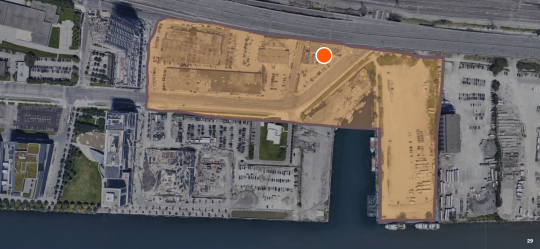
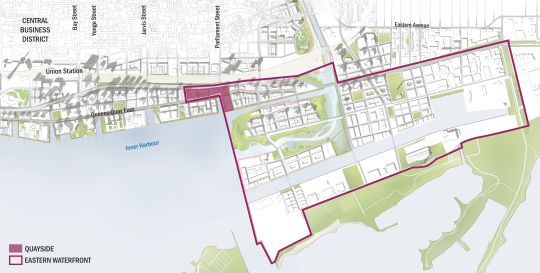
    Here is the extent of “Quayside” along the waterfront. The current land use permissions allow for about 3 million square feet of space and towers as tall as 50 storeys.

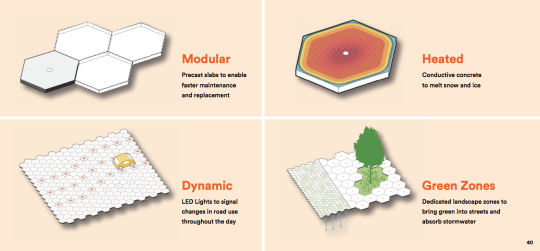
    Here is a paving system being explored for the area. It is modular. It may melt snow. And perhaps most interestingly, it would allow for dynamic changes in road use throughout the day. This sort of thing already happens to a lesser degree on streets like Jarvis. This technology could take that much further.

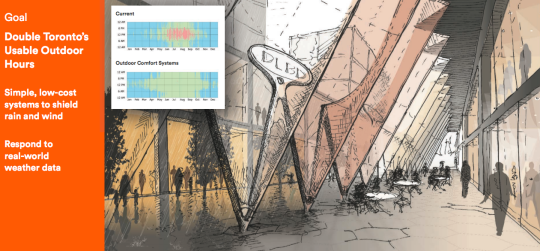
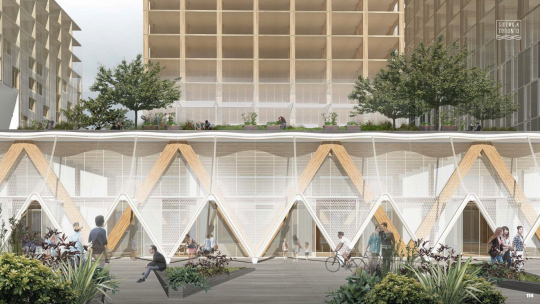
    One of their primary goals is to double Toronto’s usable outdoor hours. To do that, they are proposing simple weather shields (pictured below) and weather-responsive systems.

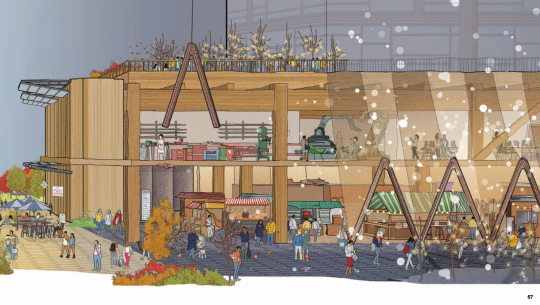
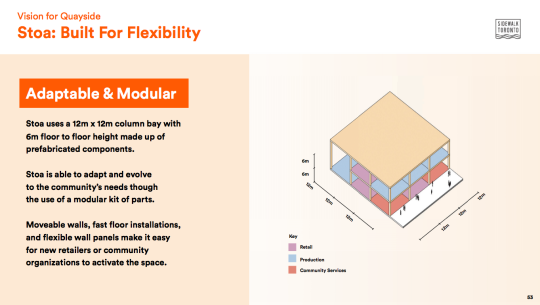
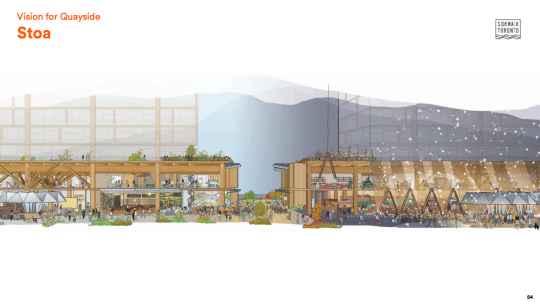
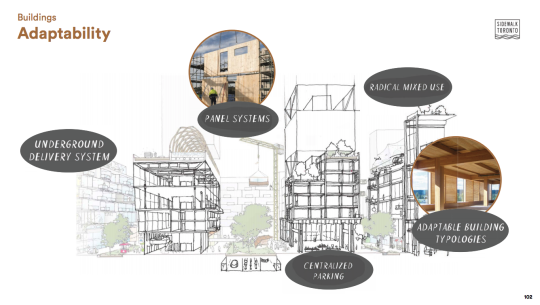
    They are spending a lot of time thinking about the ground floor of buildings, which they are calling Stoa. The idea is to create flexible and porous spaces that respond quickly to changing needs and that integrate more seamlessly with the surrounding public realm.

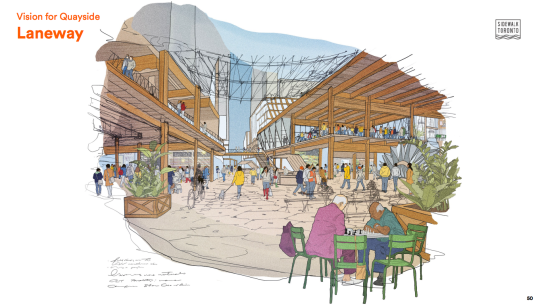
    There’s a lot on the potential hierarchy of the street network and how each will function for transit, conventional cars, AVs, cyclists, pedestrians, and so on. I was happy to see “laneways” as a core part of the pedestrian network. They are designed for walking speeds. Access would be restricted for things that move too quickly.

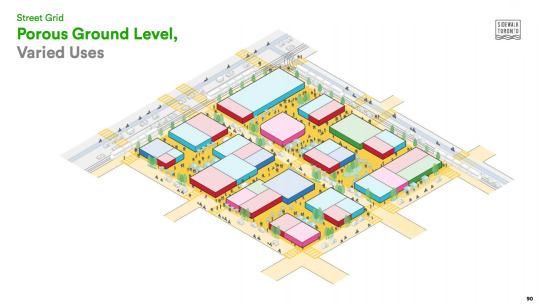
    This image ties in the street grid and Stoa.

    Finally, the goal is to build the neighborhood entirely out of timber, and more specifically, Canadian timber. If they follow through on this, I think it would really push adoption of this material forward in the city.

    I would encourage you to check out the full package, which you can do here. I can’t wait for these projects to get underway along Toronto’s waterfront.

  • A global hub for urban innovation

    Dan Doctoroff, the CEO of Sidewalk Labs (and the former deputy mayor of New York City), was recently interviewed by BNN Bloomberg about the company’s plans and ambitions for Quayside here in Toronto. 

    He talks about the project; their interest in timber construction; how the company, Sidewalk Labs, might ultimately make money; and how their mission is to create a global hub for urban innovation.

    This last point is, of course, the most exciting opportunity – both for Sidewalk Labs/Alphabet and for Toronto. And it’s why many people believe that Quayside will end up a far greater (economic development) coup compared to HQ2.

    The interview is only 10 minutes. If you can’t see it embedded below, click here.

    https://webapps.9c9media.com/vidi-player/1.5.1/share/iframe.html?currentId=1461888&config=bnn/share.json&kruxId=InSaVlLc&cid=%5B%7B%22contentId%22%3A1461888%2C%22ad%22%3A%7B%22adsite%22%3A%22ctv.bnn%22%2C%22adzone%22%3A%22ctv.bnn%22%7D%7D%5D

  • Letter from Toronto on Google’s city of the future

    Politico Magazine recently published this article about Sidewalk Toronto. It’s called: Google Is Building a City of the Future in Toronto. Would Anyone Want to Live There? 

    If you’re familiar with what Sidewalk Toronto is up to, the first bit will likely cover things you already know. But later on it gets into an interesting discussion around data privacy, among other things.

    One argument is that if you strip any personal identifiers from the data you collect, then you’ve effectively eliminated the issue of privacy. 

    But what about “collective privacy?” 

    What if you could, for example, identity signs of concentrated drug usage within certain districts, communities, or even buildings? Does that start to get a little too personal?

    This is the great debate surrounding Quayside, the area that Sidewalk is focused on. The article also touches on what Quayside could mean for the future of Toronto.

    Just about all players involved believe that if Sidewalk can be successful at Quayside, it has a shot at the adjoining 800-acre Port Lands, a swath of problem space big enough to become home to a dozen new neighborhoods in a growing metropolis. Townsend, the consultant, says of the Port Lands: “That’s a city they’re going to build there. This is just the warmup, this little piece.”

    Full article, here. There’s also an audio version in case that’s your preferred consumption method. It’s about 40 minutes long if you do it that way (and don’t speed it up).

  • Become a Sidewalk Toronto Fellow

    Sidewalk Toronto is currently looking for “12 smart, creative, and caring people who are interested in the future of Toronto’s waterfront and how we [Sidewalk Toronto] can responsibly incorporate technology to improve urban life.”

    Each Fellow will complete a 2-day orientation session in Toronto; 6 days in Amsterdam and Copenhagen; 5 days in New York City and Boston; 3 days in Vancouver; and then do a final 2-day working session back in Toronto before presenting their takeaways.

    This feels like a response to the criticism that Sidewalk Toronto wasn’t doing enough to listen to the community and that it simply wanted to build a tech-infused neighborhood that could serve us more ads – but it’s cool nonetheless. 

    If you’re between 19-24 years old and you live in Toronto, you can apply here. It sounds like a fun opportunity for young city builders. I know that I certainly would have been all over it when I was in that age bracket.

  • The neighborhood of the future (part 2)

    I have been traveling since the weekend and so I am behind on my reading. One of the benefits of writing this blog every day is that I am forced to read as much as I can. I have to be a sponge.

    Right now, I am still reeling in excitement over the Sidewalk Toronto announcement and getting caught up on that reading. 

    This week Sidewalk Labs published the entire vision section of their RFP response to Waterfront Toronto. This is the response that won them the Quayside partnership. It’s 196 pages and can be downloaded here.

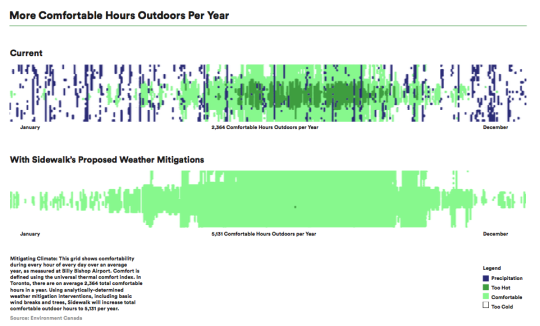
    I’m still making my way through the package, which I am obviously going to do, but I thought this was a great diagram:

    image

    As is stated in their RFP response, inclement weather affects pedestrians and cyclists more than drivers. Toronto’s most notable response has been our PATH system, which pulls both people and retail below grade, away from the elements.

    But Sidewalk’s research suggests that with the right wind, sun, and precipitation strategies, they may be able to 2x the number of comfortable outside hours per year here in Toronto. That’s what the above diagram shows.

    Of course, there is so much more in their RFP response. But I need more time to digest it all. I’ll be sure to report back to all of you once I have done that. If you don’t feel like going through all 196 pages yourself, you can watch this 4 minute YouTube video instead.

  • Building a city from the internet up

    There has been a lot of exciting tech + urbanism news this week in Toronto. Uber announced that it’s building a new artificial intelligence team in the city and it came out that Sidewalk Labs (Alphabet company) had responded to an RFP put out by Waterfront Toronto. 

    The RFP, which closed at the end of last month, was to find an “innovation and funding partner” for the 12-acre Quayside precinct shown above in purple. It’s the first parcel of the “eastern waterfront.” (Click here if you’d like to download a copy of the actual Request for Proposal.)

    These days, it’s easy to be cynical about these sorts of announcements. Every day you hear about some new innovation center or tech hub. But what’s perhaps unique about this one is that Sidewalk Labs is thinking crazier than most and they have the financial backing that crazy sometimes needs.

    If you’re not at all familiar with Sidewalk Labs, I suggest you read this post about how the company wants to build cities “from the internet up.” It’s by their CEO, Daniel L. Doctoroff. 

    Not surprisingly, they are thinking about everything from automated trash systems and autonomous vehicles (including their impact on built form, cost of living, productivity, etc.) to exchange-based thermal grids and more cost effective construction methods. And it’s not just about the technology. It’s about marrying tech + urbanism.

    Also interesting is their model of setting up a “hyper-focused labs”, which are each run by entrepreneurs-in-residence. These internal labs are focused on things like housing affordability, the health challenges faced by low-income city residents, and so on. 

    It’s all very exciting. So let’s ensure this moves forward and let’s hope Sidewalk Labs keeps thinking crazy. Toronto is ready to lead and show the world how a city built from the internet up should perform.