Daily insights for city builders, delivered every morning at 6 AM ET. I’m Brandon Donnelly — a Toronto-based real estate developer and founder of Globizen. I’ve been writing here since 2013.

Tag: quality of life

  • What drives attachment to cities

    The Knight Foundation recently published a report looking at what attaches people to the place in which they live. To get this information, they surveyed over 11,000 Americans, some of which live in urbanized areas and some of which just live in metro areas across the United States. This is interesting information to know at any time point in time, but you could argue that it’s even more important at a time like this, where everyone seems to be questioning everything about cities.

    Here are two of their key findings:

    • People who spend more time in the principal or main city of a metro area — whether as residents or as frequent visitors — tend to be more attached. This is is true both in terms of how they feel, but also in terms of how they act, such as how much they give back to the community. I suppose you could debate whether going to the city creates attachment or whether attached people tend to go to the city, but this association does seem somewhat intuitive to me. I am imagining a greater sense of place in principal cities.
    • People who choose to live in a place because of its quality of life tend to express more attachment than people who live in a place for other reasons — such as for work. About 40% of Miami transplants cited the climate as the primary factor for moving. Sounds right. Weather is pretty hard to control, but there are lots of other things that cities can do to improve quality of life. And it seems to be one of the stickier factors. Similarly, access to cultural activities and recreational amenities seem to lead to greater attachment.

    More specifically, here are how some people feel about their metro areas:

    This chart is showing the “perceived accessibility to quality features.” The left column is what they believe to be the national average. And the other columns are for Akron, Charlotte, Detroit, Macon, Miami, Philadelphia, San Jose, and St. Paul. Looking at one row in particular — affordable housing — we see that about 50% of Americans surveyed believe they have access to it. In comparison, only 29% and 12% of residents in Miami and San Jose, respectively, feel the same way.

    For a full copy of the report, click here.

    Chart: Knight Foundation

  • 25 most liveable cities in 2019

    The July/August issue of Monocle is hot off the press and, as has become tradition, it includes their annual Liveable Cities Index. Now, some of this could be construed as objective, but a lot of it is of course subjective. A liveable cities index is also very different from a global cities index, which is why you won’t find New York or London, or Toronto for that matter, on this list. Click here for a video of the 25 most liveable cities in 2019.

    Spoiler: Zürich takes the top spot.

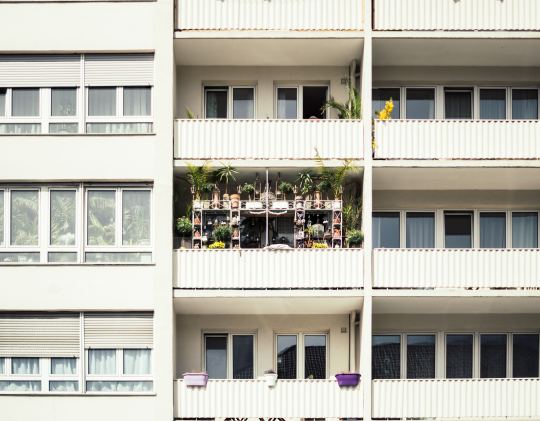
    Photo by 🇨🇭 Claudio Schwarz | @purzlbaum on Unsplash

  • Homes built in the past year

    I’m on a flight right now reading the latest issue of Monocle Magazine in a seat that barely accommodates the length of my femur. This month’s issue has their annual ranking of the top 25 cities in the world.

    Munich is first, which is not unusual for their ranking methodology. It generally scores well. Quality of life is high. Crime is low. The economy is strong. Beer gardens are fun. And you’re close to the Alps for snowboarding.

    One stat that caught my attention — and it’s not included for all of the cities — is the number of homes built in the past year. Presumably this is all housing units in the metro area — for sale, for rent, subsidized and so on.

    Here are their (clearly rounded) numbers. The order is as they appeared in the ranking, but again, not ever city included this stat.

    • Munich: 8,300
    • Tokyo: 150,000
    • Copenhagen: 5,000
    • Berlin: 11,000
    • Madrid: 1,600
    • Hamburg: 7,000
    • Melbourne: 5,100
    • Helsinki 4,400
    • Stockholm: 7,000 (18,000 in Greater Stockholm)
    • Sydney: 39,000
    • Hong Kong 17,000
    • Vancouver 22,600
    • Amsterdam 5,100
    • Kyoto 8,900
    • Dusseldorf 2,600
    • Barcelona 1,000

    Some of these numbers appear to stand out, such as the counts for Tokyo, Sydney and maybe Vancouver. But it’s hard to draw any conclusions around housing supply and housing affordability.

    Melbourne and Amsterdam allegedly have the same number of homes built over the past year, but according to Monocle the metro areas of Melbourne and Amsterdam have populations of 4.85 million and 2.4 million, respectively. This also says nothing about their growth rates.

    So which one is doing a better job of addressing housing demand? I’m not sure.

    But it was still interesting to see that Tokyo delivers somewhere around 150,000 homes a year. Tokyo is somewhat unique globally in that it’s a big city — one of the biggest — that somehow manages to gracefully balance both scale and quality of life.

    Photo by Elias Keilhauer on Unsplash

  • The perfect high street

    How do you create and maintain a thriving high street in this era of increasing online shopping? This was one of the questions that Monocle asked at its recent Quality of Life Conference in Lisbon and here’s a video with its recommendations. Click here if you can’t see the video below.

    [youtube https://www.youtube.com/watch?v=Ox2WJwDbuIo?rel=0&w=560&h=315]

  • The Monocle Quality of Life Conference

    image

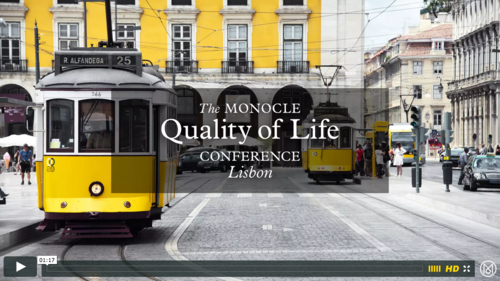
    Monocle magazine is launching their first ever conference this spring in Lisbon and it’s dedicated to quality life in the world’s greatest cities. It’s going to take place Friday, April 17th to Saturday, April 18th, 2015.

    You can click the image above for a video synopsis (there’s great urban eye candy), but if you don’t feel like doing that, here’s the text version:

    MONOCLE invites you to a weekend of peerless hospitality, great debates and in-depth conversations about the forces shaping the world’s great cities. Join our editors, correspondents and key thinkers in discussing topics ranging from architecture to independent retail, city planning to national branding.

    It sounds like a wonderful event and very much inline with some of the topics discussed here on Architect This City. If I had a conference budget that needed to get spent, I would be the first to sign up. If you’re interested, you can “register your interest” by clicking here. Tickets are €1,500.

  • What makes a city great? [Video]

    Each year Monocle publishes a ranking of the top 25 cities around the world in terms of quality of life. Different than most city rankings, the survey goes beyond the more typical metrics around crime, education and so on, and also looks at some of the softer aspects of quality of life. Metrics such as: Can I get a good glass of wine at 1am? What they’re after is a more truthful ranking of the cities that people actually want to live in.

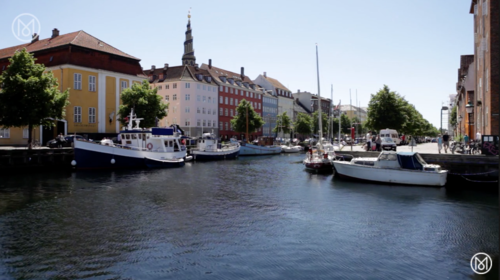
    This year Copenhagen took the number one spot. Vancouver took first in North America. And Tokyo took first in Asia. All 3 cities have scored well since they began the survey. Monocle also released a short video that looks at these 3 cities and explains a bit about their ranking methodology. Click here to watch the video. It’s only about 7 minutes long, but it’ll probably make you want to visit all 3 cities. I’ve never been to Copenhagen, but it’s certainly on my list.