Daily insights for city builders, delivered every morning at 6 AM ET. I’m Brandon Donnelly — a Toronto-based real estate developer and founder of Globizen. I’ve been writing here since 2013.

Tag: public transport

  • Toronto’s congestion crisis needs solutions, not politics

    People in Toronto are deeply and rightly frustrated about our traffic. We have truly world-class congestion. But here’s the thing, the way we’re going about solving this problem is all wrong.

    Transportation staff seem to believe that congestion charges would not reduce or deter traffic from coming into Toronto. Never mind all the global precedents, never mind that we have the tolled 407 highway to look to, and never mind that economics tells us that when the price of something increases, the quantity demanded decreases.

    Instead, we seem to think that we can solve this problem with fewer bike lanes, improved traffic management, and better policing, including higher fines for disobedience. (Interestingly enough, higher fines are supposed to deter people, but congestion charges won’t do the same. I’m confused.)

    None of this will fix the mess we’re in.

    This is a case of politics over data and experience. Identify something that people are pissed off about, and then create the illusion that you’re doing something to fix it. Good politics. But the reality is that this problem is much trickier to solve. It will require vision and meaningful change. That’s a much tougher sell.

    Think of this way. Can you identity a large car-oriented global city with millions of people that doesn’t have a traffic congestion problem? Even the Katy Freeway in Houston, which counts as many as 26 total lanes, has a congestion problem. And the last time I checked, it didn’t have any bike lanes.

    https://twitter.com/joshuahind/status/1837347617304424620

    Now let’s look at the largest city region in the world — Tokyo. The city proper has about 14 million people and the broader region has about 41 million. This is the entire population of Canada in one city region, and yet it’s generally viewed as being one of the most well-run and efficient cities in the world. How do they do it?

    Here are the modal splits within Tokyo’s 23 wards (2018 data):

    • 36% public transport (rail and bus)
    • 27% passenger cars
    • 23% walking
    • 14% bicycles and motorcycles

    Now compare this to the splits in Toronto’s census metropolitan area (2021 census data):

    • 76% passenger cars
    • 16% public transport
    • 5% walking
    • 1% bicycles
    • 2% other

    Of course, if we were to look at the modal splits within the core of the city they would look quite different and much closer to Tokyo’s numbers. This is why it can be so hard to achieve consensus on many city building issues — we are quite literally a divided and different kind of city.

    In the end, this is the root cause of our traffic problem. The vast majority of people in this city region drive. And they are not to be blamed. It’s because we’ve designed this to be the only practical option.

    But if we’re serious about solving congestion, it’s going to require some bold changes. It’s going to require reducing this 76% figure. We can fool ourselves into thinking that better construction coordination, fewer bike lanes, and higher fines will somehow solve this enormous and deep-rooted problem, but the inconvenient truth is that they won’t.

    What we need are real solutions. Is anyone going to take the lead?

  • Nobody drives at the Olympics anymore

    One of the commitments that Paris made for this summer’s Olympics was ensure that every single competition venue was served and accessible by public transport. In fact, if you look on their website, it clearly says “no venues in the Paris region are accessible by motorized vehicles.”

    For those who attended, this seems to have worked out quite well. So much so that Los Angeles just made a similar commitment for the 2028 Olympic Games (excerpt from the New York Times):

    L.A. mayor Karen Bass said Saturday the city is working on expanding its public transportation system to hold a “no-car Games” in four years, which means spectators will have to take public transportation to all Olympic venues. To accomplish this, she added that L.A. will need more than 3,000 buses and plans to borrow them from around the U.S.

    Of course, the built environment of Los Angeles is slightly different than that of Paris’. One was built around the car, and the other was not. And I think the success of Paris 2024 shows how a robust public transport system is uniquely equipped to absorb significant demand shocks when needed.

    Here’s an excerpt from Le Monde talking about transit during the games:

    Not only was the audacious gamble of organizing the first Olympic Games completely accessible by low-carbon public transport, on bicycle and on foot successful. Not only was transportation to the many competition venues scattered around Paris and its surrounding region fluid. But the transit network and its agents also proved their ability to ensure, thanks to planned initiatives and adapted resources, fast, reliable and even pleasant travel. What’s more, the Paris Olympics offered the pleasing spectacle of a large city mostly freed, for a time, from the clutches and nuisances of automobile traffic.

    But regardless of built form, both of these examples represent one of the positive externalities associated with hosting the games. They force cities toward massive positive change, and that’s always a good thing.

  • 10 years of contactless payments on London’s public transport

    I was having coffee this week with a self-described luddite and, after we ordered our coffees, he surprised me by pulling out his iPhone and initiating ApplePay. Knowing him and his general views on technology, I said, “I’m surprised that you of all people are now using ApplePay.” To which he responded, “I can’t believe it took me this long to start using it. It’s so convenient! I now barely ever pull out my wallet.” Yup, it is very convenient.

    It also just so happens that this month marks the 10 year anniversary of contactless payments on London’s public transport network. This meaning payment via a bank or credit card, and not via an Oyster card. In fact, part of the reason why London did this was because bus drivers were struggling with both having to give change and having to deal with people who didn’t have enough funds on their Oyster cards.

    So Transport for London (TfL) decided to spend £11 million, design and code the entire thing in-house, and then roll it out across the network starting in 2012. Apparently, adoption started off relatively slowly. At the end of 2013, only about 6 million journeys were made using contactless payments — this is against an initial projection of 25 million. But fast forward to today, and around 70% of all bus journeys are now contactless.

    What is also interesting about this is that TfL now licenses their contactless technology to other cities around the world. Here is a £15 million deal that was announced in 2016, which suggests that they could be generating a fairly respectable return on their initial investment. But aside from this, contactless payments are an obviously good way to onboard people onto public transport. There’s no special card. No lining up at a ticket kiosk. And yes, you can even use your phone.

    Photo by Tomas Anton Escobar on Unsplash

  • Are car tunnels the solution to traffic congestion?

    Elon Musk recently posted this Twitter survey asking if we, the people, would like “super safe, Earthquake-proof tunnels under [our] cities to solve traffic.” It was leading in that the “no” response was, “No, I like traffic.” And it was initially vague in that it wasn’t clear how these tunnels would be used. Though, most of us could probably guess. Elon later added in the thread that these road tunnels would be for zero emission vehicles only and they would be limited to EVs (from all auto companies, not just Tesla). Finally, Elon stated that these tunnels are not intended to replace other solutions, such as light rail, rather to supplement them.

    At the time of writing this post, nearly 1.5 million people had responded to the survey and about 67% of them said “definitely” to Earthquake-proof tunnels. Elon’s reaction: “Stop whining, subway Stalinists, the people have spoken.” Notwithstanding the majority, this is a divisive topic and the reactions are mixed. City planner Brent Toderian responded by saying that this “solution” would merely result in more cars, more driving, and more emissions. Steve Jurvetson, on the other hand, argued that this would be the cheapest way to add lanes and prepare for the inevitable EV-only future. (Steve sits on Tesla’s board and recently launched a venture fund that, among other things, invests in sustainable mobility.)

    The crux of this divide is a view about how cities should work. And it often becomes like dogma. Is it optimal for us to all be driving around in individual vehicles — EV or not? Will autonomous vehicles actually help solve the traffic problem? Or is building on the backbone of mass transit the only way to properly design a big and efficient city? Whether it’s lip service or not, Elon seems to acknowledge that both cars and transit are important, and that both can work together to supplement each other.

    What is clear to me is that cities, at the scale of say Tokyo, wouldn’t function nearly as efficiently if it weren’t for their extensive fixed rail networks. At the same time, there are many cities (or portions of cities) that do not have the prerequisite population and employment densities to support this same level of transit investment. And that has created a strong pull away from transit (and active transport such as cycling) toward private vehicles. Sprawling cities signal to people that they should probably be driving. This is one of the reasons why land use should never be separated from mobility discussions.

    How autonomous vehicles change all of this remains to be seen. Though I do think it will make cars less private and more public transit-like. Studies show that most of us are pretty good at coming up with incremental improvements to the things we already know and understand. i.e. This is how I would make this car better. But we’re far worse at coming up with and predicting tectonic shifts in the landscape. And autonomy is probably one of those shifts. But as long as our built form remains heterogeneous, I am inclined to believe that a mixture of mobility solutions will be needed. Maybe that means car tunnels. Or maybe it doesn’t.

    Photo by Ricardo Gomez Angel on Unsplash

  • Driverless cars, urban mobility, and Toronto’s Gardiner Expressway

    image

    About a week ago I wrote a post questioning what driverless cars will mean for cities. I ended by saying that that it feels as if we’re going to see increasing tension between private and public transport.

    What I meant by that was simply that conventional notions around private car use are going to change. And ultimately that is going to mean that we need to rethink public transport and how that fits into a broader urban mobility framework.

    What do I mean by this?

    The International Transport Forum at the OECD recently published a fascinating report called, Urban Mobility System Upgrade: How shared self-driving cars could change city traffic. And it deals with exactly the sorts of things I am thinking about.

    The study looked of what might happen when all cars become self-driving in a mid-sized European city (specifically Lisbon, Portugal). They leveraged existing transportation data from the city, but replaced 100% of the human powered cars with two types of self-driving cars: TaxiBots and AutoVots.

    TaxiBots were driverless cars that would be shared with multiple people at the same time. In other words, they were a kind of pseudo-public transit. And AutoVots we’re your more conventional private taxi. They picked up one person at a time.

    So, what did they find?

    In the first scenario, they combined their TaxiBots and AutoVots with public transit (light rail) and discovered that the same number of people could be moved around with only 10% of the cars currently on the road. That’s a 90% reduction!

    They also found that the city needed 20% less on-street parking and 80% less off-street parking since driverless cars don’t need to sit idle waiting for a driver.

    In the second scenario, they removed mass transit from the equation. And in this instance they found that the city was still able to get around, but with an 80% reduction in the number of cars on the road. Remarkably, it also led to a 10% reduction in rush hour commute times.

    These are pretty profound changes. Reducing the number of cars on the road by 80-90% is a significant change. 

    But it’s also why I’ve been thinking about the tension between private and public transport. As we get better at optimizing “cars” (their definition will change), what becomes the role of true public transit?

    Ultimately, I think what will happen is a blurring of the two. In the example above, the TaxiBots served basically as small scale public transit. But that does not necessarily mean that true mass transit will become irrelevant. We’re just going to need to rethink how the entire mobility network fits together.

    I’d now like to bring this discussion back to Toronto for a minute.

    As many of you probably know from this blog, Toronto is on the cusp of deciding what to do with the eastern portion of the Gardiner Expressway (an elevated highway that runs across the downtown waterfront). It will go to City Council next month. 

    I firmly believe that we should remove it, but there many people who believe we shouldn’t. The main objection seems to be that the traffic projections indicate that removing it could make commuting into downtown – by car – 3 to 5 minutes longer by 2031

    By today’s standards, I believe this concern represents an outdated way of thinking about cities and urban mobility. Adding more lanes is like loosening your belt to deal with obesity. However, it gets even worse when you think about urban mobility in the context of this post.

    Given the profound transportation changes that are currently underway, I think there’s a strong likelihood that the Gardiner projections we have today will be completely wrong by 2031. I don’t know know for sure, but I’m guessing the models don’t account for the efficiencies being created by driverless cars and peer-to-peer networks.

    In other words, I am suggesting that those 3 to 5 minutes could prove to be a red herring. The relevant question should be: Which decision will allow Toronto to build the absolute best waterfront in the world? And in my opinion that leads to removing the Gardiner East.

    If you feel similarly, I would encourage you to write your local City Councillor.

  • What will driverless electric cars mean for cities?

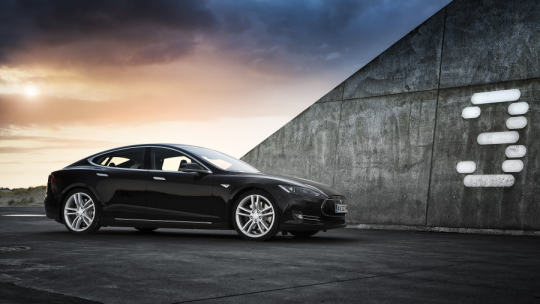
    Photograph T E S L A by Thomas Juel on 500px

    T E S L A by Thomas Juel on 500px

    Yesterday I posted a video about the career of Elon Musk. And it reminded me of something that’s been on my mind as I think about transportation, cities, and the future.

    Elon’s story for why he founded SolarCity, Tesla, and SpaceX is incredibly compelling. He chose problems and industries that he felt would move humanity forward. He felt that we needed sustainable forms of energy production (SolarCity), sustainable forms of transport (Tesla), and a way for humans to occupy other planets (SpaceX). That’s incredible ambition.

    Today though, I just want to focus on the transportation piece.

    Electric and driverless vehicles, I believe, are a step in the right direction. I honestly believe that at some point in the not too distant future we’re going to look back at that time when people used to drive their own cars and wonder how we ever allowed that to happen.

    But fundamentally, I think there still remains a question of how best to plan our cities. 

    There’s lots of talk today about peak car and the death of the automobile. Certainly within planning and urbanist circles, there’s an almost universal belief that planning (most of) our cities around the car, as opposed to people, was a huge mistake. Multimodal solutions with a public transit backbone are now the way forward.

    But will that always be the case as the notion of the “car” evolves?

    Intuitively, driverless vehicles feels like a massive opportunity to leverage data and better optimize our private transport assets. We know that the utilization rate for most private cars is incredibly low and so there’s lots of room to improve how we use and share private vehicles and how we move people around cities.

    But how big is that opportunity? Does a city filled with driverless electric vehicles and with networks like Uber mean that public transportation now becomes less important? And if so, how much less important?

    I can’t help but feel like private and public transport are on a collision course right now. I suppose that isn’t anything new. But this time around I wonder if private transport won’t figure out a way to achieve similar efficiencies to large scale public transport.