Daily insights for city builders, delivered every morning at 6 AM ET. I’m Brandon Donnelly — a Toronto-based real estate developer and founder of Globizen. I’ve been writing here since 2013.

Tag: public life

  • Would wider sidewalks induce demand?

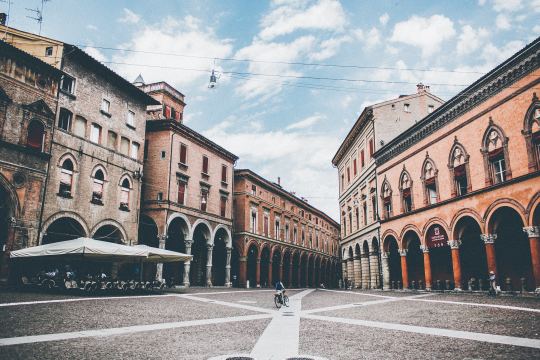
    One of the debates that is happening in cities all around the world right now is about whether or not it makes sense to redistribute public space in order to help with current social distancing measures. We are all being told to stay at home as much as possible, but as we venture out for food and/or sanity walks, many have started noticing that a lot of our sidewalks are in fact too small if you’re trying to stay 2m away from other humans. So with vehicular traffic way down, the question becomes: Should we start borrowing some of that space for pedestrians?

    Here in Toronto the official position is no. Closing down streets and lanes to car traffic is usually referred to as creating an “open street.” And the intent of these open streets is typically to bring people together for public life, which, of course, is the exact opposite of what we’re trying to do right now. What this implies, however, is that there’s a belief that additional space for pedestrians would induce demand, similar to what is believed to happen when you add additional lanes on a highway.

    Lewis Mumford probably had it best when he allegedly said, “Adding highway lanes to deal with traffic congestion is like loosening your belt to cure obesity.” So on the one hand, if you believe that more lanes doesn’t solve traffic congestion, you might also be inclined to believe that more and bigger sidewalks isn’t going to dampen the anxiety we currently feel when other humans get anywhere near us. The additional space would simply get filled with more bodies.

    But maybe you could argue that this is a little bit of a different situation. We’re in a global pandemic for God’s sake and most of us have the better sense to stay home unless it’s absolutely necessary. Perhaps in this case, demand would not increase and the greater supply would simply better serve the demand that is already there. Perhaps. I don’t have a strong stance on this, but I’m fairly certain that technology could help with this decision.

    What do you think?

    Photo by Jason Blackeye on Unsplash

  • Shutdown and restart

    Very few of us have a mental model for the macro conditions that we are living through right now. We have been through economic downturns, but most of us haven’t lived through a pandemic. I am an optimist and I know that we will get through this and normalcy will return. But one of the questions that we’re all asking ourselves right now is: What will “normalcy” look like on the backend?

    Here is an interesting piece of evidence for the current shutdown:

    When I see pictures of our cities, like these from Italy, I can’t help but think of the life that normally plays out in the streets. The conversations. The chance encounters. And even the smells. Some of that activity has moved to every single balcony in Italy and that is a beautiful thing. But it’s no substitute for true street life. Thankfully, we know that public life will both return and prevail.

    Along the way there will be changes. There are going to be winners and losers. Some companies are going to go bankrupt. And there will be adjustments that we have made that will invariably stick. Are we all going to video conference more? (The obvious one.) Will we all travel less? Will this macro event accelerate our transition to a knowledge-based digital economy? I’m sure it will. Also consider all of the new companies that are being started right at this very moment.

    But as I said on Twitter today, we are social beings. That is one of the reasons why we choose to live in cities. And I am certain that isn’t going away.

    Photo by Kristijan Arsov on Unsplash

  • Lisbon’s kiosks anchor public life

    One of my favorite things about Lisbon is the way in which life seems to happen publicly right on the street and in public squares. Its kiosks (or quiosque), like the one you see pictured above, play a major role in that.

    They are tiny; usually only run by one person. But they embody old world charm; usually with a dark green finish and some wrought iron flourishes.

    Supposedly these street anchors fell away during Portugal’s authoritarian period (Estado Novo), as there was concern that this sort of urban fraternizing might lead to new, potentially radical, ideas. (That’s usually a feature of cities.)

    Thankfully, Lisbon’s kiosks have returned and they’re as charming as ever. I like to think that city builders can workaround any type of climate. But the weather here certainly helps this public life. Lisbon is one of the sunniest cities in Europe.

  • The public life data protocol

    The Gehl Institute has just launched (in beta) something called the Public Life Data Protocol. It was developed by the Institute, as well as by Gehl (the practice), the Municipality of Copenhagen, the City of San Francisco, and Seattle’s Department of Transportation.

    The goal of the protocol is to improve the way in which we collect, share, and compare public space information. It is about improving public life in public spaces.

    To do this, they have proposed a series of metrics that measure everything from “posture within the space” to “objects brought into the space.” They also propose spatial metrics that help to analyze public life in relation to its physical context.

    Gehl is a real leader in this space. I commend them on opening up their methodology and working to create “a common language for people data.” Great data will only help us to build more human-centered cities.

    To download a full PDF of the protocol, click here

    Photo by Thaddaeus Lim on Unsplash

  • The Social Life of Small Urban Spaces

    “It is difficult to design a space that will not attract people. What is remarkable is how often this has been accomplished.” -William Whyte

    In 1980, the sociologist and urbanist William Whyte published a revolutionary book called The Social Life of Small Urban Spaces

    The ambition was to discover why some urban plazas are successful and why many others fail. And to do that, he went out and studied urban plazas throughout New York using video and simple observation, such as head counting.

    His work has been hugely influential for architects, designers, and other urbanists. But if you think about how often we fail at creating urban spaces that actually attract people, I think it’s worthwhile revising what Whyte discovered way back in the 70s and 80s.

    Some of the principles – such as providing places to sit – are dead simple and intuitive. But again, a lot of urban spaces suck. So we’re clearly not doing it.

    The other thing I feel we often forget is that it’s not just the space itself that matters, it’s also the urban fabric around it. The Seagram Building in New York plays a central role in Whyte’s work as an example of a successful urban plaza. 

    But we can’t forget that Mies van der Rohe’s simple gesture of setting the tower back from the street is strengthened by the remaining urban fabric and the activity along Park Avenue. The plaza acts as a kind of release.

    Alongside the book, Whyte also published a 60 minute video. If you’ve never seen it, I highly recommend you watch it when you get a chance. Click here if you can’t see the video below.

    [youtube https://www.youtube.com/watch?v=MjxXTsHgc8g&w=420&h=315]

    To close out this post, I thought it would be fun if everyone shared their favorite public urban space in the comment section. It can be in your city or it could just be a place you’ve visited.

    To kick things off, I’m going to go with with a space that’s close to home: Berczy Park. It has lots of places to sit, including movable chairs. There’s a great water feature. And it’s well connected to the rest of the area and surrounding streets. I often sit there during lunch or when I just want to think.

    It’s also in the midst of a revitalization and I’m excited to see that come together.