Daily insights for city builders, delivered every morning at 6 AM ET. I’m Brandon Donnelly — a Toronto-based real estate developer and founder of Globizen. I’ve been writing here since 2013.

Tag: property developer

  • Uncreative and greedy

    There’s a narrative out there that all developers are uncreative and greedy, and if only they would start being more creative and generous, we could solve the housing affordability problem that is plaguing many (if not all) global cities. In other words, the solution to increasing the supply of low and middle incoming housing is simply a psychological reframing on the part of developers.

    The problem with this mental model is that it ignores reality. Development happens on the margin. The market is competitive. It’s difficult to find developable sites. And it’s a challenge to make projects work. More often than not, you have to say no as a developer. No I can’t buy this land. No I can’t build housing here. And no the market will not support new office space here. Sorry, but no. (See cost-plus pricing.)

    Development needs to give back. On the blog we usually call this city building. And that’s because it implies a greater sense of civic responsibility. Developers aren’t just building one-off buildings, they’re building a city. I believe wholeheartedly in this. But the belief that projects can be saddled with an endless array of government fees and civic contributions is a problematic one. There are limits — because markets have limits.

    If only city building were that easy.

  • Two minutes to the subway

    I was in a meeting the other day and we started talking about a wayfinding sign that indicated it was a 10 minute walk to the nearest subway station. We wondered who had made this sign and ultimately decided that the number should be 10. Either they had no idea where the subway was or they were being ultra conservative in their estimate. The subway was — at most — 5 minutes away.

    We then joked that if a developer had made the sign it would say 2 minutes, which I thought was telling. Some people like to describe real estate development as an exercise in risk mitigation. And that is certainly something that needs to be managed. But it’s also an exercise in resiliency, as you get every possible obstacle thrown in front of you. It’s as if the goal is not to build anything.

    So while it’s important to manage the possible risks, I believe you have to be a bit of a glass-half-full kind of person in order to continue the march forward. Otherwise you’d probably give up. My first boss out of grad school used to describe it as reaching into the mouth of a tiger when everyone else figured it was over. I saw her do that time and time again and it made her great at what she did.

  • Big bad developer

    I just stumbled upon an older (2014) article by Oliver Wainwright in the Guardian called, The truth about property developers: how they are exploiting authorities and ruining our cities. In case the title didn’t give it away, it’s a scathing article about the current state of real estate development and city building.

    Here’s an excerpt:

    “Across the country – and especially in superheated London, where stratospheric land values beget accordingly bloated developments – authorities are allowing planning policies to be continually flouted, affordable housing quotas to be waived, height limits breached, the interests of residents endlessly trampled. Places are becoming ever meaner and more divided, as public assets are relentlessly sold off, entire council estates flattened to make room for silos of luxury safe-deposit boxes in the sky. We are replacing homes with investment units, to be sold overseas and never inhabited, substituting community for vacancy. The more we build, the more our cities are emptied, producing dead swathes of zombie town where the lights might never even be switched on.”

    Now, I’m not that familiar with the London market, so I can’t really comment on the dead swathes of zombie town. But I did enjoy the insights into the UK entitlement process.

    At the same time, my overarching thought as I read through the article was that I don’t believe that making money and doing what’s right need to be mutually exclusively. You can do both in development and in business. Making money as a developer does not mean you have to build shitty buildings.

    Part of the development game is managing an endless number of competing tensions. And profitability and responsible city building is just one of them. Of course, you have to want to do the right thing in the first place.

  • The institutionalization of development

    Jones Lang LaSalle recently asked: Is there still room for the buccaneer property developer?

    But in the contemporary world of real-estate – corporatized, institutionalized and massively capitalized – is there any longer room for the swashbuckling “merchant developers” or are they doomed to go the way of the wildly-gesticulating floor traders in colourful blazers that once symbolized financial markets?

    “There is always room for the entrepreneur,” says Richard Bloxam, JLL’s head of capital markets, Europe, the Middle East and Africa. “It is, however, fair to say that real estate has been on a journey away from total reliance on the entrepreneurial model.”

    I’ve written about the institutionalization of the business before. And it’s something I’ve been asking developers that I interview for my BARED blog series. Are the days of the eccentric and larger than life developer behind us?

    The consensus appears to be no. 

    All that has changed is the capital source / stack. The skills that make for a successful developer haven’t changed. You still need to be creative and look for opportunities that others don’t see. You still have to navigate through all of the various constraints – of which there is probably more of today. You still need to be entrepreneurial in spirit.

    What I wonder though is if this change hasn’t undemocratized the business to a certain extent. It seems to me that it’s harder, today, to fly by the seat of your pants with just an idea (and no capital). The barriers to entry feel more significant. But as Richard says, “there is always room for the entrepreneur.” And I believe that.

    I would be curious to hear your thoughts. 

    Also, the next BARED post will be up shortly. Stay tuned.

  • I’m writing a book on becoming a real estate developer

    typerwriter closeup by Sean Gladwell on 500px.com

    https://500px.com/embed.js

    One of the most common questions I get from readers of this blog is: How do I become / get into real estate development?

    In fact, I get it so often that I’ve decided to write a book as my response. It may be a short one or it may end up a long one. If you’ve emailed or messaged me with this question and I haven’t responded, I’m sorry. There’s a lot of you out there. But I do want to help and that’s why I’ve decided to take on this hobby book project.

    As part of the book, I’ll be talking about my own journey, as well as the actual nuts and bolts of development. But I would also like to feature some much more established players in the business. In order to do that, I’ve decided to crowdsource some of the content for this book. 

    So here’s my ask to you: If you’re a real estate developer and would like to share your story, please complete this short questionnaire. You can be located anywhere in the world.

    My plan is to select a handful of developers from around the world and then feature their stories, one-by-one. I’m confident that there will be a lot of interest in hearing how successful developers established their careers and/or own businesses.

    I’ve been thinking about doing this for quite awhile now. It feels good to get started. 

  • Making city planning cool again

    image

    This morning my friend Mackenzie Keast – who is famous and was on the radio in Toronto today talking about The Laneway Project – sent me an interesting article from the Guardian talking about the marginalization and growing irrelevance of city planners. It’s called: For the sake of our cities, it’s time to make town planning cool again.

    The gist of the article is as follows:

    While the cult of the star architect has soared over the decades and property developers have displaced bankers as the new super-rich, the figure of the local town planner has become comic shorthand for a certain kind of faceless, under-whelming dullard.

    But what really stood out for me are the following two things. First, that people are genuinely interested in cities. I would say that it’s almost trendy to be into cities these days.

    Urbanism may have displaced cultural theory as the favoured subject of the academic hipster, but talented young men and women rarely consider becoming town planners.

    And second, that we’ve made it difficult for these same interested people to participate in the planning process.

    Planners have become simultaneously under-respected and over-professionalised. Their training and practice too often leaves them able to communicate effectively only with other planners and professionals, working in an abstract language that alienates them from people. People are occasionally allowed into the professional planner’s world, but in highly mediated terms dictated by the profession.

    This stands out for me because I think that architecture is in a somewhat similar position. I often joke that the more architecture training someone has, the more likely they’re going to like buildings that the rest of the world doesn’t. It all becomes quite insular – just like the Guardian is arguing with respect to planning.

    And that may in fact be the reason for the marginalization of both planners and architects (minus the few starchitects that have a distinct brand and can command a premium). If the general public doesn’t like what you do or understand how you create value, why should they care?

    I’ve written before about the future of the architecture profession, as well as the reasons for why I decided to never practice architecture. So I won’t repeat it all here.

    But I will say that it had nothing to do with me not loving architecture. Because I do and always will. Instead, it was about recognizing that professions are not set in stone. Just like pretty much everything else in this world, they can and will be reinvented.

    Image: The Guardian / PA

  • Where the ultra rich buy real estate

    image

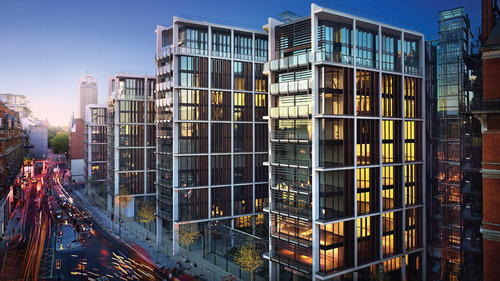
    Yesterday evening I was reading the Spring Summer Candy GPS Report put out by London-based property developer Candy & Candy. If you’ve never heard of Candy & Candy, then I guess you haven’t been in the market for a £60m apartment. Candy & Candy are the developers behind One Hyde Park in London, which is said to be the world’s most expensive residential development.

    But what is interesting about a project like One Hyde Park is that it’s really only possible in a global city, like London, that attracts a massive amount of foreign investment. A project like One Hyde Park is a possibility of globalization, not a result of local employment numbers.

    Which is why if you take a look at the Candy GPS report, you’ll see that their interest is in tracking the habits of ultra-high-net-worth-individuals (UHNWIs)–those with wealth exceeding US$30 million. Last year, the world was estimated to contain almost 200,000 of them, with a combined wealth of almost $28 trillion. This number is expected to rise to $40 trillion by 2020.

    Now, you may not be in the market for the most expensive apartment in the world, but I thought it would be interesting to talk about where this money is coming from and which cities it’s going into–at least when it comes to real estate.

    The top 3 countries for UHNWIs investing in real estate are Germany, Japan and the United States, respectively. The US has the most ultra rich people, but they have a lower propensity to invest in real estate compared to Germany. Nonetheless, these are the countries that dominate.

    But who are the recipients of this money?

    Well, first of all, it’s going into cities. But it’s flowing into a small number of them. Cities representing 5% of the world’s population are said to attract over 50% of the real estate investments made by the richest people on the plant. 

    According to Candy GPS, the top cities are Hong Kong, London, Moscow, Singapore and New York, respectively. Hong Kong sits at the top, largely because of money flowing in from mainland China, but London is said to have the broadest investment reach.

    So there you have it, a quick overview of where the ultra rich buy real estate.