
Daily insights for city builders, delivered every morning at 6 AM ET. I’m Brandon Donnelly — a Toronto-based real estate developer and founder of Globizen. I’ve been writing here since 2013.

Tag: products

  • Value of distribution and reach for consumer facing products

    image

    Forbes recently pegged social media influencer Kylie Jenner’s net worth at somewhere around $900 million. That makes her the youngest (she’s 20) person on Forbes’ annual ranking of “America’s Richest Self-Made Women.” 

    And if the trend line continues, she’ll be the youngest self-made billionaire, ever. Mark Zuckerberg apparently holds that title right now. But he was a classic underachiever and only became a billionaire at age 23.

    Most of Kylie’s net worth is derived from Kylie Cosmetics, which launched less than 3 years ago, but did an estimated $330 million in revenue last year. Forbes values the company at almost $800 million. And Kylie owns every bit of it. 

    The reason I am mentioning this today is because I was fascinated by the above Forbes article. It’s such a powerful example of social media leverage. Forbes put it differently: “Social media has weaponized fame.” 

    Kylie has 111 million followers on Instagram (plus many more on her other social channels) and that’s really the most important part of this equation. She has the distribution and reach to acquire boat loads of customers. It doesn’t matter what you’re selling if nobody knows you’re selling it.

    The rest of her business is pretty much outsourced. Seed Beauty (out of Oxnard, California and Nanjing, China) handles the manufacturing, packaging, and shipping fulfillment. Shopify (headquartered in Ottawa) is her e-commerce platform.

    We could of course have a debate about whether a celebrity-fueled business is really all that sustainable. And perhaps there’s risk in relying so heavily on social for customer acquisition. But youngest billionaire is youngest billionaire.

    Image: Forbes
  • The value equation

    On Tuesday night I attended a great industry event that Quadrangle Architects organized about mid-rise buildings. 

    Mid-rise buildings (somewhere around 4-12 storeys) are all the rage in Toronto these days. But there are many challenges associated with this building typology and this was an event to talk about them and hopefully push things forward.

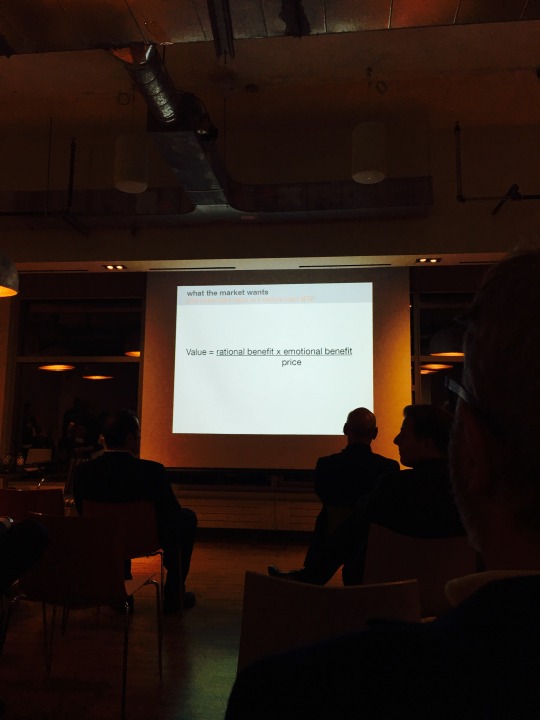
    One of the speakers at the event was Jeanhy Shim of Housing Lab Toronto. And I’d like to share one of her slides here:

    It reads:

    Value = (rational benefit x emotional benefit) / price

    I believe she admitted to taking it from someone at Bruce Mau Design. But that’s okay. That’s how ideas build. What I really like about it is that it attaches a value to the things that are difficult and sometimes impossible to measure: the emotional stuff.

    As I mentioned in this post over the weekend, we are all obsessed with the quantitative side of our businesses. In the case of development, we look at prices, per square foot prices, apartment sizes, and the list goes on. And we often reduce our “products” to these sorts of key metrics.

    But if you’re competing just on numbers, then you’re missing a big and important part of the equation. People consume things – and housing is no different – for a number of different reasons. We buy things because of how it makes us feel, how it reinforces our sense of self, how it improves or promises to improve our lives, and so on. These are all harder to measure than square footage. 

    But we are living in a data driven world and more and more of this type of information will become available for city building. If you and your business can get your head around it first, you’ll have a huge advantage. 

  • Real estate + tech

    If you’re interested in tech and tech products, you might be familiar with a platform called Product Hunt that helps you discover new products/startups on a daily basis. They launched back in 2013 and have since become an important part of the startup ecosystem.

    Here in Toronto, the Product Hunt community has been incredibly active with organizing regular meetups. Every 2 months they host an event, which includes a keynote speaker, 3 product demos from local startups, a panel discussion, and of course the usual drinks.

    The next Product Hunt Toronto event (#7) is scheduled for Thursday, November 26th at 6pm and the focus is on digital products serving the real estate industry. Back when I became obsessed with this space, this would have been considered pretty niche. But today there’s a tremendous amount of interest in the overlap between real estate and tech. And I’m thrilled to see that.

    If you’re also interested in this space, you should grab a ticket right now. They just went on sale yesterday, but usually sell out within a few days. At the time of writing this post, there are only 82 tickets left. I’m also going to be delivering the keynote talk. So I hope to see you there 🙂

  • Products people love

    Ruler, compasses, eraser, protractor, pencil and tracing paper r by Alexander Melnikov on 500px.com

    https://500px.com/embed.js

    I recently heard someone say, in a pejorative way, that all real estate developers think of what they build as “products.” I imagine this is in contrast to thinking in terms of buildings as spaces for people to live, raise a family, do their life’s work, and so on.

    When I heard this I immediately thought to myself, yeah, we (or at least I) do think of our spaces as products. But I also didn’t see it as a negative thing.

    In my view, there’s no reason that classifying something as a “product” has to make it any less beautiful, functional, and/or filled with design intent. My iPhone is a product. The wine on my shelf that somebody labored over is a product. The chair I’m sitting on right now is a product. All of these items were produced by people and then I consumed them because I liked what those people had made.

    When I was completing my first master’s in architecture and real estate, I used to walk back and forth across campus between the design school and the business school. And in these two places, we talked about bricks-and-mortar in very different ways.

    In the business school, buildings were the proverbial widget. How much does this widget cost to produce? How much can I sell or rent this widget for in the market? And how do I scale up my business so that I can sell/rent more widgets?

    On the other hand, in the design school we weren’t all that concerned with the cost of the widget or even what people would pay for it. Instead we were concerned with making it something so much more than just a plain old widget. These weren’t buildings. This was capital “A”, Architecture.

    I don’t think either school was wrong in their thinking. I just think they were missing each other. 

    Business is business. If you don’t make a profit then you’re not going to be around for very long. And while many companies can survive by making shitty products, those aren’t great businesses. The best businesses also deliver products that people absolutely love.

    So whether we call it architecture, a product, or even a widget, the goal should be to delight people. (Am I allowed to say “customer”?) Make people so happy that they have to tell their friends about it. If we’re doing that, then frankly I don’t care what we call it.

  • Amazon Dash — foolish joke or disruptive innovation?

    [youtube https://www.youtube.com/watch?v=NMacTuHPWFI?rel=0&w=560&h=315]

    Earlier this week on the day before April Fools’, Amazon launched two new services. The first was called Amazon Dash (see above video) and the second was called Amazon Home Services. The entire internet seemed to think that Dash was actually an April Fool’s joke, but it turns out it’s not. In fact, it’s actually an incredibly smart product.

    The way it works is simple. Each branded Dash Button is about the size of a pack of gum. You mount it in, on, and near things that you replace on a regular basis, such as laundry detergent, coffee refills, and so on. Then all you have to do is push the button and your order gets sent to Amazon. Shortly after the product arrives at your door. I say “shortly” because you can be certain that Amazon’s goal is to make that time frame as short as physically possible.

    I don’t know about you, but I could definitely see myself using this product. There are a number of essentials – such as laundry detergent and toilet paper – that I just hate shopping for. I have to create reminder appointments in my calendar just so I don’t forget. In fact, I did that today and I still forgot to pick everything up on my way home (my phone died).

    But what’s even more interesting about Dash, I think, is that it increases the threat to brick-and-mortar retailing and, more specifically, big box stores. Because if same day and same hour delivery is a big threat to big box stores, just imagine one button and same hour delivery. And, is it only a matter of time before something like this comes to Apple Watch? It seems like the right medium for it.

    Isn’t it interesting how something that most people believe is a silly joke could actually turn out to be a huge innovation? I try to always remain open minded. Sometimes it’s hard. But it’s good practice.

  • Marginal cost = 0

    Earlier this week I wrote a post called: The pull from services to products. And in it I made mention of the fact that part of what’s driving this pull towards products is that the marginal cost of servicing additional users or customers is almost nothing in a world of internet services and products.

    Well the reality is that this phenomenon is driving a hell of a lot more. It could – and probably will – fundamentally change almost all aspects of the economy.

    I know that sounds like a pretty audacious statement, but if you watch the following 10 minute talk by Albert Wenger (Union Square Ventures) you might start to feel the same way. He outlines 5 changes being driven by the fact that in the digital world, marginal cost = 0. The impacts go well beyond tech, capturing sectors such as transportation and industrial real estate.

    [youtube https://www.youtube.com/watch?v=sVEtTzlqsoE?rel=0]

    If you can’t see the video, click here.

  • The pull from services to products

    This morning I woke up to a fascinating post by designer Tobias van Schneider called: The agency is dead. Long live the agency.

    What he’s talking about is the phenomenon of design agencies being gobbled up or “acqui-hired” by product firms such as Facebook and Google. The latest of which is (or was) Toronto-based design agency Teehan+Lax. The partners have closed up shop and are in the process of moving to San Francisco to join Facebook Design.

    But what he’s really talking about is the pull from services to products.

    When you’re a services firm, you do work for outside clients and they pay you for that work. But there are only so many hours in the day, which is why the marginal cost of taking on new clients is relatively high – to scale up you generally need lots more people.

    On the other hand, when you’re a software company creating products, the marginal cost of serving additional customers is almost nothing. Sure, there are some variable costs, but the impact to your cost structure is not nearly as significant as when you’re a services firm. That’s how a company like Instagram can be bought for $1 billion with 30 million users and only 13 employees.

    So products are a bit of a holy grail in some circles. You can achieve greater scale. You can focus on fewer projects as opposed to jumping around from client to client. And you can make a lot of money.

    But it’s often easier said than done. Back in 2012, Teehan+Lax wrote a great post where they talked about the allure of products and the challenges they faced in trying to build their own:

    37Signals* was the worst thing to happen to services businesses trying to make products. They fucked it up for all of us, because they made it. For those of us old enough to remember, 37Signals was a services company like Teehan+Lax. They had clients and did work for hire. Of course, 37signals isn’t a services company anymore. They make amazing digital products and their success is enviable. (*37Signals became Basecamp)

    So why is it so hard to transition from services to products?

    Clayton Christensen, the father of disruptive innovation, says, “you can’t start a disruptive business from inside an incumbent one.” The incumbent business will always take the resources from the disruptive one. He argues that if you want to create a disruptive business you need to isolate it from the incumbent business. The disruptive business needs its own values, processes and resources to be successful.

    Regardless of whether you’re trying to build something disruptive or not, amazing products are hard to build. They take focus.

    But what’s also interesting about services and products is that there’s a parallel in the world of architecture and real estate development. As an architect, you’re basically a service provider. You have clients and they pay you for the work that you do. However, as a real estate developer, you offer a product: physical space. The cost structures are not nearly as beneficial as with software, but it’s a product nonetheless.

    And similarly, we’re already starting to see some developers bring architecture in-house. Will we see more of this in the future? Will there be a similar pull from services, to products?

    Image: Flickr