Daily insights for city builders, delivered every morning at 6 AM ET. I’m Brandon Donnelly — a Toronto-based real estate developer and founder of Globizen. I’ve been writing here since 2013.

Tag: presentation

  • The end of free money

    Tech analyst Benedict Evans — who has 175,000 subscribers to his weekly newsletter — has just published his big annual presentation about “what matters in tech?” This year’s is called “The New Gatekeepers.” And as is normally the case, he explores a number of macro trends that I think will interest many of you, even if you aren’t in or interested in the tech industry. To check it out, click here.

  • The new normal, whatever that is

    Back in February, I shared a presentation by Benedict Evans about the macro and strategic trends that have been playing out in the tech industry. (Of course, the potential impacts go well beyond tech.) Well that was February and lot has happened since then. So he has updated a bunch of his slides and it is now called, “Tech and the new normal.” We know that things have changed, but we don’t know what things will really look like when this is all over — and which changes will have durability. Benedict doesn’t necessarily prognosticate in his presentation, but he does provide valuable historical context and some great data. So there are a lot of conclusions that you might be able to draw from it on your own. It’s also my kind of slide deck. Not a lot of text. Lots of graphics/diagrams. And really only one key takeaway per slide. Here you are.

  • Standing on the shoulders of giants

    “Every failed idea from the dotcom bubble would work now.”

    Marc Andreessen

    Every year, Benedict Evans publishes a “big presentation” on the current trends in tech. They are always excellent and they help to put a lot of things into perspective. This year he covers everything from TV subscriptions to online mattress companies (there were 175 of them as of last year), and asks: What’s next in tech?

    New technologies have typically come in S-Curves (see above). They start out slow, see rapid growth, and then taper off. To use Benedict’s wording, they go from stupid to exciting and then to boring. Smartphones are currently in the boring phase. Each new year sees only incremental change. So, what’s next? That is still TBD.

    To download a full copy of the presentation, click here.

    Slide Image: Benedict Evans

  • The next 20 years

    image

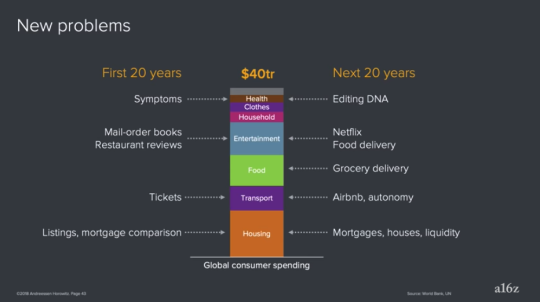
    Above is a screenshot from a presentation about the future of tech that Benedict Evans gave last week at venture capital firm a16z’s annual conference. And below is a video of the talk. If you can’t see it, click here.

    [youtube https://www.youtube.com/watch?v=RF5VIwDYIJk&w=560&h=315]

    The talk is positioned as “the end of the beginning.” In other words, here is where the internet and smartphones have taken us, but that’s just the beginning. Quote: “We used to do apartment listings [online] and now Opendoor will buy your home.”

    It’s only 24 minutes and well worth a watch.

  • Notes from the retail apocalypse

    A friend of mine was in Scottsdale last month for an ICSC conference where Garrick H. Brown (VP of Retail Research for the Americas at Cushman & Wakefield) delivered this retail presentation

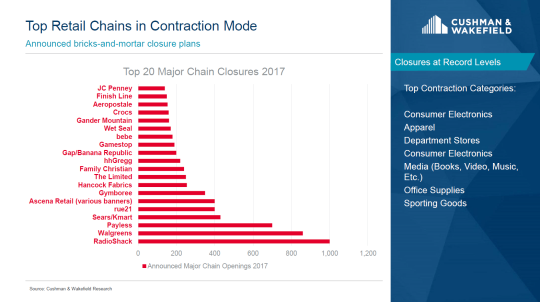
    My friend flipped it to me this week and below are a couple of slides that stood out as I scanned through it.

    image

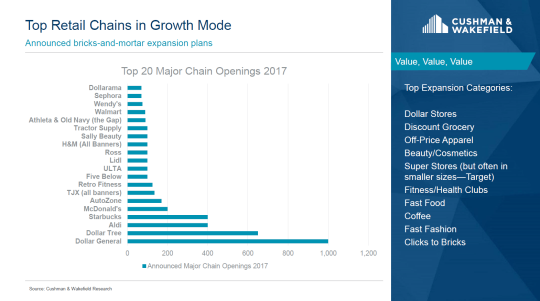
    Apparently over the last five years, a new dollar store has opened every four hours in the US. That’s how quickly this category is growing. A race to the bottom.

    image

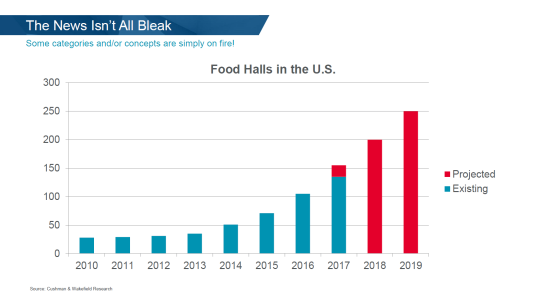
    Food halls are hot and not just in the US. Check out: “5 huge food halls opening soon in Toronto”.

    image

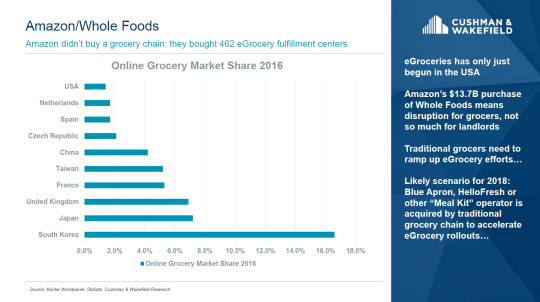
    This is similar to a chart I posted a few weeks ago that pegged online grocery shopping in South Korea at closer to 20%. I’m still fascinated by this market share number and want to better understand what’s driving it.

    image

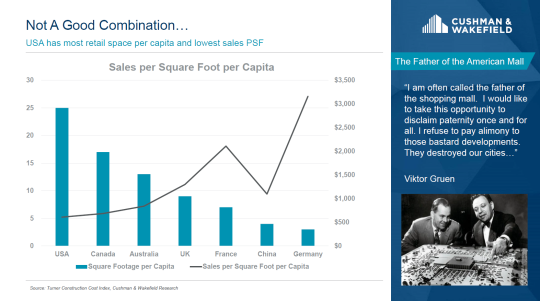
    This is an interesting chart that shows the relationship between retail square footage per capita and sales per square foot per capita. The US has lots of retail space per capita but low sales. Now look at Germany.

    image

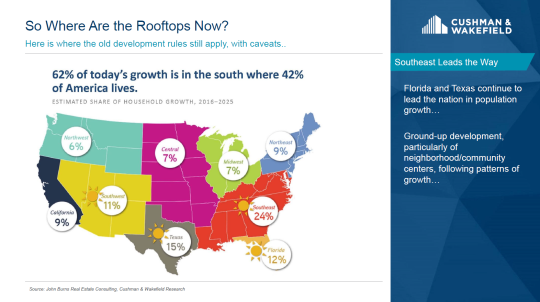
    Finally, this is a chart that shows where household growth is expected to happen from 2016 to 2025. It follows a very clear historical trend of Americans moving from cold places to warmer/hot places.

    image

    For the full presentation, click here.

  • Bringing laneway suites to Toronto

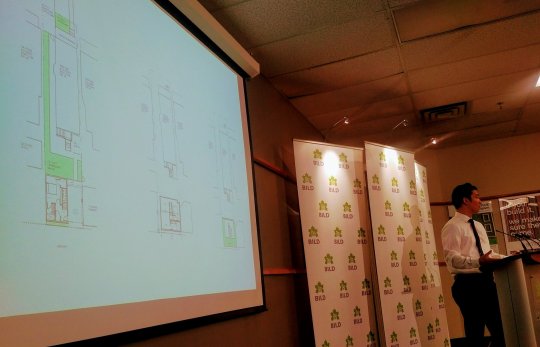
    This morning I presented and sat on a panel at BILD called “bringing laneway suites to Toronto.” The other participants were Councillor Mary-Margaret McMahon, George Pantazis (Planner at the City of Toronto), Mike Collins-Williams (Director, Policy at OHBA), and Andrew Sorbara (co-founder of Lanescape).

    Here is a photo that Mike took of me while I was talking about my failed laneway house:

    image

    For those of you wondering if/when this will happen in Toronto, here are the key takeaways from this morning: The city is already drafting laneway suite policies specific to Toronto & East York (not the other parts of the city) and they are due to report back to council in Q2-2018. Nothing is 100% certain at this stage, but there’s lots of optimism. 

    Councillor McMahon delivered this morning’s opening remarks and I was impressed by her deep commitment to laneway suites. I was also impressed by her stance on NIMBYISM, saying that education is important and that we can’t let NIMBYs stop what makes sense for the greater city.

    She gave the example of the 6 storey condominium in her ward that faced fierce community opposition a number of years back. If you can’t put a midrise building on a main street in this city, where can you put it? 

  • World after capital

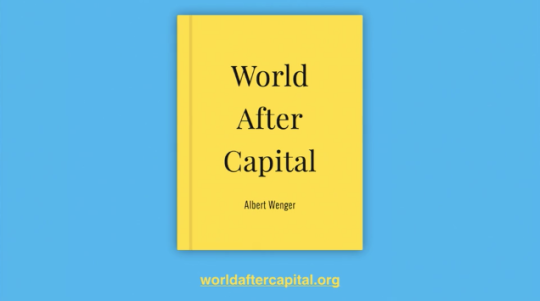
    Albert Wenger is currently in the process of writing a book called World After Capital. The book isn’t finished yet. It still exists in a crude rough draft form. But already he has made it freely available online. You’re also welcome to comment and contribute to the book as he works on it.

    Why has he done it this way? 

    Because this format of publishing is in line with where he believes the world is heading. He believes we are headed towards a world where new forms of surplus – brought about by technological innovation – will create greater levels of freedom: economic freedom, informational freedom, and psychological freedom.

    His overall thesis is that the world has been moving through a series of scarcities. As hunter and gathers, the scarcity was food. In our agricultural period, we learned how to create food surpluses (which freed up more of our time), but it then produced land scarcity. Once the industrial revolution hit we once again freed up more of our time through surpluses, but then the scarcity became centered around capital. We also started to negatively impact the environment. Today, as we clearly move away from the industrial economy towards a knowledge and information economy, Albert believes the new scarcity is attention. (I wrote a related post about a month ago.)

    If you’re interested in this topic and don’t feel like diving into his book, I suggest you watch this 23 minute presentation by Albert Wenger. I watched it this morning and he talks about everything I mention above. 

    Here’s one of his slides that I felt was important to share:

    Why it’s interesting to think about this shift is because there will inevitably be positive and negative outcomes associated with it; there will inevitably be groups who, probably because of self-interest, would rather cling to the past; and because there are pressing global issues that we need to be focusing our attention on – issues such as climate change.

    I can’t help but wonder about all the ways this shift could reverberate through the economy and our cities. Earlier this week I wrote a post about architecture as a tool for capital. But with our current fixation on “starchitecture”, one could argue that we have already transformed architecture into a new tool – a tool for grabbing attention. If you believe that attention is the new scarcity, then this makes perfect sense.

  • [Video] Gang of Four

    Scott Galloway, professor of Marketing and Brand Strategy at NYU Stern, recently delivered a presentation on the Gang of Four: Apple, Amazon, Facebook, and Google. These dominant companies are also often referred to as the “Four Horsemen.”

    The video is about 16 minutes long and I would highly recommend that you give it a watch.

    It’ll be like drinking from a firehose, but there are so many fascinating takeaways. You’ll also quickly discover how far reaching the societal impacts of these companies have been and will likely be in the future.

    If you can’t see the video below, click here.

    [youtube https://www.youtube.com/watch?v=jfjg0kGQFBY?rel=0&w=560&h=315]

  • City building every way you can

    Tonight I attended and gave a short talk at a city building themed PechaKucha night here in Toronto. If you aren’t familiar with the PechaKucha 20×20 presentation format, click here.

    The first PechaKucha night was held in Tokyo, but it has since expanded to over 800 cities around the world. Each city has a local organizer who acts as a steward and here in Toronto it is Amy Bath. She did a fantastic job this evening.

    Tonight’s event was all about non-traditional forms of city building. It was not so much about how architects and developers are shaping the built environment – thought there was some of that. It was more about how interdisciplinary artists, graphic designers, bloggers, and others, are having an impact on cities. So in my case, I was speaking as a blogger, rather than as a real estate developer, which was a bit unique for me.

    What excited me about tonight is the amount of talent and passion that we have in this city, and how so much of it is being harnessed to make cities better.

    Jay Wall of Studio Jaywall is doing incredible work at the intersection of graphic design and city building. My friend Mackenzie Keast of Distl and NXT City Prize is organizing public space competitions and then working with the city to get them built. And my friend Justin Broadbent, who is an interdisciplinary artist, is just killing it and putting Toronto on the map. I don’t know how else to say it.

    And this is just naming a few of the people in attendance.

    I have so much respect for people who love the city they call home and actively try to make it a better place. That’s a lot harder to do than just complain about why your city isn’t (insert other allegedly better city here). But it’s also a lot more productive.

  • Toronto housing — where we came from and where we’re probably headed

    This morning I’m working on a presentation that I’m going to be giving one evening next week to a delegation coming in from the US. The title of the presentation is the title of this blog post: Toronto housing – where we came from and where we’re probably headed.

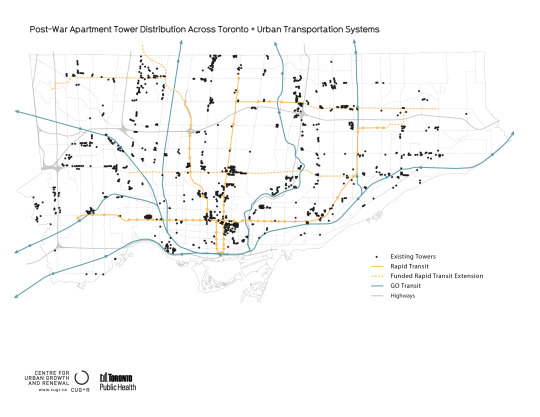
    My plan is to start in and around the 50s and 60s and talk about Toronto’s first tower boom following the war. For this time period, I’m relying a lot on the work of Graeme Stewart of ERA Architects, who is one of, if not the, expert on post war towers in this city.

    image

    I’m then going to move onto our current high-rise condo boom and compare the two.

    Because the interesting thing about the first boom is that, after it finished, we basically returned to the typical North American housing model: building single-family homes. And it wasn’t until this recent boom of the early 2000s that we once again resumed building more high-rise than low-rise housing. That is still the case today.

    But the question I want to address is really, what’s next? Where are we headed? Is history going to repeat itself or is – dare I say – this time different?

    I’ll eventually get to those questions here on Architect This City, but first I want to hear from you. So here’s what I’m proposing: leave your thoughts in the comment section below and I will feature the best ones in my presentation next week as the voices of Toronto. I’m sure many of you know that I’m a big fan of crowdsourced information.

    So here goes. Where is Toronto housing headed and how will we be living in the next 10+ years? Will we be raising families up in towers or not? Please comment by Sunday, September 27, 2015 at 6pm (ET) to make sure I have time to feature you in the presentation. 

    Thanks for participating 🙂