Daily insights for city builders, delivered every morning at 6 AM ET. I’m Brandon Donnelly — a Toronto-based real estate developer and founder of Globizen. I’ve been writing here since 2013.

Tag: poll

  • Three in four Americans believe it’s better for the environment if houses are built farther apart

    Living in a low-density place with lots of greenery and open space can feel like a pretty “green” way to live. Maybe you’ve even got a little garden where you grow delicious tomatoes. And indeed, a lot of people seem to think this is the case. According to this recent YouGov poll (which surveyed 1,000 Americans), 75% of US adult citizens believe that “it’s better for the environment if houses are built farther apart.” The number drops slightly to 68% for Democrats, but we’re still talking about a clear majority.

    Most experts will tell you that the opposite is, in fact, true. One of the best ways to be green is to live in a high-density urban setting and get as far away as you can from the natural environment so that you don’t screw it up. There are multiple reasons for this, but it generally comes down to the fact that cities use land and other resources far more efficiently on a per capita basis. Smaller living spaces, fewer cars, more things that are shared, and so on.

    The reason why this isn’t so obvious is that per capita thinking is perhaps harder to grasp. Living in the countryside certainly feels more green than living in the middle of New York City. But what if the 8.5 million or so people in New York City suddenly decided to sprawl outward into the countryside to consume more housing (that would then need to be heated and cooled), and then started driving everywhere (in lieu of taking transit, cycling, and walking)?

    This would be a less green outcome. It’s about the collective here, not what feels nice and green for any one individual.
  • #WeTheOther

    We may not all agree on things like bike lanes and transit, but if there’s one thing that can generally unite a city it’s playoff sports. 

    I love the solidarity that it creates. You may have nothing else in common with the person sitting next to you at the bar, but suddenly you’re best friends because your team is winning.

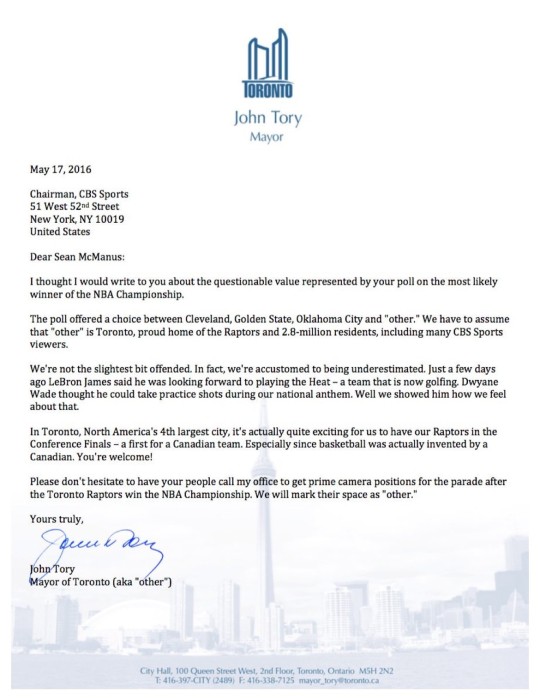
    As I write this post, #WeTheOther is currently breaking the internet after CBS Sports ran a cheeky online poll asking: Who will win the NBA title? The four options were:

    1. Warriors
    2. Thunder
    3. Cavaliers
    4. Other

    For those of you who don’t follow basketball, there are only 4 teams left in the NBA playoffs right now! So in what was likely a deliberate snub to the Toronto Raptors, CBS conveniently obfuscated them in their poll.

    Here’s how Mayor John Tory quickly responded:

    What would sports be without the trash talking?

  • Hybrid 1-2-3

    For those of you who have been reading this blog since last summer, you’ll know that I’m particularly passionate about the Gardiner Expressway East here in Toronto.

    Last night a public meeting was held to discuss the 3 alternative designs for what has become known as the “hybrid” option. If you’d like a visual summary of the options, click here.

    But essentially as you go from hybrid 1 to hybrid 3, the elevated Gardiner Expressway just gets pushed further north, away from the water. So as you go from 1 to 3, the hybrid option becomes less offensive to the waterfront and its associated public realm, and it opens up more land for development. However, it also becomes more expensive.

    Here’s a graphical summary of the costs, which my friend Gil Meslin tweeted out last night:

    //platform.twitter.com/widgets.js

    Notice that the boulevard (remove) option, which City Council rejected last summer, remains by far the most cost effective option. At a time when the city is searching for cash, I am surprised that nobody is looking here.

    I am also surprised to read that some are commenting on which of the above hybrid options will be the easiest to tear down should we want to remove the Gardiner East in the future. If that’s the lens we are applying, why rebuild it in the first place?

    But enough from me. What do you think? Here’s a Twitter poll I created this morning:

    //platform.twitter.com/widgets.js

  • How are you being shaped?

    image

    “We shape the cities, and then our cities shape us.” That’s one of my favorite lines from the documentary The Human Scale, featuring Danish architect and urban designer Jan Gehl. I like it because I don’t think many of us think enough about the way in which the built environment – that we create – ultimately goes on to influence the way we live our lives.

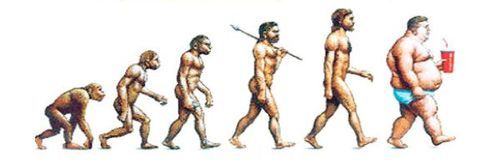
    One of the most interesting connections for me is the link between urban form and public health. There’s been a lot of talk over the years about how suburban sprawl is, or might be, making us fat (among other things). We’ve created environments that are only navigable by cars and that has forced many of us into sedentary lifestyles. We sit in our cars, and then we sit in our offices.

    So today I’d like to conduct a bit of a poll. If you’d like to participate, please share the following 3 things in the comment section below: 1) your city, 2) the type of neighborhood you live in (urban, suburban, rural, etc.), and 3) the amount of time you spend walking or doing something active on an average day.

    Here’s me:

    I live downtown Toronto in the St. Lawrence Market neighborhood (urban). I take the subway to work and the station is a 10 minute walk from my place. So as a bare minimum, I spend at least 20 minutes a day walking. But since I also walk to do most of my regular errands, and since my gym is another 10 minute walk from my place, I’d say I average a good 30-45 minutes of walking each day.

    Now it’s your turn 🙂

    This is a pretty crude survey, but with the advent of things like smartwatches and health monitors, I think we’ll soon have lots of great data on the ways in which our cities might shape our health.

    Image: The Economist

  • Tomorrow’s capital of the world

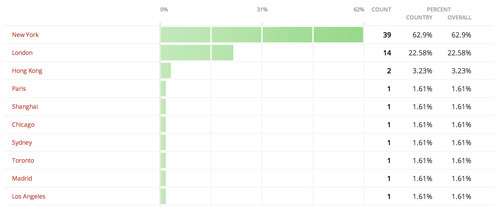
    Last week I polled the ATC community and asked which city they consider to be the “capital of the world.”

    image

    I received 62 votes and the overwhelming majority (63%) voted for New York. London came in a distant second with 23% of the vote. Though there’s probably a geography bias here (most of the readers of this blog are from North America), I did have a few people comment on Twitter that the answer to this question is blatantly obvious. The capital of the world is New York.

    But what I was really trying to do was establish a baseline for this week’s poll, which I think is a much more interesting question. Which city do you think will be the “capital of the world” in 2050? Again, there are no other instructions. Just select whatever first comes to mind. I’m using the same list of cities as before, but you can now add a city if you think the right answer is missing. If for whatever you can’t see the poll below, click here.