Daily insights for city builders, delivered every morning at 6 AM ET. I’m Brandon Donnelly — a Toronto-based real estate developer and founder of Globizen. I’ve been writing here since 2013.

Tag: podcast

  • How technology might transform health care

    Below is an interesting podcast with venture capitalist Bill Gurley talking about how technology might transform and improve health care.

    Based on their discussion, the US spends about 17-18% of GDP on health care. In most Western European countries and in Canada, it’s about half of that.

    In Singapore, it’s only 4% of GDP and there doesn’t appear to be any demonstrable differences in terms of health outcomes.

    If you can’t see the podcast embedded below, click here.

    https://art19.com/shows/the-ezra-klein-show/episodes/5bef0efc-97ce-412b-89dc-cb5d9d476f6f/embed?theme=dark-blue

  • How I built this

    My friend Dan just introduced me to a terrific podcast called, How I Built This. It’s all about “innovators, entrepreneurs, and idealists, and the stories behind the movements they built.” As soon as he told me about it I immediately pulled out my phone and hit subscribe.

    You will recognize many of the brands and entrepreneurs featured on this podcast. The companies span everything from Whole Foods and the Corcoran Group (real estate) to Kate Spade and Instagram.

    I’m not that up on podcasts. I think it’s because I don’t really drive that often and I don’t have much of a commute. Podcasts are great when you’re sitting in traffic, which is something people here in LA obviously do a lot of.

    But I’m going to make time to listen to this one. I have so much respect for anyone who has built something from nothing. Building and creating is what moves us forward.

  • What is your city’s flag?

    How often do you see it around town? 

    Here in Toronto, I can’t say that I see ours all that often outside of city hall. Am I missing it? Here’s what it looks like:

    image

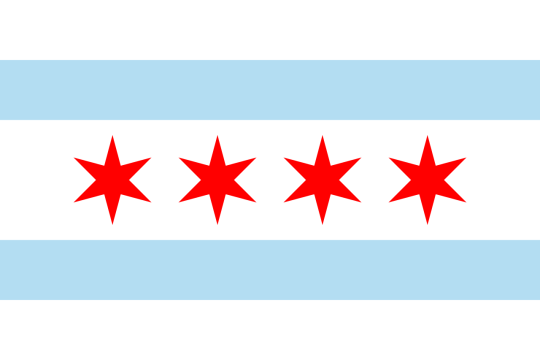
    In other cities, such as Chicago, the city flag seems to be far more ubiquitous. Here’s what Chicago’s looks like:

    image

    In the case of Toronto’s flag, the two white bands are meant to represent the architecture of Toronto City Hall. The maple leaf is the Council Chamber at the bottom. And there is some suggestion of a letter “T” for Toronto. Wikipedia says the “T” is supposed to be found in the blue space between and above the two towers of city hall, but I’ve always seen the two white bands as being the “T.”

    In the case of Chicago’s flag, the blue bands represent the lake and river (I like that) and the four six-sided stars represent significant events in the history of the city (positioned between the two bodies of water to mimic its actual geography).

    Roman Mars of 99% Invisible has a great podcast and TED talk on this topic. (The study of flags is known as vexillology.) In both instances, he outlines what he believes to be the 5 rules of great flag design. They are:

    1. Keep it simple
    2. Use meaningful symbolism
    3. Use 2-3 basic colors
    4. No lettering or seals
    5. Be distinctive

    Toronto’s flag generally conforms to these rules. But there’s something about the positioning of the maple leaf that makes the flag feel a bit arbitrary to me. I want to rationalize it.

    In any event, I think it could be really interesting if all of us shared our city’s flag in the comment section below and made a comment about how ubiquitous it is within the urban landscape.

    Roman makes the argument that a great flag gives people something to rally behind. And with cities only becoming more important on the global stage, there’s something to be said about having a well-designed flag today.

    I wonder if there will be a correlation between good flag design and ubiquity. My guess: probably.

  • The Human City

    As a follow-up to yesterday’s post about fluid labor markets and urban density, I thought I would present an opposing view.

    Joel Kotkin is a well known geographer and author. He has published a number of books, the most recent of which is called, The Human City: Urbanism for the Rest of Us. He is also well known as a supporter of the suburbs, which is a somewhat contrarian view in today’s urban-centric world.

    Here is a recent interview he did with Aaron M. Renn (click here if you can’t see it below):

    [soundcloud url=”https://api.soundcloud.com/tracks/257309155″ params=”auto_play=false&hide_related=false&show_comments=true&show_user=true&show_reposts=false&visual=true” width=”100%” height=”450″ iframe=”true” /]

    One of his messages is that the urban core is great for young people without kids, but that we shouldn’t expect it to serve everyone’s needs and wants – particularly those of families. Families need space and affordability, and urban cores are simply not engineered for that.

    Long live the suburb.

  • Planning for the unplanned

    I was listening to The Urbanist (Monocle Radio) last night while I was making dinner and there was a segment on Moscow’s “illegal retail kiosks.” These are small scale retail structures that were built without formal planning permissions and so the city decided to demolish them. 

    There was lots of backlash. Photos here.

    Now, I’ve never been to Moscow. So I can’t really comment on the attractiveness and usefulness of these kiosks. But I suspect that these illegal retail kiosks, many of which seem to have been located around metro stations, contributed quite a bit to the city’s urban vibrancy. Retail is hard to get right. It doesn’t work everywhere.

    All of this got me thinking about our tendency to sterilize and overplan cities. I’m not saying that planning is bad. It’s not. But I do think we should acknowledge that we don’t know everything about the future and that human ingenuity will undoubtedly unlock new things we never thought would be beneficial.

    So how do we plan for the unplanned? Perhaps it starts with accepting the off-center. Here’s a quote from Anthony Bourdain (it’s all over the internet, but I can’t seem to find the original blog source):

    I think that troubled cities often tragically misinterpret what’s coolest about themselves. They scramble for cure-alls, something that will ‘attract business,’ always one convention center, one pedestrian mall or restaurant district away from revival. They miss their biggest, best, and probably most marketable asset: their unique and slightly off-center character. Few people go to New Orleans because it’s a ‘normal’ city — or a ‘perfect’ or ‘safe’ one. They go because it’s crazy, borderline dysfunctional, permissive, shabby, alcoholic, and bat shit crazy — and because it looks like nowhere else. Cleveland is one of my favorite cities. I don’t arrive there with a smile on my face every time because of the Cleveland Philharmonic.

    There’s value at the margins.

  • Introducing: BARED blog series

    I was out with for a bike ride the other night with a good friend of mine and we were talking about all of the creative and social media-based projects that we would like to do. Everything from a daily vlog to a regular podcast. Sadly there are only so many things one can focus on.

    If you’ve been reading this blog since the beginning of this year, you’ll know that I’ve been trying to write a book on “becoming a real estate developer.” I believe there’s a lot of interest in this topic. It’s the number one question I receive from readers: “How do I become a developer?”

    But with everything that’s going on this year, I have decided to turn the research and writing I have done to date into a blog series that I’m calling BARED (Becoming A Real Estate Developer). I’ve interviewed a lot of fantastic people in the business and I want to get that information out there.

    The focus of the series – which was the intent of the book – is to uncover the early decisions and first projects that these now successful developers made and took on. In other words, it’s less about their current successes and more about what they did to get there.

    So no book. But expect to see the first BARED post very shortly. I think I’ll start with 3 posts and then gauge the response.

  • Conversational investing

    I’ve been spending my mornings this weekend, listening, watching, and reading things. I’m always reading to find content for this blog, but I’ve allocating more time to consumption this weekend. So you might be noticing a slightly different varietal of posts over the past few days.

    This morning it’s a podcast called Dorm Room Tycoon. It’s an interview with Andy Weissman, who is a partner with the New York venture capital firm, Union Square Ventures. The topic is “how we invest” and I’m enjoying the discussion.

    Andy describes their firm as being boutique and thesis-driven. Meaning they have theses and they look for companies that dovetail with them. But in addition, he also labels their approach as “conversational investing.”

    What does that mean?

    It means they listen, watch, and read. They blog (all the partners write their own personal blog). They engage and discuss. They put themselves and the firm “out there”. And they don’t pretend to have all the answers or to be able to predict the future. Instead they let their conversations – both internal and with the broader market – help them make their investing decisions.

    So why do I bring this up?

    Because in my own small way, I am trying to do the same with real estate development, architecture, and city building. I write every day to learn and because I am infinitely curious. If you want to know what I’m thinking about, read this blog.

    It’s for this reason that my favorite blog posts are the ones in which there’s lots of discussion in the comment section. It’s the market talking back, telling me whether I’m out to lunch or not. Ultimately, this idea of “conversational investing” is really about iterative decision making.

    Here’s the podcast embed in case you would also like to listen:

    [soundcloud url=”https://api.soundcloud.com/tracks/266734055″ params=”auto_play=false&hide_related=false&show_comments=true&show_user=true&show_reposts=false&visual=true” width=”100%” height=”450″ iframe=”true” /]

    Regardless, the Dorm Room Tycoon is worth checking out. They have other interviews with people like Malcolm Gladwell and Simon Sinek.


  • 100 years since Cincinnati tried to build a subway

    image

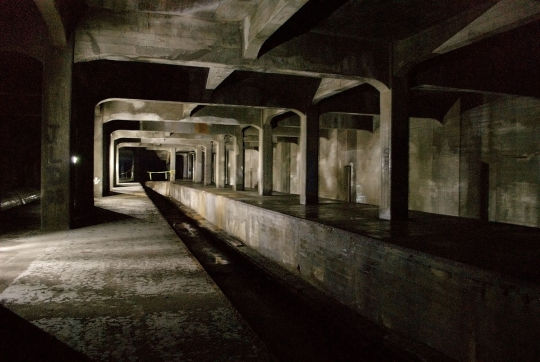
    I can get lost on Google Maps for hours on end. I love looking at maps and I love using Street View to virtually explore cities. This morning I’m honed in on Cincinnati, Ohio (a city I’ve never been to) while I listen to this podcast about their unfinished subway.

    In 1916, the city voted in favor of spending $6 million on a new subway. But it was never finished and so today – 100 years later – it has the dubious distinction of being the largest abandoned subway tunnel in the United States. 

    The podcast I’m listening to is with a fellow by the name of Jake Mecklenborg. He has written a book on the subway’s history and has emerged as the expert on this topic. And it all started with him just throwing up a website.

    One particularly interesting aspect of the subway is how it tied into the city’s flooding problems. At the time, the population density of the constrained downtown was surging and the subway was viewed as a way to stitch together desirable land and relieve some of those urban pressures.

    I’m also very interested in understanding how cities got founded in the locations that they did. As in, who was the person who dropped their bag and said: “yup, this, is the spot.” Somebody had to have made a decision.

    Oftentimes there were specific strategic, economic, and/or environmental reasons for a certain location. And this is something that Jake touches on. In the case of Cincinnati, flooding was again a major determining factor. 

    If you can’t see/listen to the podcast through the embed below, click here.

    //html5-player.libsyn.com/embed/episode/id/4210424/height/90/width/580/theme/custom/autoplay/no/autonext/no/thumbnail/yes/preload/no/no_addthis/no/direction/backward/render-playlist/no/custom-color/87A93A/

    Image: Jonathan Warren via Wikipedia

  • For the love of Brutalism

    Brutalism is an architectural movement that most people, other than architecture nerds, hate. Derived from the French words for raw concrete – béton brut – Brutalist architecture is characterized by its use of exposed concrete and its imposing fortress-like qualities.

    Most people find it too cold, sterile, and impersonal. But this 99% Invisible episode perfectly sums of where I think we sit with this era of building:

    “Back in the 1960s, Victorian style buildings were considered hideous and impossible to repair. We were tearing batches of Victorians down to erect big concrete buildings. But some Victorians were saved—and today, some of them are considered treasures.

    Concrete architecture now finds itself at an inflection point: too outdated to be modern, too young to be classic. And a small, but growing band of architects, architecture enthusiasts, and preservationists, would like us to just wait a bit and see.

    Maybe, with a little time, we’ll come around to love these hulking concrete brutes.”

    Concrete can be a wonderful building material all on its own. I mean, just look at the work of Tadao Ando. 

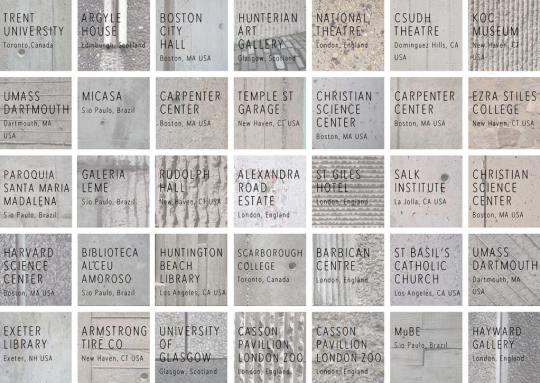
    But all concrete is not created equal. Here is a taxonomy of concrete textures that was also part of that same 99% Invisible episode:

    image

    I say all this because if we believe that Brutalist architecture has no value then we are likely to believe that it doesn’t need to be preserved. And that may very well be the case for some Brutalist architecture. But if history is any indication, some or much of it may also be considered beautiful one day.

    Most cities have a rich history of demolishing (or almost demolishing) buildings and neighborhoods that today we would (or do) treasure. Which tells me that we’re not always very good at figuring out what has value or will have value in the future.

    So maybe some of those brutes are worth a second look.

  • True Condos Podcast: Transparency in the Real Estate Industry

    A few weeks ago I was invited by Toronto realtor Andrew la Fleur to participate in his True Condos podcast series. I had actually never met Andrew before in person, but I knew of him because of Twitter, his blog, and because he was an early user of my past startup, Dirt.

    I was initially a bit apprehensive about being on a realtor podcast, because I thought it might end up as some sort of cheesy marketing piece. But I’ve come to learn that Andrew is not that kind of guy. He’s also interviewed some really great people in his podcast series (here’s the full list), so I feel honored to have been invited. 

    I’ve embedded the podcast below, but if for whatever reason you can’t see it, click here to be redirected to Andrew’s site. We talk for about 30 minutes, with a big focus on openness and transparency in the real estate industry. Thanks again for the invite Andrew. It was great to meet you in person.

    http://www.podbean.com/media/player/audio/postId/5289048?url=http%3A%2F%2Ftruecondos.podbean.com%2Fe%2Fbrandon%2F