Daily insights for city builders, delivered every morning at 6 AM ET. I’m Brandon Donnelly — a Toronto-based real estate developer and founder of Globizen. I’ve been writing here since 2013.

Tag: photos

  • Golden hour cranes

    I was out this past Saturday evening with my Fujifilm X-T3. I usually always have it on me when I’m traveling, but less so when I’m at home. It can be harder to be a “tourist” in your own city because things don’t stand out in the same way. And oftentimes it is that novelty which sparks the desire to take a photo. But that’s no excuse. So here are two photos that I took right before sunset from CityPlace, Toronto. The cranes you see in the first picture (mostly) belong to The Well.

  • Largest airport in the world

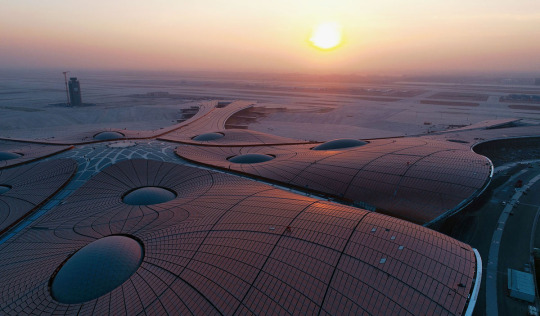
    I just finished scrolling through these photos (from the Atlantic) of Beijing Daxing International Airport, which is currently under construction about 46 kilometers south of Tiananmen Square. The first phase is expected to open in the second half of this year. It will be about 7.5 million square feet and be capable of handling some 72 million passengers per year (100 million at full build out). 

    Supposedly all of this will make it the largest airport in the world, which is pretty impressive considering Beijing Capital International Airport is already one of the busiest in the world. It too moves around 100 million passengers a year and is likely to overtake Hartsfield-Jackson Atlanta in the near term (if it hasn’t already).

    But in addition to being the biggest and baddest, two other things stand out to me about the design of Beijing Daxing. 

    The first is its starfish design. This was done to minimize the amount of walking between security and gate. Check-ins happen in the middle of the starfish and then the most you’ll ever have to walk is 600m (to end of one of the limbs). That’s in line with what most people would consider a reasonable urban transit radius.

    The second is the fact that the check-in area provides an aerial view of the gates below. You can see this layering in the photos from the Atlantic. This was done to create a visual connection between passengers and their family and friends. Usually, the goodbye waves happen at or before security. Here you get a bit more time. (Will security be an issue?)

    For the full set of photos from the Atlantic, click here. I have a thing for airports, so I thought this was a great set.

    Image: Wang Mingzhu via the Atlantic 

  • Unusual ski-spots around the world

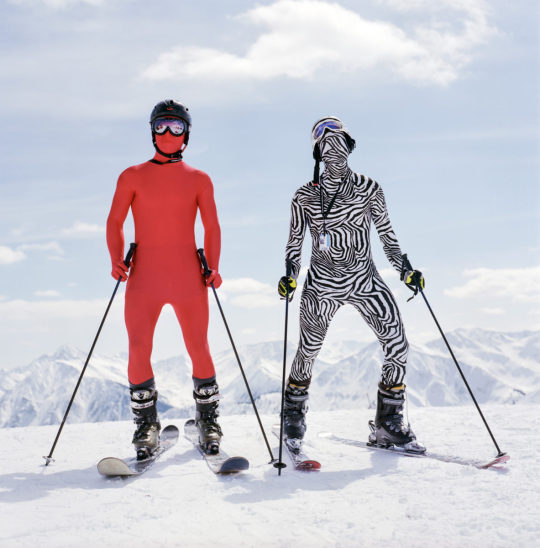
    “Like so many sports that humans do,” he [Kari Medig] says, “skiing can seem absurd: sliding over the miracle of frozen water, slipping down steep mountains wearing layers of crazy clothes—it really is a strange thing to do.”

    I love skiing (well snowboarding to be exact). And I love photography. So here is an interesting photo essay from FvF about “the unexpected diversity of the ski community.” It features the work of Canadian photographer Kari Medig.

    Kari’s career is centered around photographing unusual ski-spots around the world. He has discovered that every locale has its own unique subculture. In some places, skiing is about status. But in other places, people depend on it for their livelihood.

    Eventually Kari hopes to turn this lifelong ski project into a book. I sure hope he does that. I bet it would do very well on Kickstarter. (On a largely unrelated note, his photos of Rio de Janeiro are at least 100x better than mine.)

    Image: Kari Medig

  • Leica Store Kyoto

    Yesterday I sent out this tweet about the, relatively new, Apple store in Kyoto

    It is the first in the city and I like what they did with the facade of the building. It is decidedly modern and yet there are hints of a local vernacular.

    Photographer Jonathan Castellino responded and suggested that I check out the new(ish) Leica store, which is also in Kyoto. 

    So here is that store (if you can’t see the video below, click here):

    [youtube https://www.youtube.com/watch?v=ouckkaj3XVc&w=560&h=315]

    I shoot on the Fujifilm X-T3, but Leica certainly makes some exquisite (and expensive) cameras. The Leica Store Kyoto does not deviate from that recipe.

  • Photogenic neon in the Junction

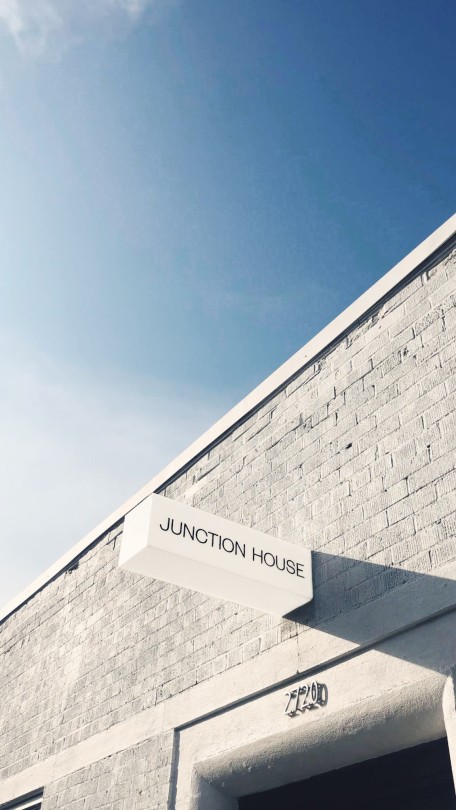
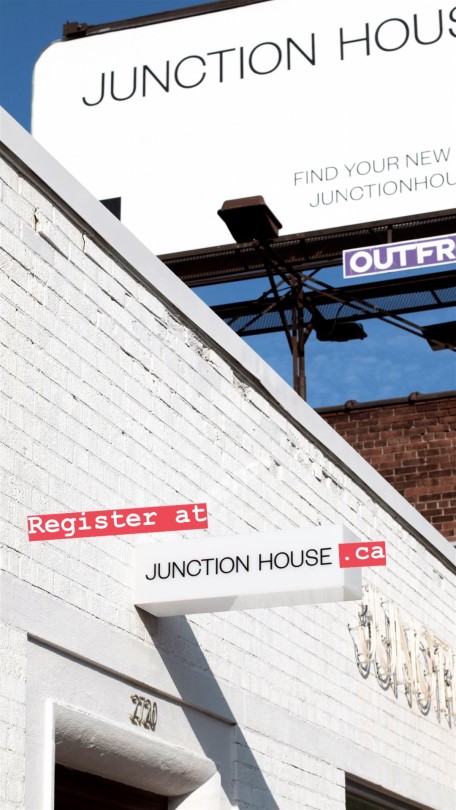
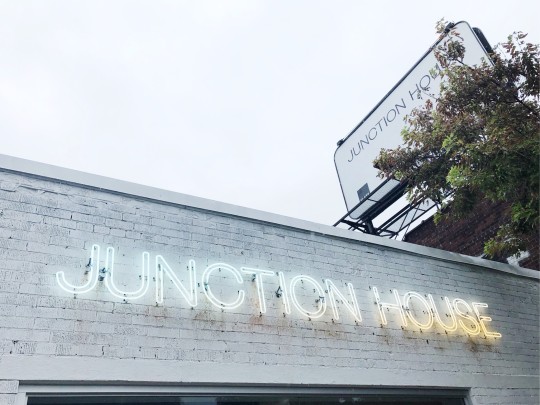
    We just finished putting up some additional signage at the future sales office for Junction House. Clean and minimal, but fun. I am pretty pumped with the way everything turned out. Creative and photos by Vanderbrand. Instagram story mashup and failed neon photo by me.

    This week I learned that properly photographing neon takes a bit of work. The neon “Junction House” sign is actually all white when you see it in person. Apparently it has something to do with the frequency. 

    I’m going to go back one evening with my tripod and Fuji and see if I can do better.

  • PAMM, hi

    Yesterday we visited the Pérez Art Museum Miami (PAMM), which has been on my list since it first opened in 2013. 

    The Pérez part of the name belongs to real estate developer and art collector Jorge Pérez. He donated $35 million in cash to the Miami Art Museum in 2011 – so that the below building designed by Herzog & de Meuron could be built – and another $15 million in 2016. 

    This latter donation included some contemporary Cuban art valued at around $5 million. Supposedly after he dies Pérez will be donating the rest of his art collection to the museum.

    Pasted below is a full copy of the architect’s description of the project to go along with my photos. It was taken from here.

    This first picture faces the main entrance (on the left) and Biscayne Bay. In the background, toward the end of the terrace, is also a playground with swings.   

    image

    This picture shows the relationship between the “veranda-like public space” that wraps the building and Biscayne Bay on the left. Also note the hanging plants. These were great.

    image

    And this last picture is my attempt to show a kind of section through the building. Here you can clearly see the raised museum and at-grade parking (described below). 

    I also enjoyed that the parking level housed vegetation that cut through the above veranda.

    image

    -—————————————————–

    An open structure

    The new Pérez Art Museum Miami (PAMM) is located in Museum Park, part of the redeveloping downtown waterfront on Biscayne Bay. Its direct neighbours are the Patricia and Phillip Frost Museum of Science and a major freeway, connecting mainland Miami with Miami Beach. Simultaneously oriented towards the park, the water and the city, the new PAMM is an open and inviting structure from all sides alike.

    Miami is known for its iconic art deco district, decorated boxes with no great relationship and exchange between inside and outside. What makes Miami so extraordinary however, is its amazing climate, lush vegetation and cultural diversity. How can these assets be fully exploited and translated into architecture?

    Nature

    As in previous examples of our work, such as the Dominus Winery in Napa Valley, the building’s environmental circumstances become central to its architectural concept. Due to its proximity to the water, the museum is lifted off the ground for the art to be placed above storm surge level. We use the space underneath the building for open-air parking, exposed to light and fresh air that can also handle storm-water runoff. Rising from the parking level, the stilts supporting the museum platform become columns supporting a shading canopy, which covers the entire site creating a veranda-like public space that welcomes visitors to the museum and the park. Facing the bay, a wide stair connects the platform to the waterfront promenade.

    In this exceptional location, we wanted the museum to offer generous views to the outside. Yet all the building’s expansive windows are recessed, with wooden planks under the concrete beams to minimize the sun’s impact on the glazing and to reduce the building’s energy consumption for cooling. Tropical plants selected for their resilience to the local conditions engulf the structural system. Roof and plants combined will create an overall microclimate reducing the extreme temperature gaps between outside and inside in the hot weather. The exterior surface of the museum’s massive concrete walls is chiseled in places and polished in others. When adjacent to the glazing, the concrete is smooth and reflective. When facing the outside, the concrete becomes rough, exposing its natural ingredients.

    Rather than being an isolated “jewel box” (Schatzkammer) for art lovers and specialists, the museum provides comfortable public space for everybody. It is an extension of the park, offering gradual transitions from the outside to the inside, from the warm to the cool, from the humid to the dry and from the street to the art.

    Specificity

    The expression of the building comes from the canopy, the platform, the columns, the vegetation: in other words, the Veranda occupying the entire site. The museum’s interior volume nests within it, suspended amid the structural framework, each floor assuming the shape it needs. Because the galleries did not have to fit into any given form, we had the freedom to develop the curatorial layout, in close collaboration with the museum staff, to what felt like an optimal configuration to exhibit and develop the growing collection as well as to provide ample space for temporary exhibitions.

    PAMM is organised around four different gallery types: Overview, Focus, Project and Special Exhibition galleries. They occupy part of the first and the entire second floor. The Overview galleries, displaying the museum’s collection, serve as the connecting tissue between the other gallery types. Fluidly connected in a non-linear sequence, they allow relationships to be formed between spaces. They are characterized by large openings with views onto the park, downtown Miami, the bay and the freeway. Along this flowing sequence of rooms, single enclosed spaces punctuated by windows show an individual artist, a theme, a specific collection or a commissioned work. These spaces are called Focus and Project galleries. The fourth type, the Special Exhibitions galleries function as spacious exhibition halls designed to accommodate contemporary art exhibitions. The Overview, Focus and Project galleries form a firm and rhythmic sequence through the building, varying in proportion and relationship to the outside. On the other hand, the Special Exhibitions galleries are flexible, with fewer openings to the outside and can be subdivided by temporary walls.

    The spaces at PAMM and their materiality are very specific. They can be considered an antithesis to the flexible, abstract white cubes that have been a dogma in most recently built art spaces. Concrete and wood are used in different combinations, reflecting the outside materials of the building. Typical drywalls are detailed in a way that they are legible as added to the main structure. In order to enhance the inside-out transition, we designed a customized concrete mullion system that holds the largest ever-used hurricane-proof glass in Florida.

    Community and views

    At the heart of the building, a stair as large as a gallery connects the two exhibition levels. This stair also functions as an auditorium, using sound-insulating curtains in different configurations to provide space for lectures, film screenings, concerts and performances. Our idea was to avoid for such events to be isolated in a space remaining unused for most of the time. At PAMM, events in preparation are visible. When the space is not actively used for events, it is used by visitors and staff for individual readings, introductions to groups and the like. The museum shop and bistro are located on the platform level and are oriented to the bay. Education and research facilities are on the third floor along with the museum’s offices. We place these communal spaces at the periphery of the building, maximizing their exposure to the Veranda, Biscayne Bay, and Museum Park.

    Herzog & de Meuron, 2013

  • MOMO TOKYO

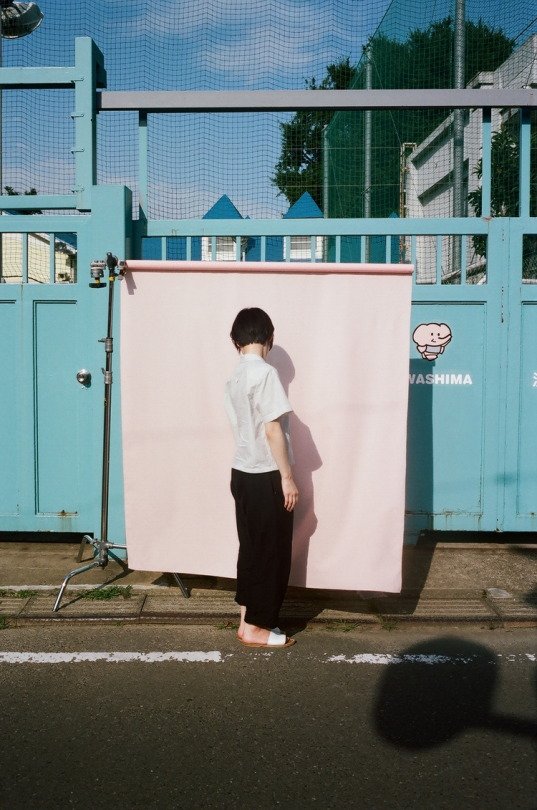
    Last summer, photographer Parker Woods spent two weeks walking over 100 miles in Tokyo with a peach-colored (”momo” in Japanese) backdrop and a metal c-stand. He used this accessory to “contextualize his first encounter with Japanese culture.”

    In some cases, it functions as you would expect: as a backdrop for the new people that he encountered along his walking journey. 

    But in other cases, the backdrop is simply inserted into the urban environment. Sometimes rolled up amongst a pile of metal tubes. And sometimes fully erected in the middle of a busy road.

    This is an interesting photography project based in one of my favorite cities in the world, and so I wanted to share it on the blog. All of his photos were shot on Kodak film. It’s also giving me some ideas for my own photos.

    If you’d like to buy a copy of the book ($40), you can do that here. There’s a limited run of only 250 copies. If you’d like to read a bit more about the project (and see a few additional photos), you can do that here on VSCO.

    Image: Parker Woods

  • New lens

    I ordered a new lens for my Fuji X Series camera today. 

    For those of you who are interested in photography, it’s a prime lens: 35mm (53mm equivalent) with a maximum aperture of F2.0. I wanted a fixed focal length because I suspect I’m going to enjoy shooting with it more than my current zoom lens. There’s something pure about it. I also wanted a lens that would be versatile enough for street photography, portraits, and so on. Also helpful is the fact that it’s compact and easy to carry around.

    Since I picked up my Fuji camera last summer I’ve been slowly but surely returning to photography as a hobby. Part of why I did that is because I felt like I needed to challenge myself creatively. I was also inspired by some of my creative friends, namely Akbar and Evgeny. Both of them take great photos and are far more serious about photography than I am. I’m also an avid follower of Bijan Sabet’s blog. He’s a venture capitalist with an amazing passion and talent for photography.

    But the other reason I have been drawn to photography – for my many years now – is that it’s a way to document the built environment. It’s for that reason that I love taking photos when I travel. Everything is new and I’m just trying to soak it all up.

    I am mentioning all of this today for three reasons. First, I’d like to incorporate more of my photos into this blog. I’ve also been feeling like this blog needs a bit of a refresh. It’s been almost 4 years of daily writing and I think it’s important to continually try new things. Second, by being public about all of this, it holds me accountable. And third, I’m going to be in Miami this weekend. So expect some fresh photos on my Instagram.

  • Motion Exposure

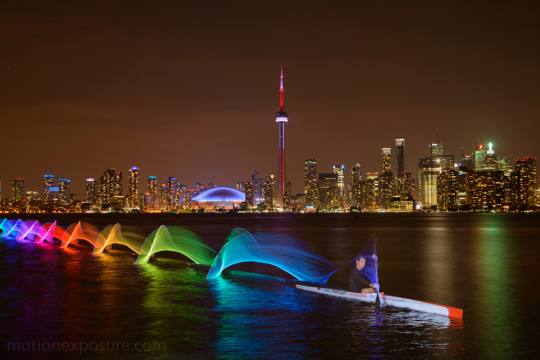
    Photographer Stephen Orlando is obsessed with capturing “motion through time and space.” What he does is use long single exposures and LED lights (attached to people and objects) in order to reveal paths of movement. The results are stunning.

    He has done this with various sports, including cross-country skiing, soccer, hockey, karate, and kayaking. His work is art + technology + sport. Check out his gallery here.

    Recently Stephen collaborated with Olympic kayaker Adam Van Koeverden and shot photos of him cruising along Lake Ontario with the Toronto skyline in the background. See above photo. The LED lights were attached to his paddle. The rest of those photos can be found here.

    What I like about these photos is that they’re created by visualizing – in a more permanent way – movement that is already latent within these sports. These are geometries that currently exist, we just can’t see them without Stephen’s help.

  • Photoblog: TIFF

    This past weekend was the first weekend of the 2016 Toronto International Film Festival. It’s a great time to be in the city – regardless of whether you’re into film or not. It felt as if the entire city decided not to sleep this past weekend.

    Growing up in Toronto, it was also the signal that summer is coming to an end and the city is now about to refocus itself on work. Game on.

    Here are a few photos from the weekend: