Daily insights for city builders, delivered every morning at 6 AM ET. I’m Brandon Donnelly — a Toronto-based real estate developer and founder of Globizen. I’ve been writing here since 2013.

Tag: pedestrian only

  • The mighty bollard

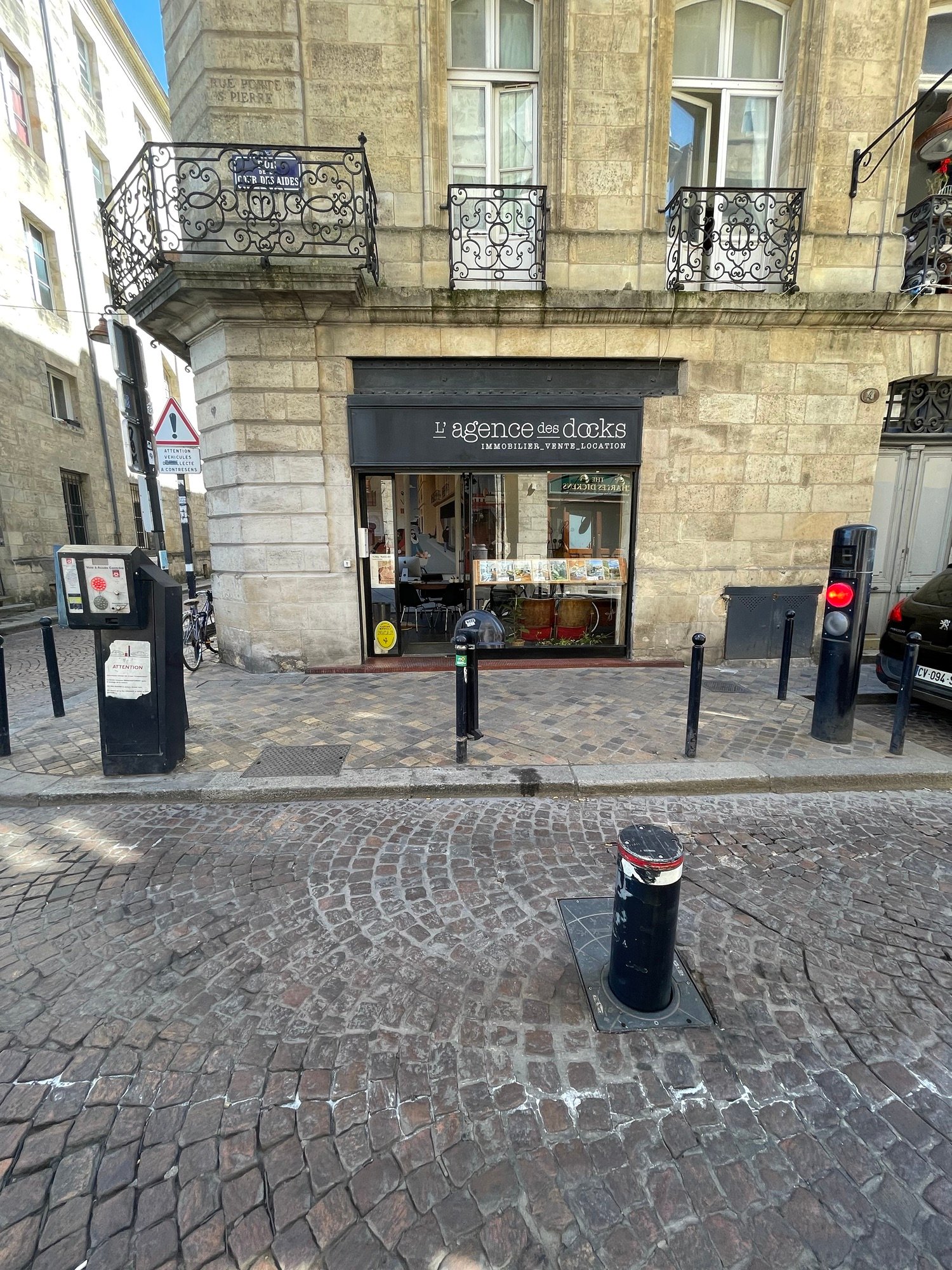
    The mighty — and automatic — bollard is an important city-building tool that isn’t employed nearly enough in North America. It’s typically used to control car access to small pedestrian-only or pedestrian-first streets. But I guess if you don’t have any of these, then you may not feel the need to install such a device. The above photos are from Bordeaux. And if you want to gain access, you need to hit the intercom button and explain why you’re local traffic. Can you think of any streets in your city that could use a system like this? I can think of many in Toronto.

  • Montréal is making yet another case for pedestrian-only streets

    There are parts of Toronto that are pedestrian only. There’s the Distillery District, some small laneways in Yorkville, the Toronto Islands (though this is a bit of a unique situation), and various other pockets around the city.

    There are also streets that we temporarily open up to only pedestrians, such as Market Street and King Street, and areas, such as Kensington Market, that we have been rigorously considering pedestrianizing for as long as I can remember.

    What is clear is that pedestrian-only streets are controversial. Motorists fear that it will make driving in the city even more inconvenient. And businesses fear that it will limit their customer base.

    While it is true that not all streets can and should be pedestrianized, there are countless examples of streets and areas that appear to be thriving because of it.

    Take, for example, Montréal.

    Since 2021, the city has been pedestrianizing a stretch of 30 blocks along Mont-Royal Avenue during the summer months. And according to Mayor Valérie Plante, the commercial vacancy rate for the street has dropped from 14.5% in 2018 to 5.6% in 2023:

    Maybe you don’t want to infer causality here, but at the very least, it seems to suggest that the street isn’t dying and bereft of human activity. This year, pedestrianization is also planned to be extended further into the fall.

    This won’t necessarily be the outcome for all streets, but I do agree with this recent Globe and Mail article that, oftentimes, the reasons for not pedestrianizing are “a question of philosophy, not geography.” Because there’s lots of research and data to support doing this.

    If any of you are business owners along Mont-Royal, I’d love to hear about your experiences and how you think, for better or for worse, it has changed the area. Leave a comment below or drop me a line.

  • Should Toronto’s Kensington Market be mostly pedestrianized?

    I was in Toronto’s Kensington Market over the weekend and so naturally I decided to tweet out a glib remark about how the neighborhood should be mostly pedestrianized. This, as many of you know, has been an ongoing debate in this city for as long as I can remember. But there are, in fact, things happening. Watermain replacements are scheduled for the area in 2024 and 2025 and so the city is rightly using this as an opportunity to rethink the area’s streets. Here’s the official website for the project. Here’s the staff report that was adopted. And here’s what design changes are right now being proposed.

    One of the things that you’ll find in these documents are answers to the following question: “How supportive are you of the proposed design for the Pedestrian-only Zones?” And the results are pretty interesting. When the question was proposed to all respondents (the total number being 1,165), 90% were either very supportive or supportive of the Pedestrian-only Zones. And when narrowed to “visitors” of the area, the number appears to increase to 94% supportive. However, when this same question was asked to “people who live/work/own within the affected streets” the number drops to 55% supportive, with 28% being “very unsupportive” of the idea.

    One of the concerns with pedestrianization is that it could make it difficult for businesses to operate in the market. This is an understandable concern. But in my lay opinion, this is a problem that has already been solved in many other cities around the world. Delivery vehicles would still be allowed to load/deliver, and you control their flow through things like mechanical bollards. The other concerns raised by community seem to suggest something different. They seem to suggest that pedestrianization might make the area too desirable. More specifically, it might “accelerate gentrification” and cause “traffic and other issues in the neighborhood.” I’m assuming the traffic being referred to here is non-vehicular, because we are, after all, talking about pedestrianization.

    This dichotomy is an interesting one. On the one hand you have visitors and customers who overwhelmingly want the area to be pedestrianized or, at the very least, have pedestrian-only zones. But on the other hand, the businesses themselves seem to be concerned about their operations and the area becoming too successful. On some level, I guess, this makes sense, if your concern is displacement and/or the area becoming too corporate or whatever. But it’s also counterintuitive. Usually when you run a retail-oriented business you like things that (1) make your customers happy and (2) drive foot traffic.

    So how do we go about reconciling this city building divide? Well, like many/most urban initiatives these days, you run a pilot! And that’s exactly what the city plans to do. There will be more consultation sometime next year, and then construction is planned for 2024-2025. Once that wraps up, the plan is to test out the various pedestrian-only zones. So I reckon we could be 2026 before we truly know where this is landing. I remain optimistic. But until then, please continue to refer to my glib weekend tweets.

  • So how is the Market Street pedestrian-only pilot project going?

    A portion of the street that I live on has been thinking about going pedestrian-only for a few years now. Last summer it was pedestrianized for a few weekends. And this summer, it’ll be pedestrianized until, I think, September as part of a more extensive pilot project. These sorts of moves can be controversial and so our usual approach is to ease-in with a pilot project.

    When our condominium board sent out a notice about the pilot project, they framed it as a closure to vehicles. But of course, the other way to frame this is that the street is now open to pedestrians. And since I happen to walk this street every day (and oftentimes multiple times a day), I’ve been tweeting out pedestrian usage updates.

    Click here to view on Twitter if the embedded tweets below aren’t showing up for you properly. Spoiler: it’s all working according to plan.

    Not every street (or area) is necessarily a good candidate for a pedestrian-first focus. But there are many great examples across the city, including Kensington Market and this stretch of Market Street. So let’s start investing in mechanical bollards, as they do in Europe, and make this pilot a permanent fixture.

  • Should Market Street be pedestrianized?

    Next to the St. Lawrence Market (here in Toronto) is an appropriately named street called Market Street. It is a lovely street — perhaps one of the nicest in the city. It’s old and historic and it was completely redone several years ago (evidence here) with nice unit pavers, bollards, a curbless design, and seasonal restaurant patios.

    In the winter months, the restaurant patios are packed up and additional parking is added to that side of the street. It was designed to be adaptable and in my experience it seems to be working quite well.

    Right now the local Business Improvement Area is running a pilot project to see what this street might be like if it were to be pedestrianized. It was closed to vehicles this past weekend and the same will happen this upcoming weekend. Here’s a photo of what that looked like on Saturday:

    It’s not perfect. A number of people commented on Twitter that the seating needs some shade. But hey, it’s a pilot project. It is about giving people a taste of what the future could be.

    I am a fan of pedestrianized streets in the right locations and when executed well. And I think this stretch of Market Street is a perfect candidate. It’s already pedestrian-only to the north of Front Street and it has the right kind of “edges” to ensure that it can be properly animated.

    If you feel the same way, I would encourage you to fill out this short survey that the St. Lawrence BIA has put out. I would also be curious to hear your thoughts on pedestrianized streets in general. Leave a comment below.

  • Prerequisites for a successful pedestrian-only street

    image

    A few of us had a really great discussion on Twitter recently about pedestrian-only streets. It was kicked-off by a tweet about Spark Street Mall in Ottawa, which many argue needs a rethink.

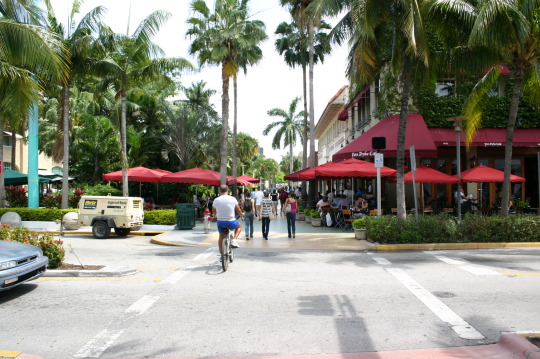
    One of the comments was that a lot of people tend to overvalue their worth. And I will admit that I am probably one of those people. If you’ve ever visited places like Grafton Street in Dublin, Lincoln Road in Miami Beach, or Kensington Market in Toronto on a pedestrian Sunday, you can’t help but think to yourself: why don’t we do more of this? They’re such great places to be.

    But the research suggests that these success stories are few and far between. 

    Below are the key findings from a report that was shared on Twitter during our discussion. It’s by Cole E. Judge and it’s called, The Experiment of American Pedestrian Malls: Trends Analysis, Necessary Indicators for Success and Recommendations for Fresno’s Fulton Mall.

    – Pedestrian malls in the United States have an 89% rate of failure. Most have been removed or repurposed. Only 11% have been successful.

    – Of the 11% successful pedestrian malls, 80% are in areas with populations under 100,000.

    – Certain indicators need to be present for a pedestrian mall to be successful in the United States: near or attached to a major anchor such as a university, situated in close proximity to a beach, designed to be a short length in terms of blocks, in a town/city with a population under 100,000, and/or located in a major tourist location such as Las Vegas or New Orleans.

    – Cities that have embraced the Main Street and Complete Streets models have experienced turn-arounds in their downtowns with more investment, higher occupancy rates and more pedestrian traffic.

    Though the report lists proximity to a beach as helping pedestrian malls, this is more about having a strong anchor than it is about climate – which is a commonly held excuse for why they don’t work. The report cites lots of failed pedestrian malls in California.

    Furthermore, if you look at the list of successful pedestrian malls, about half of them are in colder climates. And if you search the report for the word “weather” it only comes up once. The word “climate” doesn’t come up at all. 

    So I don’t believe that they’re not possible in colder climates. Ski resorts, for example, usually have great pedestrian-only spaces because they have a strong anchor – the mountain.

    But I do agree that pedestrian-only streets aren’t possible everywhere. And the more I think about this topic, the more I agree that we are overvaluing pedestrian-only. I guess that’s why our focus today is more on complete streets.

  • It’s too cold for that

    This past Sunday I spent part of the afternoon in Kensington Market (Toronto) for Pedestrian Sundays. 

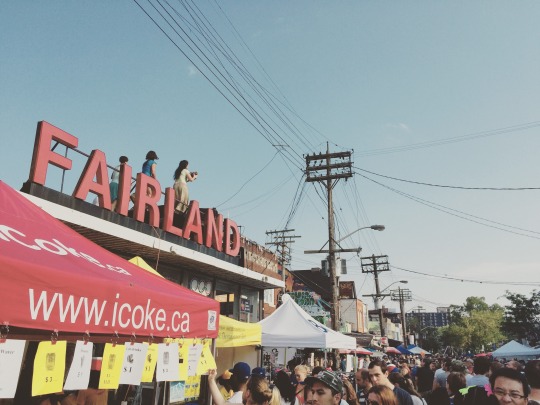
    If you’ve never been to a Pedestrian Sunday, you’re missing out. The entire neighborhood – which happens to be a National Historic Site of Canada – gets closed to cars, and filled with street vendors, musicians, bands playing on roofs (see above), and so on. It’s pretty wild. And it feels very Toronto to me.

    It happens the last Sunday of the month from May to October. But every time I go I wonder why the area isn’t this way more often or even all the time. It’s a natural candidate. But after 12 seasons of Pedestrian Sundays, it still hasn’t happened. It’s only 6 days throughout the year. 

    I remember being in a meeting early on in my career when I brought up the idea of a pedestrian mall in Toronto for a project I was working on. And I got completely shut down. I was told they don’t work here in our climate and that we should just forget about it. I was told to look at the failure of Ottawa’s Spark Street Mall.

    But I’m still not convinced that’s the case. In fact, I feel even stronger at this point that it could and would work in Toronto. I’ve been to the Distillery District in the dead of winter for the Toronto Christmas Market and I could barely move because of all of the people. 

    Acknowledging climate is important. But it shouldn’t become an excuse for not doing things.

  • A tale of two cities

    image

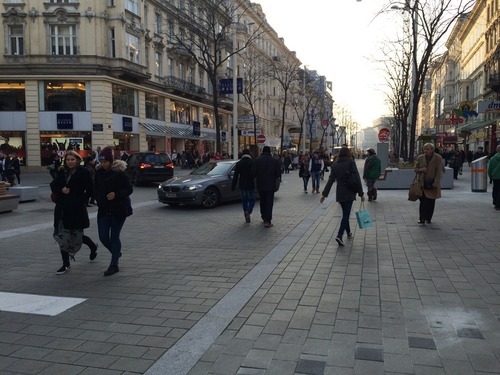
    Yesterday my friend Darren Davis out of Auckland introduced me to a 3-part blog series that he recently did with Andreas Lindinger out of Vienna, which looked at pedestrian zones and shared spaces across these two cities.

    The first post looks at the redesign of Vienna’s Mariahilferstraße (important shopping street that I’m somewhat glad I get to write and not try and pronounce). The second post looks at Auckland’s overall shared space program. And the third one offers a direct comparison between the two cities. The posts are all hosted on an interesting blog called Vienncouver (Vienna + Vancouver), which I am now following as of this morning.

    Compared to both Auckland and Vienna, Toronto is behind when it comes to pedestrian zones and shared spaces. So it’s interesting to see how other cities have managed to pull it off. It’s also further proof that you don’t have to be a warm climate city to have amazing public spaces.

    Image: Vienna via Vienncouver (notice the cars and pedestrians mixed in)

  • Being exemplary

    image

    Yesterday morning I had coffee with a good friend of mine and fellow city geek. We don’t connect nearly as often as I’d like, but when we do we always have great conversations about cities and about Toronto.

    One of the things he asked me was whether I was still loving Toronto. And I responded by saying absolutely. We then both agreed that there are a lot of exciting things happening in the city right now. 

    But I qualified this statement by saying that I wish we were bolder. I wish we took more chances. Because while it’s great that we’re doing things like building more bike lanes and intensifying our growth centers, lots of other cities are doing those things as well.

    To be a leading city, you have to be prepared to do things that other cities think are wrong or won’t work and that are truly remarkable. Whether you’re city, company, or an individual, following trends is never enough.

    Take for example the dramatic anti-pollution measures that were recently announced by Paris mayor Anne Hidalgo:

    By 2020, no diesel fuel at all will be burnt within Paris. Regular cars will be banned outright from its more polluted roads, which will be open solely to electric and hybrid vehicles. Meanwhile, the city’s most central districts (the first four arrondissements) will be barred to all but residents’ vehicles, deliveries, and emergency services, transforming Paris’ Right Bank core into a semi-pedestrian zone. As a counterbalance, the number of cycle lanes will be doubled by 2020, while the city will fund an extended electric bikeshare scheme to encourage more people to get on two wheels. “I want us to be exemplary” Mayor Hidalgo has declared. 

    That’s how you win hearts: by being exemplary.

    As always though, I’m incredibly optimistic about the future. Toronto has a new leader at its helm and I know that there are a lot of passionate people in this city who care deeply about its future. I am certainly one of them.

    Image: Not my actual coffee (via Flickr)

  • Toronto already has a laneway community on the islands

    image

    It feels really good to have shared the details about my laneway project yesterday. It’s a project I’ve been working on for a few years now, and – though I’ve spoken to architects, engineers, and city staff about the project – I hadn’t really gone public with it. And I’m happy I did.

    I got a lot of great feedback from the twittersphere. In fact, I didn’t receive one negative comment about the idea of a laneway house in Toronto. Everyone seemed to think it was a great idea and many expressed their dismay with the city’s reticence to formally support them.

    I also received a number of encouraging emails, one of which was from a resident of the Toronto Islands. And he raised a really great point: Toronto already has a very successful community of laneway-like houses and it’s called the Toronto Islands.

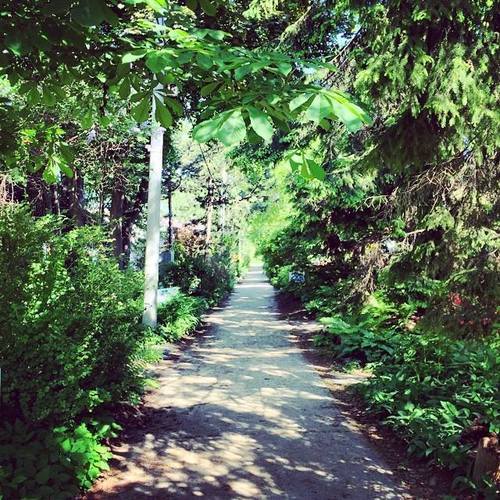
    The streets are no wider than the laneways we have here on the mainland (and even smaller in some cases) and yet there are about 250 houses serving a population of roughly 750. He went on to mention that they even have “downsized garbage trucks”, which are used to navigate the small, car-free streets of the Toronto Islands.

    What this reinforces is that our aversion to laneway housing is not because we can’t figure out the logistics of how to service them. We can and are already doing that. If we can figure out how to do that on the islands, I’m pretty sure that we could also figure out how to do it on the mainland. 

    So what this really comes down is that there isn’t the political will to make this happen. And there isn’t that will, I’m guessing, because there’s a fear of upsetting the established neighborhoods. That’s why Ontario’s Places to Grow Act (2005) was deliberate in concentrating growth in specific areas of the city – it meant that we could say that the rest of the city would receive little to no growth.

    We’ve since revised that position with the push to intensify our Avenues with mid-rise buildings. But just as we went from high-rise to mid-rise intensification, I think it’s only a matter of time before low-rise intensification starts to also happen.

    I firmly believe that the demand is already there for laneway housing (the Lanehouse on Bartlett pretty much sold out in one evening). It’s simply a matter of now figuring out the supply side of this equation.

    Image: Ward’s Island (Toronto Islands)