Daily insights for city builders, delivered every morning at 6 AM ET. I’m Brandon Donnelly — a Toronto-based real estate developer and founder of Globizen. I’ve been writing here since 2013.
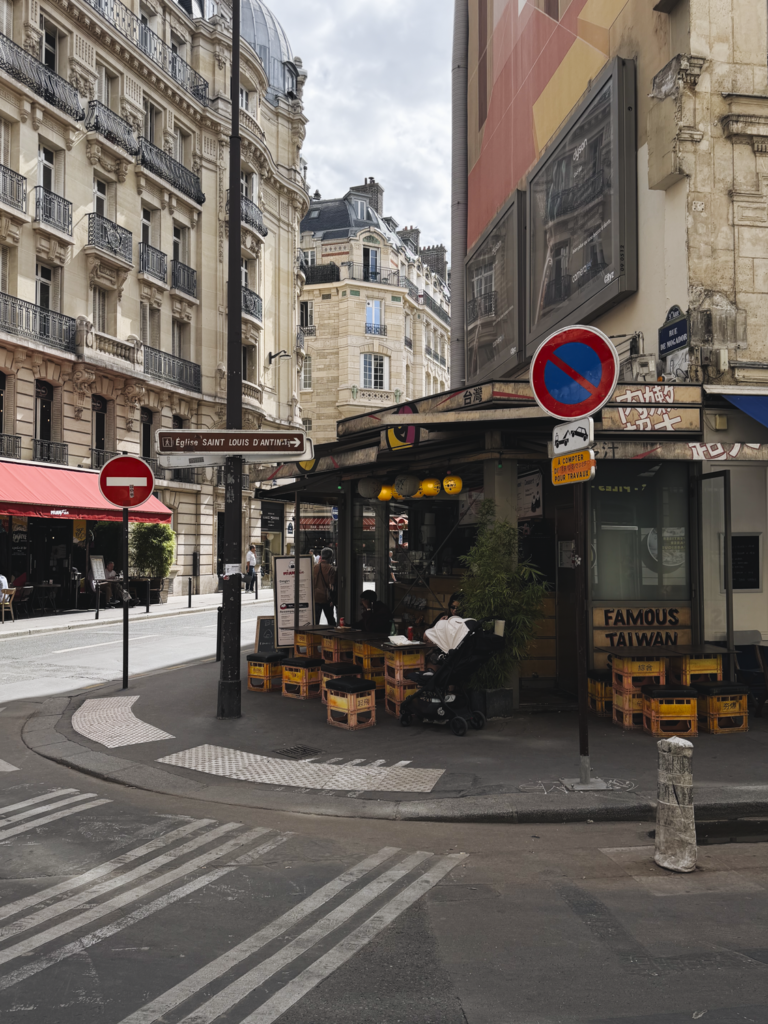
This corner, the corner of rue de la Victoire and rue de Mogador in Paris, could have very easily been nothing. The side wall of the main building is, for whatever reason, blank. There’s a tall mural, two advertising billboards, and a remnant parcel of land that looks to be no deeper than about 3 metres at its absolute deepest.
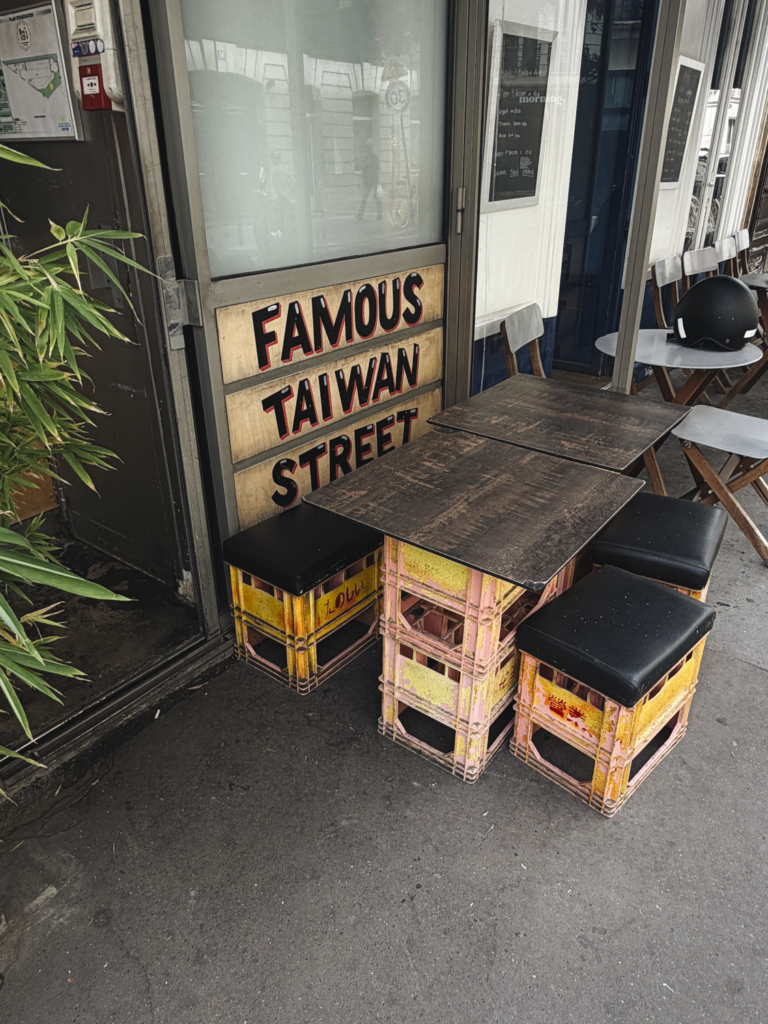
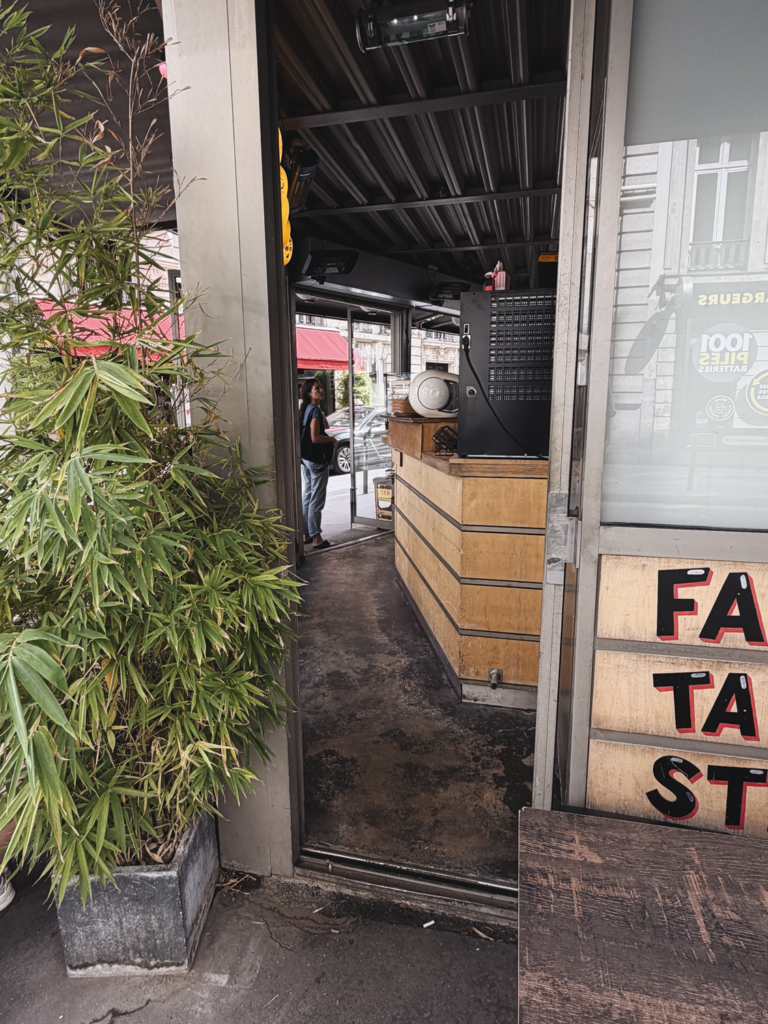
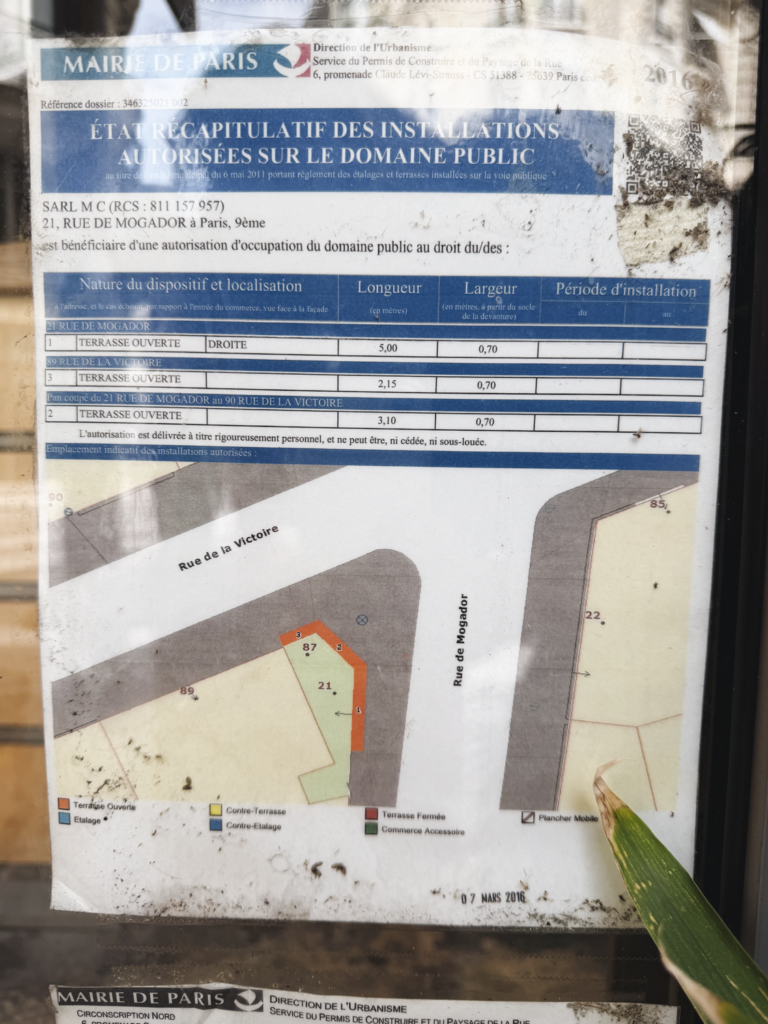
But instead, you’ll find a Japanese street food restaurant called Mian Fan Onigiri (I’m not sure what the Taiwan sign is all about). The interior can’t be larger than 20 or so square metres, but it’s surrounded by a 0.7-metre-deep patio that wraps around the outside of the space and runs about 10 m in total along three faces (see city terrace permit document).
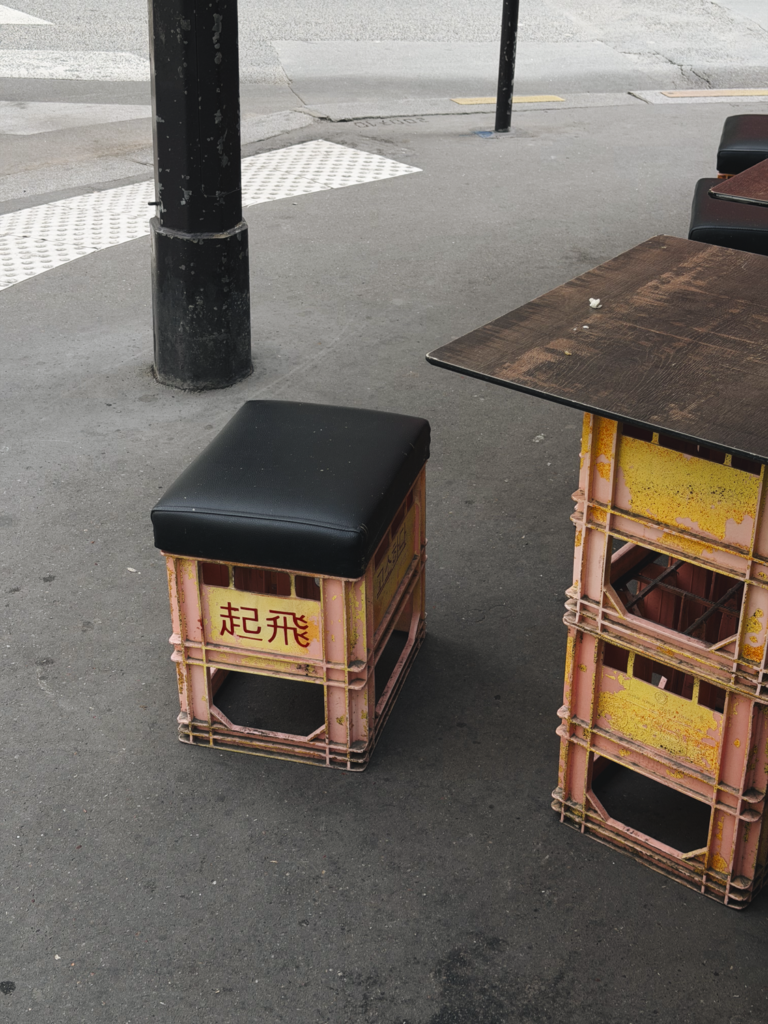
It’s a simple and unfussy space. The patio consists of milk-crate furniture. But these kinds of small spaces punch well above their weight in what they contribute back to a city in terms of street animation and public life. Cities would do well to reduce the barriers to this scale of business and encourage more small entrepreneurs to hang a shingle.
And until they do, we’ll never know how much of this urban spirit is being suppressed.
Perhaps the two most distinctive features of Montreal’s low-rise architectural landscape are (1) lots of exterior stairs and (2) lots of balconies. (Their density is, of course, also noteworthy, particularly in a North American context.)
The exterior stairs are somewhat curious to outsiders given all the snow the city gets. But it’s maybe a good case study and follow-up to yesterday’s post about 1925 Victoria Park Road and its proposed exterior corridors.
As for the second feature, the Globe and Mail recently published this wonderful little ode to the Montreal balcony. It is a great reminder that, when designed well, people really do love balconies and exterior spaces.
This is an ongoing debate in the world of multi-family development, and the outcomes often vary by city and sometimes by housing tenure. But at the end of the day, I have yet to meet anyone who doesn’t appreciate getting outside in the summer.
We are reasonably confident that summer will eventually arrive in Toronto this year, and so we (Junction House) have partnered with Indie Alehouse to host a public and outdoor beer garden from June through to August, right in the Junction.
We are calling it The House Beer Garden because we both have “House” in our name and that’s as clever as we get.
Here are the details:
There will be four editions of The House Beer Garden and each will host a different local food vendor. For the first one, we will be welcoming Chau Toronto and their modern Asian bites.
The timing of the first Beer Garden also happens to line up with the Annual Summer Solstice Festival in the Junction (that was deliberate). So Dundas Street West will be closed to cars and it’s going to be a lot of fun.
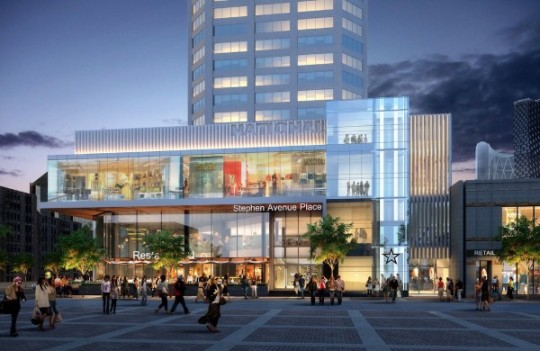
It also announced that it has partnered with Oliver & Bonacini Hospitality and Concorde Entertainment Group to create three new dining destinations at the property: a top floor restaurant, a food hall, and a high-energy restaurant/bar/patio at street level.
Here are a couple of excerpts from today’s press release:
Stephen Avenue Place offers 620,000 square feet of rentable space at the nexus of the historic Stephen Avenue Walk and 2nd St. This classic of the Calgary skyline will undergo a significant renovation – from its public-access ground floor to exclusive tenant amenities and top-floor restaurant – that will reposition it as a modern hub for energy, innovation, business, dining and shopping.
The acquisition and renovation of Stephen Avenue Place is part of Slate’s growing investment in Calgary. In the past 18 months, Slate has increased its footprint in Calgary to 2.3 million square feet with the purchase of 21 office properties, including 12 downtown.
“We are thrilled to acquire and develop such a high-quality property in downtown Calgary that offers businesses, diners and shoppers the very best in location, amenities and access,” said Slate founding partner Blair Welch. “Stephen Avenue Place will undergo an extensive renovation to fully reflect the way we work and live now, while respecting and celebrating its history and future as a Calgary landmark.”
For the full press release, click here. And to learn more about Stephen Avenue Place, including leasing opportunities, click here.
Disclosure: As many of you already know, I work for Slate Asset Management L.P. I am responsible for the company’s ground-up development efforts.
Today was the first day of the year that truly felt like summer here in Toronto. It also happens to be my birthday.
So I did the only sensible thing one should do on a day like this. I went to a rooftop patio after work, with my family, for two of my favorites: a bowl of spaghetti al limone and a negroni. Simple.
In other news, Fred Wilson wrote a great post on his blog today about why he loves Canada and why it is an increasingly important place for the tech sector.
For those of us who already know that Canada is the greatest country on earth, it’s a noteworthy post not because it is likely to tell you a lot of new things, but because it was written by Fred fucking Wilson.
After yesterday’s post about Toronto, I had a friend ask me on Facebook what it is exactly that I think happened to make this city so much cooler. Was it because of one iconic building like Toronto’s new City Hall? Was it because of our recent condo boom? Or was it something else? What changed exactly?
My response was that it’s a generational thing. Let me explain.
Toronto used to have the reputation of being a boring and staid city, and that’s because it was a boring and staid city. In the immediate post-war years, Toronto was overwhelmingly Protestant and the immigration policies at the time were specifically designed to exclude anyone who wasn’t white and from Western Europe or America. If you were Asian, Southern or Eastern Europe (especially Jewish), then you were at the bottom of the entry list.
Prime Minister Mackenzie King reflected the national mood when he observed that “the people of Canada do not wish to make a fundamental alteration in the character of their population through mass immigration.” Discrimination and ethnic selectivity in immigration would remain. “Canada is perfectly within her rights in selecting the persons whom we regard as desirable future citizens. It is not a ‘fundamental human right’ of any alien to enter Canada. It is a privilege. It is a matter of domestic policy.”
In the 1950s and 1960s, Canada started to slowly open up, but only because it needed to. It was in need of labour to fuel its robust post-war economy. Reluctantly, Canada began to look for workers in places like Italy. Initially, Canada had hoped to attract more northern and Germanic-like Italians, but with the European economy picking up, it was the southern Italians who came in the greatest number. In the 1950s, Canada’s Italian population jumped from around 150,000 to 450,000.
But this influx of espresso drinking Catholics was hard for Toronto to adapt to at first. They were so alien compared to Toronto’s population at the time. They wanted to do weird things like eat outside on patios, and that just wasn’t the way we did things here in Protestant and conservative Toronto. We ate inside. That’s where food belonged.
My best friend’s father – who’s also in the real estate development business – once told me that when he first moved to Toronto in the 1970s the real estate business was virtually run by two groups of people: Italians and Jews. In other words, the people building our city were the people that we were once afraid to let come here in the first place.
But in their quest for wealth and a better life (I have so much respect for people who are able to build something from nothing), these new Canadians also reshaped Toronto both physically (through building) and socially (by doing crazy things like eat outside on patios). They were not only building new lives for themselves, they were also rebuilding Toronto. They helped us grow up and not be so stuffy. And I absolutely believe that we’re a better city because of it.
However, I think the true impact of their efforts is happening right now through the next generation – their children. Millennials and Generation Xs (at least the younger ones) don’t remember when Italians were considered aliens. They remember growing up with martini bars on College Street (which is the original Little Italy for those of you unfamiliar with Toronto). They know a different and cooler version of this city.
But most importantly, those subsequent generations are now old enough (and have a lot more generational wealth behind them) to reshape this city even further. And with much deeper roots here, they have the passion to do just that. When I went to graduate school in the US, my parents were afraid I would never come back. That’s what they told me. But the more I traveled and the more I lived outside of Toronto, the more I wanted to come back.
Just like those early wave of pioneering aliens who got us to dine al fresco and taught us that if we shop on Sundays we’re not going to go straight to hell, I feel like I too want to shape this city. I want to make it even better. No city is perfect, but if there’s something you don’t like about Toronto, then here’s my advice to you: Go change it. I can tell you it’s possible, because new immigrants with no money managed to do it.
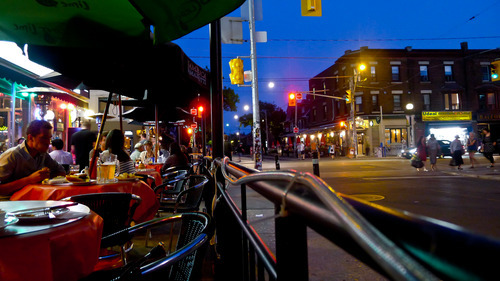
The first person who can tell me (in the comments below) which restaurant the patio shown above belongs to will get a free Architect This City t-shirt. If you’re from Toronto, this should be an easy one.