Daily insights for city builders, delivered every morning at 6 AM ET. I’m Brandon Donnelly — a Toronto-based real estate developer and founder of Globizen. I’ve been writing here since 2013.

Tag: parking requirements

  • Why we shouldn’t blame Uber for traffic congestion

    It has become fairly common to blame Uber (and ridesharing in general) for increased traffic congestion. I hear it all the time: “If only there weren’t so many Ubers on the road, traffic would flow more freely.” While there are studies suggesting that “deadheading” miles do have a negative impact and that Uber can draw people away from public transit (that’s bad), I think it’s important to consider the bigger picture here. So let’s try and do that today.

    Firstly, let’s think about who traffic congestion directly impacts (indirectly it’s everyone). If you’re a pedestrian, you don’t care about traffic congestion. In fact, maybe you gain satisfaction from seeing other people stuck in it. (There’s even a German word for this feeling.) Similarly, if you’re riding the subway, taking any form of transit on its own right-of-way, or riding a bike, you likely also don’t care about traffic congestion. It doesn’t directly impact you.

    Where you do care about congestion is if you’re in something like a bus that is stuck in traffic or if you’re driving. In the former case, you’re probably thinking, “hey why can’t these people take the bus like me. Then we’d have less traffic!” And in the latter case you’re probably thinking, “if only there weren’t so many Ubers and bike lanes, then I wouldn’t be stuck in traffic!” Ironically, this is arguably the biggest segment of people who feel they are being impacted by Ubers.

    Secondly, let’s think about how Uber vs. driving might impact traffic congestion differently. In both cases, I would think that the majority of use cases involve one person (excluding drivers in the case of Uber) going to their desired destination. So from a raw space per person perspective, they both take up a similar amount of urban space.

    The differences are that the Uber likely had some amount of deadhead miles. In other words, it spent time driving around looking for its next passenger. And it likely targeted already busy areas because that’s where it was more likely to find someone. Individual drivers don’t do this. They go from point A to point B.

    However — and this is a big however — drivers do require parking once they get to where they’re going. Ubers don’t. This both takes up more space and oftentimes requires some amount of circling around. This is a significant difference and it begs the question: which is worse? Deadhead miles or all of the parking that cars generally require? I would argue the latter.

    Where I’m going with all of this is that I think the criticism of Uber is misdirected. It doesn’t get at the real underlying problem. If traffic congestion exists, it is because they are too many cars for a finite amount of road space. This includes the people who choose to drive themselves around. In fact, you could argue that they’re the most impactful to cities. The way you solve this is simple: you price congestion and you encourage alternative forms of mobility.

    Everything else is just a distraction.

  • Toronto to eliminate parking minimums

    For the last year or so the City of Toronto has been doing a review of parking requirements for new developments. This would include things like how much car and bike parking needs to be provided for each residential unit in a new building. More information on this work can be found here.

    City staff are now preparing to release their initial findings and, as I understand it, it is going to include the removal of most minimum parking standards across the city and the introduction of some maximum parking standards. What this should mean is that in most cases you can build as little parking as you want, but in some cases you’ll be stopped from building too much of it.

    There are lots of examples of other cities doing this. Buffalo is one example and I recently wrote (over here) about what happened to new developments once its minimums were eliminated. Among other things, it revealed where the previous parking requirements were overshooting what the market was actually demanding.

    Urban parking is heavily dilutive to new developments. It drives up the cost of new housing. It is also hypocritical to claim that we want to encourage alternative forms of mobility while at the same time mandating that we build a certain amount of car parking. Do we want people to drive or do we want people to do other things? Which is it?

    Some will bemoan this inevitable loss of parking (though it was already happening). But I think this is a great thing. It is Toronto growing up and continuing to realize that it’s pretty damn hard to build a big and well-functioning global city if everyone is driving around everywhere. Maybe one day we’ll even allow e-scooters.

  • Thoughts on driving and parking

    Adrian Cook’s recent blog post about parking got me thinking about a few driving-related issues. Adrian points out that most condo buildings only allow owners to rent out their parking spots to people who already live in the building. But oftentimes, that’s not the customer. The people in the market for a downtown spot are the ones who commute into the city. And so what we are seeing in many downtowns is an oversupply of parking. Municipalities need to adjust their requirements.

    What I have found is that most, but not all, cities are now fairly flexible when it comes to urban parking requirements. They recognize the hypocrisy in trying to encourage alternative forms of mobility while at the same time mandating a certain number of parking spots. And so the driver is more typically the market. Empty nesters and families who buy larger suites — at least here in Toronto — still almost always want parking. And it’s a deal breaker for them. Sometimes they want 2 spots.

    Of course, there are also many instances where the location and unit mix of a project can support building absolutely no parking. There are lots of examples of the market excepting this, and so my view on parking is that there needs to be flexibility. Parking is typically a loss leader. The incentives are in place to build a hell of a lot less of it. But developers build it because they have to.

    Lastly, I find that discussions around car dependency tend to ignore that we have designed vast swaths of our cities to be positively inhospitable to people who aren’t driving. Adrian is right in that if you look at the modal splits for people who live in downtown Vancouver and downtown Toronto, you will find a lot less drivers. And that’s because the environment is much better suited to other forms of mobility. The solution starts with urban form.

    Photo by Claudio Schwarz | @purzlbaum on Unsplash

  • How will self-driving vehicles change our cities and our habits?

    Last night
    I had a dream that I was driving around in a snowstorm and, for whatever
    reason, my tires had almost no tread on them. So I was all over the road.
    Strange. I have no idea what this means, if anything at all.

    But it did
    remind me that I can absolutely imagine a time when the thought of driving your
    own car (outside of it being maybe a hobby) will seem positively archaic. I
    mean, think about how messy our current system is. Roads are a chaotic and
    oftentimes dangerous place.

    The more
    interesting question for me though is: how will self-driving vehicles change
    our cities, our habits, and so on? In Elon Musk’s recently published Master
    Plan (Part Deux)
    he outlines 4 main goals for Tesla:

    1. Create stunning solar roofs with
      seamlessly integrated battery storage
    2. Expand the electric vehicle product
      line to address all major segments
    3. Develop a self-driving capability
      that is 10X safer than manual via massive fleet learning
    4. Enable your car to make money for
      you when you aren’t using it

    Let’s think
    about what these could mean.

    One
    translates into decentralized energy generation and storage. Now all of a
    sudden the cars on our roads will be roaming around our cities collecting and
    storing energy, eventually returning home at the end of the day to power our homes.
    I can already imagine fleets of sun worshipping cars chasing the light as it
    moves across our cities.

    Two is recognition
    that self-driving vehicles are going to have a meaningful impact on traditional
    public transit. (Elon reveals that Tesla is working on high passenger-density
    urban transport.)

    Three
    addresses the chaotic current state and the massive potential of networked
    cars.

    Four is particularly
    interesting to me. I wonder to what extent this income will simply subsidize
    car ownership or if it could actually transform cars into an investment (rather
    than purely an expense). Will people end up buying self-driving vehicles in the
    same way that people buy real estate for yield?

    Furthermore,
    how does this notion of a shared vehicle pool now completely change the way we
    think about parking requirements. For instance, today we think about parking in
    terms of individual usage. This tenant requires/wants X amount of parking. All
    2-bedroom apartments require Y amount of parking.

    But if we’re
    now all sharing our vehicles, parking requirements would then be based on some
    broader and collective demand curve. Parking would become less individualistic
    and instead become more of a yard where self-driving vehicles come to store
    themselves when not in use.

    Once again,
    we reach a point where utilization rates go up for each vehicle and overall
    parking demand goes down. Good thing we’re getting rid of parking minimums.

    What else could
    you see happening?

  • The cost of parking minimums

    Access Magazine has a good piece on parking minimums and the cost they create for our cities. The article is by Donald Shoup, who is Professor of Urban Planning at UCLA. He is also the author of The High Cost of Free Parking.

    Here is his argument:

    “Minimum parking requirements create especially severe problems. In The High Cost of Free Parking, I argued that parking requirements subsidize cars, increase traffic congestion and carbon emissions, pollute the air and water, encourage sprawl, raise housing costs, degrade urban design, reduce walkability, damage the economy, and exclude poor people. To my knowledge, no city planner has argued that parking requirements do not have these harmful effects. Instead, a flood of recent research has shown they do have these effects. We are poisoning our cities with too much parking.”

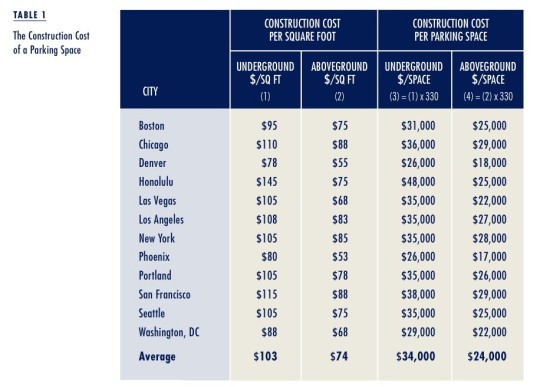
    And here’s his summary of what it costs to build a parking stall in various US cities (both underground and aboveground):

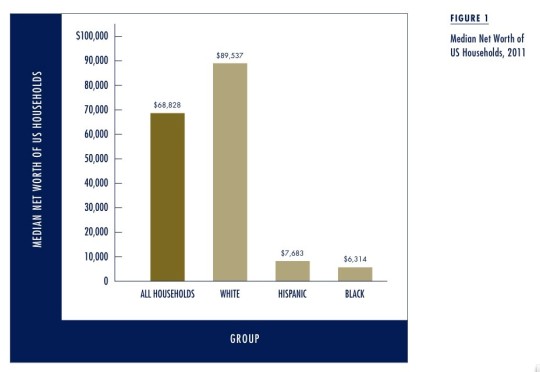
    To put these numbers into perspective, he also looks at the median net worth of US households (2011) to show just how expensive this parking is for some groups. 

    Because remember, these parking costs get embedded into the cost of housing, retail stores, and so on.

  • What do you think of parking stackers?

    One of the things that’s becoming a lot more common in Toronto is parking stackers. For small infill sites there’s simply no other way to fit in the parking. You can’t lay out a traditional parking garage.

    But while it’s still relatively new for Toronto, I think many of you would be surprised by how many projects there are in the pipeline right now that plan to use parking stackers. In the next 5 to 10 years, they are going to be quite common.

    Some of you might be wondering how they work. There are a bunch of different solutions, from stackers to elevators and palettes, but here’s an example of a triple car stacker:

    In this case, there’s a below grade pit and an open space that goes up into the second floor. This way each car remains accessible without having to move any of the others. If you want the car on the top shelf, just lower the other 2 into the pit. If you want want the car on the bottom shelf, just raise the other 2 into the second floor space (which is what’s shown above).

    But here’s what I’m really curious about: How do you feel about parking stackers? Would you live an apartment or condo where that was how you had to park your car? Or would it be a deal breaker? Please let us know in the comment section below.

  • Big box stores are the new noxious-use

    As a follow-up to yesterday’s post on New Urbanism, I thought I would post an interesting video discussion between Andrés Duany and Ben Stevens. 

    Duany is the father of New Urbanism and Stevens runs a great blog called The Skyline Forum where he interviews notable city builders, developers, architects, planners, and so on. If you can’t see the video below, click here.

    [youtube https://www.youtube.com/watch?v=QfZZ61C4YOY?rel=0&w=560&h=315]

    Once again it’s a great reminder that so much of what we do and build in our cities is dictated by parking requirements. One of the ways Duany differentiates New Urbanism from “old urbanism” is that the new explicitly provides for the car. 

    Regrettably, I think we do that almost everywhere nowadays. But I take his point that New Urbanism happens almost as an intervention in areas where there are few or no other mobility options besides the car.

    I also thought it was interesting that Duany refers to big box stores as the new noxious-use in cities, rather than industry. He describes the parking, not the stores themselves, as creating a “flume of unwalkability.”

    It always seems to come down to parking.

  • Thoughts on big box retailing and the Stockyards

    image

    Tonight I finally got the opportunity to visit the Stockyards retail center at the corner of St. Clair West and Weston Road in Toronto. It’s a 550,000 square foot complex that was only recently completed. The major anchor tenant is Target and it just so happens to be the first new construction Target in Canada.

    What’s interesting about the Stockyards development is that it’s a reinvention of the suburban big box store format that we all know so well. You know, the big store surrounded by a sea of parking. And from my past experience working on projects similar to this one, I can tell you that the Stockyards project is generally loved by planners at the city.

    So what’s the big deal?

    Let’s first look at how it would work for a traditional big box store development. Assume you’re a developer and you’re trying to secure a 150,000 square foot big box store tenant for your site.

    Historically, in order for that tenant to even consider signing with you, you’d need to be able to offer her a single level format. In other words, her 150,000 square feet needs to be all on one level. Multiple levels are more expensive to build and they add another layer of complexity when it comes to shopping carts, back of house loading, and so on.

    On top of this, she’s going to have onerous parking requirements. It wouldn’t be unheard of for her to ask–or demand–for 3.5 parking stalls per 1,000 square feet of rentable area. If you do the math in this example (150,000 / 1,000 x 3.5), you get 525 parking spots. This number usually exceeds any of the parking requirements that your local municipality might have. And historically, it has always been surface parking. So forget about building a parking garage and don’t even waste a second thinking about underground parking. That’s way too expensive.

    Finally, the tenant will want her building oriented in such a way that the entrance is directly in front of the largest possible number of parking stalls. Usually this means that the front of the building is facing inward, away from the street, and the rear of the building is facing outward towards the rest of the city. If you could provide all of this and the demographics in your catchment radius were favorable for her business, you’d be in a pretty good position to sign a deal.

    The problem with this format is that most cities don’t want it anymore. It goes against everything that most progressive cities are trying to promote in terms of walkable and transit-oriented communities. Large surface parking lots don’t make for great cities and neither do introverted buildings. At the same time, land values are getting to a point where developers need to use their land more intensively. Big surface parking lots just aren’t the highest and best use.

    So how then do you make big box retailing work?

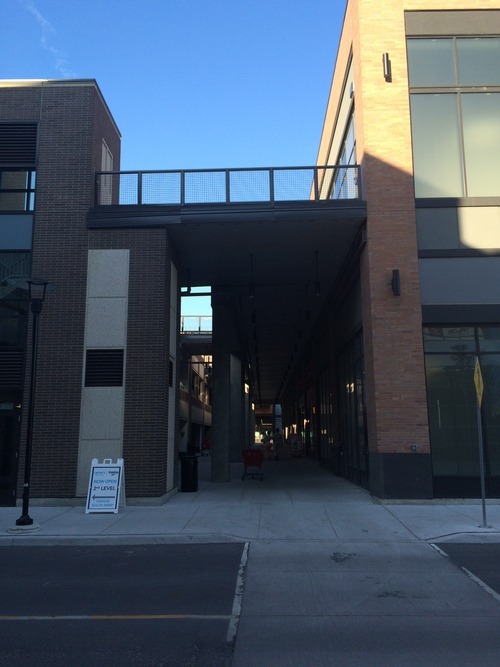
    That’s where the Stockyards comes in. What they’ve done is put smaller retailers along the perimeter of the site with direct access from the sidewalk; they’ve buried the parking in the middle of the site (and built structured parking); and they’ve moved the anchor and larger tenants (Target, Winners, etc.) to the second floor. I don’t think that all big box stores would go for this, but Target is known to be one of the more progressive in this regard.

    So functionally, if you’re taking transit and walking along the street, you have shops engaging you and you’re not looking at the loading area of some big box store. And if you happen to be driving–as many people do to big box stores–you can either drive in and park on the ground floor (and then take an escalator up) or you can drive up the second floor parking area and walk right into the store as you normally would. What they’ve basically done is adapted big box stores to a more urban context. 

    image

    Now, I can see why many at the city like this development and I certainly think it’s a step in the right direction in terms of getting both developers and tenants to think more urban. But I wouldn’t say that we’ve nailed the formula here. When I was there the space felt empty and I had trouble orienting myself after I parked. But it’s certainly a major improvement compared to the big box stores across the street.

    If you’ve had a chance to visit the Stockyards, I would love to hear from you in the comment section below.