Daily insights for city builders, delivered every morning at 6 AM ET. I’m Brandon Donnelly — a Toronto-based real estate developer and founder of Globizen. I’ve been writing here since 2013.

Tag: park city

  • Retaining earth in the mountains

    As many of you know, I am working on a new build in Park City, Utah. One of the things that I have had to get up to speed on are earth retention systems. Building in the mountains is challenging. Here are a couple of photos from this morning of a new single-family home under construction near the lot that I am working on.

    It looks to be a combination of cast-in-place concrete and precast blocks (right side). We are looking at a similar strategy. To give you a sense of the magnitude, some of the concrete blocks we are looking at are 1,800 lbs each. As is the case with many construction projects, a lot of the costs here end up going towards things that most people won’t ever see or think about.

  • Schematic design phase complete for Parkview Mountain House

    Some of you may be aware that Globizen is working on a new project in Park City, Utah right now called the Parkview Mountain House.

    It was first announced on the Globizen Journal back in the summer and then a later announcement was made appointing New York-based Mattaforma as the project architect. It’s kind of a great story because Mattaforma is a relatively new firm that was formed by two architects who used to be at Studio Gang. So we have a long history of working together.

    The vision for the project is a creative retreat in the mountains. A place to unplug, be active, and hopefully a place to foster creative expression, whatever that may be for you. It was inspired by the trip that I have been making to the mountains each year where we try and do exactly this. It’s one of my favorite times of the year and one that I look forward to the minute the last one is over.

    The team has just finished the schematic design phase for the house (see above axonometric). And we are now working through some of the structural and geotechnical issues that come with building in the mountains on very steep terrain.

    To give you all one example, we had initially contemplated large multi-storey retaining walls to hold back the earth and embed the house into the side of the mountain. But that is now being changed to a stepped foundation that minimizes the amount of excavation and reduces each retaining wall to no more than a single storey. This move will also result in more wood and less concrete. It has been a fun learning process.

    The creative retreat concept has also been evolving and we recently decided to make digital NFT art an integral part of the experience. We have a few collections that we have been stocking up on, but if any of you have any recommendations we are, of course, all ears.

    Once the floor plans have been finalized, they’ll be posted up on the Globizen Journal. So make sure to e-mail subscribe and follow along on Instagram at @parkviewhousepc.

  • A modernist utopia at Summit Powder Mountain

    About 60 miles north of Salt Lake City is the largest ski resort in America, called Summit Powder Mountain. It’s some 10,000 acres. But beyond just being big, there is also a fascinating story and philosophy behind the mountain.

    It was started by four partners — Elliott Bisnow (of Bisnow events), Brett Leve, Jeff Rosenthal and Jeremy Schwartz — who partnered up with Learn Capital in 2013 to buy the mountain from a distressed seller for $40 million.

    The four guys were already running a successful invitation-only event series for entrepreneurs and creative types called the Summit Series, and big part of their vision for the mountain was to recreate this same ethos.

    The idea was to create a community focused on relationship-building, entrepreneurship, innovation, environmental sustainability, and good design. Put differently: a kind of utopia for rich people.

    So far, about 80% of the home buyers at Summit Powder Mountain are members of the Summit Series.

    All of this has translated into some pretty cool mountain architecture (see above). In fact, people who buy vacant lots within the community are effectively banned from building the kind of faux chalet stuff that permeates a lot of (or most?) mountain towns.

    Here is a taste of some of the homes that have already been built.

    Image: Paul Bundy for the Wall Street Journal

  • Extell Development to build $2 billion ski resort near Park City

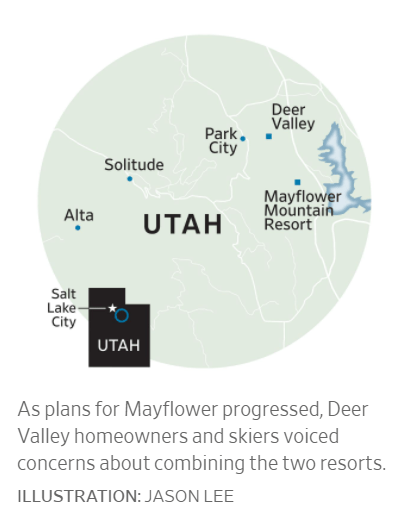
    New York-based Extell Development is, according to this recent WSJ article, in the midst of trying to build a $2 billion full-service ski and snowboard resort near Park City, Utah. It would be the first new resort in the United States in about four decades. These things are, clearly, difficult to get approved, and the fundamentals are, arguably, not all that great. In the early 1990s, the US had about 546 ski and snowboard resorts across the country. As of the 2018-2019 season that number had dropped to 476, according to the WSJ. People are skiing less than they used it, it would seem.

    To be a bit more precise on its location, the proposed resort, which is currently called Mayflower Mountain Resort, is to be located next to Deer Valley Resort. And there’s even a plan floating around to possibly merge the two resorts. That’s apparently what the county planners want. I’m not all that familiar with Deer Valley because they don’t allow my kind there (snowboarders). But it’s an exclusive resort with a country-club kind of feel (or so I’m told). So it shouldn’t come as a surprise that the proposed merger doesn’t seem to be getting a lot of traction with the patrons of Deer Valley.

    But here’s the interesting thing about the Mayflower site. It’s generally controlled (to what extent, I don’t exactly know) by an entity called The Military Installation Development Authority. And this entity has the power to do things like issue bonds and grant certain land-use approvals. This means that there may be an angle to streamline the approvals process (i.e. make this project actually feasible) and to leverage things like tax increment financing (TIF) in order to fund the project.

    Supposedly a new mountain resort has been on the books for this site for some 30 years. Could now finally be the time? If they allow my kind, you can count me in.

    Image: WSJ

  • Snowboarding, vlogs, Cape Town, and marketing

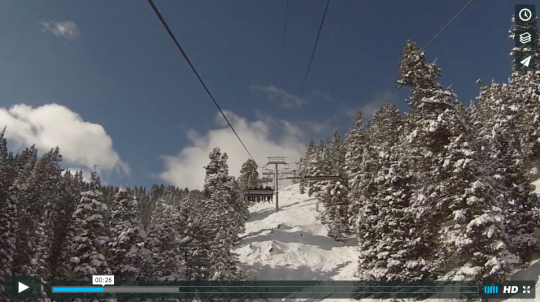
    This morning, instead of my usual routine of writing alongside a cup of coffee, I decided to finally edit all of the skiing and snowboarding footage that I took last month in Park City, Utah. Click here for the final cut.

    Compared to the video we did for Jackson Hole, I don’t like the selfie perspective as much. It doesn’t show enough of the person. This time we used the Go Pro 3-way arm, but in Jackson we used a plastic tube that I think was used for a beer funnel before that. Next year we’ll go back to that.

    Video is a lot of fun and I would love to figure out a way to incorporate more of it into this blog. But that’s a far bigger time commitment and I am not prepared to allocate resources to that. I write every day. That’s my thing.

    I am, however, not ignorant to what’s happening in the world of video blogging. And I think there are lots of opportunities for businesses who have the resources to allocate towards projects like this.

    Take for instance this vlog by New York video guy Casey Neistat. It’s probably the best piece of marketing that the Phantom 4 drone could have asked for. It’s authentic. I watched it and now I want one. Take my money. 

    (Note to city geeks: It’s worth watching just for the drone aerials of Cape Town, South Africa.)

    To my knowledge, I don’t think people are doing anything like this in the real estate business. But eventually it will happen. Because people are becoming increasingly immune to your typical marketing pieces.

  • Ziggurats and gondolas

    Yesterday was an exciting day for Toronto city building announcements. 

    Firstly, Alex Bozikovic of the Globe and Mail published an exclusive preview of architect Bjarke Ingel’s plan for King Street West. Here’s a photo of the architectural model (it’s by Landon Speers):

    My favorite quote from the article is this one from Bjarke:

    “It would be sad if the most diverse city in the world had the most homogenous real estate.”

    It’s true.

    For those of you who emailed me about the details of his talk next week (there were a lot of you!), I believe I emailed you all back. But in case I missed some of you, you can click here for the event details. I should have included it in my original post about BIG, but I thought the event was already oversubscribed.
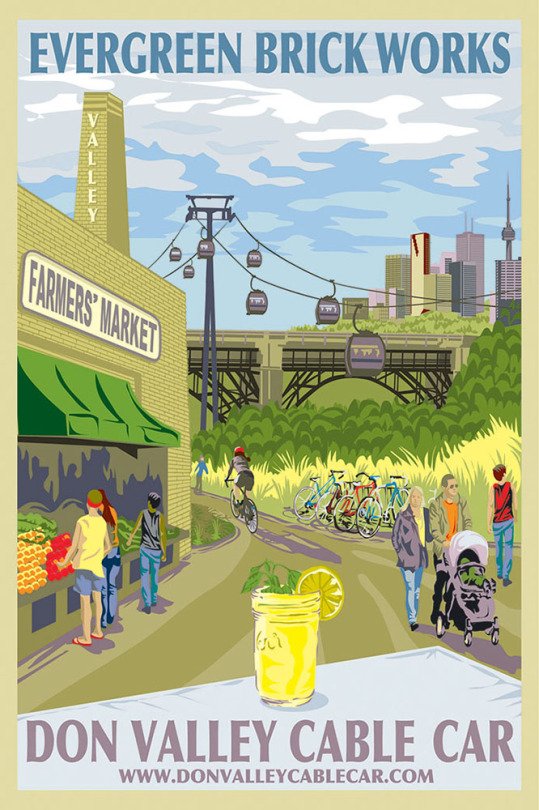
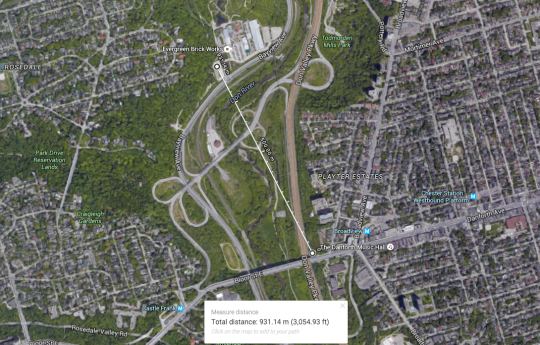
    Secondly, a private company called Bullwheel International Cable Car Corp. has just proposed to build a $20 to $25 million gondola running from Danforth Avenue (near Broadview subway station) to the Evergreen Brickworks. The total length would be almost 1 km and it, allegedly, wouldn’t require any public money. Here is their website.

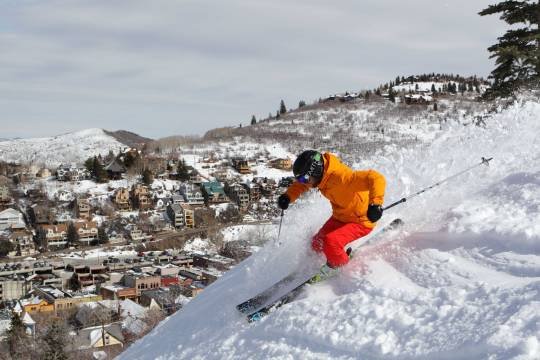
    The timing of this proposal feels a bit serendipitous to me. When I was in Park City, Utah a few weeks ago, snowboarding right into the town and then taking their “town lifts” back up to traverse the mountain, I remember thinking to myself: what a wonderful form of transportation this is.

    Of course, Park City has giant mountains and Toronto, unfortunately, does not. But we do have spectacular ravines and a spectacular institution known as the Evergreen Brickworks.

    But one of the challenges with our ravines is that they can be a bit hidden – particularly for visitors to the city. Part of this is because we are trying to figure out the right balance between natural preservation and active use. But that’s one of the things that makes this proposal so intriguing. It’s a way to celebrate our ravines and natural landscape, without physically encroaching it.

    Here’s a map of the proposed gondola path:
    What do you think about these announcements?

  • The value of lifestyle in attracting human capital

    When I was in Revelstoke, BC last year I met a number of people who had made the move out there from Toronto. When I asked if they missed living in a big city, pretty much everyone gave me the same answer: “No, I love it here.”

    This past week when I was in Park City, Utah, I similarly met a number of people who had made the move from New York and other large cities. And when I asked them the same question, I heard statements like: “I used to live in New York, but then I got a life and moved out here." 

    In these two examples, the obvious draw is the mountains. But it’s not like everyone just moved and became a ski bum. In fact, Inc Magazine recently published an article talking about Park City’s robust startup scene. People are figuring out how to combine hard work with the lifestyle they want.

    What I find interesting about this is that it runs counter to the trend of young people preferring big cities. Here’s a quote from NPR:

    “But affordable real estate and waterfront views don’t have millennials biting. They continue "a multigenerational pattern of young adults preferring more expensive urban areas over lower-cost rural ones because the lifestyles and opportunities in such places make the extra burden of cost worth it,” says Robert Lang, professor of urban growth and population dynamics at the University of Nevada, Las Vegas.”

    However, some small towns clearly have a unique lifestyle advantage: mountains. And that seems to be a strong enough draw that some people are simply figuring out how to create the economic opportunities for themselves.

    For me, this is yet another reminder that if you’re trying to attract the best human capital to your city or town, you need to think about lifestyle. And since young adults aged 18-34 are far more likely to move around than any other generation, you should also be thinking specifically about what this generation wants.

    Here’s a chart from CityLab that shows how precipitously migration falls off (in the U.S.) once people finish school and get settled in a job:

    image

    Obviously, not every town or small city is blessed with mountains. But there are many lifestyle advantages that can be created. It’s for this reason that I keep talking about nightlife and Toronto’s laughable 2AM last call. Those are lifestyle things and we can do better.

  • Cities aren’t the only places struggling with housing affordability

    We already know that many successful cities are struggling with housing affordability. But what you may not know is that a similar phenomenon is happening in many ski towns. Supply is constrained and demand is high.

    Here is an excerpt from a recent New York Times article:

    Local officials and housing experts say it is a symptom of widening economic inequality, one that is especially sharply felt in tiny resort towns hemmed in by beautiful but undevelopable public land. While the wealthiest can afford $5 million ski homes and $120-a-day lift tickets, others work two jobs and sleep in shifts to get by.

    “It’s so much worse today than it’s ever been,” said Sara Flitner, the mayor of Jackson, Wyo., where the median single-family home price rose 24 percent last year to $1.2 million, according to the Jackson Hole Report.

    It’s for reasons like this that some ski towns have strict criteria around who is an eligible resident. For example, Banff, Alberta does this to ensure, “that housing remains available for those whose primary objective is to live and work in the community.”

    In small landlocked ski towns – where it’s difficult or almost impossible to increase supply – there are only so many options. 

  • Off to the mountains

    image

    I am leaving this morning for my annual retreat to the mountains. This year we are going to Park City, Utah, which we decided to do about a year ago.

    The reason we chose this particular place is because Vail Resorts spent $50 million over the offseason to merge Park City Mountain Resort with the neighboring Canyons Resort. 

    There’s now a mountain-to-mountain gondola and 7,300 acres of skiable area across the two resorts, which makes it the largest ski resort in the United States. And that’s why, this month, the New York Times named it one of the 52 places you need to visit in 2016

    But it’s not all puppy dogs and ice cream. What kickstarted this transformation was that the previous operator of Park City, Powdr Corporation, actually forgot to renew its sweetheart land lease.

    So if you’re at all interested in skiing, snowboarding, real estate, and/or lawsuits, you might be interested in what happened here. Curbed did a summary of the battle last year. It was big news in the ski world.

    Image via the New York Times

  • What are your disciplines?

    Photograph sunset drag by Philippe Clairo on 500px

    sunset drag by Philippe Clairo on 500px

    I’m sitting in Calgary International Airport right now waiting for my flight back to Toronto. This marks the end of the 6th Penn Annual (our annual ski and snowboard trip). We all had an amazing time and I can’t wait until next year’s annual. We’ve already (pretty much) decided that it’s going to be in Park City, Utah.

    As you can probably tell, I like traditions and routines. As boring as that might sound, I think there’s a lot of value in doing the same thing over and over again. 

    It’s why I do an annual ski and snowboard trip every February with some of my closest friends (to a mountain we’ve never been to before). It’s why I write something – no matter how short it might be – every day here on Architect This City. It’s why I lift weights 3-4 times every week. It’s why I’m interested in brand building (creating equity takes consistency and time). It’s why I love the permanence of real estate. And it’s also why I like dollar cost averaging when it comes to investing.

    I guess you could say I like the long game. I enjoy having “disciplines.”

    And that’s because I think there are very few substitutes for hard work and sustained efforts. We all love to talk about those overnight success stories, but in reality they’re often the farthest thing from overnight. I know that it takes time to get great at something. And I also know that I’m not always going to be right. But the simple act of not stopping can take you pretty far.

    In any event, I hope you enjoyed all the mountain town talk (I have a few more ideas I want to write about) and my Snapchat stories (if you followed along). I got really into Snapchat on this trip. And that’s because I think the platform is at a tipping point where brands are going to start thinking of it as a legitimate marketing channel – and not just an app for teens.

    Do you have any routines or disciplines? If so, feel free share them in the comment section below. Or if you hate routines, tell us why.

    See you in Toronto 🙂