Daily insights for city builders, delivered every morning at 6 AM ET. I’m Brandon Donnelly — a Toronto-based real estate developer and founder of Globizen. I’ve been writing here since 2013.

Tag: park city

  • My first Turo experience

    I used Turo for the first time this evening. For those of you who aren’t familiar, Turo is like Airbnb, but for cars. It connects people who have cars with people who need rental cars. Here is a photo of ours at SLC:

    The pickup was perfectly seamless. I got a text from an alleged human the day before. It said that they would leave the car on the second level of the parking garage next to baggage claim. And that I would get more precise instructions — such as where the key will be — after it was parked there.

    I was also told that there would be a small charge to pay in order to exit the garage. And that the charge would obviously depend on how quickly I retrieve the car after they park it. In my case it ended up being US$10, but we also stopped for food on the way.

    Overall, I’d say the pickup experience was easier and faster than your typical rental car. The car was as advertised. And thankfully, it was also there waiting for us. The two standout features for me are probably: (1) It was cheaper and (2) you get to pick your exact car. 

    This second one is important because sometimes you need a rental car so that you can drive it into a snow-covered canyon. And when faced with this situation, it can be helpful to know exactly what you’ll be getting — right down to the type of tires.

  • Framing nearing completion at Parkview Mountain House

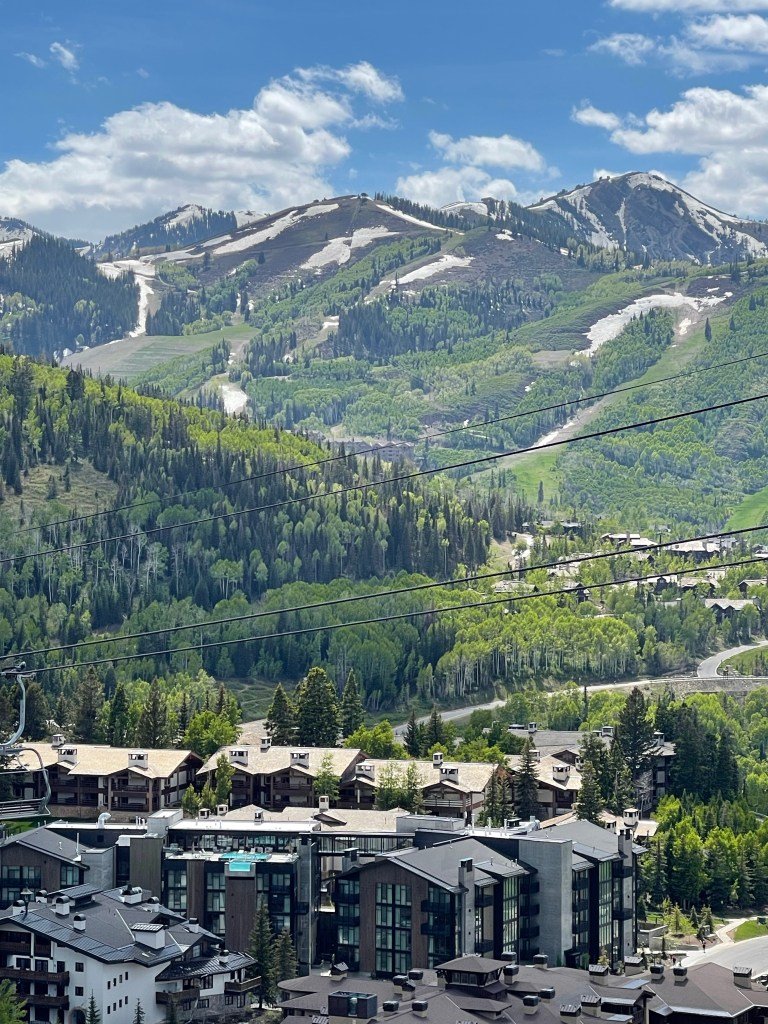
    The building season is short in Park City. There was still snow on our site in May and there was snow again on our site by October. You can certainly build through the winter, but it’s not ideal. It slows you down, and so the team has been racing to get “closed in” before the real winter weather arrives. (Park City Mountain Resort opens for the season on November 17.)

    Right now, it looks like we’ll be finished framing by early next week. We have our framing inspection scheduled with Summit County on Wednesday. Here’s a progress shot of level three from last week:

    This is the top floor of the house, which will house the kitchen, dining area, living room, terrace (which is where the above photo was taken from), and two bay windows. The far one is going to serve as a seat in the living room, and the closer one (on the right) is going to be a workspace area. In both cases, they’re designed to orient you towards the trees and the mountain.

    Overall, this was Mattaforma’s design strategy — to create a kind of introverted house. The windows facing the street are generally small and placed to frame very specific views of the landscape; whereas the windows facing the trees and mountain are generous. The intent was to always connect you with nature as you move throughout the house.

    Sadly, PMH won’t be available for rent this winter. But if you’d like to get on the list for next summer and winter, click here.

  • The end of private car ownership

    Here is an argument that Philadelphia-based Diana Lind recently made on her blog, The New Urban Order:

    I believe we’re at the beginning of the end of private car ownership in American cities. This idea came from thinking about the next steps when our RAV4 dies in the coming year or so: not only shouldn’t we replace it, but we won’t want to replace it. Right now only about a quarter of Americans do not drive to work, and only 9 percent of Americans do not have access to a car at all. But I think that in the coming decade there’s going to be a ton of potential to convert people living in dense cities and neighborhoods away from private cars.

    There are a number of reasons for why she believes this is going to be the case and, to quickly summarize, they are: remote work, declining birth rates, more old people, Uber and other services, and autonomous vehicles. And generally, I would agree that there is a strong case to be made here.

    But one thing that she does not explicitly talk about is the relevance of built form in this move away from private car ownership. She does mention “people living in dense cities” (see above), but does this mean that we are to assume density will remain a prerequisite, as it mostly is today?

    Urban density dictates so much of how we move around. When I was driving around Paris during the summer, I couldn’t wait to return our car and get back on foot. You should have also seen the gymnastics we pulled off to refill the tank. Driving in the city was annoying. Paris is designed for walking, taking the metro and, now, cycling.

    On the other hand, when I land in Salt Lake City (Park City), the first thing I do is head to the car rental area. The city is getting better at trying to reorient itself, and there is a tram (Green Line) that runs from the airport through downtown, but it very much remains a driving city. And ideally you want something like a Toyota 4Runner that will take you through snow and up steep pitches.

    So while I agree that, directionally, Diana is right, I think the question remains: What does this mean for individual cities and their built environments? In a city like Paris, it is obvious. Private car ownership is highly likely to continue declining. But in a place like Salt Lake City, I think it’s going to be much more challenging and take a lot longer.

    Photo by Chris Henry on Unsplash

  • Summit County, Utah to vote on acquisition of 8,576-acre ranch

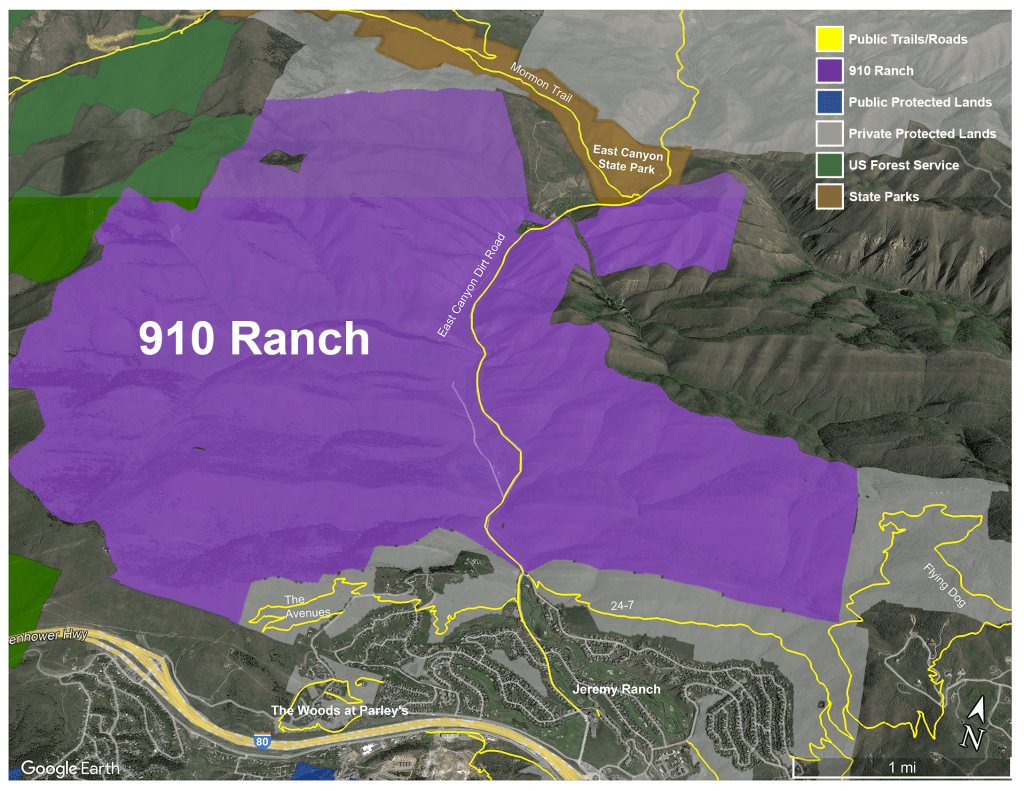
    Summit County Council is holding a special meeting this week to vote on the acquisition of an 8,576-acre property next to Jeremy Ranch and around the corner from Parkview Mountain House.

    The County Manager has recommended approval of the deal and these are the terms:

    – $55 million total purchase price (about $6,413 per acre)

    – Structured through a $15 million three-year option to purchase, with a right to extend for another year for an additional $5 million (option fees to be applied toward the purchase price)

    – During the option period, the County will have control of the property and pay $5,000 per month in rent

    Another way to look at this deal is that Summit County needs to initially come up with $15 million of equity. This is because they are getting seller financing for the remaining $40 million. (Implied loan-to-value of about 73%.)

    After 3 years, they will have to put in another $5 million, which lowers the implied LTV to about 64%. But in both cases, and assuming the $5k per month is all the County needs to pay, there’s effectively no interest on this 4-year “financing”. ($60k per year on $40-45 million.)

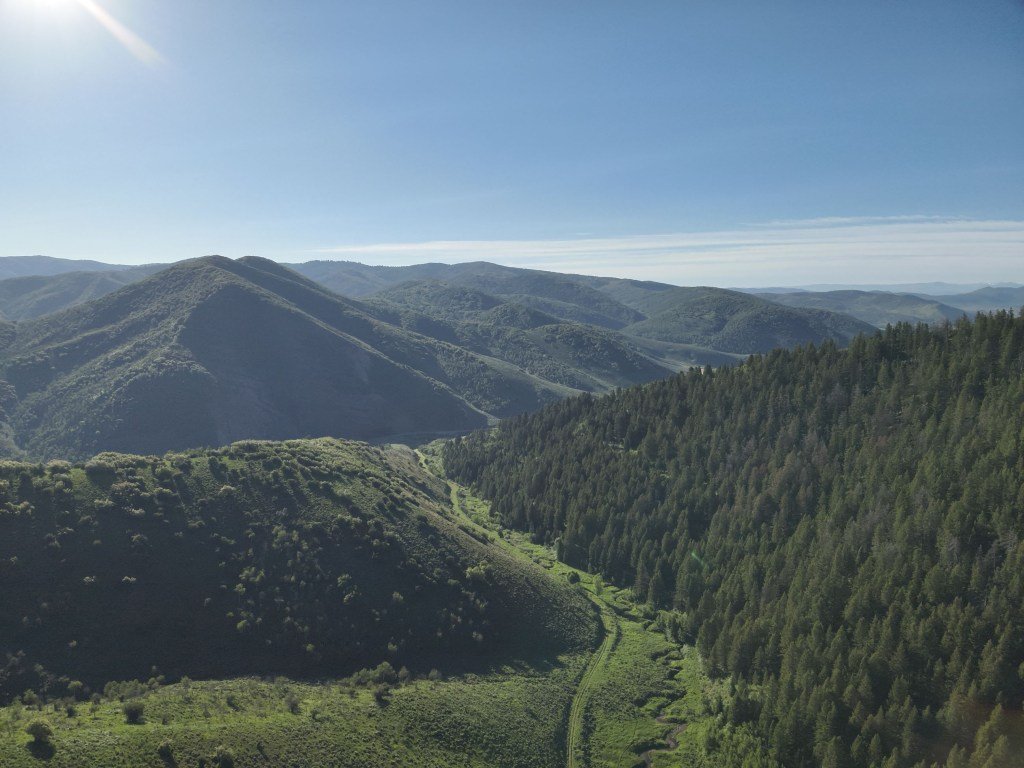
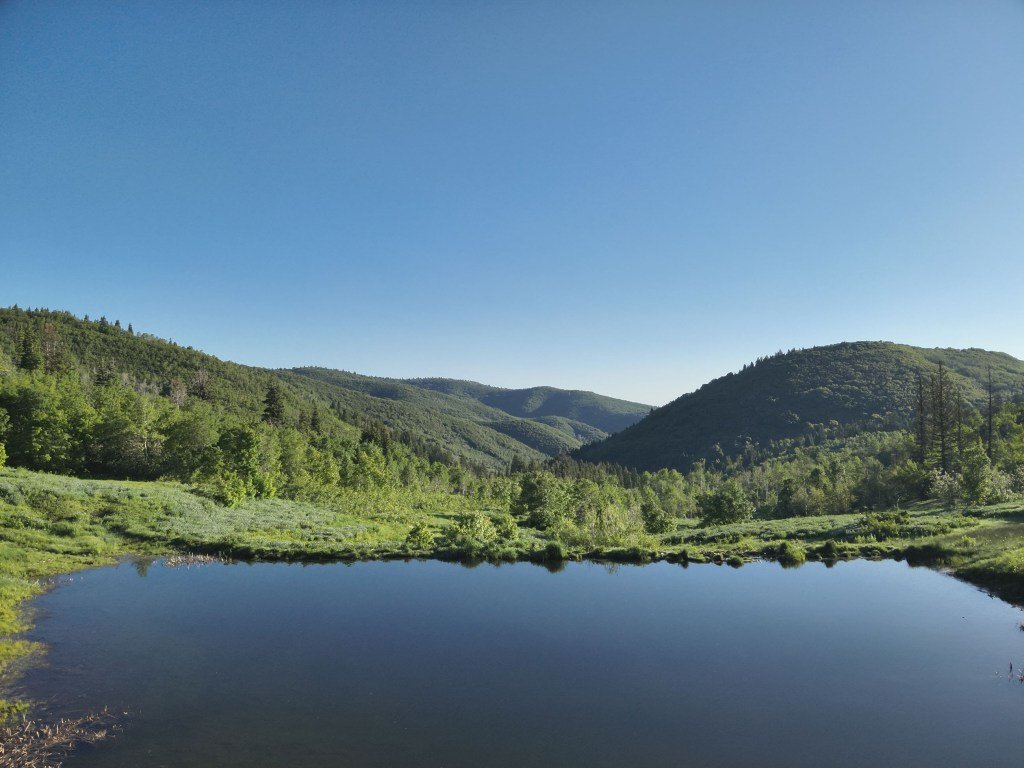
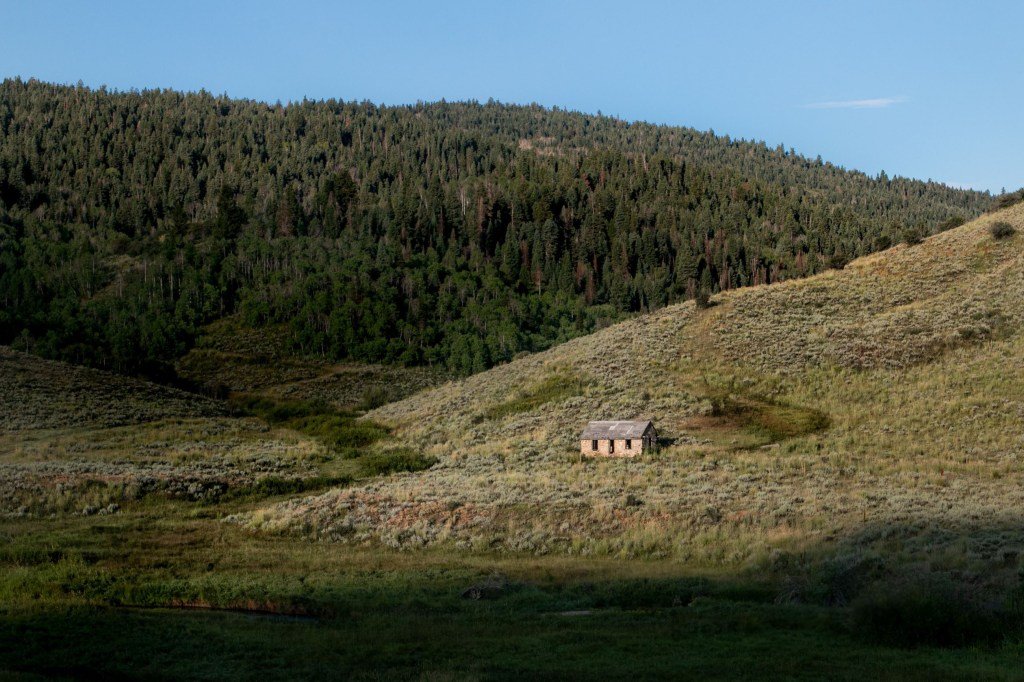
    The purchase price is also only ~$6k per acre, which should tell you that this is not development land. Its value is what you see here:

    And this is exactly what Summit County intends to do with the land: conserve it. As one of the last contiguous mountain ranches in the area that is privately owned, this sure seems like a win for the community. It’s a pretty good deal, too.

    Images: Summit County, Utah

  • Footings and foundations in Park City

    We poured the concrete footings/foundations for Parkview Mountain House this week. Above is a photo of the pour. We’re about two weeks behind schedule because of delays related to site works and excavation. (We’re building into the side of a mountain.) But I’m hopeful we can make it up once we finish concrete work and move on to wood framing next month.

    For those of you who like details, here’s a section showing the footing and retaining wall on the back of the property facing the slope of the mountain:

    Our tallest retaining wall is going to be 15 feet high, which, as I understand it, is more or less the maximum we could have done here without getting into more elaborate structural solutions (such as tiebacks). So the team spent a lot of time solving a design puzzle that involved the height of this retaining wall, the maximum allowable zoning height for the site, and our choice of established grade.

    Onward. More concrete to come and then we move to wood. It’s a race to get “closed in” before the snow starts up again.

  • Vacation rentals in Park City

    We spent his morning meeting with prospective property managers for Parkview Mountain House. Here’s what we learned about the short-term rental market in Park City, Utah:

    • Property management fees generally range from 20-35% of revenue (these are turnkey solutions)
    • Airbnb is somewhere around 80% of the market here; though it does tend to skew toward slightly smaller rentals, whereas VRBO skews larger
    • Sundance Film Festival and New Year’s Eve are the two busiest times in Park City (demand greatly exceeds the available vacation rentals — 120%?)
    • Many Sundance guests tends to be people on expenses accounts: not price sensitive, but apparently very demanding
    • Winter is obviously peak demand because of snowboarding and skiing, but demand is still strong in the summer because of cycling, hiking, golfing, fishing, etc.
    • The two slowest times are spring (mud season) and fall
    • Many PMs will track booking lead times, which is the period of time between booking and check-in
    • This past winter season, demand was strong but average lead times were way down — meaning people were booking last minute and responding to snowstorms
    • During heavy snowfall seasons, like the one Utah had this past winter, you’ll likely need to budget for roof snow clearing (a few thousand for the season)
    • Heated driveways are a very good idea in the mountains
    • The most popular / most searched amenity is by far a hot tub; servicing one will run you about $125 per month

    I always find it fascinating to dig in and learn about a new industry and/or market. And that’s exactly what we did this morning.

  • Parkview Mountain House starts construction

    I am in Park City for the weekend because we just started site works for Parkview Mountain House (PMH).

    When you’re building in the mountains, there are generally two types of sites: sites that are uphill from the road and sites that are downhill from the road.

    The latter is significantly harder to build on because you have to first create access to the lot, which means bringing in soil and creating a ramp. You may also end up craning in materials.

    Thankfully, our site is on the uphill side. You bring in an excavator, dig into the mountain, and then you have a flat workable site.

    That’s what we’re doing on site right now and it’s what you’re seeing above — a big hole in the side of a mountain. And it’s pretty exciting.

    Photos: Isaac Silvera

  • Wealthiest cities in the world

    According to this annual survey by Henley & Partners (first chart from Bloomberg), these are the top 10 wealthiest cities in the world when you count the number of high-net-worth individuals (i.e. people with investable wealth greater than US$1 million):

    However, if you instead count billionaires, the top city flips from New York City to the Bay Area (which includes San Francisco and all of Silicon Valley). This isn’t all that surprising.

    Also not surprising is the precipitous decline in the number of HNWIs residing in Hong Kong. From 2012 to 2022, the number declined by 27%. That said, a bunch of other cities fared even worse. The city that lost the most millionaires over this same decade was Moscow. It declined by 44%.

    For those of you wondering about Toronto, we placed 12th, just after Chicago, with 105,200 millionaires, 193 centi-millionaires, and 18 billionaires:

    The next city in Canada on the list is Vancouver, and following that is Montreal:

    It is interesting to see how much further behind Montreal places with these metrics given that it is an urban region with about 1.6x the population of that of Vancouver’s.

    Also interesting — given its size and global importance — is Paris (18th when it comes to HNWIs):

    However, when it comes to seasonal draw, Paris is second only to Miami, which appears to be the undisputed global destination for rich people in the winter. Paris has 126 centi-millionaire residents, but during its peak holiday month (presumably summer), this number is believed to increase to over 300:

    Finally, looking at Park City, Utah, it has 8 permanent centi-millionaires and this number is thought to increase to over 100 during the winter snowboarding season. And to be clear, this transient population figure only includes people who own a second home there. It does not include rich people paying US$3,700 per night to stay at Deer Valley. That’s pretty good for a small town of only 8,500 permanent residents.

    To check out the full list of 97 cities, click here.

  • Why Utah wants to build the world’s longest and most expensive urban gondola

    If you drive around the Cottonwood Heights neighborhood in Salt Lake City, which I have done multiple times over the last year, you will invariably see lawn signs shouting for “no gondola!” And the reason for this is that last summer, the Utah Department of Transportation (UDOT) came forward with its preferred solution to traffic congestion in Little Cottonwood Canyon: an eight-mile long gondola all the way up and into the mountains. If built, this would apparently be the longest and most expensive urban gondola in the world.

    To try and explain why this is being recommended, I’ll give the example of what happened to us when we were there last week. We drove into Little Cottonwood Canyon on Tuesday morning when it was not snowing. We left Park City around 8am, passed through the valley (Salt Lake City), and arrived at Snowbird (resort) in around 45 minutes. This is normally how long it takes. But on the way up it started snowing, and it didn’t stop all day. (Nice!) So our drive home took significantly longer and looked like this (we were going 8-10 miles per hour all the way down):

    This is what happens when it snows in the canyons. Which is why a wise bartender at one of the resorts advised us that, “on powder days, you need to leave the valley at 6AM. Because at some point, some asshole is going to think they can get up the canyon in a Tesla, and they will ruin it for everyone. It’s better to nap in your car at the resort than white knuckle for 2-3 hours.” During our drive home, we learned that he was not at all joking. This is what happens. And it is why UDOT wants to build one really long urban gondola.

    There are, however, some very good reasons why urban gondolas aren’t really that common. Portland has one. Medellín has one. And apparently both are quite successful. But other than these examples, they generally aren’t thought of as the most effective tool in the transportation arsenal:

    Gondolas are low-capacity vehicles that quickly get cramped if turned into high capacity ones. They don’t work well for multiple stops. As a result, they are a point-to-point transportation method with low capacity. They are also expensive, especially relative to how many people they might serve, making them financially unattractive options for most applications. At their best, gondolas work when traversing difficult terrain with a consistent but low ridership, which is why they’re most often deployed on ski resorts.

    But this situation is maybe a bit unique. It’s kind of urban transport, but really it’s for people to get up the canyon and shred deep powder. Here’s more on how it might work:

    The Cottonwood Canyon gondola would be a hybrid of sorts between urban transportation solution and resort-based gondola. The proposal is to build a massive 2,500-spot parking garage at the base of the canyon, about 20 miles from downtown and the airport, where people will park. They will then ride the gondola for 27 minutes to Snowbird or 37 minutes to Alta, a trip duration which has no parallel in the urban or resort gondola scene (the Snowbird tram, one of the most famous in the world, fits more than 100 people per tram but takes less than 10 minutes to ride). Even though the gondola would serve two ski resorts, it belongs more to the urban gondola concept because it is being proposed and recommended by the state’s transportation department as a solution to a recurring traffic problem.

    As a snowboarder, this sounds great. But it is, of course, complicated. Conservation groups are objecting, and some/many taxpayers don’t want to pay for a gondola that will largely benefit two ski resorts. Especially one that doesn’t permit snowboarders (I made this part up). So we’ll see. A final decision is expected by UDOT this summer. In the meantime, if you’re interested in urban gondolas, check out this recent article in Vice Magazine by Aaron Gordon (quoted above). He does a good job explaining both sides of this debate. And if you are interested in this topic, I’d be curious to hear whether you think this is a good idea or not.

  • The impact of climate change on the Winter Olympics

    It was pure luck, but we couldn’t have timed this last week any better. It started snowing in the mountains around Salt Lake City on Tuesday, and it felt like it didn’t stop until Saturday. On Wednesday morning, which was peak powder, the main resorts were reporting anywhere between 23″ and 30″ of fresh now. It was the stuff of magical dreams.

    But snowfall is, of course, highly variable. SLC is having a record year, whereas many resorts in Europe weren’t able to open until mid-January because of a lack of snow. And from a macro perspective, things are generally getting worse. According to this report, for every one degree increase in the world’s average temperature, global snow cover is reduced by about 8%.

    What this mean is that, even in low emission scenarios, many of the places that previously hosted the Winter Olympics, may struggle to do so again in the future because of “non-reliable” snow cover. Freestyle ski and snowboard, for example, typically wants a minimum of 1 meter of snowpack as a base, and sometimes more if melting is expected.

    Things do not look positive for Vancouver, Garmisch-Partenkirchen, and even Chamonix in the below chart. (And as a further blow, the authors of the report also don’t know how to spell Vancouver.) Naturally, this is something that you might want to consider when looking at long-term investments that are dependent on fresh snow.

    You can, however, ignore Sochi in the above chart. Because this was never a great place for the Winter Olympics and it’s unclear to me why this place was ever chosen (other than for presumably nefarious reasons). It’s like: “We are one of the largest and coldest countries in the world. We have a lot of snow in Russia. But for fun, let’s choose one of the few places with a sub-tropical climate.”

    Excluding Sochi, though, this is an alarming chart.